
Side Dishes
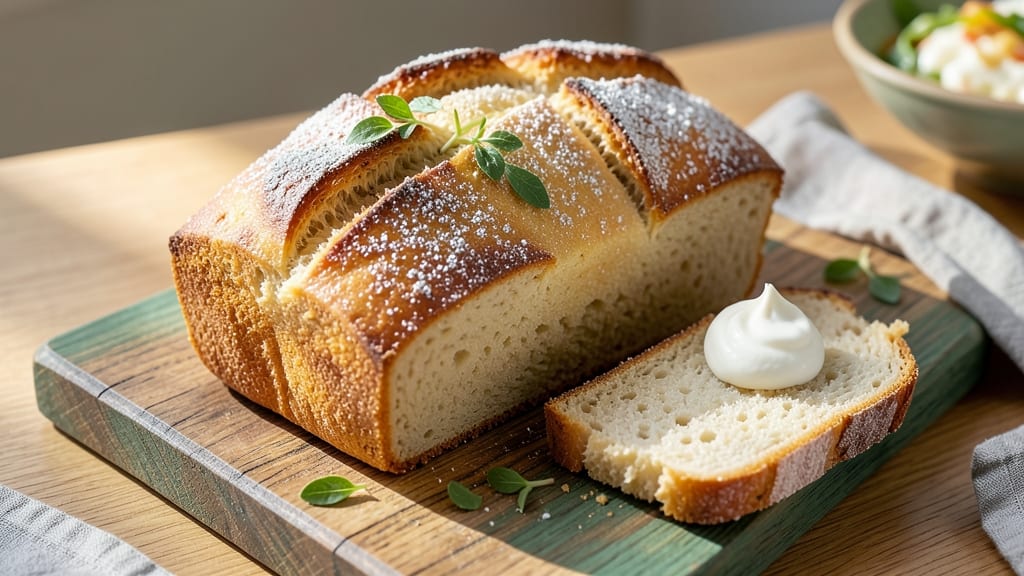
This 0-carb yogurt bread delivers the perfect fluffy rise—without sugar, carbs, or dairy—using plant-based yogurt and clever binding agents. ✨ The secret lies in almond flour and psyllium husk, which replace traditional wheat flour while maintaining that signature soft, airy texture keto dieters crave.
I developed this after struggling to find a bread substitute that actually tasted fresh-baked, not dense or chalky.
The magic happens with a vegan yogurt base (coconut or almond works best) combined with zero-carb sweeteners like erythritol or stevia. Psyllium husk acts as a natural thickener, while egg whites or aquafaba provide structure without gluten.
This recipe proves you don’t need carbs to enjoy warm, toasted bread—just the right technique and ingredients.
What you’ll end up with is a loaf that slices neatly, toasts to golden perfection, and pairs beautifully with soups, butter, or avocado. The texture stays soft for days when stored properly, and the slight tang from the yogurt adds depth without overpowering.
Best of all? It’s completely compliant for strict keto, paleo, or dairy-free diets.
Ready in just 30 minutes of prep plus baking time, this bread requires no special equipment—just a standard loaf pan and basic pantry staples. Whether you’re avoiding carbs or simply curious about low-carb baking, this recipe delivers restaurant-quality results at home.
Ingredients for 0 carb yogurt bread
Eight clever ingredients transform into fluffy, zero-carb bread that rivals traditional loaves.
| Ingredient | Amount | Notes |
|---|---|---|
| Unsweetened Vegan Yogurt 🥛 | 1 cup | Coconut or almond based |
| Almond Flour 🌰 | 2 cups | Blanched, finely ground |
| Psyllium Husk Powder 💊 | 2 tbsp | Pure, unsweetened |
| Erythritol 🍬 | ¼ cup | Granulated, zero-carb |
| Aquafaba 🌱 | ½ cup | Chickpea brine liquid |
| Baking Powder 🧂 | 1 tsp | Aluminum-free preferred |
| Salt 🧂 | ½ tsp | Fine sea salt |
| Apple Cider Vinegar 🍏 | 1 tbsp | Unfiltered for tang |
| Xanthan Gum 🧪 | ¼ tsp | Pure powder form |
| Vanilla Extract 🌸 | ½ tsp | Pure vanilla preferred |
| Lemon Zest 🍋 | 1 tsp | Freshly grated |
| Water 💧 | ½ cup | Room temperature |
The almond flour is non-negotiable here—Bob's Red Mill or Anthony's Goods brands deliver the finest grind for that signature texture. Psyllium husk might sound unusual, but it's the secret to that perfect rise (trust me, it's worth hunting down at Whole Foods or health food stores). For the yogurt, Cocojune coconut yogurt or Silk almond yogurt work best—they're thick enough to bind without adding excess moisture. Erythritol is your zero-carb sweetener, but Lakanto monk fruit blend works too if you prefer a different taste profile. The aquafaba? Save those chickpea brine cans—it's the magic ingredient that replaces eggs entirely!
No psyllium husk? Ground flaxseed at double the amount works in a pinch, though the texture won't be identical. Swapping erythritol for stevia or allulose is fine, but adjust to taste—some brands are sweeter than others. The aquafaba can be replaced with 1 extra egg white if you're not strictly vegan, but the recipe stays fully plant-based with this version. For extra flavor, add 1 tsp cinnamon or cardamom—it pairs beautifully with the lemon zest. And if you're worried about the vinegar taste, don't be: it dissipates completely during baking, leaving just that perfect tang!
This dough needs 10 minutes of rest before baking—don't skip it! Store leftovers in an airtight container with a slice of bread between layers to prevent drying. Keeps for 3-4 days at room temperature or 1 week refrigerated. For longer storage, wrap tightly in parchment and freeze for up to 3 months. Toasting is key to revive stale slices—just 2-3 minutes in a hot toaster brings it back to life. The lemon zest adds freshness, so if you're making ahead, zest just before baking for maximum brightness!
Why You'll Love This Recipe
- No-Fuss Mixer Magic: I swear by this recipe when I’m too tired to measure anything complicated. Just toss the almond flour, psyllium husk powder, and erythritol into a bowl, add the yogurt and aquafaba, and let the mixer do the work—no kneading, no fuss.
- Tangy Crust, Soft Core: That psyllium husk gives it a satisfying crunch while the yogurt keeps it light and fluffy inside. Honestly, it’s the closest thing to real bread I’ve found without the carbs—and it doesn’t taste like it’s missing anything.
- Meal Prep MVP: I bake a whole loaf on Sundays, slice it, and store it in the fridge for toast, sandwiches, or even French toast later. It reheats in seconds, so it’s always ready when I am.
- Pantry Staple Hack: Between us, almond flour and psyllium husk are already in my low-carb arsenal, and erythritol is my go-to sweetener. This recipe uses what I have, so it’s budget-friendly and zero waste—just add water if needed.
Step-by-step instructions for fluffy 0-Carb yogurt bread
This zero-carb bread rises like magic—here's how to nail the perfect texture every time.
👨🍳 Step 1: Whisk Wet Ingredients to a Silky Batter
In a large mixing bowl, combine the 1 cup unsweetened vegan yogurt, 0.5 cup aquafaba, and 0.5 cup water. Whisk vigorously for 2 minutes until completely smooth—this breaks down the proteins for maximum rise. The mixture should look like thick, frothy custard.
Next, add the 0.25 cup erythritol, 0.5 tsp vanilla extract, and 1 tsp lemon zest. Whisk for another 30 seconds until the erythritol dissolves completely. I like to press the back of a spoon against the bowl to check for smoothness—any grit means you need to whisk longer. This sweet-tart base is what gives our bread its signature flavor without any carbs.
👨🍳 Step 2: Create the Perfect Flour Blend
In a separate bowl, sift together the 2 cups almond flour, 2 tbsp psyllium husk powder, 1 tsp baking powder, 0.5 tsp salt, and 0.25 tsp xanthan gum. This blend is crucial—psyllium husk creates that signature bread-like chew, while xanthan gum binds everything together. Use a whisk to break up any lumps in the almond flour before sifting.
Make a well in the center of the dry ingredients and pour in the wet mixture. Using a silicone spatula, gently fold everything together until just combined—you should still see some dry flour streaks. Overmixing develops gluten, which we don't want in a low-carb bread. The batter will be thick but workable, almost like wet sand. This is where the magic happens—the psyllium will start absorbing liquid immediately, so work quickly but carefully.
🍳 Step 3: Add Vinegar and Rest for Maximum Rise
Add the 1 tbsp apple cider vinegar to the batter and mix gently with a spatula. The vinegar reacts with the baking powder to create lift, and it also helps balance the richness of the almond flour. Let the batter sit for 10 minutes at room temperature—this allows the psyllium husk to fully hydrate and the xanthan gum to activate completely.
After resting, the batter should be noticeably thicker and more cohesive. If it looks too stiff, add 1-2 teaspoons of water to loosen it slightly. The ideal consistency is like thick pancake batter—it should hold its shape when spooned but still be pourable. This resting step is non-negotiable; it's what gives our bread that professional bakery rise without any gluten.
🔥 Step 4: Bake in a Preheated Loaf Pan
Preheat your oven to 350°F and lightly grease an 8x4-inch loaf pan with nonstick spray or butter. Pour the batter into the prepared pan and smooth the top with a spatula. Tap the pan gently on the counter twice to remove any air bubbles—this ensures an even rise and smooth surface.
Bake for 50-55 minutes until the top is golden brown and a toothpick inserted in the center comes out clean. The bread should spring back slightly when pressed but still feel soft to the touch. I like to check at the 45-minute mark—every oven runs hot, so adjust accordingly. The edges should pull away from the pan slightly, indicating it's ready to be removed.
⏰ Step 5: Cool and Slice for Perfect Texture
Remove the bread from the oven and let it cool in the pan for 10 minutes before transferring to a wire rack. This gradual cooling prevents cracking and allows the psyllium to fully set. The bread will continue to firm up as it cools, developing that perfect bread-like crumb.
Once completely cool, slice with a sharp serrated knife for clean cuts. Each slice should have a tender crumb with a slightly crisp exterior—no gummy texture here. Store wrapped at room temperature for up to 3 days, or freeze slices for up to 3 months. The flavor actually improves over time as the almond flour develops its nutty notes. This bread is so good, you won't believe it's zero-carb!
Pro Tips For Making 0 Carb Yogurt Bread
- Mix the Psyllium First: Psyllium husk powder is your bread’s glue—don’t just toss it in dry. Whisk it into the aquafaba first until it forms a thick, gel-like paste before adding other ingredients. I learned this the hard way after ending up with dense, crumbly loaves that fell apart like wet cardboard.
- Use Cold Yogurt: Skip the room-temperature shortcut—cold, thick vegan yogurt (straight from the fridge) blends smoother and prevents gummy texture. Thin it slightly with water if needed, but don’t overdo it—this isn’t a smoothie.
- Don’t Overmix the Batter: After combining everything, stir just until the erythritol dissolves and the almond flour is mostly incorporated. Overmixing activates the gluten in almond flour (yes, it has some), and your bread will turn out tough instead of tender. Think "just combined," not "fluffy pancake batter."
- Bake at 350°F for 20 Minutes, Then Broil: The oven’s lower rack is your friend—preheat and place the loaf pan there to ensure even browning. After 20 minutes, switch to broil for 2-3 minutes to crisp the top. Watch it like a hawk; almond flour burns faster than you’d expect.
Troubleshooting perfect results
Dense or Gummy Texture
If your bread turns out dense or gummy, you likely overmixed the batter or skipped the 10-minute rest. The psyllium husk needs time to hydrate fully—don't rush this step! I've also found that using too much almond flour (or flour that's too fine) can create a compact texture.
Try replacing 1 tbsp of almond flour with ground flaxseed for better structure. Overmixing activates gluten-like proteins, so fold just until combined. 💫
Flat or Sunken Top
A flat or sunken top usually means the baking powder wasn't activated properly. Make sure your baking powder is fresh (test by mixing with water—it should fizz immediately). The apple cider vinegar is crucial here—it reacts with the baking powder to create lift.
If your batter seems too thick after mixing, add 1 tsp more water to help it rise. Also, avoid opening the oven door during the first 30 minutes of baking—temperature drops cause collapses. ✨
Dry or Crumbly Crust
Dryness often happens when the oven runs too hot or the bread is baked too long. Check your oven temperature with an oven thermometer—many home ovens run 25-50°F hotter than set. If your bread pulls away from the pan edges too soon, it's overbaked.
For a better crust, brush the top with 1 tsp melted butter or olive oil right after removing from the oven. This adds moisture and creates that golden sheen. 🔥
Bread Sticks to Pan
This is usually a greasing issue. Use nonstick spray or butter to coat the pan thoroughly, including the sides. I recommend Misto oil spray for even coverage. If your bread still sticks, try lining the pan with parchment paper cut to fit snugly.
Avoid overgreasing—excess oil can make the bread greasy. For stubborn cases, let the bread cool 5 minutes longer in the pan before transferring to a rack. ⚡
No Rise at All
If your bread doesn't rise, check your psyllium husk first—it's the key to lift. Make sure you're using pure psyllium husk powder (not whole husks). Also verify that your baking powder is active (test with water).
The aquafaba must be fresh—old brine loses its ability to create structure. As a last resort, replace 1 tbsp psyllium with 1 tsp xanthan gum to boost binding, but this won't replicate the same rise. 💡
Excessive Almond Flavor
Almond flour's natural taste can overpower the bread if not balanced. The lemon zest and vanilla extract help mask this, but if it's still too strong, try mixing 1 cup almond flour with 1 cup sunflower seed flour for a milder profile.
For extra depth, add ½ tsp cinnamon to complement the nutty notes. If you prefer a completely neutral base, consider using coconut flour (though you'll need to adjust other ingredients). 🌰
Nutrition facts
Frequently asked questions
Can I make this bread without aquafaba?
Yes! Replace the 0.5 cup aquafaba with 1 extra egg white for binding power, or use 0.5 cup unsweetened applesauce for a vegan alternative. The texture will be slightly different but still hold together. For a neutral taste, stick with egg whites—they mimic the protein structure aquafaba provides.
Why does my bread taste too almond-y?
The almond flour's natural flavor can dominate, but the lemon zest and vanilla help balance it. For a milder taste, swap 1 cup almond flour for sunflower seed flour or add ½ tsp cinnamon to complement the nutty notes. If you prefer a completely neutral base, try coconut flour (but adjust other liquids accordingly).
How do I store this bread to keep it fresh?
Wrap the cooled loaf tightly in plastic wrap or place slices between parchment paper in an airtight container. It stays fresh at room temperature for 3-4 days, or refrigerated for 1 week. For longer storage, freeze slices for up to 3 months. Toasting revives stale slices—just 2-3 minutes in a hot toaster brings back that fresh-baked texture.
Can I make this bread in a different shape?
This batter works perfectly for muffins, mini loaves, or even bagels. For muffins, divide batter into greased muffin tins and bake at 350°F for 18-20 minutes. For bagels, shape dough into rings, boil in water with 1 tbsp baking soda for 3 minutes, then bake at 375°F for 20-25 minutes. The psyllium husk maintains structure in any shape.
Is this bread safe for strict keto diets?
Yes, this recipe is completely keto-compliant with 0g net carbs per serving. The almond flour, psyllium husk, and erythritol ensure no carbs or sugars. Just verify your vegan yogurt brand doesn't contain hidden carbs—some flavored versions may have additives. Stick to plain, unsweetened coconut or almond yogurt for maximum compliance.