
Side Dishes
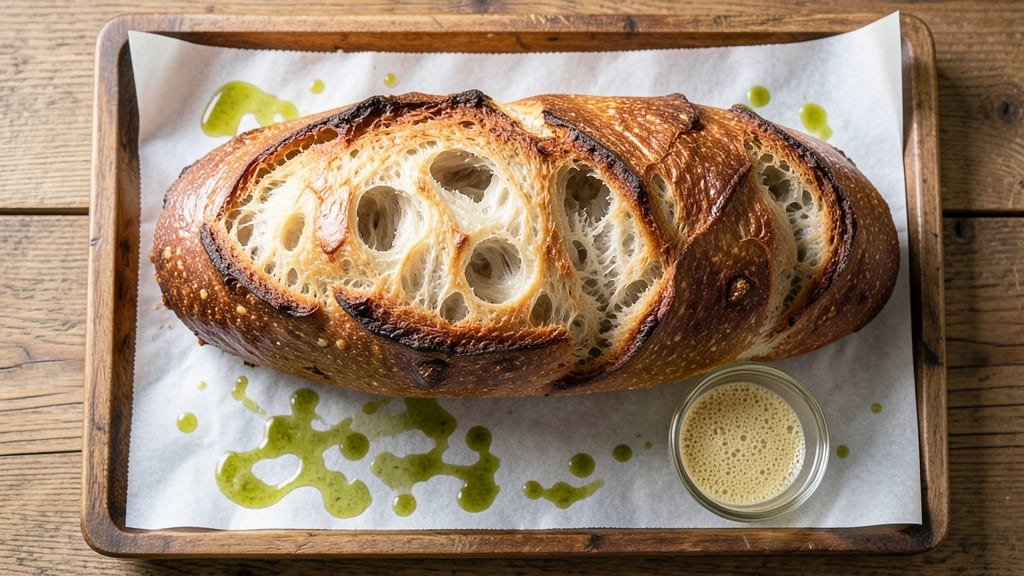
This airy ciabatta bread recipe delivers the perfect balance of pillowy chews and crusty shatter—just like your favorite Italian bakery. The secret lies in a high-hydration dough that develops an open, airy crumb while creating a crispy, golden crust.
I've perfected this technique over years of baking, ensuring every slice has that signature texture and flavor. What makes this recipe special is the combination of traditional Italian methods with modern shortcuts.
You'll work with simple ingredients—flour, water, yeast, salt, and olive oil—but the shaping and proofing techniques are what create that iconic ciabatta texture. The dough is forgiving, even for beginners, and the no-knead option makes it even more accessible.
By the time you pull this bread from the oven, you'll have a loaf with a crispy, shatteringly thin crust and an interior filled with air pockets that make each bite irresistibly soft.
The aroma alone will have everyone asking for seconds, and the texture is what truly sets this bread apart from standard loaves. Whether you're serving it with olive oil and balsamic vinegar or using it to make sandwiches, this ciabatta is a game-changer.
Let's get started on mastering this classic Italian bread at home.
Ingredients for airy ciabatta bread
Five simple ingredients transform into the perfect airy ciabatta loaf with crispy shatter crust.
| Ingredient | Amount | Notes |
|---|---|---|
| All-Purpose Flour 🌾 | 5 cups | Plus 1 tbsp for dusting |
| Active Dry Yeast 🍞 | ¼ oz | Or 2¼ tsp packet |
| Granulated Sugar 🍚 | 1 tbsp | Feeds yeast for activation |
| Warm Water 💧 | 2 ½ cups | 110°F ideal temperature |
| Extra-Virgin Olive Oil 🫒 | ½ cup | High quality for flavor |
| Kosher Salt 🧂 | 1 ½ tsp | Diamond Crystal preferred |
| Cornmeal 🌽 | ¼ cup | For dusting baking sheet |
| Ice Water ❄️ | ½ cup | For dough hydration control |
The flour is the foundation—King Arthur or Caputo Tipo 00 if you want to splurge, but all-purpose works perfectly fine. Yeast is non-negotiable for that signature airy crumb, so grab fresh yeast from the refrigerated section (not the dried packets in the baking aisle). The olive oil matters here—look for extra-virgin with a fruity aroma at Whole Foods or Trader Joe's. I always measure my salt by weight (1.5 tsp kosher = 9g) for precision, but volume works too if you're in a hurry. The ice water is key for controlling hydration—don't skip it, even if the dough feels sticky.
No yeast? Instant yeast works 1:1, but active dry requires proofing first. Short on olive oil? Avocado oil is a great neutral substitute. The sugar can be swapped for honey or maple syrup if you prefer, though it won't activate yeast as effectively. For the dough, flour brands matter—some absorb more water than others. If your dough feels too sticky after adding all the water, sprinkle in 1 extra tbsp flour. The cornmeal dusting prevents sticking during baking, but semolina works too if you've got it.
Store the yeast in the fridge for up to 3 months—it lasts longer that way. The flour should be kept in an airtight container to prevent absorption of fridge odors. Once mixed, the dough can rest in the fridge overnight for better flavor development. Baked loaves stay fresh for 2-3 days at room temperature, but they're best eaten within 24 hours for maximum pillowy texture. Freeze any extras—wrap tightly in plastic and it'll keep for up to 3 months.
Why You'll Love This Recipe
- No-Knead Magic: I swear by this trick—just mix the flour, yeast, sugar, and warm water, then let the dough rest while I do the dishes. The olive oil in the mix keeps it tender without a single punch or fold.
- Crispy Yet Soft: That airy pocket? It’s all in the slow rise. The crust gets gloriously crisp while the inside stays pillowy—like biting into a cloud with a golden shell. Honestly, it’s the kind of bread that makes you pause mid-bite.
- Weeknight Hero: Toss a loaf in the freezer for toast in the morning or pair it with marinara for a 10-minute dinner. It’s my go-to for lazy nights when I still want something that feels special.
- Pantry Staple: Five ingredients, zero waste. The dough keeps for days, and I’ve made three loaves at once—perfect for feeding a crowd or stashing for sandwiches. Budget-friendly? Absolutely. Reliable? Even more so.
Step-by-step instructions for airy ciabatta bread
Here's how to craft that perfect ciabatta with a shatteringly crisp crust and an airy, open crumb.
Activate the Yeast for Maximum Rise
In a small bowl, whisk together the 2.5 cups warm water (around 110°F), 1 tbsp granulated sugar, and 0.25 oz active dry yeast. Let it sit for 5-10 minutes until it becomes frothy and bubbly—this tells you the yeast is alive and ready to work. If it doesn't bubble, your yeast might be dead, and you'll need to start over.
This step is crucial because active yeast creates the air pockets that give ciabatta its signature pillowy texture. I like to use a glass bowl so I can easily spot the bubbles forming. Once it's bubbly, proceed quickly to avoid overproofing.
Mix the Dough with Just the Right Hydration
In a large mixing bowl, combine the 5 cups all-purpose flour and 1.5 tsp kosher salt. Make a well in the center and pour in the yeast mixture along with the 0.5 cup extra-virgin olive oil. Using a wooden spoon or your hands, mix until a shaggy dough forms.
Now comes the fun part—adding the 0.5 cup ice water. This might seem counterintuitive, but it helps control the dough's hydration and prevents it from becoming too sticky. Gradually incorporate the ice water while mixing until the dough comes together but still feels slightly tacky. Avoid overworking it at this stage—just enough to form a cohesive mass.
Knead and Rest for Optimal Texture
Lightly flour a clean surface and turn out the dough. Knead gently for 5-7 minutes until smooth and elastic. You're not trying to develop gluten like you would with a baguette—just enough to create structure without overworking. The dough should be soft, slightly sticky, and just hold together when pressed.
Place the dough in a lightly oiled bowl, cover it with a damp towel, and let it rest at room temperature for 1 hour. This initial rest allows the gluten to relax and the dough to absorb more moisture, which is key for that signature ciabatta texture. I like to set a timer so I don't forget this critical step.
Shape and Proof for Maximum Airiness
After the rest, turn the dough out onto a lightly floured surface. Using your hands, gently stretch and fold the dough in half 3-4 times. This technique builds structure without over-kneading. Let it rest for 10 minutes again to relax before shaping.
To shape, create a loose log by rolling the dough gently with your hands. Place it seam-side up on a parchment-lined baking sheet dusted with 0.25 cup cornmeal. Cover loosely and let it proof for 1-1.5 hours until nearly doubled in size. The dough should feel light and springy when pressed gently—this is your cue that it's ready for the oven.
Bake for Crispy Crust and Pillowy Crumb
Preheat your oven to 425°F with a baking stone or inverted baking sheet inside. Once hot, place the dough in the oven and immediately reduce heat to 400°F. Bake for 20-25 minutes until the crust is deep golden brown and sounds hollow when tapped.
For that signature shatter, I like to spray the crust with water after 10 minutes in the oven. This creates steam that helps develop the open crumb. Let the bread cool on a wire rack for at least 30 minutes before slicing—this prevents it from turning gummy. The result should be a crust that snaps satisfyingly and a crumb that's light, airy, and full of holes.
Pro Tips For Making Airy Ciabatta Bread
- STRETCH THE DOUGH LONG: Ciabatta’s signature airiness comes from folding the dough repeatedly—at least 4-5 sets of stretches and folds over 30 minutes. I used to rush this, but skipping even one round means dense, chewy bread instead of that light, shaggy texture. Work it like you’re tucking in a fitted sheet: pull one side toward the center, fold, rotate, repeat.
- USE WATER JUST OFF BOIL: Your yeast needs warmth, not heat. Mix the yeast, sugar, and water when the water’s cooled to about 100°F (just off boil, not scalding). I learned this the hard way—once I used water straight from the kettle, and the yeast died before it even started. A quick finger test: dip your pinky in the water; if it’s too hot to hold for 5 seconds, wait.
- SKIP THE BAKING STEAM TRICK: Ciabatta’s crust should crackle, not steam-soften. Don’t spray the oven or add ice cubes to the pan—just bake it on a preheated stone or inverted baking sheet at 425°F. The olive oil in the dough will create enough moisture for an open crumb without making the crust gummy. (Yes, it’ll look dry at first—that’s how you know it’s working.)
- WEIGH YOUR FLOUR LIKE A PRO: Ciabatta dough is wetter than most, so scooping flour from the bag is a disaster. Use a kitchen scale and measure by weight (about 500g for a standard recipe). I used to eyeball it, and my batches turned out either too stiff or gloppy. A quick tap on the counter to level the flour in your bowl makes all the difference.
Perfect pairings for these flavors
Olive Oil Drizzle
Finish your ciabatta with a generous drizzle of extra-virgin olive oil—I use Whole Foods 365 for its balanced peppery finish. Warm the oil slightly (just until it releases aroma) and drizzle 2-3 tablespoons over the warm loaf.
The heat opens up the oil’s fruity notes, complementing the bread’s crispy crust and airy crumb. 🫒
Balsamic Vinegar
Pair your ciabatta with a high-quality aged balsamic vinegar like Giovanni Rossi 25-Year for a sweet-tangy contrast. Drizzle 1 tablespoon over the bread just before serving, or serve it on the side for dipping. The acidity cuts through the richness of the olive oil, balancing the flavors perfectly.
Fresh Herbs
Add a burst of freshness with chopped rosemary or thyme—I love using organic rosemary from Trader Joe’s. Sprinkle 1 tablespoon of finely chopped herbs over the warm bread for an aromatic finish.
The piney notes of rosemary or the earthy thyme enhance the crust’s crispiness while keeping the crumb light.
Prosciutto or Salami
Turn your ciabatta into a showstopper by layering it with thinly sliced prosciutto di Parma or spicy Calabrese salami. The salty, savory meat pairs beautifully with the bread’s airy texture.
For extra flair, add a few slices of mozzarella di bufala and broil for 2-3 minutes to create a quick, delicious panino.
Tomato Confit
Elevate your ciabatta with tomato confit—slow-cooked tomatoes with olive oil, garlic, and herbs. Spread 2-3 tablespoons of the confit on warm slices for a sweet, jammy contrast to the bread’s crispy crust. I make mine by simmering San Marzano tomatoes with olive oil and basil until thickened. 🍅
Cheese Board Pairings
Serve ciabatta alongside a curated cheese board featuring aged pecorino, creamy burrata, and sharp aged cheddar. The bread’s airy crumb soaks up cheese flavors beautifully, while the crust adds a satisfying crunch.
Add cured meats, fig jam, and nuts for a well-rounded spread that highlights the bread’s versatility.
Nutrition facts
Frequently asked questions
Why does ciabatta need so much water?
The high hydration (70-80%) creates those signature air pockets and pillowy texture. The extra water develops gluten differently, giving ciabatta its signature open crumb. Without it, the bread would be dense like regular sandwich bread. Think of it as creating steam during baking that puffs up the interior.
Can I make this dough overnight?
After the initial 1-hour rest, place the dough in the fridge overnight. The cold slows fermentation, enhancing flavor and improving texture. Just let it sit at room temp for 1-2 hours before shaping and baking. This method actually makes the dough easier to handle too!
What if my ciabatta turns out too dense?
Dense ciabatta usually means either underproofing or overworking the dough. Try these fixes:
- Let the dough proof longer (up to 2 hours) until it's nearly doubled,
- Use less flour when shaping (keep it sticky), or
- Bake with steam (spray water in oven). The ice water in the recipe helps prevent this too!
How do I store leftover ciabatta?
Wrap cooled loaves tightly in plastic wrap or a bread bag, then store at room temp for 2-3 days. For longer storage, freeze slices wrapped in parchment paper. To revive, warm at 350°F for 5-10 minutes until crispy again. Never refrigerate—it makes bread stale faster!
Can I substitute bread flour for all-purpose?
Yes, but adjust hydration slightly. Bread flour has more protein, so reduce water by 1-2 tablespoons to prevent a gummy texture. The gluten development will be stronger, which might make the crust slightly chewier. For best results, stick with all-purpose as written—it's more forgiving for beginners.