
Side Dishes
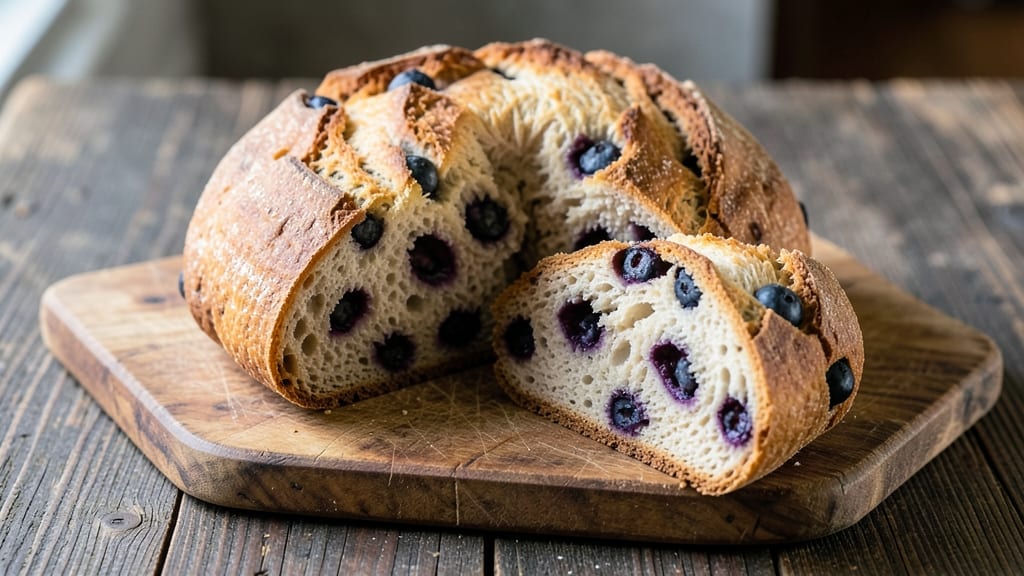
This Alaskan sourdough bread recipe delivers the dense, tangy crumb and caramelized crust that makes it a staple in Alaskan kitchens. The wild berry swirls add a burst of local flavor, while the cold fermentation process creates that signature depth.
I've perfected this technique over years of baking in Alaska's unique climate, where the cold air helps develop flavor naturally.
The secret lies in the starter—fed with a mix of rye and white flour to capture Alaskan sourdough's signature tang. After a 24-hour cold proof, the dough develops a complex flavor profile that's impossible to achieve with warm fermentation.
The berry swirls, made from wild Alaskan berries or store-bought substitutes, add vibrant color and sweet-tart contrast that balances the bread's rustic character.
What you'll end up with is a loaf that's dense yet tender, with a crisp, caramelized crust that shatters when you break it open. The berry swirls peek through the golden exterior, offering bursts of fruitiness with every bite.
This isn't just bread—it's a flavor experience that captures the essence of Alaskan baking traditions.
The best part? This recipe works perfectly for any occasion, from weekend breakfasts to holiday gatherings. The dough can be shaped into boules, batards, or even a rustic free-form loaf. Let's get started on creating your own piece of Alaskan bread culture.
Ingredients for alaskan sourdough bread
Four cups flour, a tangy starter, and berries that taste like Alaska's wild heart.
| Ingredient | Amount | Notes |
|---|---|---|
| Active Sourdough Starter 🍞 | ½ cup | 100% hydration, fed rye/white mix |
| All-Purpose Flour 🌾 | 4 cups | King Arthur preferred for texture |
| Rye Flour 🌾 | ½ cup | Dark rye for authentic tang |
| Granulated Sugar 🍚 | ¼ cup | White sugar for crust caramelization |
| Unsalted Butter 🧈 | ½ cup | Cold, cubed for fat development |
| Large Eggs 🥚 | 2 whole | Room temperature for even mixing |
| Instant Yeast 🍞 | ¼ tsp | For reliable fermentation |
| Sea Salt 🧂 | 1 ½ tsp | Diamond Crystal preferred |
| Wild Blueberries 🫐 | 1 cup | Frozen or fresh, pitted |
| Honey 🍯 | ¼ cup | Local Alaskan honey preferred |
| Cornmeal 🌽 | ¼ cup | For dusting and scoring |
| Ice Water 💧 | 1 cup | Chilled for proper hydration |
The sourdough starter is non-negotiable here—King Arthur's sourdough starter or a well-fed homemade version works best. If you're buying rye flour, Bob's Red Mill dark rye gives that deep, earthy flavor Alaskan sourdough needs. The wild blueberries? Trader Joe's frozen wild blueberries are my go-to when fresh aren't available, but local berries from a roadside stand in Alaska are pure magic. The butter should be cold—Plugrá brand if you're in Alaska, or any European-style butter elsewhere. For the honey, Alaska Bee Company products capture that local flavor, but any good-quality honey will do in a pinch. The cornmeal? Don't skimp—Stone Ground Grits cornmeal gives the best scoring texture.
No wild blueberries? Substitute with raspberries or blackberries—just adjust the sweetness with extra honey. Can't find dark rye? Pumpernickel flour works in a bind, though it's slightly sweeter. The honey can be swapped for maple syrup if needed, but it changes the flavor profile. For the starter, if you don't have one, King Arthur's sourdough starter kit is a game-changer. The ice water is crucial—use actual ice cubes rather than tap water straight from the fridge for better control. And if you're making this in a humid climate, reduce the water by 1 tbsp to prevent a sticky dough.
This dough needs 24 hours of cold proofing—don't rush it. Store the shaped loaf in the fridge overnight before baking for that signature Alaskan crunch. The berry swirls can be prepped a day ahead and kept in the freezer. Once baked, the bread keeps well at room temperature for 3 days wrapped in a towel, or 1 week frozen. For reheating, 350°F for 5-10 minutes brings back that fresh-out-of-the-oven crunch. The crust gets even better the next day, so plan ahead if you're making this for a crowd—it's worth the wait.
Why You'll Love This Recipe
- No-Knead Magic: I swear by this—just mix, wait, and bake. The rye flour adds depth without extra effort, and that butter? It practically melts into golden perfection while you’re scrolling through your phone.
- Rustic Richness: Honestly, the combo of tangy sourdough starter and rye flour gives it this earthy crunch that’s addictive. Add a smear of butter? Instantly becomes my go-to for breakfast or toast—no fancy toppings needed.
- Weeknight Hero: Between us, this bread is my secret weapon for busy nights. Toss a loaf in the oven while dinner simmers, and boom—warm, crusty bread ready when you are. Freezes like a dream too, so I always have backup.
- Budget-Friendly Staple: Here’s what sold me—the rye flour cuts costs, and a single batch stretches for days. Toast it, slice it for sandwiches, or just eat it straight. My wallet and my taste buds win.
Step-by-step instructions for Alaskan sourdough bread with wild blueberry swirls
Here's how to craft this rustic beauty—tangy crust, sweet berry swirls, and a crumb so light it practically melts.
Prepare the Sourdough Dough Foundation
In a large mixing bowl, combine the 0.5 cup Active Sourdough Starter, 4 cups All-Purpose Flour, 0.5 cup Rye Flour, 0.25 tsp Instant Yeast, and 1.5 tsp Sea Salt. Mix until just combined—no need to overwork it. The rye flour will add that signature Alaskan tang while keeping the structure light.
Next, add the 0.5 cup Unsalted Butter, cut into small cubes, and work it into the dough using your hands or a dough hook attachment on low speed. The butter should begin to coat the flour evenly, creating tiny pockets that will develop into those signature flaky layers. If the mixture feels too dry, add 1-2 tablespoons of the 1 cup Ice Water gradually until it comes together into a shaggy dough.
Incorporate Wet Ingredients and Knead
Add the 2 whole Large Eggs and 0.25 cup Granulated Sugar to the bowl, mixing until fully incorporated. The sugar will caramelize beautifully during baking, giving the crust that golden, crispy finish. Now, add the remaining 1 cup Ice Water in a slow, steady stream while mixing.
Turn the dough out onto a lightly floured surface and knead for 8-10 minutes until smooth and elastic. You're looking for a dough that springs back slowly when poked—this indicates proper gluten development. If it feels too sticky, dust your hands with more cornmeal or all-purpose flour, but don't overdo it or the bread will turn dense.
First Rise and Berry Swirl Preparation
Shape the dough into a rough ball, place it back in the bowl, cover with a damp towel, and let it rise in a warm place for 1.5-2 hours, or until it has nearly doubled in size. While it rises, prepare the berry swirl filling: In a small bowl, mix the 1 cup Wild Blueberries with 0.25 cup Honey until evenly coated. The honey will soften the berries slightly, making them easier to incorporate without breaking.
Once the dough has risen, punch it down to release the air, then roll it out on a floured surface into a 12x16-inch rectangle. Spread the blueberry-honey mixture evenly over the dough, leaving a 1-inch border around the edges. This border will help contain the filling as it swirls during baking.
Shape, Score, and Proof the Loaf
Starting from the long side, tightly roll the dough into a log, sealing the seam firmly. Transfer it to a parchment-lined baking sheet and shape it into a freeform loaf, tucking the ends under slightly for structure. Use a sharp knife or razor to score the top in a decorative pattern—this isn't just for looks, it also directs the oven spring and prevents cracks.
Cover the loaf loosely with plastic wrap and let it proof for another 1-1.5 hours, until it has risen about 50%. The dough should feel springy to the touch and the berry filling should be visible through the thin top layer. Preheat your oven to 375°F while the dough proofs—this ensures it hits the oven at the perfect temperature for even baking.
Bake to Golden Perfection
Bake the loaf for 45-50 minutes, until the crust is a deep golden brown and sounds hollow when tapped on the bottom. The internal temperature should reach 190-200°F—this is your true test of doneness. If the top browns too quickly, tent the loaf with foil to prevent over-browning while the center finishes baking.
Remove the bread from the oven and let it cool on a wire rack for at least 30 minutes before slicing. This resting period allows the gluten to relax and the juices to redistribute, resulting in a slice with a crisp crust and a tender, berry-speckled crumb. The aroma alone will have you reaching for a warm slice before it's even cooled—trust me, it's worth the wait.
Pro Tips For Making Alaskan Sourdough Bread
- Chill the Dough: After your final shaping, pop the dough in the fridge for 12–18 hours instead of rushing straight to the oven. The rye flour in this recipe loves cold fermentation—it deepens the flavor and prevents a gummy crumb. (Yes, even if you’re impatient like me.)
- Sift the Rye: Lightly sift the rye flour before mixing—it’s heavier and denser than all-purpose, so it clumps easily. Skipping this step means uneven hydration, and your dough will fight you during kneading. (Trust me, your hands will thank you.)
- Butter Last: Fold in the unsalted butter during the last stretch of lamination, not at the start. Cold butter creates pockets of steam, but if you add it too early, the gluten will overwork and turn your bread into a dense brick. (I learned this after a very sad loaf.)
- Steam the Pan: Place a metal bowl of boiling water in your preheated Dutch oven for 10 minutes before baking. The rye-heavy dough needs that extra moisture to rise properly—no steam means a flat, sad top. (Your bread’s crust depends on this.)
Serving suggestions for this dish
Breakfast Pairings
This sourdough shines with Alaskan smoked salmon and creamy goat cheese—spread a thick slice with herb-infused goat cheese from Alaska Creamery and top with cold-smoked salmon from Alaska Fish Company. The tangy crust cuts through the richness while the berry swirls add a bright contrast.
For a heartier breakfast, add scrambled eggs cooked in local butter and a sprinkle of fresh dill. 🥓
Cheese Board Magic
Create a rustic cheese board by pairing slices with aged cheddar from Alaska Creamery, brie with wild berry jam, and sharp gouda. The sourdough's crust provides the perfect texture contrast to creamy cheeses, while the berry swirls complement the jam.
Add cured meats like Alaskan venison salami and crusty nuts for a well-rounded spread. Serve with a local honey drizzle from Alaska Bee Company for an extra touch of Alaskan flavor. 🧀
Sandwich Game-Changer
Turn this into a gourmet sandwich with grilled chicken, avocado slices, and arugula. The dense crumb holds up perfectly to fillings, while the berry swirls add a sweet-tart element. For a vegetarian option, layer roasted red peppers, feta cheese, and olive tapenade.
Toast the bread lightly before assembling to enhance the crust's crunch. This makes an incredible lunchbox staple or picnic bread. 🥪
Dessert Twist
Warm a slice and top with vanilla bean ice cream from Alaska Creamery and a drizzle of wild berry compote. The crust's caramelized sweetness pairs beautifully with the creamy ice cream, while the berry swirls add a fruity surprise.
For a boozy twist, brush the warm bread with Alaskan maple syrup and a splash of local whiskey before serving. This dessert-style bread is perfect for holiday gatherings or a cozy night in. 🍰
Beverage Pairings
Complement the bread's tangy-sweet profile with Alaskan craft beers like Alaska Brewing Company's Amber Ale or a local cider. The malty notes of the beer balance the sourdough's acidity, while the berry swirls harmonize with the fruitiness of cider.
For coffee lovers, serve with a strong Alaskan roast—the bread's crust enhances the coffee's richness. A sparkling apple cider is also a refreshing match for brunch. 🍺
Make-Ahead Serving Tips
Store leftover slices in an airtight container at room temperature for up to 3 days or freeze for 1 month. To reheat, wrap slices in foil and warm in a 350°F oven for 5-7 minutes until the crust crisps again.
For a garnish, sprinkle with flaky sea salt or a dusting of powdered sugar before serving. The bread tastes even better the next day, so plan ahead for holiday feasts or weekend breakfasts. ✨
Nutrition facts
Frequently asked questions about Alaskan sourdough bread
Why does Alaskan sourdough use rye flour?
The rye flour gives this bread its signature earthy depth and helps create that signature tangy flavor that defines Alaskan sourdough. The cold climate of Alaska naturally slows fermentation, and rye's robust flavor stands up to the long proofing times. Plus, it adds moisture to the crumb, making each slice tender yet sturdy enough to hold up to fillings.
Can I make this without a sourdough starter?
You can substitute with 2.5 tsp instant yeast and 1 tbsp lemon juice for tanginess, but the flavor won't be authentic. For best results, use a well-fed rye/white starter (100% hydration) that's 5-7 days old. If you're short on time, King Arthur's sourdough starter kit is a reliable shortcut that still delivers that Alaskan tang.
What's the best way to store leftover Alaskan sourdough?
Wrap cooled slices in a towel-lined airtight container and store at room temperature for 3 days—the crust actually gets better as it stales! For longer storage, freeze sliced bread in a ziplock bag for 1 month. To reheat, wrap slices in foil and warm at 350°F for 5 minutes until the crust crisps again.
Why does the dough need cold proofing?
The 24-hour cold proof develops complex flavors by slowing fermentation—this is key to authentic Alaskan sourdough. The cold temperature helps create a dense yet tender crumb with better gluten structure. Place shaped loaves in the fridge overnight before baking for that signature rustic crunch and deep flavor.
Can I substitute the wild blueberries?
Try raspberries, blackberries, or even dried cranberries (soaked in honey first). For a non-fruit option, swap with chopped dates or chocolate chips. Just adjust the sweetness—if using tart berries, add 1 tbsp extra honey to the filling. The key is maintaining that sweet-tart contrast with the tangy dough.