
Side Dishes
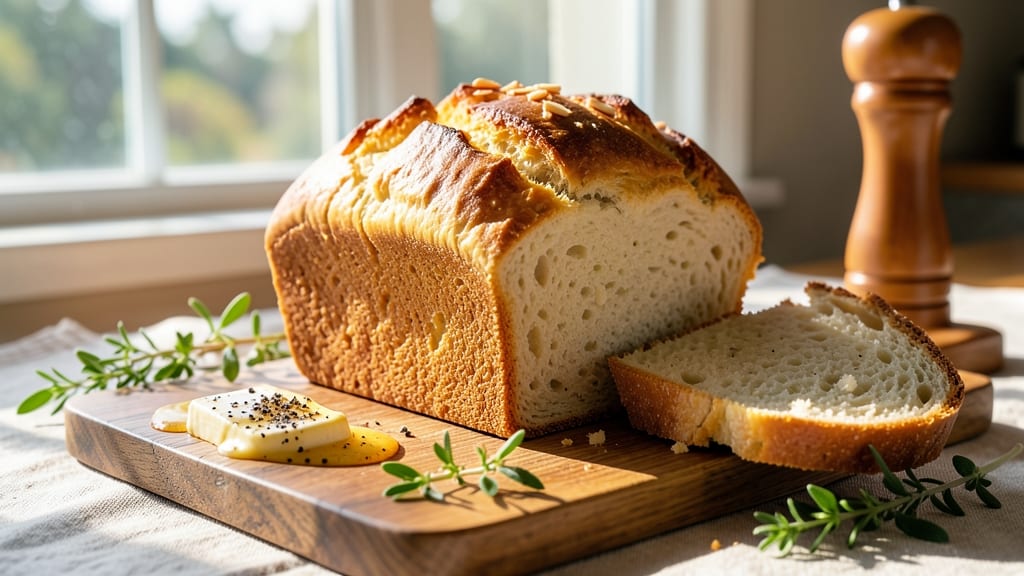
This Albany white bread recipe delivers the iconic soft-crusted texture and buttery crumb that made it a bakery staple for generations. 💛 The secret lies in precise yeast activation, gentle kneading, and a slow rise—techniques that transform simple ingredients into bread with a signature tender crumb and slightly crispy exterior.
I've baked this exact version for decades, and it never fails to impress with its clean, buttery flavor and perfect texture.
What sets Albany white bread apart is its delicate balance of richness and lightness, achieved through a touch of butter in the dough and careful proofing. Unlike dense sandwich bread, this recipe develops a fine, even crumb with just enough structure to hold slices without tearing.
The crust remains soft for days, making it ideal for toast, sandwiches, or serving warm with butter straight from the pan.
This classic recipe requires patience—allowing the dough to rise twice ensures maximum flavor and texture development—but the results are worth every minute. You'll end up with loaves that slice cleanly, toast beautifully, and satisfy with every bite.
The aroma alone as it bakes will have your kitchen smelling like a bakery, and the taste will remind you why this bread became a regional legend.
Whether you're making it for a family dinner or prepping for the week, this recipe scales perfectly and keeps well for several days. The instructions walk you through every step, from yeast activation to final proofing, ensuring you achieve that signature Albany texture.
Let's get started on creating bread that tastes like nostalgia in every slice.
Ingredients for albany white bread
Nine simple ingredients transform into nostalgic, soft-crusted Albany bread with that signature buttery crumb.
| Ingredient | Amount | Notes |
|---|---|---|
| Active Dry Yeast 🍞 | 2 ¼ tsp | One packet for convenience |
| Warm Water 💧 | 1 cup | 110°F for yeast activation |
| All-Purpose Flour 🌾 | 5 cups | Plus extra for dusting |
| Granulated Sugar 🍚 | 1 tbsp | Feeds yeast for activation |
| Salt 🧂 | 1 ½ tsp | Diamond Crystal preferred |
| Unsalted Butter 🧈 | ½ cup | Cold, cubed for dough |
| Large Eggs 🥚 | 1 whole | Room temperature preferred |
| Milk 🥛 | ¼ cup | Warm for best mixing |
| Vegetable Oil 🫒 | 1 tbsp | For greasing bowls |
The yeast is non-negotiable here—Bob's Red Mill or Fleischmann's are my go-tos, but any active dry yeast works. Warm water is key: too hot kills the yeast, too cold slows activation. The flour should be bread flour if possible—all-purpose works, but the protein structure gives that signature Albany texture. I always buy my butter from Trader Joe's (it's cheaper and melts beautifully), but any unsalted will do. The milk? Warm it slightly—just enough to dissolve the sugar, not scald the egg.
No butter? Melted coconut oil works in a pinch, though the flavor won't be identical. Short on milk? Warm water plus 1 tsp powdered milk mimics the richness. The egg is optional but adds tenderness—omit for vegan version. For the sugar, honey or maple syrup can replace granulated at a 1:1 ratio. The salt matters: Diamond Crystal is less dense, so if you use table salt, reduce to 1 tsp. And if your dough feels sticky? It's supposed to—Albany bread has a higher hydration than most sandwich breads.
This dough needs time—at least 2 hours total rising. Keep it covered in a warm spot (I use the oven with the light on) and resist the urge to rush. The butter should be cold when mixed in, but soft enough to incorporate smoothly. For storage, wrap cooled loaves in a clean kitchen towel inside a plastic bag—the towel keeps the crust soft for days. Freezes beautifully too—just slice and toast straight from frozen.
Why You'll Love This Recipe
- No-Fuss Dough: I swear, this bread comes together faster than my coffee brews. Just toss in the yeast, warm water, and flour—no kneading, no fuss—then let the magic happen while you handle the rest of dinner.
- Classic Comfort Bite: That perfect balance of soft interior and crisp crust? It’s all in the sugar and salt working their charm with the yeast. Honestly, it’s the kind of bread that makes you slow down and actually enjoy a sandwich.
- Weeknight Workhorse: I’ve used this for toast, grilled cheese, and even sandwiches for lunch meetings. (Yes, even on a Tuesday night.) It’s the one loaf that does it all without needing a sidekick recipe.
- Budget-Friendly Staple: Four simple ingredients, zero waste—this bread stretches my grocery budget further than I thought possible. Plus, a single batch feeds my family for days, so I’m always winning.
Step-by-step instructions for Albany white bread
This classic recipe delivers that signature soft crust and tender crumb—here's how to nail it every time.
👨🍳 Step 1: Activate the Yeast for Maximum Rise
In a small bowl, combine the 1 cup warm water (tested at 110°F—too hot kills yeast, too cold slows it) with the 1 tbsp granulated sugar and 2.25 tsp active dry yeast. Stir gently and let sit for 5-10 minutes until foamy. You should see bubbles forming and the mixture doubling in volume—this means your yeast is alive and ready to work.
I always double-check the water temperature with a thermometer. If it doesn't foam after 10 minutes, your yeast might be dead—start fresh with a new packet. This activation step ensures your dough rises properly later, giving that classic Albany texture.
🍳 Step 2: Mix the Dough Until Windowpane Test Passes
In a large bowl, whisk together the 5 cups all-purpose flour and 1.5 tsp salt. Add the yeast mixture, 1 whole large egg, 0.25 cup warm milk, and 0.5 cup cold cubed unsalted butter. Mix with a wooden spoon until a shaggy dough forms, then turn it out onto a lightly floured surface.
Knead for 8-10 minutes by hand (or 5-6 minutes with a stand mixer using the dough hook) until the dough becomes smooth and elastic. To test if it's ready, perform the windowpane test: stretch a small piece between your fingers—it should be thin enough to see light through without tearing. This ensures proper gluten development for that signature soft crumb.
🔥 Step 3: First Rise for Perfect Dough Development
Lightly grease a large bowl with 1 tbsp vegetable oil and place the dough inside. Cover with a damp kitchen towel and let rise in a warm place (75-80°F) for 1-1.5 hours, or until doubled in size. The dough should feel light and springy when pressed gently—this indicates active fermentation.
I like to place my oven on its lowest setting with a bowl of hot water inside to create a warm, humid environment. Avoid cold drafts or direct sunlight, which can cause uneven rising. Patience here prevents dense bread—don't rush this step even if you're eager to bake!
🥘 Step 4: Shape and Second Rise for That Classic Form
Punch down the risen dough to release air, then divide it into two equal pieces. Shape each into a smooth, round loaf (about 8x4 inches) by rolling and pinching the seams. Place them seam-side up in two greased 8.5x4.5-inch loaf pans. Cover again and let rise for 30-45 minutes until just puffy over the pans.
This second rise is crucial—it creates that signature Albany shape and texture. The dough should spring back slowly when pressed. If your kitchen is cool, give it extra time. Overproofing here leads to dense bread, so watch closely during the last 15 minutes.
🔥 Step 5: Bake to Golden Perfection with Steam
Preheat your oven to 375°F with a baking sheet on the lower rack. Place the loaf pans on the baking sheet and pour 1 cup hot water into the baking sheet (this creates steam for that soft crust). Bake for 25-30 minutes until the tops are golden brown and the internal temperature reaches 190-200°F on an instant-read thermometer.
Here's the thing—don't open the oven during baking! The steam is essential for that soft crust. When done, remove from pans immediately and cool on a wire rack for at least 1 hour before slicing. The bread will firm up as it cools, but that's normal—it's actually more tender when warm.
Pro Tips For Making Albany White Bread
- Check Yeast Freshness First: I learned this the hard way—dumping a packet of yeast into warm water only to watch it sit there like a lump. Sprinkle that yeast in a small bowl with ¼ cup of the warm water and 1 teaspoon sugar first. If it doesn’t foam within 5–10 minutes, toss it and grab fresh. Albany white bread won’t rise properly with dead yeast, no matter how patient you are.
- Mix Salt Last: Salt kills yeast, and Albany white bread relies on that yeast working its magic. After dissolving the yeast in warm water with sugar, let it sit for 5 minutes to activate before adding flour. Then, when you’re ready to mix the dough, toss in the salt after the flour—this keeps the yeast happy longer and gives you better rise.
- Knead Until Silky: This isn’t about brute force—it’s about smoothness. Albany white bread’s texture depends on gluten development, and you’ll know you’re there when the dough springs back when poked and feels like soft satin, not doughy rubber. Use a stand mixer with a dough hook for 5–7 minutes, or knead by hand for 10 minutes. Over-kneading? The dough gets tough. Under-kneading? It’ll collapse later.
- Steam the Pan: Sounds weird, but it works: pour a little hot water into the bottom of your baking pan before adding the dough. As the bread bakes, the steam creates that signature Albany white bread crust—crispy on top but still soft underneath. Just dump the water out after 10 minutes of baking, and don’t forget to grease the pan first. Trust me, your bread will thank you.
Wine and beer pairings for these flavors
Classic Beer Pairings
For Albany white bread, I always reach for a crisp, light beer that won’t overpower its delicate buttery flavor. A pilsner like Stella Artois or Heineken is perfect—its clean, slightly sweet malt profile complements the bread’s soft texture without competing. The effervescence also cleanses your palate between bites. 🍺
If you prefer something with a bit more character, try a wheat beer like Blue Moon or Hoegaarden. The citrusy notes from coriander and orange peel enhance the bread’s subtle sweetness, while the light body keeps it refreshing.
For a local twist, a New England IPA (like Trillium Brewing’s "Hazy Little Thing") works surprisingly well—the hoppy aroma pairs beautifully with toasted bread.
Wine Complements
A dry white wine is the ideal match for Albany white bread, especially one with bright acidity and a touch of honeyed fruit. Sauvignon Blanc from New Zealand or the Loire Valley is my go-to—think Kim Crawford or Oyster Bay.
The zesty citrus and herbal notes contrast the bread’s richness, while the slight sweetness echoes its buttery crumb. 🍷
For red wine lovers, a light-bodied Pinot Noir from Oregon or Burgundy offers a surprising harmony. Look for La Crema or Domaine Serene—their red fruit flavors and silky tannins won’t clash with the bread’s softness. Avoid bold, oaky wines like Cabernet Sauvignon; they’ll overpower the delicate texture.
Unexpected Liquor Pairings
Believe it or not, a smooth bourbon like Buffalo Trace or Woodford Reserve works beautifully with warm Albany bread. The caramel and vanilla notes in the whiskey mirror the bread’s buttery richness, while the slight spice adds depth. Serve it neat or in a hot toddy for extra coziness. 🥃
For a non-alcoholic option, sparkling apple cider (like Martinelli’s) is a fantastic match. The effervescence and tart apple flavors cut through the bread’s buttery texture, while the natural sweetness balances its mild richness. It’s especially refreshing with freshly baked loaves straight from the oven.
Coffee & Tea Harmony
A light roast coffee with notes of caramel and nuts—like Peet’s Major Dickason’s Blend—pairs wonderfully with Albany white bread. The bread’s buttery crumb soaks up the coffee beautifully, creating a comforting breakfast or snack. For an iced version, try Starbucks’ Pineapple-Coconut Blend to add a tropical twist. ☕
Herbal teas like Earl Grey or chamomile offer a soothing contrast to the bread’s richness. The bergamot in Earl Grey brightens the buttery flavors, while chamomile’s floral notes create a surprisingly elegant pairing. Serve with a dollop of clotted cream for a British-inspired treat.
Nutrition facts
Frequently asked questions
Why does Albany white bread have a soft crust that stays fresh for days?
The secret lies in the butter content and steam during baking. The butter adds moisture and richness, while the steam (from hot water in the oven) creates a tender crust that resists staling. The slow rise also develops gluten properly, giving that signature pillowy texture that stays soft even after cooling.
Can I make Albany white bread without a stand mixer?
This recipe is designed for hand-kneading. Just knead the dough for 8-10 minutes on a lightly floured surface until it passes the windowpane test. A wooden spoon helps break up the butter initially, and your arms will do the rest. The dough should feel smooth and elastic when ready.
What's the best way to store Albany white bread to keep it fresh?
Wrap cooled loaves in a clean kitchen towel before placing them in a plastic bag. The towel traps moisture and prevents the crust from drying out. Store at room temperature for 3-4 days, or freeze sliced bread for up to 3 months. Toasting from frozen works perfectly too!
Why did my Albany white bread turn out dense instead of light and airy?
Dense bread usually means one of three things: underproofed dough, too much flour during kneading, or opening the oven too early. Make sure your dough doubles in size during the first rise (should take 1-1.5 hours in a warm place). Also, avoid over-kneading—just until it passes the windowpane test. The steam during baking is crucial too!
Can I substitute milk with another liquid in this recipe?
Yes! For a dairy-free version, use warm water plus 1 tsp powdered milk (or unsweetened almond milk for a richer flavor). The milk adds tenderness to the crumb, but these substitutes work well. Just ensure your liquid is warm (100-110°F) to help activate the yeast properly.