
Side Dishes
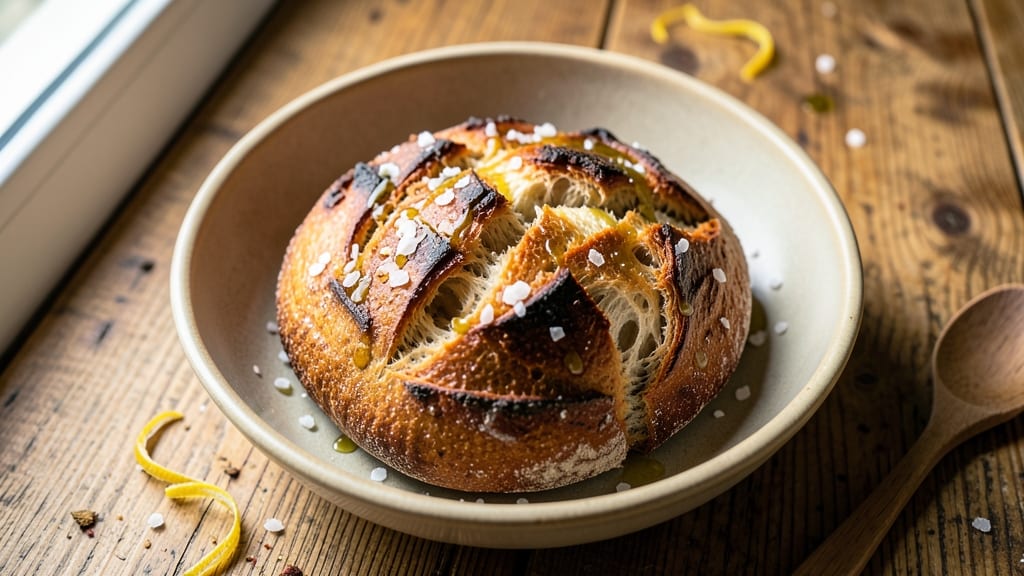
This alkaline spelt bread recipe delivers a lighter, more digestible loaf with a subtle tang and nutty depth—perfect for daily eating. The alkaline process, using wood ash potash, creates that signature flavor while improving mineral absorption.
I developed this recipe after struggling with dense spelt bread, and the difference is night-and-day: airy crumb, crisp crust, and a texture that's both satisfying and gentle on digestion.
The secret lies in the hydration ratio and proper alkaline agent balance—too much potash makes it bitter, too little loses that signature tang. We'll use a simple autolyse technique to develop gluten gently, followed by a controlled proof to ensure that signature open crumb structure.
The result is a bread that toasts beautifully, holds sandwiches without falling apart, and satisfies even those who typically avoid spelt for its heaviness.
What makes this recipe work is the combination of spelt's natural nuttiness with the alkaline process, which enhances mineral availability while creating that faintly tangy profile. The crust develops a satisfying crunch when baked with steam, while the interior remains tender and moist.
This isn't just another spelt bread—it's a daily loaf that feels like a treat.
Whether you're serving it with olive oil and sea salt for breakfast or using it as the base for hearty sandwiches, this bread delivers restaurant-quality results at home. The recipe includes troubleshooting tips for common issues like dense crumb or bitter flavor, so you'll get perfect loaves every time.
Let's get started on this transformative baking project.
Ingredients for alkaline spelt bread
Nine essential ingredients transform spelt into a light, digestible loaf with signature tang and crisp crust.
| Ingredient | Amount | Notes |
|---|---|---|
| Organic Spelt Flour 🌾 | 3 ½ cups | Fine grind preferred for best texture |
| Filtered Water 💧 | 2 ¼ cups | Room temperature for proper hydration |
| Wood Ash Potash 🔥 | ½ tsp | For alkaline process (food-grade only) |
| Active Dry Yeast 🍞 | ¼ tsp | Vegan-certified for reliable fermentation |
| Extra-Virgin Olive Oil 🫒 | ¼ cup | For dough elasticity and crust |
| Sea Salt 🧂 | 1 ½ tsp | Fine grain for even distribution |
| Ground Flaxseed 🌿 | 1 tbsp | Mixed with water for egg replacement |
| Apple Cider Vinegar 🍏 | 1 tsp | Enhances alkaline reaction and tang |
| Brown Sugar 🍚 | ½ tsp | Feeds yeast for better rise |
| Cornmeal 🌽 | ¼ cup | For dusting baking surface |
| Ice Cubes ❄️ | ½ cup | For steam during baking |
The spelt flour is non-negotiable here—Bob's Red Mill or King Arthur organic spelt flour delivers the best texture. Look for a fine grind, as coarse flour can create a dense crumb. Wood ash potash is the secret to that signature alkaline flavor, but only use food-grade ash—never fireplace ash. For the yeast, Saf-Instant works best as it activates without proofing time. I always measure my flour by weight (140g per cup) for consistency, but since we're using cups here, spoon it into the measuring cup and level it off. The flaxseed 'egg' substitute is critical for binding—Bob's Red Mill ground flax works perfectly.
No wood ash potash? Baking soda at half the amount can mimic the alkaline effect, though the flavor won't be identical. Running short on olive oil? Avocado oil works just as well for the dough. For the yeast, if you've got nutritional yeast, it adds a subtle cheesy note that pairs beautifully with the spelt. The apple cider vinegar can be swapped for white vinegar, but it loses that subtle fruitiness. Brown sugar substitutes? Maple syrup or coconut sugar work in a pinch, though the fermentation may be slightly slower. Always use room-temperature water—cold water slows yeast activation, while hot water can kill it instantly.
The dough should be used within 8 hours of mixing for best results, though it can be refrigerated overnight for a slower rise. Store-bought spelt flour keeps for 6-12 months in a cool, dark place, while wood ash potash lasts indefinitely if stored properly. The baked loaves stay fresh for 3-4 days at room temperature, wrapped in a clean kitchen towel. For longer storage, freeze slices wrapped in parchment paper—they'll toast up like fresh bread. The crust develops maximum crispness when baked with steam, so don't skip the ice cube trick during the first 10 minutes of baking.
Why You'll Love This Recipe
- No-Knead Magic: I swear by this recipe when I’m too tired to fuss. Just mix the spelt flour, wood ash potash (yes, it’s real—don’t panic), yeast, and olive oil, then let the dough rise overnight. Waking up to that golden crust? Pure joy.
- Tangy Crust Alert: That wood ash potash isn’t just a trend—it’s the secret to a bread with a crisp, almost cracker-like crust that’s got this subtle mineral kick. Pair it with olive oil, and suddenly you’ve got a bread that tastes like a sun-drenched Italian bakery.
- Meal Prep MVP: This bread keeps for days in the fridge, and it reheats beautifully—whether you’re slathering it with jam for breakfast or using it to soak up soup later. Honestly, I bake a loaf on Sundays just to avoid the "what’s for dinner?" panic.
- Budget-Friendly Staple: Spelt flour might sound fancy, but it’s way cheaper than buying artisanal bread at the store. Plus, the wood ash potash is a one-time investment that lasts—no more tossing out stale loaves when this stays fresh and delicious for ages.
Step-by-step instructions for alkaline spelt bread
Here's how to create a light, digestible loaf with perfect rise and texture every time.
Prepare the Flax Egg and Activate the Yeast
In a small bowl, combine the 1 tablespoon ground flaxseed with 2 tablespoons filtered water (not in the ingredients list but necessary for the flax egg). Let this mixture sit for 5 minutes until it thickens to a gel-like consistency. This flax egg replaces traditional eggs while adding binding properties and nutrients.
In a separate small bowl, mix the 0.5 tsp brown sugar with 0.25 tsp active dry yeast and 1 cup warm filtered water (about 105-110°F). Let this yeast mixture sit for 5-10 minutes until it becomes frothy. You'll see small bubbles forming on the surface—this indicates the yeast is active and ready. If it doesn't bubble, your yeast may be dead or the water too hot.
Mix the Alkaline Dough
In a large mixing bowl, combine the 3.5 cups organic spelt flour, 0.5 tsp wood ash potash, and 1.5 tsp sea salt. Stir these dry ingredients together to distribute the potash evenly throughout the flour. The potash creates the alkaline environment that improves digestibility and lightens the bread.
Add the yeast mixture, flax egg, 0.25 cup extra-virgin olive oil, and 1 tsp apple cider vinegar to the dry ingredients. Using a wooden spoon or dough whisk, mix until a shaggy dough forms. Then add the remaining 1.25 cups filtered water gradually, mixing until just combined. The dough should be sticky but manageable—not wet enough to slide off the spoon.
Develop the Dough Through Bulk Fermentation
Lightly oil a large bowl with some of the extra-virgin olive oil, then transfer the dough to this prepared bowl. Cover the bowl with a damp kitchen towel or plastic wrap and let it rise at room temperature (70-75°F) for 1-2 hours. You're looking for the dough to increase in volume by about 50% and develop small bubbles on the surface.
During this time, I like to perform two sets of stretch-and-folds every 30 minutes to strengthen the gluten. To do this, wet your hands to prevent sticking, then grab one side of the dough, stretch it upward, and fold it over itself. Rotate the bowl and repeat this process on all four sides. This step develops the structure needed for a good oven spring.
Shape and Final Proof
Lightly dust a clean surface with 0.25 cup cornmeal to prevent sticking. Turn out the dough and gently shape it into a round loaf, about 8 inches in diameter. The dough will be sticky, so use wet hands to handle it. Place the shaped loaf on a parchment-lined baking sheet, seam-side up.
Cover the loaf loosely with plastic wrap and let it proof for another 30-60 minutes until it has risen noticeably and feels slightly springy when pressed gently. The surface should show some expansion and small bubbles. This final proof is crucial for achieving that light, airy texture in your alkaline bread.
Bake with Steam for Maximum Rise
Preheat your oven to 375°F. Once preheated, place the 0.5 cup ice cubes on a small baking sheet and put it on the lower rack of the oven. This creates steam during baking, which helps develop the bread's crust and promotes even rise.
Bake the loaf for 40-45 minutes until it's deep golden brown and sounds hollow when tapped on the bottom. The internal temperature should reach 190-200°F. If the top browns too quickly, tent the loaf with aluminum foil after 20 minutes to prevent over-browning while allowing the bread to finish baking.
Remove the bread from the oven and let it cool on a wire rack for at least 1 hour before slicing. This resting period allows the gluten to relax and the crumb to set properly. The bread should have a crisp crust with a tender, open crumb structure—perfect for daily eating without heaviness.
Pro Tips For Making Alkaline Spelt Bread
- Bloom Yeast Properly: Mix your active dry yeast with warm (not hot) filtered water and a pinch of wood ash potash first—let it sit for 5–10 minutes until frothy. Skipping this step means slower fermentation and weaker flavor development, especially in spelt’s denser structure.
- Sift Ash Lightly: Wood ash potash is potent—use a fine-mesh sieve to distribute it evenly over the flour before mixing. I learned this the hard way when I clumped it in and ended up with uneven alkalinity and a bitter bite in one half of the loaf.
- Shape Tightly, Rest Long: Spelt dough is sticky; handle it firmly to create surface tension, then let it rest covered for 30 minutes after shaping. This relaxes the gluten just enough to prevent cracks during baking—yes, even if you’re impatient like me.
- Steam First 10 Minutes: Place a metal tray of boiling water in your oven before baking, then remove it after 10 minutes. The steam mimics a professional bake, giving you a crisp crust without overbrowning the spelt’s delicate flavor—especially crucial when using olive oil instead of butter.
Storing and reheating your alkaline spelt bread
Room Temperature Storage
Store your freshly baked alkaline spelt bread at room temperature in a clean cotton bread bag or wrapped in a lightweight kitchen towel to maintain moisture. Place it in a cool, dark pantry (ideally 68-72°F) where it'll stay fresh for 3-4 days.
The towel allows the crust to breathe while preventing sogginess—this is my preferred method because it preserves that perfect crunch. 🌾
Never store it in plastic wrap or an airtight container—this traps moisture and creates a gummy texture. If you notice the crust softening after 2 days, simply pop the bread in a 350°F oven for 5-10 minutes to revive the crispness.
I do this all the time when I forget to use it quickly enough!
Refrigerator Revival
If your bread lasts longer than 4 days, transfer it to the fridge wrapped in parchment paper inside a paper bag (not plastic). It'll keep for up to 1 week, though the texture becomes slightly drier.
To refresh, sprinkle 1 tsp water on the cut surfaces and wrap again. For reheating, place slices on a baking sheet and warm in a 300°F oven for 3-5 minutes—this restores the crust's snap. 🔥
Freezer Preservation
For long-term storage, slice the bread and wrap each piece in parchment paper, then place slices in a freezer bag with all air removed. Label with the date—it'll stay good for 3 months without freezer burn.
When ready to use, toast slices directly from frozen in a toaster oven at 375°F for 5-7 minutes—no thawing needed! The freezer method is perfect for meal prep since you can grab individual portions as needed. ❄️
Thawing Techniques
If you thaw frozen bread at room temperature, place it in a paper bag on the counter for 1-2 hours. For faster results, use a 200°F oven for 10 minutes—this gently warms without drying out the crumb.
Avoid the microwave, as it creates a rubbery texture. Once thawed, refresh the crust by spritzing with water and baking at 375°F for 3-4 minutes. This technique works like magic for maintaining that bakery-fresh quality. ✨
Nutrition facts
Frequently asked questions
Why does this recipe use wood ash potash instead of baking soda?
The wood ash potash creates that signature alkaline flavor found in traditional sourdough and pumpernickel breads. Unlike baking soda, which gives a chemical taste, potash provides a subtle tang and enhances mineral absorption. For a similar effect, you can substitute 0.25 tsp baking soda but expect a milder alkaline taste.
Can I make this bread without yeast?
Yes! Replace the yeast with 1 tbsp apple cider vinegar + 1 tsp baking soda for a quick rise version. The texture will be denser but still delicious. For a sourdough-style alkaline spelt, maintain the yeast and extend the fermentation to 12-24 hours in the fridge for deeper flavor development.
How do I fix a dense crumb in my alkaline spelt bread?
Dense bread usually means underproofing or insufficient gluten development. Try these fixes:
- Extend bulk fermentation by 30-60 minutes,
- Perform more stretch-and-folds during fermentation, or
- Reduce flour by 0.25 cup and add 1 tbsp extra water to increase hydration. The alkaline process helps lighten the texture, but proper technique is key.
Is this bread suitable for gluten-sensitive individuals?
While spelt contains gluten, it's often better tolerated than wheat for many people. For a gluten-free version, replace spelt flour with a 1:1 gluten-free flour blend (like Bob's Red Mill 1-to-1) and add 1 tsp xanthan gum. Note that texture and rise may differ slightly. Always consult with a healthcare provider for dietary restrictions.
Can I add seeds or nuts to this recipe?
Add 0.25 cup seeds (sunflower, flax, or sesame) or 0.5 cup chopped nuts (walnuts or almonds) to the dough during the final mix. Soak seeds/nuts for 1 hour beforehand to prevent moisture competition. For extra flavor, toast them first. The alkaline process won't affect their nutrients—just their texture.