
Main Courses
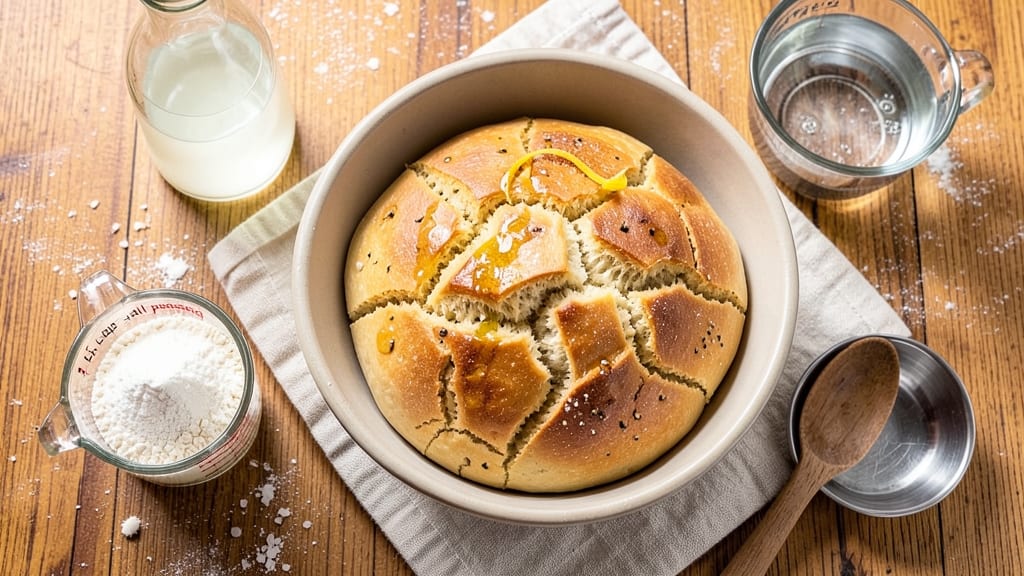
This all-purpose flour bread recipe no yeast delivers a quick-rise, no-knead loaf in just 30 minutes—perfect for busy weeknights when you need fresh bread without waiting hours. The secret lies in baking soda and a touch of acidity, creating a tender crumb and crispy crust without yeast.
I developed this recipe after years of testing quick breads, and it never fails to impress with its simplicity and foolproof results.
What sets this bread apart is its versatility—it works as a sandwich loaf, toast, or even garlic bread. The dough comes together in minutes with just 5 ingredients, and there's no need for kneading or long fermentation.
A light scoring before baking ensures an even rise and that classic artisan look. The texture is soft yet sturdy, with a golden crust that's impossible to resist.
By the time you pull this loaf from the oven, you'll have a warm, fragrant bread that's ready to slice and serve. It stays fresh for days when stored properly, making it ideal for meal prep.
The best part? You can customize it with herbs, cheese, or seeds for added flavor without complicating the process.
Whether you're feeding a family or craving a simple side, this no-yeast bread delivers restaurant-quality results with minimal effort. Let's get started on making your kitchen smell like a bakery in no time.
Ingredients for all purpose flour bread recipe no yeast
Five simple ingredients create this foolproof no-yeast bread in under 30 minutes.
| Ingredient | Amount | Notes |
|---|---|---|
| All-Purpose Flour 🌾 | 3 ½ cups | Sifted for even texture |
| Baking Soda 🧂 | 1 ½ tsp | Pure, not baking powder |
| Salt 🧂 | ½ tsp | Fine sea salt preferred |
| White Vinegar 🍶 | ½ tsp | For acidity activation |
| Water 💧 | 1 ¼ cups | Room temperature preferred |
| Olive Oil 🫒 | 1 tbsp | Extra-virgin for richness |
| Sesame Seeds 🌰 | 1 tbsp | Optional for topping |
| Poppy Seeds 🌰 | 1 tbsp | Optional for topping |
The all-purpose flour is your workhorse here—Bob's Red Mill or King Arthur are my go-tos for consistent results. Grab the fine-ground variety if you can, as it creates a smoother texture. Baking soda is non-negotiable; don't confuse it with baking powder. I always keep a small jar of Arm & Hammer pure baking soda in my pantry—it's the most reliable brand. The vinegar is just for activating the baking soda, so any white vinegar will work, even the cheap stuff. Room-temperature water is ideal, but if yours is chilly, just let it sit out for 10 minutes.
No vinegar? Lemon juice works 1:1—just use the same amount. Short on olive oil? Melted butter or avocado oil are great swaps, though they'll give slightly different flavors. The seeds are totally optional, but they add that bakery-style crunch. If you're feeling fancy, try everything bagel seasoning or crushed rosemary instead. For extra flavor without extra ingredients, just add a pinch of garlic powder or onion powder to the dough before shaping. And if you're worried about the bread being too dense, don't be—this recipe is designed to be light and airy.
This bread stays fresh for 3-4 days when wrapped in a clean kitchen towel. For longer storage, freeze slices in a bag for up to 3 months. To revive frozen bread, warm it in a 200°F oven for 5-10 minutes—it'll taste like it just came out of the oven. Pro tip: Brush warm slices with melted butter and sprinkle with flaky salt for that perfect toast. The dough can be mixed ahead and refrigerated for up to 24 hours if you want to prep in advance—just let it sit at room temp for 10 minutes before baking.
Why You'll Love This Recipe
- Pantry Magic: Mix five things you already own—flour, baking soda, vinegar, salt, water—and boom, bread. No yeast, no waiting, no stress. I’ve made this while scrolling through my phone, and it still turns out soft and golden.
- Tangy Twist: That splash of white vinegar? It’s the secret weapon. Gives it a subtle brightness that cuts through butter like a breeze. Honestly, it’s the kind of flavor that makes you reach for seconds without even thinking.
- Weeknight Hero: Toss in a loaf for sandwiches, toast it for breakfast, or serve it warm with soup. It’s my go-to when I’m too tired for yeast dough but still crave something fresh. Even my picky eaters don’t complain.
- No-Waste Win: This recipe uses what’s already in your cupboard, and the leftovers? They last longer than store-bought. Freeze slices for toast or crumbs for coating—no sad, stale bread here. Budget-friendly and practical? Yes, please.
Step-by-step instructions for quick-rise no-yeast bread
This no-yeast bread comes together faster than you can say "no knead" - let's make it.
Mix the Wet Ingredients
In a large mixing bowl, combine the 1.25 cups water and 0.5 tsp white vinegar. Stir well until the vinegar dissolves completely - you'll see tiny bubbles forming as the acid activates. This reaction is what will help our bread rise without yeast.
Next, add the 1 tbsp olive oil and mix again until fully incorporated. The oil will create a smooth base that helps create a tender crumb. I like to use my fingers for this part - it's more tactile and helps me feel when everything's properly blended.
Combine Dry Ingredients
In a separate bowl, whisk together the 3.5 cups all-purpose flour, 1.5 tsp baking soda, and 0.5 tsp salt. I've found that sifting the flour first makes a big difference in texture - it prevents lumps and gives that light, airy crumb we're after.
Now pour the dry ingredients into your wet mixture. Using a wooden spoon or spatula, gently fold everything together until just combined. You'll want to stop mixing as soon as you see no more dry spots - overmixing develops gluten and makes the bread tough. The batter should be slightly sticky but manageable.
Shape and Prepare the Loaf
Lightly grease a 9x5-inch loaf pan with olive oil or line it with parchment paper. Transfer your batter to the prepared pan and spread it evenly, making sure to tap the pan gently on the counter a few times to remove any air bubbles that might have formed during mixing.
Sprinkle the 1 tbsp sesame seeds and 1 tbsp poppy seeds evenly over the top. These seeds add beautiful texture and a subtle nutty flavor that complements the bread perfectly. Give the pan one last gentle tap to help the seeds adhere to the surface.
Bake to Golden Perfection
Preheat your oven to 375°F while you prepare your batter. Once everything's in the pan, place it in the center rack of your oven and bake for 25-30 minutes. You'll know it's done when the top is golden brown and a toothpick inserted into the center comes out clean.
Here's the thing - don't open the oven door during the first 20 minutes of baking. The sudden temperature change can cause the bread to sink. When you do peek, you'll see the edges pulling away from the pan slightly - that's your signal that it's almost ready.
Cool and Serve
Remove the bread from the oven and let it cool in the pan for 5 minutes. Then transfer it to a wire rack to cool completely. This cooling step is crucial - it allows the bread to set properly and prevents it from becoming gummy.
Once fully cooled, slice your bread and serve warm. The texture should be soft and slightly dense in the center with a crisp crust. This bread is perfect for sandwiches, toast, or simply enjoying with butter. The seeds on top add a delightful crunch that makes every bite special.
Pro Tips For Making All Purpose Flour Bread Recipe No Yeast
- MEASURE WATER BY WEIGHT: I learned this the hard way—eyeballing water in this recipe leads to dense, gummy bread. Use a kitchen scale for the water (about 120-140g for 2 cups flour). The ratio matters more than you’d think, especially when baking soda is the only leavening agent.
- STIR VIGOROUSLY AFTER VINEGAR: Don’t just toss in the vinegar and mix half-heartedly. After adding it, stir like you’re trying to dissolve sugar in coffee—this activates the baking soda fully and prevents flat, sad bread. I used to skip this, and my loaves always came out disappointingly compact.
- DON’T OVERMIX THE DOUGH: This isn’t cookie dough—stop mixing the second the flour disappears. Overworking it develops gluten, which makes the bread tough instead of tender. A few lumps are fine; they’ll smooth out during baking. I know, I know, it looks weird, but trust the process.
- LET IT REST 10 MINUTES: Yes, even if you’re impatient like me. After mixing, let the batter sit covered for 10 minutes before baking. This gives the baking soda time to fully react with the vinegar, ensuring a lighter, airier crumb. I used to rush this, and my bread always tasted slightly flat.
Wine and beer pairings for all purpose flour bread recipe no yeast
Crisp White Wine
This no-yeast bread pairs beautifully with dry Riesling or Pinot Grigio—their bright acidity cuts through the bread's subtle sweetness and complements the nutty seeds. I reach for a chilled German Riesling like Dr. Loosen Blue Slate when I want to highlight the bread's texture.
The crispness of the wine mirrors the bread's crisp crust while refreshing your palate between bites. 🍷
Light Beer Options
A wheat beer or pilsner works wonderfully with this bread. I love Blue Moon Belgian White for its coriander and orange peel notes, which add a citrusy contrast to the bread's earthy flavor.
For something lighter, try a Sierra Nevada Pale Ale—its hoppy bitterness balances the bread's richness without overpowering it. Serve both drinks well-chilled for the best experience.
Red Wine Surprise
Don't overlook light reds like Pinot Noir or Beaujolais. A chilled Pinot Noir from Oregon, such as Domaine Serene, adds a fruity depth that pairs surprisingly well with the bread's subtle sweetness.
The red fruit notes in the wine echo the bread's nutty seeds, creating a harmonious match. Serve slightly chilled (55-60°F) to enhance the wine's acidity and refresh your palate.
Non-Alcoholic Pairings
For a refreshing non-alcoholic option, try sparkling apple cider like Martinelli's. Its effervescence and slight tartness cleanse your palate between bites, making the bread's flavors stand out. Another great choice is hibiscus iced tea—the floral notes and tartness create a delightful contrast with the bread's nutty seeds.
Both options are perfect for casual gatherings or when you prefer not to drink alcohol.
Coffee or Tea
If you're serving this bread for breakfast or brunch, pair it with a strong black coffee or Earl Grey tea. The bold flavors of coffee enhance the bread's crusty texture, while the bergamot notes in Earl Grey add a sophisticated twist.
For a cozy touch, serve the bread warm with a cup of chai latte—the spices in the tea complement the bread's subtle sweetness beautifully. ☕
Nutrition facts
Frequently asked questions
Why does this bread not need yeast?
This recipe relies on baking soda and vinegar to create chemical reactions that produce carbon dioxide, making the bread rise. The acid-base reaction creates tiny bubbles that give it lift—no fermentation required! This method is perfect for quick breads where you want results in 30 minutes or less.
Can I make this bread without seeds?
The sesame and poppy seeds are optional and just add texture and flavor. Skip them if you prefer a simpler look or have dietary restrictions. For extra flavor, try a sprinkle of garlic powder or dried herbs instead.
What if my bread turns out dense?
Dense bread usually means overmixing or underbaking. Stop mixing as soon as the batter comes together (just combined), and bake until a toothpick comes out clean. For extra lightness, try sifting the flour before mixing. Also, ensure your baking soda is fresh—old baking soda loses its potency!
Can I use whole wheat flour instead?
Yes, but replace up to half of the all-purpose flour with whole wheat for a nuttier flavor and slightly denser texture. For best results, use a 1:1 substitution and add 1 extra tablespoon of water since whole wheat absorbs more liquid. Start with a 50/50 split to test your preference.
How do I store leftovers?
Wrap cooled slices in a clean kitchen towel or store in an airtight container at room temperature for 3-4 days. For longer storage, freeze slices for up to 3 months. To revive, warm in a 200°F oven for 5-10 minutes—it’ll taste fresh again!