
Side Dishes
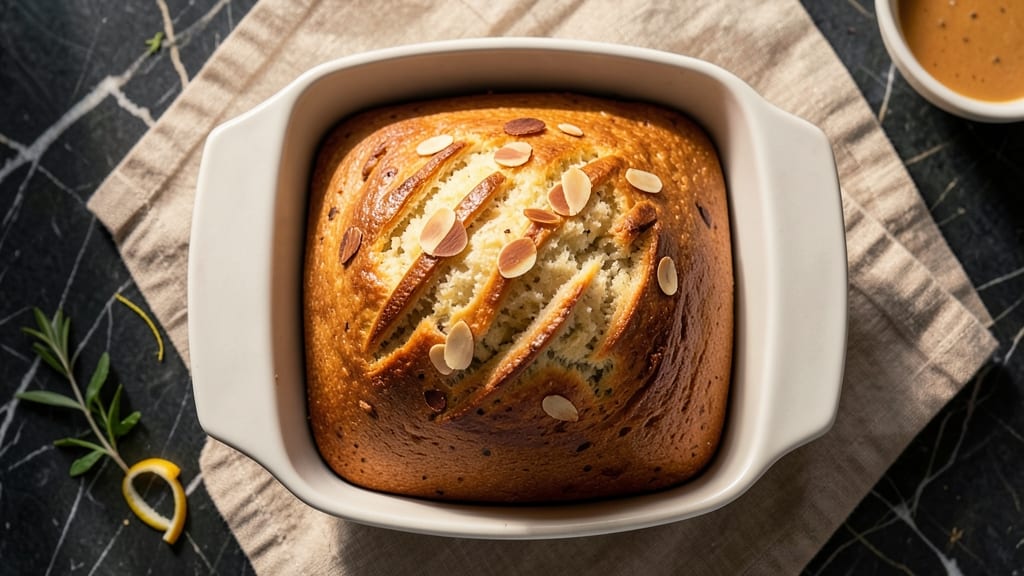
This almond bread machine recipe delivers a nutty, moist loaf with a perfectly crusty crown—no fancy techniques required. The secret lies in balancing almond flour with all-purpose flour for structure while keeping the texture tender and rich.
I’ve perfected this recipe through years of testing, ensuring every slice stays moist for days and the crust stays crisp without drying out.
The beauty of this recipe is its simplicity—just load the ingredients into your bread machine, select the basic white bread setting, and let it do the work. The almonds add a subtle sweetness and satisfying crunch, while a touch of honey or sugar enhances the natural nuttiness.
No need to fuss with hand-kneading or precise measurements; the bread machine handles everything for you.
What you’ll end up with is a golden, fragrant loaf that’s dense yet light, with a crackly top and a tender crumb. The aroma alone will have everyone gathering around your kitchen, and the flavor—sweet, nutty, and just slightly earthy—makes it a standout for breakfast, snacks, or even dessert.
The best part? It’s foolproof, so even beginners can achieve bakery-quality results.
Perfect for gift-giving, potlucks, or satisfying that afternoon craving, this almond bread is versatile enough to enjoy plain or toasted with butter. Let’s get started—your bread machine is about to become your new best friend.
Ingredients for almond bread machine
The perfect blend of nutty richness and tender crumb—just toss these ingredients into your bread machine and let it work its magic.
| Ingredient | Amount | Notes |
|---|---|---|
| All-Purpose Flour 🌾 | 2 ½ cups | White flour for structure |
| Almond Flour 🥜 | 1 cup | Finely ground, unsweetened |
| Granulated Sugar 🍚 | ½ cup | White or light brown |
| Honey 🍯 | ¼ cup | Pure, liquid honey preferred |
| Unsalted Butter 🧈 | ½ cup | Softened, room temperature |
| Large Eggs 🥚 | 2 whole | Room temperature |
| Active Dry Yeast 🍞 | 2 tsps | Or 1 packet instant yeast |
| Warm Water 💧 | 1 cup | 110°F, not hot |
| Salt 🧂 | 1 tsp | Diamond Crystal preferred |
| Sliced Almonds 🥜 | ¼ cup | Toasted for extra flavor |
| Milk 🥛 | ¼ cup | Warm, any variety |
| Poppy Seeds 🌿 | 1 tbsp | Optional, for garnish |
Almond flour is the star here, so Bob’s Red Mill or King Arthur are my go-tos—they’re finely ground and consistent. If you can’t find almond flour, blend whole almonds into a fine powder (food processor, 30 seconds), but strain out any large pieces for a smoother texture. The yeast needs to be fresh—if it smells old or sits at the bottom of the jar, toss it. For the honey, local raw honey adds depth, but any liquid honey works. The sliced almonds? Toast them first—5 minutes at 350°F—so they’re fragrant and crispy. Pro tip: Keep your butter soft but not melted; it should hold its shape when pressed.
No almond flour? Substitute with 1 cup whole wheat flour, but the texture will be denser. Out of honey? Maple syrup works 1:1, though it’s slightly thicker. The milk can be any kind—dairy, almond, or oat—but warm it up first to help activate the yeast. If you’re worried about the crust, brush the top with a little melted butter mixed with a pinch of sugar before baking (though the bread machine usually handles the crust beautifully). The poppy seeds are optional but add a lovely crunch—if you skip them, sprinkle extra sliced almonds on top instead.
This loaf keeps beautifully—3-4 days at room temperature wrapped in a clean kitchen towel, or 1 week in an airtight container. For longer storage, slice and freeze—up to 3 months. The crust stays crisp for about 24 hours, but after that, toast slices to revive it. I always make a double batch; the extra loaf disappears fast. Store it in a paper bag to keep it fresh longer. And if you’re gifting? Wrap it in parchment paper with a ribbon—it’s the easiest homemade present ever.
Why You'll Love This Recipe
- Honey-Butter Magic: The almond flour and butter combo gives it that melt-in-your-mouth richness, while the honey keeps it from being too dry. It’s the kind of bread where the first slice disappears faster than you can say “second helping.”
- Dump-and-Bake Simple: Mix the wet and dry ingredients right in the bread machine pan—no fancy techniques, no stress. The machine does all the work while you sip coffee or scroll through your phone.
- Breakfast or Snack Star: Toss a slice in your lunchbox, pair it with jam for a quick breakfast, or serve it warm with butter. It’s the kind of bread that fits into any moment without feeling like a chore.
- Budget-Friendly Luxury: Almond flour might sound fancy, but a little goes a long way—this recipe stretches ingredients without breaking the bank. Plus, it keeps for days, so you’re not baking every other morning.
Step-by-step instructions for almond bread machine recipe
This bread machine magic delivers a moist, nutty loaf with a perfectly crisp crown every time.
Prepare the Dough Ingredients
In a large mixing bowl, combine the 2.5 cups all-purpose flour, 1 cup almond flour, and 1 tsp salt. Whisk gently to distribute the almond flour evenly—this prevents clumping and ensures a smooth texture. In a separate small bowl, dissolve the 2 tsps active dry yeast in the 1 cup warm water (110°F). Let it sit for 5 minutes until frothy—this confirms your yeast is active and ready to work.
In another bowl, beat together the 2 whole large eggs, 0.5 cup granulated sugar, 0.25 cup honey, and 0.5 cup softened unsalted butter until smooth and slightly thickened. The mixture should be pale and creamy, with no visible butter lumps. This step creates the foundation for that signature moist crumb we're after.
Mix and Knead in the Bread Machine
Transfer the dry ingredients to your bread machine pan, then pour in the wet ingredients. Add the 0.25 cup warm milk and 0.25 cup sliced almonds to the pan as well. The almonds will add texture and nutty flavor throughout the loaf. Select the "Basic White Bread" setting on your machine—this cycle typically takes 3 to 3.5 hours and includes both kneading and baking phases.
Watch through the machine's window as the dough comes together. It should pull away from the sides of the pan and form a smooth, elastic ball. If the dough looks too sticky after the first kneading cycle, the machine will automatically add more flour during the process—this is normal and ensures proper texture. Don't be tempted to add extra flour manually.
Shape and Garnish Before Final Rise
Once the kneading cycle completes, remove the dough from the machine and place it on a lightly floured surface. Gently shape it into a smooth, round loaf about 8 inches in diameter. This helps create an even rise and prevents cracks in the crust. Place the shaped dough back in the greased bread pan, seam-side up.
In a small bowl, whisk together 1 tbsp poppy seeds with 1 tbsp water to create a simple egg wash substitute. Brush this lightly over the top of the dough, then sprinkle with the remaining 1 tbsp poppy seeds for decoration. The seeds will add a subtle crunch and beautiful contrast against the golden crust. Return the pan to the bread machine and select the "Bake" function if your machine has separate settings.
Bake to Golden Perfection
Let the bread bake according to your machine's instructions, typically 50 to 60 minutes at 350°F. You'll know it's done when the internal temperature reaches 190°F and the crust turns a deep golden brown. The bread should sound hollow when tapped on the bottom—this indicates proper doneness.
Remove the bread from the pan immediately and place it on a wire rack to cool for 10 minutes. This brief cooling period prevents the crust from becoming soggy. For the best texture, slice the bread when it's still slightly warm—this ensures clean cuts and maximum moisture. The finished loaf should have a crisp, crackly crown with a tender, nutty crumb that stays moist for days.
Pro Tips For Making Almond Bread Machine
- Weigh the almond flour: My first burned batch taught me this—scooping almond flour straight from the bag packs in air pockets, making your bread dense. Use a kitchen scale for 1:1 accuracy; it’s the difference between a light crumb and a brick.
- Mix dry ingredients first: I used to toss everything in the bread machine at once, and the almond flour would clump like glue. Whisk the almond flour, all-purpose flour, and sugar together before adding wet ingredients—this keeps the texture smooth and prevents gummy spots.
- Don’t overmix the butter: Once, I mashed the butter into the honey like I was making cookie dough, and the bread turned greasy. Just cut the cold butter into small cubes—let the machine do the work. You want soft, not soupy.
- Add honey last: Honey’s stickiness can trigger the machine’s early baking cycle. Wait until the machine signals to add liquids, then pour it in after the butter’s melted. This guarantees even distribution and prevents a gummy center.
Creative variations of this almond bread machine
Sweet & Spiced Twist
Add 1 tsp cinnamon and ½ tsp cardamom to the dry ingredients for a warm, aromatic variation. I also swap ¼ cup of the almond flour for oat flour to enhance the cozy spice notes.
Top with a sprinkle of turbinado sugar before baking for a caramelized crust. This version tastes like a cross between almond bread and spiced cake—perfect for holiday mornings. 🌟
Savory Herb Version
Skip the sugar and honey, replacing them with 2 tbsp olive oil and 1 tbsp Dijon mustard. Add 2 tbsp fresh rosemary and 1 tbsp dried thyme to the dry ingredients for an earthy, herby loaf.
Garnish with flaky sea salt and coarse black pepper before baking. This savory twist works beautifully with charcuterie boards or as a side for roasted meats. 💛
Chocolate-Almond Fusion
Fold ½ cup dark chocolate chips into the dough during the kneading cycle for pockets of rich, melty chocolate. I use 70% cacao for balance. Add 1 tsp vanilla extract to the wet ingredients to complement the chocolate.
This decadent version satisfies chocolate cravings while keeping the nutty almond base. Store in an airtight container to prevent the chocolate from softening. 🍫
Gluten-Free Adaptation
Replace the all-purpose flour with 2 cups gluten-free 1:1 baking flour (like Bob’s Red Mill or King Arthur). Add 1 tbsp xanthan gum to improve texture. Reduce the almond flour to ½ cup to prevent dryness.
This version is just as moist but with a slightly denser crumb. I recommend using the gluten-free bread setting on your machine if available. ✨
Cranberry-Orange Zing
Fold ½ cup dried cranberries and 1 tbsp orange zest into the dough during kneading. Add 1 tbsp fresh orange juice to the wet ingredients for brightness. This festive variation adds a tart contrast to the nutty sweetness.
I like to sprinkle extra orange zest on top before baking for extra aroma. Perfect for Thanksgiving or Christmas mornings. 🍊
Everything Bagel Seasoning
Sprinkle 1 tbsp everything bagel seasoning (sesame seeds, poppy seeds, garlic, onion, salt) on top of the dough before the final rise. The savory, garlicky notes pair surprisingly well with the almond sweetness.
This version is ideal for brunch or as a side for bagels and cream cheese. The bread machine’s crusty crown complements the crunchy seasoning beautifully. 🥯
Nutrition facts
Frequently asked questions
Can I use whole almonds instead of almond flour?
Yes, but you’ll need to grind them first! Use 1 cup whole almonds (about 4 oz) and pulse in a food processor until finely ground, then strain through a fine-mesh sieve to remove any large pieces. This ensures a smooth texture similar to almond flour. Whole almonds add more texture, so the bread will be slightly denser but still delicious.
Why did my bread turn out dense instead of light?
Dense bread usually means the yeast didn’t activate properly or the dough didn’t knead enough. First, check your yeast—it should be fresh and dissolved in 110°F water for 5 minutes until frothy. If your bread machine has a "dough only" setting, use that to ensure proper kneading before baking. Also, make sure your almond flour is finely ground and evenly distributed.
Can I make this recipe without a bread machine?
Mix the dough by hand, knead for 10 minutes until smooth, then let it rise for 1-2 hours in a warm place. Shape into a loaf, place in a greased pan, and bake at 350°F for 45-50 minutes until golden. The texture will be slightly denser, but still moist and flavorful. The bread machine’s kneading cycle is what gives it that signature lightness.
How do I store leftover almond bread?
Wrap the cooled loaf in a clean kitchen towel or store it in an airtight container to keep it fresh for 3-4 days at room temperature. For longer storage, slice and freeze—it’ll stay good for up to 3 months. Toast slices from frozen for maximum crispiness. The crust stays fresh for about 24 hours, but after that, a quick toast revives it perfectly.
Can I add other nuts or seeds?
Yes! Try walnuts, pecans, or pumpkin seeds for extra crunch. Use ¼ cup total (instead of or in addition to almonds) and toast them first for enhanced flavor. For seeds, pumpkin or sunflower seeds work well—just reduce the sliced almonds by 2 tbsp to balance the texture. Avoid adding too many nuts/seeds, or the bread may become dry.