
Side Dishes
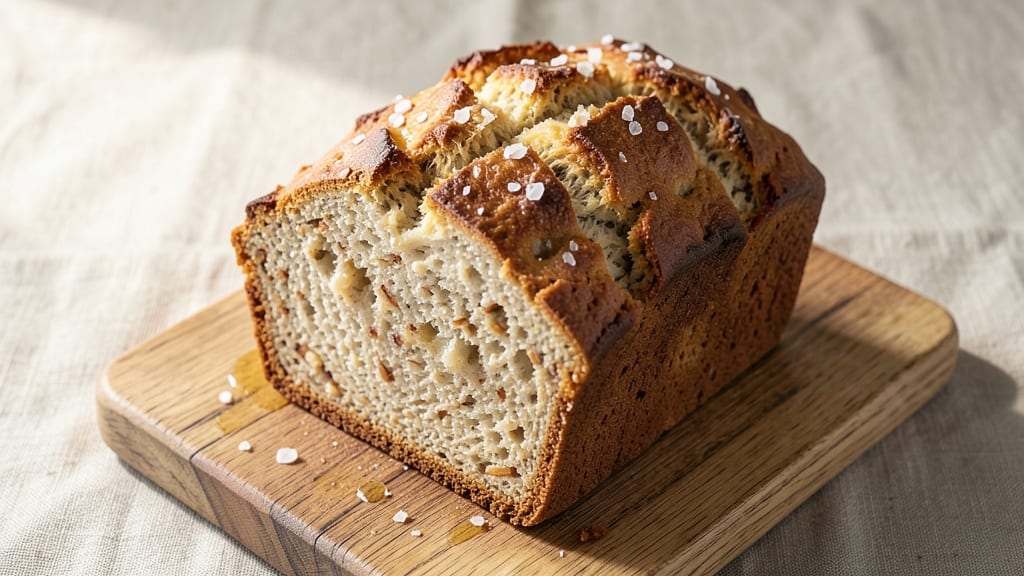
This almond flour and coconut flour bread delivers a surprisingly light, gluten-free loaf with nutty depth and satisfying texture—perfect for sandwiches or toast. 💛 The secret lies in balancing these flours for structure while keeping it grain-free and vegan-friendly, a game-changer for those avoiding gluten or refined grains.
Unlike dense gluten-free breads, this recipe achieves a tender crumb with proper hydration and a touch of psyllium husk, which mimics gluten's binding properties. The almond flour adds richness, while coconut flour absorbs moisture to create a moist yet sturdy loaf.
Baking at a precise temperature ensures a golden crust without drying out the interior.
What you’ll end up with is a gluten-free bread that’s crisp on the outside, soft inside, and packed with nutty flavor—ideal for toast, sandwiches, or serving alongside soups. The recipe includes optional add-ins like seeds or herbs for extra texture and nutrition, making it versatile for any meal.
Ready in about 90 minutes (including baking time), this bread requires minimal effort but delivers restaurant-quality results at home. Whether you're baking for dietary needs or simply craving something different, this recipe proves gluten-free doesn’t mean sacrificing taste or texture.
Ingredients for almond flour and coconut flour bread
Balanced flours, precise hydration, and psyllium husk create this gluten-free masterpiece—light yet sturdy, nutty with a crisp crust.
| Ingredient | Amount | Notes |
|---|---|---|
| Almond Flour 🌰 | 2 ½ cups | Finely ground, unsweetened |
| Coconut Flour 🥥 | ½ cup | Sifted, for even texture |
| Psyllium Husk Powder 🌿 | 2 tbsp | Critical for gluten-free structure |
| Tapioca Starch 🍠 | ¼ cup | For chewy texture and rise |
| Baking Powder 🍞 | 1 ½ tsp | Aluminum-free for best flavor |
| Salt 🧂 | 1 ½ tsp | Fine sea salt preferred |
| Sugar 🍯 | ¼ cup | Coconut sugar for depth |
| Flaxseed Meal 🌾 | ¼ cup | For binding and omega-3s |
| Water 💧 | 1 ¼ cups | Room temperature, filtered |
| Apple Cider Vinegar 🍎 | 1 tbsp | Activates baking powder |
| Olive Oil 🫒 | ¼ cup | Extra-virgin for richness |
| Sunflower Seeds 🌻 | ¼ cup | Optional, for crunch |
| Fresh Rosemary 🌿 | 1 tbsp | Chopped, optional herb |
The almond flour is non-negotiable here—Bob’s Red Mill or Anthony’s Goods brands deliver the finest grind for optimal texture. Coconut flour absorbs moisture aggressively, so measure it by weight if possible—spooning leads to dryness. Psyllium husk powder, available at health food stores or online, acts as the gluten substitute; do not skip this or your loaf will crumble. Tapioca starch from Bob’s Red Mill adds chewiness, but arrowroot works too in a pinch. For the seeds, Trader Joe’s offers pre-portioned packages, saving you from measuring.
No psyllium husk? Substitute 1 tbsp ground chia seeds plus 1 tbsp water, though texture will differ slightly. Swap coconut sugar for maple syrup or agave at equal measure, but expect a moister crumb. Olive oil can be replaced with avocado oil or melted coconut oil, though flavor shifts. For the vinegar, lemon juice works in a bind, but apple cider adds subtle depth. The sunflower seeds? Pumpkin seeds or chopped walnuts are equally delicious—whatever you have on hand.
Mix the dry ingredients first, then add wet gradually—coconut flour needs time to absorb. Let the dough rest 10 minutes before shaping; this step prevents cracking. Bake in a lightly greased loaf pan for a crisp crust. Cool completely on a rack—cutting too soon causes gummy texture. Stores wrapped at room temperature for 3 days or frozen for 3 months. Toast slices for extra crispiness—perfect for avocado toast or sandwiches.
Why You'll Love This Recipe
- No-Fuss Mixing: I swear by this combo—just toss the dry ingredients (almond flour, coconut flour, psyllium husk) in a bowl, add water, and stir. The psyllium husk does all the heavy lifting, so no kneading, no waiting for dough to rise. Honestly, my blender’s seen more action than my stand mixer lately.
- Nutty-Creamy Magic: That first bite? Rich almond flavor meets a subtle coconut warmth, with just enough chew from the psyllium to hold its shape. It’s not sweet—it’s savory in a way that makes toasted avocado or almond butter jam taste like a revelation. (Yes, even on a Tuesday night.)
- Meal Prep MVP: This bread stays fresh for days in the fridge, slices beautifully, and toasts up like new. I make a loaf on Sundays, and it’s my go-to for sandwiches, French toast, or crumbled over salads all week. No sad, stale bread here—just reliable, versatile slices.
- Budget-Friendly Staple: Almond and coconut flour might seem pricey upfront, but a little goes a long way, and this recipe stretches further than wheat-based bread. Plus, the psyllium husk and tapioca starch cut costs while keeping it light and fluffy. My wallet and my gluten-free friends thank me.
Step-by-step instructions for gluten-free almond-coconut bread
Mastering this gluten-free blend requires precision—each ingredient plays a critical role in achieving that signature rise and nutty depth.
👨🍳 Step 1: Combine Dry Ingredients for Optimal Texture
In a large mixing bowl, whisk together the 2.5 cups almond flour, 0.5 cup coconut flour, 2 tbsp psyllium husk powder, 0.25 cup tapioca starch, 1.5 tsp baking powder, 1.5 tsp salt, and 0.25 cup sugar. The psyllium husk is non-negotiable here—it mimics gluten's structure by forming a gel when hydrated, which gives this bread its signature rise and chewiness.
Use a fine-mesh sieve for the coconut flour to prevent clumping, which can lead to dense spots in your final loaf. I like to mix everything by hand first to distribute the psyllium evenly—this powder has a tendency to clump if not incorporated properly. Once combined, set the dry mixture aside until ready to mix with wet ingredients.
👨🍳 Step 2: Create the Fluffy Wet Base
In a separate bowl, whisk together the 1.25 cups room-temperature water, 1 tbsp apple cider vinegar, 0.25 cup flaxseed meal, and 0.25 cup olive oil. The vinegar activates the baking powder immediately, so don't skip this step—it ensures maximum rise. Let the mixture sit for 5 minutes while the flaxseed meal forms a gel-like consistency, which will bind everything together.
Here's the thing—this mixture should be slightly thicker than traditional bread batter. If it looks too thin, add 1 tablespoon more almond flour to compensate. The flaxseed meal is doing double duty here: it adds binding properties and omega-3s while creating that signature nutty depth in flavor.
🥘 Step 3: Hydrate and Mix to Perfect Consistency
Gradually pour the wet mixture into the dry ingredients while mixing with a hand mixer on low speed for 2 minutes. The batter will be thick and sticky—this is normal. Add the 0.25 cup sunflower seeds and 1 tbsp chopped fresh rosemary (if using) and mix for another 30 seconds just to distribute them evenly.
This is where many gluten-free breads fail—they either turn out too dense or too crumbly. The key is patience. Let the batter rest for 10 minutes at room temperature. This allows the psyllium husk to fully hydrate and begin forming its structural network. Don't skip this resting period—it's what gives this bread its professional-quality texture.
🔥 Step 4: Shape and Bake for Golden Perfection
Preheat your oven to 350°F and line a 9x5-inch loaf pan with parchment paper, leaving an overhang on the sides for easy removal. Transfer the batter to the prepared pan and smooth the top with a wet spatula. The batter should come about ¾ full of the pan—don't overfill or it will spill during baking.
Bake for 50-60 minutes until the top is golden brown and a toothpick inserted in the center comes out clean. Here's my pro tip: Tent the loaf with foil after 30 minutes if the top is browning too quickly—this prevents over-browning while allowing the center to cook through. The internal temperature should reach 205°F for that perfect balance of moisture and texture.
⏰ Step 5: Cool and Slice for Maximum Flavor
Remove the bread from the oven and let it cool in the pan for 15 minutes, then transfer to a wire rack to cool completely. This cooling period is crucial—rushing it will result in a gummy interior. The bread will firm up as it cools, developing that beautiful crumb structure we're after.
Slice with a serrated knife while still slightly warm for cleaner cuts. Each slice should reveal a tender crumb with subtle pockets of air from the psyllium's work. The nutty depth from the almond flour and coconut flour will dominate, with just a hint of herbal rosemary if you included it. Store wrapped at room temperature for up to 3 days or freeze for longer storage—this bread actually improves with age as the flavors meld.
Pro Tips For Making Almond Flour And Coconut Flour Bread
- Mix Wet First: The second you add coconut flour to liquid, it turns into a gluey mess—skip the dry mixing. Whisk your wet ingredients (eggs, water, applesauce) first, then fold in the dry mix gently with a spatula. Overmixing turns your dough into a dense brick, and nobody wants that.
- Weigh Your Flours: Scooping almond and coconut flour by volume is a disaster—these guys pack differently every time. Use a kitchen scale for precision: 1 cup almond flour is about 120g, but coconut flour is lighter (100g per cup). Trust me, your bread’s texture will thank you.
- Don’t Skimp on Psyllium: This isn’t the place to cut corners. Psyllium husk powder is the glue holding your bread together—use the full amount called for, then let the dough rest for 10 minutes. I learned this the hard way when my loaf crumbled like a sad sandwich.
- Bake Low and Slow: Your oven’s top rack is not your friend here. Preheat to 350°F (175°C) and bake on the middle rack for 30–40 minutes. Almond-coconut bread dries out fast, so tent it with foil if the edges brown too soon. Patience wins—crusty outsides hide gummy insides.
Regional styles of these flavors
Southern U.S. Style
In the South, this bread gets a hearty twist with 1 tbsp smoked paprika and ½ tsp cayenne pepper mixed into the dry ingredients. Add ½ cup chopped pecans for a Southern-inspired crunch, and finish with a drizzle of honey butter after baking.
This version pairs perfectly with fried chicken or BBQ sandwiches—just like a gluten-free Southern classic. 🌶️
Mediterranean Twist
For a Mediterranean flair, swap the rosemary for 1 tbsp dried oregano and 1 tsp lemon zest in the wet mixture. Add ¼ cup chopped kalamata olives and 2 tbsp capers to the batter for briny depth.
Bake in a round 8-inch cast-iron skillet for an artisan-style loaf, then serve with hummus or olive tapenade. The almond-coconut combo shines with Mediterranean herbs and citrus. 🍋
Nordic-Inspired
In Scandinavian kitchens, this bread often includes 1 tbsp ground cardamom and ½ tsp cinnamon for warmth. Replace the sunflower seeds with ¼ cup chopped hazelnuts and add 1 tbsp chopped fresh dill to the wet ingredients.
Brush the baked loaf with melted butter and sprinkle with coarse sea salt—this version pairs beautifully with smoked salmon or herbed cream cheese. 🌿
Mexican-Inspired
Give it a fiesta vibe by adding 1 tsp ground cumin and ½ tsp chili powder to the dry mix. Stir in ¼ cup chopped cilantro and 2 tbsp chopped jalapeños for a spicy kick.
Serve warm with refried beans and avocado slices for a gluten-free taco bread. The nutty almond flour balances the bold Mexican flavors perfectly. 🌶️
French Baguette Adaptation
For a French-inspired version, shape the dough into a 12-inch baguette mold or a long loaf on a baking sheet. Brush the top with olive oil and sprinkle with flaky sea salt before baking.
Add 1 tsp dried thyme to the dry ingredients for a classic French touch. This gluten-free baguette is perfect for dipping in olive oil or spreading with herbed goat cheese. 🥖
Nutrition facts
Frequently asked questions
Why does this bread need psyllium husk?
Psyllium husk is the secret to gluten-free structure—it mimics gluten's binding properties by forming a gel when hydrated. Without it, your bread would crumble or turn dense. The 2 tbsp in this recipe creates that signature chewy texture while helping the loaf hold together during baking.
Can I make this bread without coconut flour?
Yes, but expect a denser texture. Replace the 0.5 cup coconut flour with 0.5 cup more almond flour and add 1 extra tbsp water to compensate for moisture absorption. The coconut flour adds subtle sweetness and helps absorb excess liquid, so omit it at your own risk!
How do I prevent the bread from sticking to the pan?
Line your 9x5-inch loaf pan with parchment paper, leaving overhang on the sides for easy removal. Lightly grease the paper with olive oil before adding the batter. If using a metal pan, preheat it in the oven for 5 minutes before pouring the batter to ensure even heat distribution.
Why does my gluten-free bread taste bland?
This recipe includes rosemary and sunflower seeds for flavor, but you can boost taste with 1 tsp garlic powder or ½ tsp onion powder in the dry mix. For extra richness, add 1 tbsp nutritional yeast—it adds a cheesy, umami depth that balances the nutty flavors.
Can I make this bread in a Dutch oven?
Transfer the batter to a preheated 9x5-inch loaf pan inside your Dutch oven for 350°F baking. The Dutch oven will create steam, giving you a crispier crust and even browning. Just remove the lid after 20 minutes to prevent oversteaming.