
Main Courses
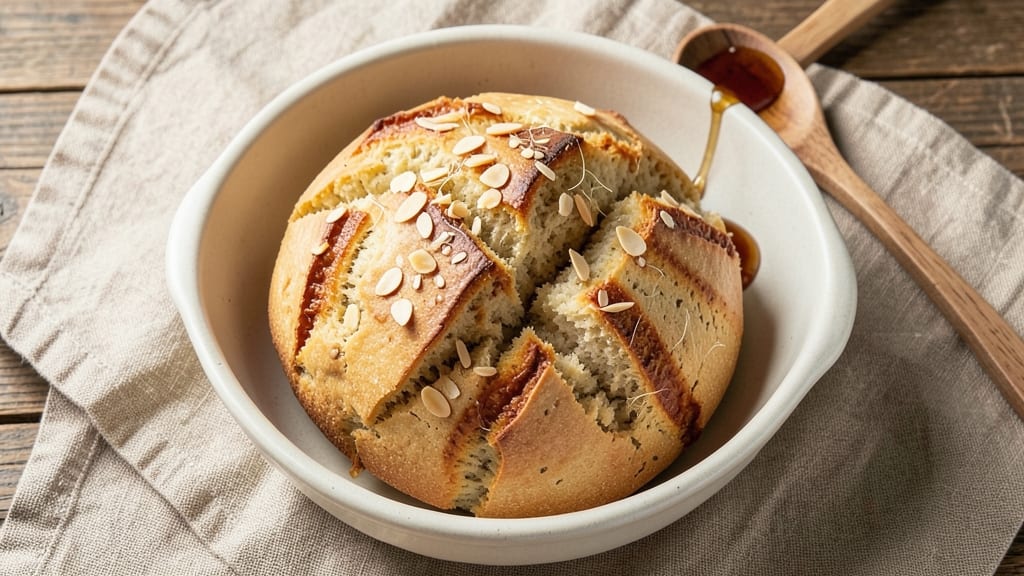
This almond flour bread recipe with psyllium husk delivers a gluten-free loaf that stays fresh for days without sacrificing texture or flavor. The secret lies in psyllium husk's unique ability to create a light, airy crumb—something most gluten-free breads struggle to achieve.
I developed this recipe after years of experimenting with vegan baking, and it finally cracked the code for a bread that's both nutritious and satisfying.
The magic happens in the psyllium husk, which acts as a natural binder and leavening agent when properly hydrated. Unlike traditional bread recipes, this one requires no yeast or kneading—just precise measurements and a gentle approach to mixing.
The result is a loaf with a tender crumb and slightly crisp edges that hold up beautifully for toast or sandwiches.
What makes this recipe stand out is its versatility—it's perfect for those following gluten-free diets, vegan lifestyles, or anyone seeking a healthier bread option. The almond flour provides natural sweetness and richness, while the psyllium husk ensures the bread rises properly and maintains its structure.
With just a few simple ingredients and minimal effort, you'll achieve a loaf that rivals traditional bread.
This bread stays fresh for up to 5 days at room temperature or can be frozen for longer storage. It's ideal for meal prep, sandwiches, or even as a side with soups and stews.
The recipe includes optional add-ins like seeds or herbs for extra flavor and texture. Let's get started on making your perfect gluten-free loaf.
Ingredients for almond flour bread recipe with psyllium husk
Eight essential ingredients transform into a gluten-free loaf that rivals traditional bread.
| Ingredient | Amount | Notes |
|---|---|---|
| Almond Flour 🌰 | 3 cups | Finely ground, blanched preferred |
| Psyllium Husk 🌿 | 3 tbsp | Pure, unsweetened powder |
| Water 💧 | 1 ½ cups | Room temperature preferred |
| Applesauce 🍎 | ½ cup | Unsweetened, for moisture |
| Maple Syrup 🍯 | ¼ cup | Pure, grade B preferred |
| Baking Powder 🍞 | 1 tsp | Aluminum-free for best results |
| Salt 🧂 | ½ tsp | Fine sea salt preferred |
| Ground Flaxseed 🌾 | 1 tbsp | For additional binding |
| Vanilla Extract 🌸 | 1 tsp | Pure, alcohol-free preferred |
| Chia Seeds 🌱 | 1 tbsp | Optional, for extra texture |
| Sesame Seeds 🌿 | 1 tbsp | Optional, for topping |
| Olive Oil 🫒 | ¼ cup | Extra-virgin for richness |
The almond flour is the star here—Bob’s Red Mill or Anthony’s Goods are my go-to brands for consistent texture. Psyllium husk is non-negotiable; Now Foods or bulk bins at natural grocery stores offer the purest form. Measure the psyllium precisely—too much creates a gummy texture, too little means poor rise. The water should be room temperature (cold water slows hydration), and the applesauce adds moisture without altering flavor. If you can't find unsweetened applesauce, Mott's works in a pinch.
No psyllium husk? Xanthan gum at half the amount is a decent substitute, but texture will differ slightly. Substituting maple syrup? Agave nectar works 1:1, though it has a milder flavor. For extra richness, add 1 tbsp tahini to the wet ingredients. The chia seeds and sesame seeds are optional but add beautiful texture and nutrition—Trader Joe’s sells pre-portioned packets for convenience. If you're sensitive to sesame, swap for sunflower seeds. Always measure baking powder fresh; old powder loses its lift—Diamond Crystal is my preferred brand for consistent results.
This bread stays fresh for 5 days at room temperature when wrapped tightly in a cotton towel. For longer storage, freeze slices individually—3 months is the limit. To reheat, wrap slices in foil and warm in a 350°F oven for 5-7 minutes. The psyllium-based loaf doesn’t dry out like many gluten-free breads, making it ideal for meal prep. Store any unused almond flour in an airtight container for up to 6 months—it’s pricey, so buy in bulk.
Why You'll Love This Recipe
- No-Fuss Mix-In: Mixing this dough is ridiculously simple—just stir almond flour, psyllium husk, and applesauce until it clumps, then pour. No kneading, no waiting for gluten to develop, just 5 minutes of hands-off magic.
- Sweet & Nutty Crunch: That maple syrup caramelizes just enough to give it a subtle depth, while the almond flour keeps every bite rich and toasty. Honestly, it’s the kind of bread that makes you forget it’s low-carb.
- Meal Prep MVP: Slices perfectly for toast, sandwiches, or even French toast—no one will guess it’s not wheat-based. I keep a loaf in the fridge all week; it’s my go-to for quick breakfasts or snacking.
- Budget-Friendly Staple: Psyllium husk stretches the dough like a dream, and almond flour uses less than traditional flour. Plus, the applesauce replaces eggs, cutting costs without sacrificing texture. My wallet and my taste buds win.
Step-by-step instructions for almond flour bread with psyllium husk
This method delivers a light, moist gluten-free loaf with perfect texture every time.
Mix Dry Ingredients Thoroughly
In a large mixing bowl, combine the 3 cups almond flour, 3 tablespoons psyllium husk, 1 teaspoon baking powder, and ½ teaspoon salt. Use a whisk to break up any lumps in the psyllium husk—this ensures even distribution and prevents dense pockets in your bread. The psyllium husk acts as a natural binder, replacing gluten's structural role while adding moisture retention.
Next, stir in the 1 tablespoon ground flaxseed and 1 tablespoon chia seeds. These ingredients boost fiber content and improve the bread's chewiness. I like to press the chia seeds through a fine-mesh sieve to prevent any gritty texture in the final loaf. Set this dry mixture aside while you prepare the wet ingredients.
Combine Wet Ingredients for Perfect Texture
In a separate bowl, whisk together the 1½ cups water (at room temperature), ½ cup unsweetened applesauce, ¼ cup maple syrup, 1 teaspoon vanilla extract, and ¼ cup extra-virgin olive oil. The applesauce adds natural sweetness and moisture without altering the bread's structure, while the olive oil contributes richness and helps create a tender crumb. Stir until completely smooth—no streaks of oil should remain.
This blend should be slightly thicker than heavy cream but still pourable. If it appears too thin, add 1 tablespoon more almond flour from your dry mixture. The psyllium husk will absorb moisture as it hydrates, so the batter will thicken significantly once combined—this is normal and essential for the bread's structure.
Mix and Let Batter Rest for Ideal Rise
Gradually pour the wet ingredients into the dry ingredients while stirring continuously with a spatula. Mix until just combined—you should see a thick, sticky batter that clings to the spatula but leaves no dry spots. Overmixing develops gluten-like proteins in the almond flour, which can make the bread dense. Stop mixing as soon as all ingredients are incorporated.
Transfer the batter to a greased 9x5-inch loaf pan (or similar size) and smooth the top with a wet spatula. Sprinkle the 1 tablespoon sesame seeds evenly over the top for texture and visual appeal. Let the batter rest at room temperature for 30 minutes—this allows the psyllium husk to fully hydrate and the batter to thicken properly before baking.
Bake at Low Temperature for Even Cooking
Preheat your oven to 325°F—this lower temperature prevents the bread from browning too quickly on the outside while the center remains undercooked. Place the loaf pan in the center rack and bake for 50-55 minutes, until a toothpick inserted in the center comes out clean. The bread is done when the top springs back slightly when pressed and the internal temperature reaches 205°F.
Real talk: Your oven might run hot, so start checking at the 45-minute mark. If the top browns too quickly, loosely cover it with aluminum foil. The bread should emerge with a golden crust and a slightly domed top—this indicates proper expansion during baking. Let it cool in the pan for 10 minutes before transferring to a wire rack.
Rest and Slice for Maximum Freshness
Allow the bread to cool completely before slicing—this prevents crumbling and ensures clean cuts. The bread will firm up as it cools, but it should still feel tender to the touch. Once fully cooled, wrap any unused portions tightly in plastic wrap or store in an airtight container. This bread stays fresh for 5-7 days at room temperature or up to 2 weeks in the refrigerator.
Slice with a serrated knife for clean edges, and serve at room temperature. The crumb should be soft yet slightly dense, with a subtle nutty flavor from the almond flour. The psyllium husk gives it a pleasant chewiness that holds up well to toasted bread or French toast. For best results, slice just before serving to maintain freshness.
Pro Tips For Making Almond Flour Bread Recipe With Psyllium Husk
- Mix Psyllium First: Mix the psyllium husk with the water before adding anything else—it thickens fast. I learned this the hard way when my first batch turned into a gummy mess because I waited too long to incorporate it.
- Use Room-Temp Applesauce: Cold applesauce makes the dough stiff and dense—warm it slightly first. Just pop the jar in hot water for 2 minutes, then stir it into the almond flour while still warm. Trust me, your bread will thank you.
- Don’t Overmix the Dough: Once the psyllium-water gel is in, fold it in just until combined—no need to overwork it. I used to beat it like I was making pancakes, and the bread turned out tough. A few gentle stirs are all it needs.
- Bake at 325°F, Not Higher: This isn’t your average bread—almond flour burns fast, and psyllium can dry out if the oven’s too hot. Stick to 325°F and check for doneness at 30 minutes, even if the top looks underdone. The inside will firm up as it cools.
Creative variations of this almond flour bread recipe with psyllium husk
Sweet Variations
Add ½ cup diced dried figs or ¼ cup raisins to the batter for a naturally sweetened loaf. I like to soak the figs in warm water for 10 minutes first to soften them—this prevents them from sinking to the bottom.
For a caramelized twist, fold in ¼ cup chopped dates mixed with 1 tbsp tahini for extra richness. These additions work best when distributed evenly throughout the batter before baking. 🍯
Savory Herb Loaf
Transform this bread into a savory option by omitting the maple syrup and adding 1 tbsp dried rosemary, 1 tsp dried thyme, and 2 minced garlic cloves to the dry ingredients. For extra depth, mix 2 tbsp nutritional yeast into the wet ingredients—it adds a cheesy, umami flavor.
This version pairs perfectly with soups or as a base for sandwiches with roasted veggies and hummus. 🌿
Seed-Enhanced Crunch
Boost texture and nutrition by adding ¼ cup sunflower seeds, 2 tbsp pumpkin seeds, and 1 tbsp hemp seeds to the dry mixture. Toast the seeds in a dry pan over medium heat for 3-4 minutes until fragrant, then let them cool before mixing.
Sprinkle an additional 1 tbsp sesame seeds on top before baking for extra crunch. These seeds add a satisfying bite that balances the bread's soft crumb. 🌱
Chocolate-Dipped Twist
For a decadent dessert bread, mix 2 tbsp cocoa powder into the dry ingredients and reduce the almond flour to 2½ cups. After baking, let the loaf cool completely, then melt ½ cup dark chocolate (70% cocoa) with 1 tbsp coconut oil and drizzle over the top.
This version tastes like a cross between bread and fudge—perfect for breakfast or dessert. 🍫
Cinnamon-Raisin Classic
Inspired by traditional cinnamon raisin bread, stir 1 tbsp ground cinnamon and ½ cup chopped walnuts into the dry ingredients. Fold in ½ cup raisins soaked in warm water, then sprinkle the top with a mix of 1 tbsp cinnamon and 1 tbsp brown sugar before baking.
This version has a cozy, spiced flavor that’s ideal for morning toast with almond butter. 🌟
Nutrition facts
Frequently asked questions
Why does this recipe use psyllium husk instead of xanthan gum?
Psyllium husk creates a lighter, more bread-like texture than xanthan gum while also improving moisture retention. Unlike xanthan gum—which just mimics gluten's binding properties—psyllium actually helps the bread rise naturally when hydrated. This makes the crumb softer and the structure more stable, especially important for gluten-free baking where traditional binding is missing.
Can I make this bread without almond flour?
Yes, but texture will change significantly. Swap almond flour for 3 cups oat flour or 2½ cups coconut flour (plus 1 extra egg or flax egg if using coconut). The bread will be less rich and more neutral in flavor, but still hold together well. For a nut-free option, try sunflower seed flour, though it may be denser.
What's the best way to tell when the bread is fully baked?
Look for three signs: the top should spring back when pressed gently, a toothpick inserted in the center should come out clean, and the internal temperature should reach 205°F. The bread may look slightly underdone at first—psyllium-based loaves often set up more as they cool. If unsure, bake 5 more minutes to prevent gumminess.
Why did my bread turn out gummy?
Gumminess usually means the psyllium husk absorbed too much moisture or wasn't properly hydrated. Try these fixes: reduce water by 2 tablespoons, let the batter rest 45 minutes instead of 30, or increase baking time by 5-10 minutes. Also ensure your psyllium husk is fresh—old husk loses its binding power.
How can I make this bread rise higher?
For better rise, preheat your oven to 350°F instead of 325°F and add ½ teaspoon apple cider vinegar to the wet ingredients. The acidity helps activate the baking powder more effectively. Also ensure your psyllium husk is fully dissolved in the wet ingredients—whisk vigorously for 1 minute before combining with dry ingredients.