
Side Dishes
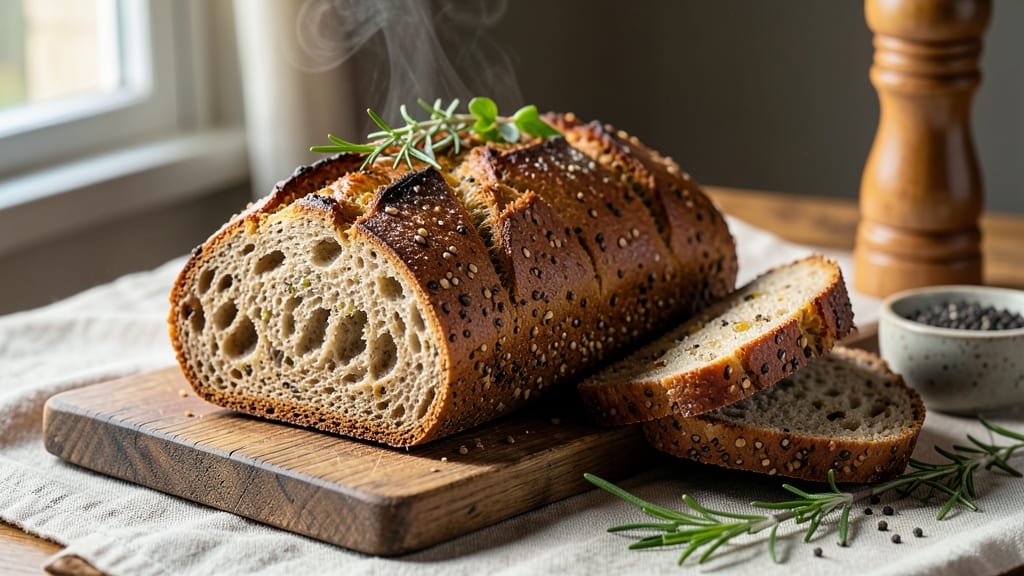
This Alpine grain bread recipe brings hearty European flavors to your kitchen with its rustic crust and nutty depth. 🌾 The secret lies in combining traditional Alpine grains like rye and spelt with a touch of buckwheat, creating a loaf that's both satisfying and visually striking.
Unlike standard bread, this version develops rich, earthy notes from slow fermentation, making every slice worth savoring.
The dough requires patience—resting overnight allows flavors to meld beautifully while developing that signature open crumb structure. You'll work with a mix of whole grains and flour, creating a texture that's dense yet tender, perfect for soaking up soups or pairing with sharp Alpine cheeses.
The crust develops a satisfying crunch when baked at high heat, sealing in those warm, nutty aromas.
What you'll end up with is a loaf that looks like it belongs in a Swiss chalet—golden crust with deep cracks, a crumb that's both open and moist, and a flavor profile that's complex yet approachable.
The grains add subtle bitterness that balances the bread's natural sweetness, while the crust provides that satisfying crunch in every bite.
Serve this bread warm with cultured butter, aged cheddar, or alongside hearty stews. The recipe scales beautifully, so you can make it for everyday meals or special occasions. Let's get started on creating this rustic masterpiece that brings Alpine charm to your table.
Ingredients for alpine grain bread
These Alpine-inspired flours and simple pantry staples create a rustic loaf with deep flavor and satisfying texture.
| Ingredient | Amount | Notes |
|---|---|---|
| All-Purpose Flour 🌾 | 2 ½ cups | For structure and lightness |
| Rye Flour 🌾 | 1 cup | Adds deep, earthy flavor |
| Spelt Flour 🌾 | ½ cup | Nutty, slightly sweet notes |
| Buckwheat Flour 🌾 | ½ cup | Rich, toasty depth |
| Active Dry Yeast 🍞 | ¼ oz | Or 1 packet (2.25 tsp) |
| Warm Water 💧 | 1 ½ cups | 110°F for optimal yeast activation |
| Honey 🍯 | 2 tbsp | Feeds yeast and adds sweetness |
| Unsalted Butter 🧈 | ½ cup | Cold, cubed for flavor |
| Salt 🧂 | 1 ½ tsp | Diamond Crystal preferred |
| Olive Oil 🫒 | 1 tbsp | Extra-virgin for richness |
| Whole Milk 🥛 | ¼ cup | Enhances tenderness |
| Cultured Butter 🧈 | 1 tbsp | For brushing crust |
| Coarse Cornmeal 🌽 | ¼ cup | For dusting baking sheet |
The flours are the heart of this bread—rye adds that signature Alpine tang, while spelt and buckwheat bring nutty complexity. Bob's Red Mill has great bulk options, but the store-brand versions at Whole Foods or Trader Joe's work perfectly too. Look for stone-ground flours if you want extra depth, though regular rye and spelt flours will still give you that hearty texture. The buckwheat flour can be found in the baking aisle or near specialty grains. Pro tip: if you can't find spelt flour, swap it 1:1 with whole wheat—just know the crumb will be slightly denser. Yeast is non-negotiable here, but Red Staractive dry yeast is my go-to because it's consistent.
No honey? Maple syrup works 1:1, though it'll add a slightly different sweetness profile. Running low on butter? Coconut oil or vegetable shortening keeps the same functionality, though you'll lose that rich dairy flavor. The milk can be swapped for plant-based milk if needed—just add a pinch of salt to compensate for the lower salt content. For the olive oil, avocado oil works too, but stick with extra-virgin for that fruity depth. The cornmeal is just for dusting—you could use semolina or even flour if that's what you have, but cornmeal gives that classic rustic look when the bread comes out of the oven.
This dough needs time—overnight in the fridge is ideal for flavor development. Store it in an airtight container with a damp towel over it to prevent drying. The shaped loaf keeps 2 days at room temperature wrapped in a clean kitchen towel, or 5 days in the fridge once sliced. For longer storage, freeze the loaf up to 3 months—just thaw at room temperature before serving. The crust stays crisp for about 24 hours, so slice it fresh when you're ready to serve. Leftovers? Toast them—it's the best way to revive stale bread.
Why You'll Love This Recipe
- Five-Ingredient Magic: I swear, this bread comes together with just flour, yeast, water, and a pinch of salt—no fancy mixers or kneading marathon. The rye and spelt add depth without extra work, and the buckwheat gives it that rustic bite I didn’t even know I craved.
- Earthy, Not Earth-Boring: Honestly, the mix of rye and buckwheat might sound weird, but it’s ridiculously good—like a campfire loaf with a crispy crust. The spelt keeps it tender, so you get that hearty Alpine vibe without the dry, heavy texture.
- Meal Prep MVP: This bread freezes like a dream (yes, even the crust stays crispy when toasted). I bake a batch on Sundays, slice it, and toss it in the freezer—perfect for quick breakfasts or sandwiches all week.
- Budget-Friendly Staple: Between us, rye and spelt flour are cheaper than buying pre-made artisan loaves, and the yeast stretch goes far. One batch feeds my whole family, and the leftovers? They last longer than my willpower to resist them.
Step-by-step instructions for Alpine grain bread
Here's how to craft this rustic beauty with a crisp crust and nutty interior.
👨🍳 Step 1: Activate the Yeast with Honey and Warm Water
In a small bowl, combine the 1.5 cups warm water (around 110°F) with the 2 tbsp honey and 0.25 oz active dry yeast. Let it sit for 5-10 minutes until foamy and bubbly—this confirms the yeast is alive and ready to work. The honey not only feeds the yeast but also adds subtle sweetness that balances the earthy flours.
If the mixture doesn't bubble after 10 minutes, your yeast might be dead. Start fresh with a new packet—this is the foundation of your bread, and skipping this step leads to dense, flat results.
👨🍳 Step 2: Mix the Flours and Hydrate the Dough
In a large mixing bowl, whisk together the 2.5 cups all-purpose flour, 1 cup rye flour, 0.5 cup spelt flour, 0.5 cup buckwheat flour, and 1.5 tsp salt. Make a well in the center and pour in the yeast mixture along with the 1 tbsp olive oil and 0.25 cup whole milk. The buckwheat flour will make the dough darker and denser, so don't be surprised if it looks heavier than typical bread dough.
Using a wooden spoon or dough whisk, gradually mix until a shaggy dough forms. The flours' different textures will create a slightly sticky but workable dough. Let it rest for 5 minutes—this helps the flours absorb the liquid evenly.
👨🍳 Step 3: Knead Until Smooth and Elastic
Turn the dough onto a lightly floured surface and knead for 8-10 minutes until smooth and elastic. The rye and buckwheat flours will make this dough denser than all-purpose, so focus on developing the gluten gradually. You'll know it's ready when it springs back slowly when poked and feels slightly tacky but not sticky.
If the dough feels too dry, add 1 tsp warm water at a time; if too sticky, add 1 tbsp flour. Shape the dough into a round loaf and place it back in the bowl. Cover with a damp towel and let it rise in a warm place for 1-2 hours, or until doubled in size. The nutty aromas will fill your kitchen—this is where the magic happens!
🔥 Step 4: Shape and Proof the Loaf
Punch down the risen dough and shape it into a rustic loaf on a parchment-lined baking sheet. Dust the top generously with 0.25 cup coarse cornmeal—this creates that beautiful textured crust and prevents sticking. Cover loosely with the towel and let it proof for another 30-45 minutes until puffy and slightly jiggly when touched.
Preheat your oven to 375°F with a Dutch oven inside for 30 minutes. The residual heat helps create that signature oven-spring. Brush the loaf with 1 tbsp melted cultured butter for extra richness and shine.
🔥 Step 5: Bake to Golden Perfection
Carefully transfer the loaf (with parchment) into the hot Dutch oven. Bake covered for 30 minutes, then uncover and bake for another 15-20 minutes until the crust is deep golden brown and sounds hollow when tapped on the bottom. The internal temperature should reach 205-210°F.
Let the bread cool on a wire rack for at least 1 hour before slicing—this prevents a gummy interior. The crust should be crisp and slightly charred in spots, while the interior reveals those beautiful nutty swirls from the rye, spelt, and buckwheat flours. Slice and serve warm with cultured butter or olive oil for dipping!
Pro Tips For Making Alpine Grain Bread
- Bloom the Yeast Cold: Skip the warm water—yeast activates better in cold liquid (around 70°F) for this dense grain mix. I learned this the hard way after overproofing batches with hot water; the yeast in rye and spelt needs a gentler start. Let it sit 10 minutes in the fridge before mixing—it’ll wake up just fine and handle the buckwheat’s bitterness better.
- Mix Flours First: Combine all flours before adding yeast—this prevents the rye and buckwheat from stealing moisture and gumming up the dough. I used to add them separately, and my dough always felt sticky and sluggish. Weigh them together, then cut the yeast into the wet ingredients last.
- Don’t Over-Knead: This isn’t French bread—stop kneading when the dough pulls cleanly but still feels slightly tacky. Overworking it with spelt and buckwheat turns the crumb gummy. I was skeptical until I tried it; the texture stays open and airy without effort.
- Steam the First 15: Add a metal tray of boiling water to the oven when baking—this fights the dense flours’ tendency to dry out. I skipped it once and ended up with a crusty exterior hiding a dense, dry center. Sounds weird, but it works: the steam gives the bread a proper rise.
Dietary considerations for alpine grain bread
Gluten-Free Adaptations
For a gluten-free version, replace the all-purpose, rye, spelt, and buckwheat flours with a 1:1 gluten-free flour blend like King Arthur Measure for Measure. Add ½ tsp xanthan gum to the dry ingredients to mimic gluten's structure and improve texture.
The dough will be stickier, so use a dough scraper and wet your hands when handling it. Expect a denser crumb but still delicious flavor. 🌾
Low-Carb Options
To reduce carbs, swap half the all-purpose flour for almond flour (about 1.25 cups) and increase the egg count to 2 large eggs for binding. Reduce the honey to 1 tbsp and omit the milk entirely.
This version will be lower in carbs but higher in fat—perfect for keto diets. The texture becomes more cake-like but still satisfying.
Vegan Substitutions
Replace the yeast with 1 tbsp nutritional yeast and the honey with maple syrup. Use vegan butter (like Miyoko's) instead of cultured butter, and swap the whole milk for unsweetened almond milk.
The dough will be slightly denser, but the flavor remains rich. Let it proof longer—up to 2 hours—since vegan dough rises more slowly. 🌱
Allergen-Friendly Notes
This recipe is naturally nut-free and egg-free, but always check flour labels for cross-contamination warnings. For a dairy-free version, use olive oil instead of butter and coconut yogurt for brushing the crust.
If you have a buckwheat allergy, replace it with an equal amount of sorghum flour—just note the flavor will be slightly milder.
Seed and Nut Add-Ins
Boost nutrition by adding ¼ cup sunflower seeds or chopped walnuts to the dough. For extra crunch, sprinkle sesame seeds or flaxseeds on top before baking.
These additions work well with the Alpine flavors and add satisfying texture. Just reduce the cornmeal by 2 tbsp to maintain the same volume. 💫
Nutrition facts
Frequently asked questions
Why does this Alpine grain bread use multiple flours?
Each flour brings unique qualities: rye adds deep, earthy flavor, spelt contributes nutty sweetness, and buckwheat delivers rich toasty notes. Together they create the complex, satisfying taste of traditional Alpine breads while improving texture and nutrition compared to all-purpose flour alone.
Can I make this bread without a Dutch oven?
Yes! Use a heavy oven-safe pot with a lid or even a baking stone. For best results, bake at 425°F for 10 minutes covered with foil, then uncover and bake 20-25 minutes until golden. The crust won't be as crispy, but the interior will still develop beautifully.
How do I know when the dough is properly kneaded?
The dough is ready when it springs back slowly when poked and feels slightly tacky but not sticky. With the dense Alpine flours, it should take 8-10 minutes of kneading—test by stretching a small piece gently. If it resists but doesn't tear immediately, you're good to go.
What's the best way to store leftover Alpine grain bread?
Wrap cooled slices in a clean kitchen towel and store at room temperature for 2 days, or refrigerate for 5 days. For longer storage, freeze the whole loaf (up to 3 months)—thaw at room temperature before serving. To revive stale bread, toast or warm in a 350°F oven for 5-10 minutes.
Can I add seeds or herbs to this recipe?
Try ¼ cup sunflower seeds or chopped rosemary for extra flavor. For topping, sprinkle sesame seeds or flaky sea salt before baking. Just reduce cornmeal by 2 tbsp to maintain proper volume and texture.