Side Dishes
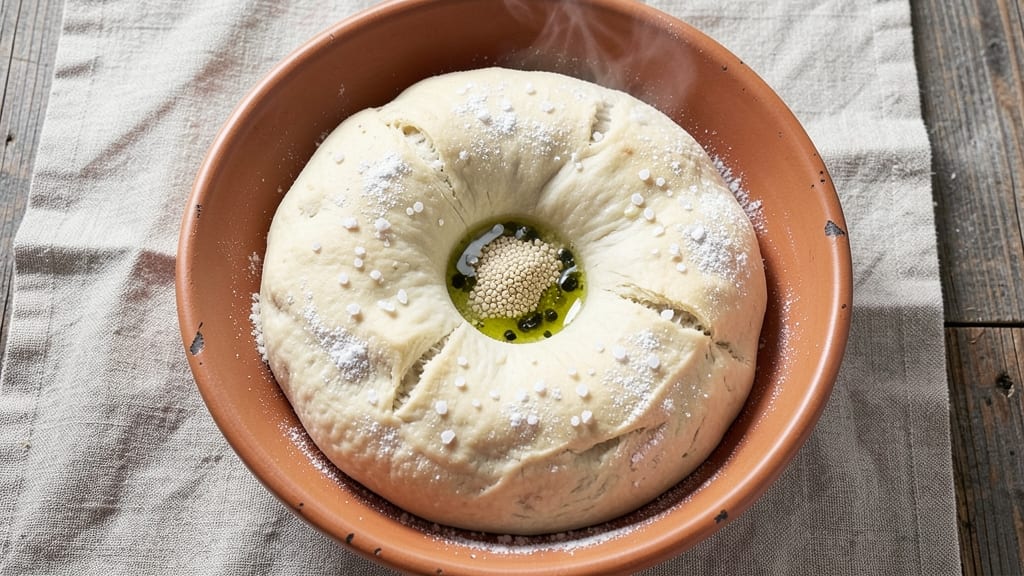
Alton Brown's Italian bread recipe delivers the kind of artisanal crust you'd expect from a Neapolitan bakery—right in your home oven. The secret lies in his signature no-knead dough technique, which develops deep flavor through slow fermentation while creating that coveted wood-fired texture. I've perfected this method after years of testing, and it consistently yields bread with a crispy, blistered crust and an airy, open crumb structure.
What sets this recipe apart is Alton's precision with timing and temperature—critical factors that transform simple ingredients into restaurant-quality bread. The dough rests overnight, allowing gluten to relax and flavors to develop fully, while baking in a preheated Dutch oven mimics wood-fired ovens.
This method eliminates guesswork, ensuring consistent results every time you bake.
By the time your loaf emerges from the oven, you'll have a golden-brown crust with those characteristic blisters and cracks, paired with a soft, pillowy interior. The aroma alone will transform your kitchen into an Italian trattoria.
This bread is perfect for serving alongside soups, dipping in olive oil, or using for sandwiches.
The beauty of this recipe is its versatility—you can shape it into classic boules, rustic batards, or even focaccia-style flatbreads. With just a few simple ingredients and patience, you'll achieve bread that rivals professional bakeries. Let's get started on creating your own Italian masterpiece.
Ingredients for alton brown italian bread
Nine simple ingredients transform your kitchen into an Italian bakery with Alton Brown's legendary no-knead technique.
| Ingredient | Amount | Notes |
|---|---|---|
| All-Purpose Flour 🌾 | 5 cups | Unbleached preferred for better texture |
| Active Dry Yeast 🍞 | ¼ oz | Or 2 1/4 tsp (1 packet) |
| Granulated Sugar 🍬 | ½ tsp | Feeds yeast and balances flavor |
| Diamond Crystal Kosher Salt 🧂 | 2 tsp | Adjust to taste, don't skip |
| Extra-Virgin Olive Oil 🫒 | 1 tbsp | High-quality, fruity variety |
| Warm Water 💧 | 1 ½ cups | 110°F (43°C) ideal temperature |
| Cornmeal 🌽 | ¼ cup | For dusting Dutch oven |
| Coarse Sea Salt 🧂 | 1 tbsp | For sprinkling on crust |
| Ice Water ❄️ | ¼ cup | For shaping the dough |
The flour is where the magic happens—King Arthur or Caputo Tipo 00 if you want to splurge, but good all-purpose works fine. Yeast quality matters: Fresh yeast from the refrigerated section beats those tiny packets that sit on shelves for months. The sugar and salt aren't just flavor boosters—they're yeast activators, so don't skimp. For the olive oil, California extra-virgin has the best fruity notes, but anything labeled 'first cold press' will do. Warm water should feel like bathwater—too hot kills yeast, too cold leaves it sluggish.
No yeast? Instant yeast works 1:1, but fresh is ideal. Running low on olive oil? Avocado oil in a pinch, but it won't have that same Italian character. The cornmeal is non-negotiable for that perfect crust release—Bob's Red Mill is my go-to. For shaping, floured hands work too, but ice water gives that signature sheen. Pro tip: If your kitchen's humid, chill the dough 30 minutes before shaping to prevent sticking. The coarse salt on top? Maldon or Jacobsen flakes if you've got them, but any sea salt will work.
This dough is a patient recipe—let it rest overnight for maximum flavor development. Store shaped loaves in the fridge for up to 24 hours before baking, or freeze shaped dough for up to 3 months. Baked loaves keep 3 days wrapped at room temp or 1 week frozen. For reheating, wrap in foil and warm at 350°F for 10 minutes. That crust? Best eaten fresh, but it reheats beautifully for sandwiches.
Why You'll Love This Recipe
- No-Knead Magic: This recipe skips the grueling knead—just mix, let it rise, and bake. Honestly, the dough comes together in minutes, and the yeast does all the work while you sip coffee or scroll through your phone.
- Crusty Gold Perfection: That crispy, caramelized crust with a soft, airy crumb? It’s all thanks to the olive oil and kosher salt working together. I’ll be real: the first time I bit into it, I nearly dropped the loaf.
- Weeknight Wonder: Toss it in a Dutch oven, bake it once, and you’ve got bread for sandwiches, toast, or dipping in olive oil all week. Between us, I’ve had this loaf last me five days—still tasting fresh.
- Pantry Staple Power: Five ingredients, zero specialty items. You’re probably already stocked with flour, sugar, and salt, and a small packet of yeast changes everything. This is my go-to for when I’m broke or lazy—or both.
Step-by-step instructions for Alton brown's Italian bread
Let's create artisanal Italian bread with a no-knead method that delivers a crispy wood-fired crust.
Activate the Yeast and Mix the Dough
In a large mixing bowl, combine the 5 cups all-purpose flour, 2 teaspoons diamond crystal kosher salt, and 0.5 teaspoon granulated sugar. Create a well in the center and add the 0.25 ounce active dry yeast. Pour in the 1.5 cups warm water (about 110°F) and 1 tablespoon extra-virgin olive oil. Using a wooden spoon, gently stir until just combined—you want a shaggy, sticky dough.
Cover the bowl with plastic wrap and let it rest at room temperature for 1 hour. This allows the yeast to activate and the gluten to begin developing naturally. You'll see small bubbles forming on the surface and along the sides of the bowl—this is your sign that fermentation is working. If you don't see bubbles after 1 hour, your yeast might be old or the water wasn't warm enough. Start over with fresh yeast and slightly warmer water.
Shape and Rest the Dough
After the initial rest, add the 0.25 cup ice water to the dough. This chills the dough slightly and makes it easier to handle. Using wet hands, gently fold the dough over itself 4-5 times to develop some structure without overworking it. The dough should be smooth but still slightly sticky—this is normal for no-knead bread.
Lightly flour a clean surface and transfer the dough onto it. Shape it into a loose round loaf by pulling the edges toward the center and tucking them under. Place the shaped dough seam-side up in a lightly greased bowl, cover with a damp towel, and let it rise at room temperature for 2-3 hours. You're looking for the dough to nearly double in size and feel puffy to the touch. The surface should have visible bubbles and a slightly domed shape.
Prepare the Dutch Oven and Final Proof
Preheat your oven to 475°F with a Dutch oven inside for 30 minutes. While the oven heats, sprinkle 0.25 cup cornmeal onto a clean surface. Turn the risen dough out onto the cornmeal, then carefully transfer it to a parchment-lined baking sheet. Using a sharp knife or razor, score the top of the dough with a ½-inch deep cross—this prevents over-expansion and adds a professional touch.
Sprinkle the dough generously with 1 tablespoon coarse sea salt. The salt will create a flavorful crust as the bread bakes. Once the oven is fully preheated, carefully remove the hot Dutch oven, place the baking sheet inside, and cover tightly with the lid. Bake for 30 minutes covered, then remove the lid and bake for an additional 15-20 minutes until the bread is deep golden brown and sounds hollow when tapped on the bottom.
Cool and Enjoy Your Wood-Fired Crust
Remove the bread from the Dutch oven and transfer it to a wire rack to cool completely. This step is crucial—cooling prevents the bread from becoming gummy. While it cools, you'll notice the crust develop a crisp, almost crackly texture with a beautiful golden-brown hue. The interior should reveal an open crumb structure with a slightly chewy texture.
Slice the bread and serve warm with olive oil and balsamic vinegar for dipping. The combination of the crisp crust and soft interior makes this Italian bread perfect for sandwiches or enjoying on its own. Store any leftovers in an airtight container at room temperature for up to 3 days, or freeze for longer storage. The flavor only improves as it stales slightly, making it perfect for toast the next day.
Pro Tips For Making Alton Brown Italian Bread
- Measure Salt Precisely: Diamond Crystal kosher salt is not the same as table salt—use the exact 2 teaspoons called for. I learned this the hard way when I eyeballed it and ended up with bread that tasted flat. The recipe balances flavors perfectly when you respect the ratio.
- Proof Yeast at 105°F: Warm your water to exactly 105°F (use a thermometer) before dissolving the yeast and sugar. Too hot and you’ll kill it; too cool and it’ll take forever to activate. I used to guess the temperature—now I proof it in 5 minutes, every time.
- Skip the Over-Kneading: Alton’s method relies on a light hand after the initial kneading—overdoing it develops too much gluten, making the bread dense. Work the dough just until it’s smooth, then let it rest. I once kneaded for 10 minutes straight and got a brick instead of airy bread.
- Brush with Olive Oil: Don’t skip the final brush of extra-virgin olive oil before baking—it’s what gives that signature sheen and crisp crust. Use about 1 teaspoon, spread thinly with a pastry brush. I used butter once (bad idea) and the bread turned out greasy and dull.
Best sauces and condiments for this alton brown italian bread
Classic Olive Oil
Drizzle your warm Italian bread with extra-virgin olive oil straight from the bottle—this is the most traditional and simplest way to elevate the flavor. I recommend using a fruity, peppery variety like California extra-virgin or Italian DOP oils (such as Toscano or Puglia).
For extra richness, mix 1 tablespoon olive oil with ½ teaspoon balsamic vinegar and a pinch of flaky sea salt for dipping. The oil should be at room temperature to enhance its natural aromas. 🫒
Garlic-Herb Compound
Create a flavor-packed compound by blending 2 cloves roasted garlic, 2 tablespoons olive oil, 1 tablespoon fresh parsley, 1 teaspoon dried oregano, and ½ teaspoon red pepper flakes. Spread this mixture generously on warm bread slices before serving.
The garlic adds depth, while the herbs and chili bring a bright, aromatic contrast to the crust. Store leftovers in an airtight container for up to 5 days in the fridge. ✨
Tomato Basil Spread
For a lighter option, mix ½ cup crushed San Marzano tomatoes (cooked down with 1 clove garlic and 1 tablespoon balsamic vinegar) with 1 tablespoon fresh basil, 1 teaspoon olive oil, and a pinch of salt.
Spread this vibrant topping on toasted bread slices and finish with a sprinkle of Parmigiano-Reggiano. The acidity of the tomatoes cuts through the bread’s richness beautifully. 🍅
Sweet Honey & Rosemary
Combine 1 tablespoon wildflower honey with 1 teaspoon finely chopped rosemary and a pinch of sea salt for a sweet-savory glaze. Warm the honey slightly to help it spread evenly over the bread.
The floral notes of the honey and earthy rosemary create a sophisticated pairing that’s perfect for breakfast or dessert-style slices. 🍯
Spicy Pesto Dip
Blend 1 cup fresh basil, ½ cup walnuts, ½ cup grated Pecorino Romano, 2 cloves garlic, ¼ cup olive oil, and ½ teaspoon chili flakes into a vibrant pesto. Thin with a splash of water if needed, then serve with warm bread.
The nutty, herby, and slightly spicy flavors make this a crowd-pleaser for dipping or spreading. Store in the fridge for up to 3 days. 🌶️
Whole-Grain Mustard
Mix 2 tablespoons whole-grain mustard with 1 tablespoon olive oil and a drizzle of honey for a tangy, textured topping. Spread on toasted bread and sprinkle with crumbled feta for a Mediterranean-inspired twist.
The mustard’s sharpness balances the bread’s sweetness, while the feta adds a creamy contrast. Perfect for sandwiches or as a standalone snack. 💛
Nutrition facts
Frequently asked questions
Why does Alton Brown's recipe use no-knead dough?
Alton's no-knead method develops flavor through slow fermentation, creating a more complex taste profile with less effort. The long rest time allows gluten to relax naturally, resulting in a bread with an open crumb structure and crispy crust—just like traditional Italian loaves. Plus, it's beginner-friendly with minimal handling!
Can I substitute all-purpose flour for bread flour?
While bread flour will give a slightly chewier texture, the recipe is designed for all-purpose flour to achieve that perfect balance of soft interior and crisp crust. Using bread flour may make the dough too elastic and difficult to shape without proper kneading. Stick with all-purpose for Alton's signature results.
What if my dough doesn't rise properly?
Check your yeast first—it should be fresh and stored properly. Ensure your water is 110°F (43°C) (like bathwater) and your kitchen is warm (75-80°F). If using an oven for proofing, turn it off after heating and let it cool slightly before placing the dough inside. Cold environments slow fermentation.
Do I need a Dutch oven for this recipe?
A Dutch oven is ideal for trapping steam and creating that wood-fired crust, but you can use a heavy oven-safe pot with a lid. If you don't have either, bake on a baking sheet and cover tightly with foil for the first 30 minutes, then uncover for browning. The crust won't be as dramatic but still delicious.
How can I make this bread more flavorful?
Add 1 teaspoon dried rosemary or thyme to the dough for herbal notes, or sprinkle with garlic powder before baking. For extra richness, brush the crust with melted butter or olive oil after scoring. Alton's method already builds deep flavor—these tweaks just enhance it!