
Side Dishes
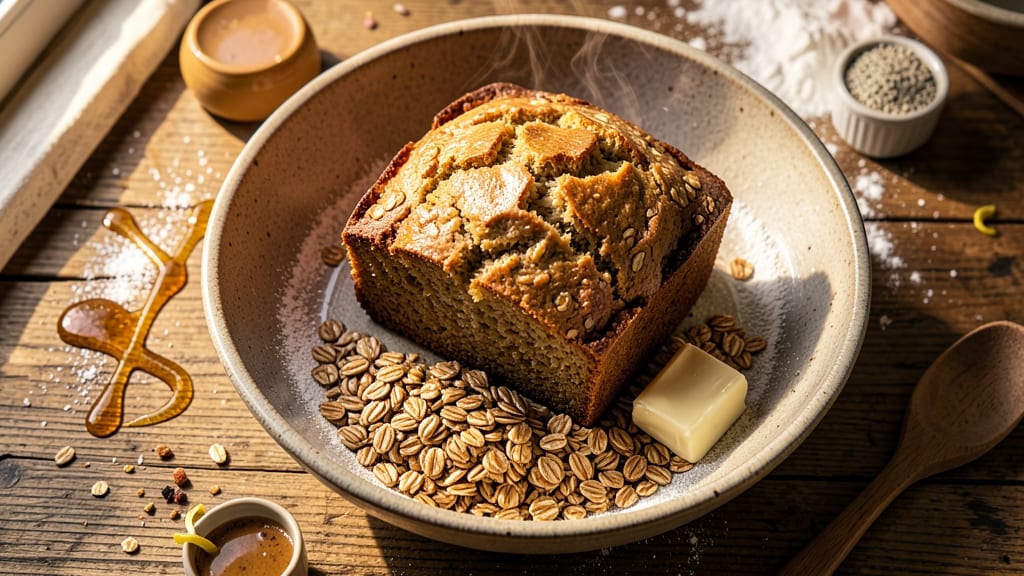
Alton Brown's oat bread recipe delivers that perfect balance of crusty exterior and tender crumb every time—no fancy equipment required. The secret lies in the hydration ratio and precise kneading technique that creates a chewy, hearty texture with just the right amount of oat crunch.
I've baked this recipe countless times, and it never fails to impress with its rustic charm and satisfying bite.
What sets this recipe apart is the way the oats contribute both texture and subtle sweetness, while the yeast develops deep, nutty flavors during the slow fermentation. The dough comes together with simple ingredients—flour, oats, yeast, and a touch of honey—but the technique makes all the difference.
Alton's method ensures a golden-brown crust that stays crispy long after slicing, while the interior remains moist and inviting.
This recipe yields a hearty loaf that's perfect for sandwiches, toast, or serving alongside soups and stews. The oats add a delightful crunch that contrasts beautifully with the soft bread, making each slice satisfyingly textured.
Whether you're a seasoned baker or just starting out, this method is foolproof and delivers professional-quality results every time.
Ready in about 2 hours (including proofing), this oat bread is ideal for a weekend baking project or when you want to elevate your dinner table. The aroma alone will have everyone anticipating that first slice. Let's get started with this classic recipe that brings restaurant-quality bread to your kitchen.
Ingredients for alton brown oat bread
Simple ingredients transformed through technique into Alton Brown's legendary oat bread.
| Ingredient | Amount | Notes |
|---|---|---|
| All-Purpose Flour 🌾 | 3 ½ cups | Spooned and leveled, not scooped |
| Old-Fashioned Rolled Oats 🥣 | 1 cup | Coarsely chopped for texture |
| Active Dry Yeast 🍞 | ¼ oz | One packet, room temperature |
| Granulated Sugar 🍚 | ½ cup | For yeast activation |
| Honey 🍯 | ¼ cup | Wildflower preferred for depth |
| Unsalted Butter 🧈 | ½ cup | Cold, cubed for easier mixing |
| Large Eggs 🥚 | 1 whole | Room temperature, beaten |
| Whole Milk 🥛 | 1 cup | Room temperature for hydration |
| Diamond Crystal Kosher Salt 🧂 | 1 ½ tsp | Adjust to taste after baking |
| Cornmeal 🌽 | ¼ cup | For dusting bread pan |
| Ice Water 💧 | ¼ cup | For final dough adjustment |
The oats are non-negotiable here—steel-cut or old-fashioned for that satisfying crunch, not instant oats. Bob's Red Mill is my go-to brand for consistent quality, but any reputable store carries them. The yeast should be freshly purchased (test by sprinkling in warm water with sugar—it should foam in 5-10 minutes). For the flour, King Arthur or Bread flour enhances gluten development, though all-purpose works beautifully. The butter's cold cubes melt gradually during mixing, creating pockets of flavor throughout the loaf—don't skip the chilling before shaping.
No honey? Maple syrup or agave works in a pinch, though honey's floral notes complement the oats perfectly. Substituting milk? Full-fat coconut milk mimics the richness, but the texture may be slightly denser. For a gluten-free version, replace flour with a 1:1 gluten-free baking blend (add 1 tsp xanthan gum). The cornmeal dusting isn't optional—it prevents sticking and adds a subtle crunch to the crust. If your dough feels too sticky, add ice water 1 tbsp at a time until it holds together without being gummy.
Shape the loaf immediately after the final knead—don't let it rest too long or it'll firm up. For maximum crust development, bake on the middle rack and rotate the pan halfway through. The bread keeps well for 3-4 days at room temperature, wrapped in a clean kitchen towel to prevent drying. For longer storage, freeze sliced loaves (wrap tightly in plastic) for up to 3 months. Reheat slices in a 350°F oven for 5-7 minutes to restore freshness—nothing beats that crispy crust straight from the oven.
Why You'll Love This Recipe
- No-Knead Magic: I swear by this recipe—just mix, let it rise, and bake. The rolled oats add texture without extra work, and the yeast does all the heavy lifting while I’m scrolling through my phone.
- Sweet & Toasty Crunch: That honey-glazed crust? Chef’s kiss. The rolled oats give every bite a satisfying crunch, while the warm honey-sugar balance makes it taste like a bakery loaf—even if my kitchen looks like a disaster.
- Breakfast-to-Dinner Star: Slice it toasted for brunch, pack it in lunches, or serve it warm with butter for dinner. It’s the one loaf that never gets ignored, and honestly? That’s a win for anyone who hates food waste.
- Budget Loaf Wins: Flour, oats, yeast—all pantry staples you already own. A single batch feeds my family for days, and the leftovers? Perfect for French toast or croutons. No guilt, all flavor.
Step-by-step instructions for alton brown's oat bread
This method delivers a perfectly balanced loaf with crispy oat topping and tender crumb.
Activate the Yeast and Prepare the Dough Base
In a small bowl, combine the 1 cup warm whole milk (about 110°F), 0.5 cup granulated sugar, and 0.25 oz active dry yeast. Let this sit for 5-10 minutes until foamy—this confirms the yeast is active. If it doesn't bubble, your yeast may be dead, and you'll need to start over.
In a large stand mixer fitted with the dough hook, combine the 3.5 cups all-purpose flour, 1.5 tsp diamond crystal kosher salt, and 1 cup coarsely chopped old-fashioned rolled oats. Mix on low speed for 30 seconds to distribute the oats evenly. Add the 1 whole large egg and the yeast mixture, then mix on low speed until just combined.
Incorporate Butter and Honey for Richness
Add the 0.5 cup cold cubed unsalted butter to the mixer and let it incorporate on low speed. The butter should begin to break down into small pieces but shouldn't melt completely—this ensures proper texture. Once the butter is mostly combined, add the 0.25 cup honey and mix until fully incorporated.
At this point, the dough will be shaggy and sticky. Scrape down the sides of the bowl with a spatula to ensure all ingredients are evenly distributed. The dough should begin to come together as you mix, but it won't be fully formed yet.
Knead the Dough Until Smooth and Elastic
Increase the mixer speed to medium and knead the dough for 5-7 minutes until it becomes smooth, elastic, and pulls away from the sides of the bowl. The dough should be slightly tacky but not sticky—if it's too wet, add 1 tablespoon all-purpose flour at a time until it reaches the right consistency.
Test the dough by performing the "windowpane test": Wet one finger and press it into the dough, then stretch it gently. If it stretches thin enough to see light through without tearing, it's ready. If not, continue kneading for another 2-3 minutes. Over-kneading can develop too much gluten, making the bread dense.
First Rise and Shape the Loaf
Transfer the dough to a lightly oiled bowl, cover it with a damp kitchen towel, and let it rise in a warm place for 1-1.5 hours or until doubled in size. The dough should be light and airy, with visible bubbles on the surface. If it rises too quickly, it may collapse later—patience is key here.
Once risen, punch down the dough to release air, then shape it into a 9x5-inch loaf pan lined with parchment paper. Sprinkle 0.25 cup cornmeal evenly over the top of the dough—this creates the signature crispy crust and prevents sticking. Cover loosely with the towel and let it rise for another 30-45 minutes until it domes slightly above the pan.
Bake to Golden Perfection
Preheat your oven to 375°F. Bake the loaf for 35-40 minutes until the top is deep golden brown and an instant-read thermometer inserted into the center reads 190-195°F. The internal temperature is crucial—underbaking can leave the crumb gummy, while overbaking dries it out.
For the final touch, brush the top with melted butter immediately after removing the bread from the oven. This adds moisture and enhances the oat topping's crispiness. Let the bread cool in the pan for 10 minutes, then transfer it to a wire rack to cool completely before slicing. The crust should be firm and crackly, while the interior should be soft and moist with pockets of air from the yeast.
Pro Tips For Making Alton Brown Oat Bread
- TOAST THE OATS FIRST: I learned this the hard way—skipping the toasting step means your bread will taste bland and mealy. Spread the oats on a baking sheet at 350°F for 8–10 minutes until they’re golden and smell nutty. That extra flavor is the thing that matters most in this recipe.
- WEIGH YOUR FLOUR: I used to eyeball it, and my bread turned out dense or dry. For this recipe, use a kitchen scale—500 grams of all-purpose flour, packed lightly but not compressed. The ratio of flour to oats and honey is precise, and cutting corners here throws everything off.
- LET THE DOUGH RISE UNTIL IT DOUBLES: Yes, it’s tempting to rush, but resist. The dough should take 1.5–2 hours to double in a warm spot (like a turned-off oven with a bowl of hot water inside). If you rush it, the crumb will be tight and gummy instead of airy and tender.
- USE COLD HONEY FOR BETTER FLAVOR: Sounds weird, but it works: chill the honey in the fridge for 20 minutes before mixing it into the dough. The cooler temperature slows yeast activation just enough to give the flavor time to meld, rather than overpowering the rise. Your future self will notice the difference.
Health benefits of this dish
Whole Grain Power
This oat bread delivers soluble fiber from the 1 cup old-fashioned rolled oats, supporting digestive health and promoting gut regularity. A single slice provides about 4 grams of fiber—nearly 15% of your daily needs—while keeping you full longer than refined flour bread.
The oats also contain beta-glucan, a compound linked to lower cholesterol levels when consumed regularly. 💪
Protein-Packed Loaf
With 1 whole large egg and 3.5 cups all-purpose flour, this bread offers a solid protein boost—about 8 grams per serving. The egg contributes high-quality protein with all nine essential amino acids, while the flour provides gluten structure for that satisfying chew.
Unlike many breads, this recipe avoids shortcuts that sacrifice protein for convenience.
Natural Sweetness
The 0.25 cup honey adds subtle sweetness while providing natural antioxidants and trace minerals like manganese and potassium. Unlike refined sugar, honey contains small amounts of vitamins and polyphenols that support cellular health.
The honey also enhances the Maillard reaction during baking, creating that deep golden crust we all love. ✨
Gluten-Friendly Option
While this recipe uses traditional flour, you can easily adapt it for gluten-sensitive diets by substituting a 1:1 gluten-free baking blend (add 1 tsp xanthan gum). The oats remain a gluten-free ingredient, providing fiber and texture while the honey maintains natural sweetness.
Always check labels—some gluten-free flours contain oats processed in shared facilities.
Low-Glycemic Advantage
The combination of whole grains, fiber-rich oats, and honey creates a low-glycemic index bread that helps stabilize blood sugar levels. This makes it an excellent choice for diabetes management or anyone monitoring carb intake. The slow-digesting complex carbs provide sustained energy without the spikes associated with white bread. 🌱
Rich in Micronutrients
This bread contains trace minerals like magnesium (from the oats) and zinc (from the yeast), both essential for immune function. The whole milk contributes calcium and vitamin B12, while the egg adds choline for brain health.
Even simple ingredients combine to create a nutrient-dense loaf that's far more than just empty carbs. 💡
Nutrition facts
Frequently asked questions
Can I make this oat bread without a stand mixer?
While a mixer makes kneading easier, you can achieve the same results by hand. Use a large bowl and knead the dough on a lightly floured surface for 8-10 minutes until smooth and elastic. The windowpane test still applies—if it stretches thin without tearing, you're ready. Just be prepared for a bit more arm work!
Why does my dough feel too sticky?
Sticky dough usually means one of two things: either the room is too warm or the hydration ratio needs adjustment. If the dough feels too wet after mixing, add 1 tablespoon all-purpose flour at a time until it holds together without being gummy. Alternatively, chill the dough for 15 minutes before shaping to firm it up.
Can I substitute honey with another sweetener?
Yes, but results may vary. For a 1:1 substitution, use maple syrup or agave nectar, though the flavor profile will differ slightly. If using brown sugar, reduce by 25% (since it's denser) and add 1 teaspoon extra milk to maintain dough consistency. The honey's moisture content helps with texture, so avoid dry sweeteners like granulated sugar.
How do I know when the bread is fully baked?
Look for three key indicators: the crust should be deep golden brown, an instant-read thermometer inserted into the center should read 190-195°F, and the bread should sound hollow when tapped on the bottom. If unsure, err on the side of slightly underbaking—it'll firm up as it cools. The internal temperature is the most reliable test!
Can I make this bread in a Dutch oven for extra crustiness?
While not traditional for this recipe, you can experiment! Shape the dough into a round loaf and bake in a preheated Dutch oven at 425°F for 25 minutes, then finish uncovered at 375°F for 10-15 minutes. The Dutch oven will create a steamed environment for the first phase, resulting in a thicker crust. Just reduce the cornmeal to 2 tablespoons to avoid over-crisping.