
Desserts
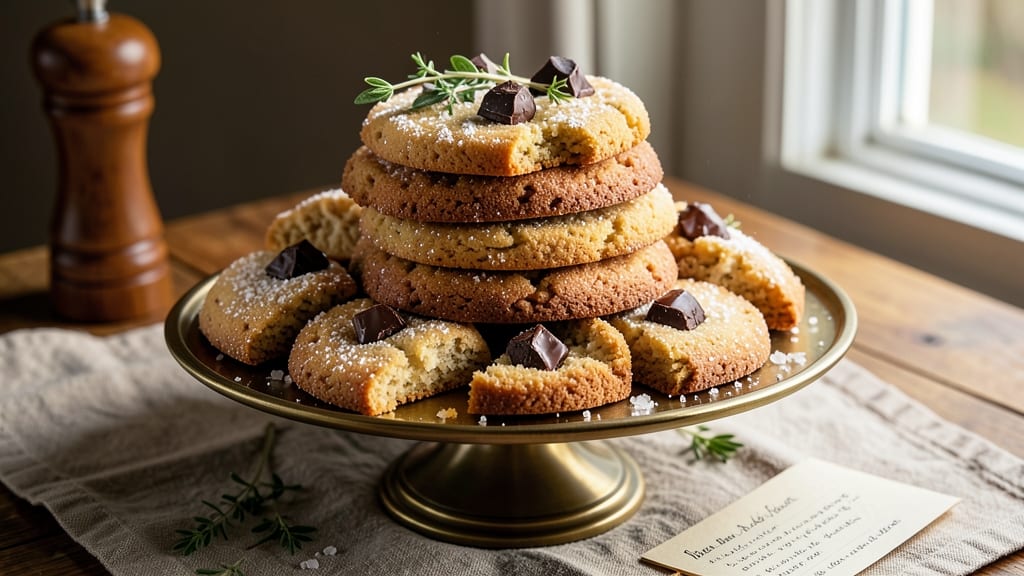
Alton Brown's shortbread cookie recipe delivers the perfect balance of buttery crunch and delicate vanilla flavor—every bite is a testament to precise technique. The secret lies in chilled butter cut into flour until it resembles coarse crumbs, creating that signature tender yet crisp texture.
I've perfected this method over years of baking, ensuring each cookie maintains its iconic shape and melt-in-your-mouth quality.
What sets these apart is the careful ratio of ingredients: 1 cup of butter to 2 cups of flour, with just a touch of vanilla to elevate the buttery base.
Alton's approach emphasizes proper chilling at every stage—from the dough to the baked cookies—to prevent spreading and maintain that signature shortbread snap. The result is a cookie with clean edges and a velvety interior that practically dissolves on your tongue.
Baking at 325°F ensures even golden color without browning, while a precise 15-minute bake time guarantees perfect texture. The cookies cool on the baking sheet for 10 minutes before transferring, allowing them to set properly for clean cutting.
This is the kind of recipe that transforms ordinary afternoons into moments of pure indulgence.
For added depth, consider folding in dark chocolate chunks or orange zest into the dough—these variations maintain the classic shortbread profile while adding exciting new dimensions. The key remains the same: precise technique and patience yield cookies that taste like they came straight from a professional kitchen.
Ingredients for alton brown shortbread cookie
Precision-crafted ingredients for Alton Brown's iconic shortbread cookies—where technique meets buttery perfection.
| Ingredient | Amount | Notes |
|---|---|---|
| Unsalted Butter 🧈 | 2 cups | Cold, cut into 1/2-inch cubes |
| All-Purpose Flour 🌾 | 4 cups | Sifted, spooned and leveled |
| Pure Vanilla Extract 🍯 | 1 tbsp | High-quality, Madagascar bourbon preferred |
| Diamond Crystal Kosher Salt 🧂 | ½ tsp | Fine grain, not iodized |
| Granulated Sugar 🍚 | ¼ cup | Superfine preferred for even texture |
| Dark Chocolate Chunks 🍫 | ½ cup | 70% cacao, chopped into 1/4-inch pieces |
| Orange Zest 🍊 | 1 tbsp | Fresh, finely grated |
The butter is non-negotiable here—European-style unsalted with at least 82% fat content delivers that signature melt-in-your-mouth texture. Plugrá or Kerrygold are my go-tos, but any high-fat butter works if properly chilled. The flour must be sifted to eliminate air pockets—this ensures those crisp edges. For vanilla, Madagascar bourbon extract adds depth beyond imitation varieties. Store your butter in the freezer to maintain its firmness during the cutting process, which is critical for achieving that classic shortbread crumb texture.
No superfine sugar? Regular granulated sugar pulsed in a food processor works perfectly—just 30 seconds transforms it. Substituting dark chocolate? Ensure 70% cacao minimum to maintain balance with the buttery base; lower percentages risk overpowering the delicate flavor. For orange zest, use only the outer layer—avoid the white pith, which adds bitterness. The salt is crucial but subtle; Diamond Crystal kosher dissolves evenly without graininess. If you're short on time, pre-sift your flour and store it in an airtight container to prevent absorption of ambient moisture.
Shortbread dough requires two 30-minute chills—first after mixing, then after shaping. Wrap dough tightly in plastic and refrigerate to prevent condensation. For variations, fold in chocolate or zest after the first chill to maintain even distribution. Baked cookies keep in an airtight container at room temperature for 5-7 days, though they're best enjoyed within 48 hours for peak texture. For gifting, parchment-lined boxes preserve freshness for up to 10 days.
Why You'll Love This Recipe
- Here’s what sold me: the way Diamond Crystal kosher salt and pure vanilla extract cut through the sweetness. It’s buttery, crisp, and just slightly salty—like a hug for your taste buds. No artificial flavors, just real, clean flavor that makes you go back for another.
- Butter Love Simplicity: I swear by this recipe because it’s just four ingredients—no fussing with eggs or weird ratios. You cream the butter and sugar, toss in flour and vanilla, then chill. That’s it. Even my 10-year-old could handle it (though I’d still supervise the oven part).
- Vanilla-Salt Magic: Here’s what sold me: the way Diamond Crystal kosher salt and pure vanilla extract cut through the sweetness. It’s buttery, crisp, and just slightly salty—like a hug for your taste buds. No artificial flavors, just real, clean flavor that makes you go back for another.
- Holiday or Snack Attack: Between us, these cookies are my go-to for holiday gifts and midnight cravings. They freeze like champs (perfect for parties) but also disappear in minutes when I’m lazy. Wrap them in cellophane? Done. Eat straight from the pan? Also done.
Step-by-step instructions for alton brown shortbread cookies
Mastering these cookies means perfecting three key elements: cold butter, precise mixing, and gentle baking.
Prepare the Dough with Cold Butter
In a stand mixer fitted with the paddle attachment, combine the 2 cups cold, cubed unsalted butter with the 0.25 cup granulated sugar. Mix on medium speed for 2-3 minutes until the butter is fully incorporated and the mixture is light and fluffy. The butter should remain in distinct pieces—this is crucial for achieving that signature crumbly texture.
Add the 1 tbsp pure vanilla extract and 1 tbsp orange zest to the butter mixture. Mix on low speed for 30 seconds until evenly distributed. The orange zest will add a bright, citrusy note that complements the buttery richness. At this stage, the dough should resemble coarse sand with visible butter pieces.
Incorporate Dry Ingredients Gently
Reduce the mixer speed to low and gradually add the 4 cups sifted all-purpose flour and 0.5 tsp kosher salt through the feed tube. Mix just until the dough comes together—this should take about 1 minute. Overmixing develops gluten, which leads to tough cookies instead of the delicate crumb we want.
Once combined, remove the dough from the mixer and gently fold in the 0.5 cup dark chocolate chunks by hand using a silicone spatula. Distribute them evenly throughout the dough. The chocolate should be cold to prevent premature melting. Press the dough into a disk, wrap it tightly in plastic wrap, and refrigerate for at least 2 hours or up to 24 hours.
Roll and Cut the Dough
Preheat your oven to 325°F and line two baking sheets with parchment paper. On a lightly floured surface, roll the chilled dough to a thickness of ¼ inch. Use a round cutter or glass to cut out circles—about 2.5 inches in diameter. Re-roll the scraps and cut more cookies until all the dough is used.
Place the cut cookies on the prepared baking sheets, spacing them about 1 inch apart. The dough will spread slightly during baking, so don't crowd the pan. For extra flavor, sprinkle a pinch of kosher salt and a few extra chocolate chunks on top of each cookie before baking.
Bake to Golden Perfection
Bake the cookies for 12-15 minutes, rotating the pans halfway through, until the edges are light golden brown and the centers look slightly underbaked. They should feel firm to the touch but not rock-hard. The key is to bake them just until they're set—overbaking leads to dry, crumbly cookies that lack that signature melt-in-your-mouth texture.
Remove the cookies from the oven and let them cool on the baking sheets for 5 minutes before transferring to a wire rack to cool completely. The cookies will firm up as they cool, developing that signature shortbread crunch. Store in an airtight container at room temperature for up to 5 days or freeze for up to 3 months.
Pro Tips For Making Alton Brown Shortbread Cookie
- CHILL THE DOUGH: I learned this the hard way—rolling out warm dough leads to cracks and uneven baking. Pop the dough in the fridge for at least 30 minutes before shaping, even if it feels like overkill. The butter needs time to firm up, or your cookies will spread into sad, misshapen blobs.
- WEIGH THE BUTTER: Using a scale for the butter isn’t fussing—it’s precision. Brown’s recipe relies on the exact ratio of cold, cubed butter to flour, and eyeballing it means your cookies might turn out greasy or dry. I keep a small digital scale just for this; it’s the only way to guarantee those perfect crumbly layers.
- SALT THE FLOUR: Skip the separate salt step—just toss the flour and salt together in the bowl first. I used to add the salt later and ended up with uneven flavor. Mixing it in dry means every bite gets that subtle, buttery saltiness without clumps. (And yes, Diamond Crystal measures differently—use ½ tsp per cup of flour.)
- PRESS FOR EVEN CRUSTS: Don’t just roll the dough—press it firmly into the pan with your fingers or a glass. I used to worry about overworking it, but a little pressure ensures the edges crisp up while the centers stay tender. Think of it like giving the dough a little hug so it holds its shape.
Troubleshooting great alton brown shortbread cookie
Butter Too Soft?
If your butter melts too quickly during mixing, it's time to chill it properly. Place your butter cubes in the freezer for 15-20 minutes before starting—this ensures they stay firm. I like to use European-style butter like Plugrá because it has a higher fat content (82%) that holds up better.
If your kitchen is warm, consider chilling your mixing bowl and paddle attachment in the freezer for 10 minutes before use. 🧈
Dough Spreads Too Much
Overworked dough or insufficient chilling causes spreading. First, ensure you're chilling the dough for the full 2 hours before rolling. If you're in a hurry, wrap the dough in plastic and place it in the freezer for 30 minutes instead.
Also, verify your oven temperature—if it's running hot, reduce it to 320°F and bake for 16-18 minutes. Using a lightly floured surface when rolling helps too.
Cookies Turn Out Dry
Dry cookies usually mean overbaking or too much flour. Check your baking time—12-15 minutes at 325°F is ideal. If your cookies still look dry, try adding 1 tbsp milk or heavy cream to the dough mixture.
For extra moisture, brush the tops with melted butter right after baking. I also recommend using superfine sugar if you haven't already—it dissolves faster and keeps the texture tender. 💧
Cutter Sticks Too Deep
If your cutter is pressing too far into the dough, causing uneven edges, adjust your rolling technique. Roll the dough to a consistent ¼-inch thickness and use a sharp cutter or glass.
For extra precision, place the dough on a piece of parchment paper before rolling, then transfer it to the baking sheet with the parchment intact. This prevents sticking and makes cutting easier. A 2.5-inch round cutter works best for classic shortbread shapes.
Chocolate Melts Prematurely
If your chocolate chunks lose their shape before baking, they weren't cold enough. Place your chocolate in the freezer for 10 minutes before folding it into the dough. For extra insurance, use enrobed chocolate chunks (like those from Ghirardelli)—they stay firm longer.
If you notice melting during baking, reduce the oven temperature slightly to 315°F and check cookies at 10 minutes.
Cookies Lack Flavor
Weak flavor often means underseasoned dough. Double-check your vanilla extract—Madagascar bourbon vanilla adds depth that imitation extracts can't match. For extra richness, add ½ tsp lemon zest alongside the orange zest.
If your cookies still taste bland, try adding 1 tbsp brown sugar to the dough mixture—it enhances the caramel notes. Freshly ground spices like cardamom or cinnamon can also elevate the flavor profile. 🍯
Nutrition facts
Frequently asked questions
Why do these shortbread cookies need to chill twice?
The first 2-hour chill after mixing develops the gluten structure gently, while the second 30-minute rest after rolling prevents spreading during baking. This two-step process creates that signature crisp edge and tender crumb. Think of it as giving the butter time to firm up properly between stages—critical for texture!
Can I make these without a stand mixer?
Use a pastry cutter or two forks to cut the 2 cups cold butter into the 4 cups flour until it resembles coarse crumbs. Work quickly in a cold bowl to prevent melting. The key is to keep everything chilled—even your hands! This method takes 5-7 minutes of elbow grease but yields the same perfect texture.
How do I store these cookies to keep them fresh?
For maximum freshness, store in an airtight container at room temperature for up to 5 days. Place parchment paper between layers to prevent sticking. For longer storage, freeze the baked cookies for up to 3 months—just thaw at room temperature for 15-20 minutes before enjoying. The chocolate chunks stay firm when frozen!
What's the secret to cutting perfect circles?
Roll the dough to a consistent ¼-inch thickness and use a sharp cutter or glass rim. Press straight down without twisting to avoid uneven edges. Pro tip: Freeze your cutter for 5 minutes before use—it helps with clean cuts through chilled dough. A 2.5-inch round cutter gives classic shortbread proportions.
Can I add other mix-ins besides chocolate?
Yes! Try ½ cup crushed pistachios, 1 tsp cardamom, or 1 tbsp lemon zest for variations. Fold mix-ins after the first chill to maintain even distribution. Just remember: the butter-to-flour ratio is sacred—don't exceed 2 cups butter or the texture will suffer.