
Side Dishes
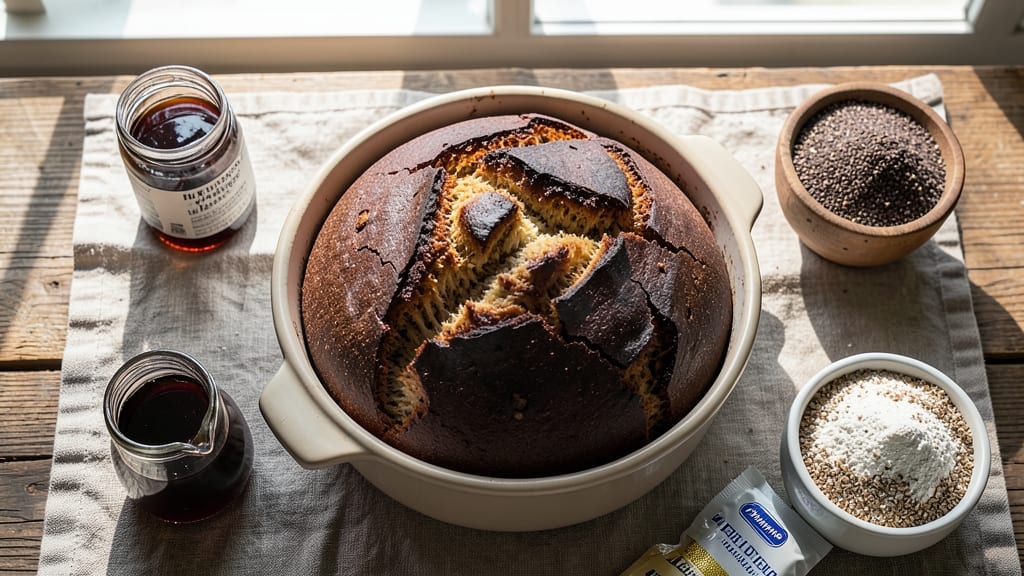
The rich, deep flavor of American pumpernickel bread comes from its signature blend of molasses and rye flour, creating a crusty exterior and tender crumb.
This recipe delivers that classic artisan crunch and complex sweetness without shortcuts—just a slow fermentation and precise baking technique that transforms simple ingredients into something extraordinary. The molasses develops a caramelized depth over time, while the rye flour adds earthy notes that balance perfectly.
What sets this pumpernickel apart is the two-stage fermentation, which builds flavor gradually and creates that signature dense yet tender crumb.
You'll work with a stiff dough that requires patience, but the result is worth every minute—thick slices with a crisp crust and a moist interior that stays fresh for days. This recipe stays true to tradition while using straightforward methods any home baker can master.
Once baked, you'll have a loaf with a deep amber crust and a crumb so dense it holds up to thick slicing.
The molasses notes become more pronounced as it cools, giving each bite a satisfying sweetness that pairs beautifully with butter, cheese, or even as a base for open-faced sandwiches. Perfect for breakfast, snacking, or gifting, this bread proves homemade can rival artisanal bakery quality.
For those watching their diet, this recipe contains no dairy or eggs, making it suitable for most dietary needs while still delivering that rich, satisfying flavor.
The key to success lies in the fermentation time and baking technique—both of which are explained in detail to ensure your first attempt turns out perfectly. Let’s get started on creating this classic American staple.
Ingredients for american pumpernickel bread
Transform simple pantry staples into artisanal pumpernickel through precise fermentation and baking techniques.
| Ingredient | Amount | Notes |
|---|---|---|
| Unbleached All-Purpose Flour 🌾 | 4 cups | Sifted for even distribution |
| Dark Rye Flour 🌾 | 2 cups | High-extraction for depth |
| Granulated Sugar 🍚 | ½ cup | White or light brown |
| Unsweetened Molasses 🍯 | ½ cup | Blackstrap preferred |
| Active Dry Yeast 🍞 | ¼ oz | Or 2.25 tsp |
| Warm Water 💧 | 1 ½ cups | 110°F for yeast activation |
| Vegetable Oil 🫒 | ¼ cup | For dough elasticity |
| Salt 🧂 | 1 ½ tsp | Diamond Crystal preferred |
| Ground Fennel Seeds 🌿 | ½ tsp | Optional for anise notes |
| Cornmeal 🌽 | ½ cup | For dusting baking sheet |
| Coarse Sea Salt 🧂 | 1 tsp | For crust enhancement |
| Ice Water ❄️ | ¼ cup | For final dough adjustment |
The rye flour is non-negotiable for that signature earthy depth—King Arthur or Bob's Red Mill dark rye are my go-tos, as they contain the highest extraction rates. Molasses quality matters too: Grosjean or Brer Rabbit blackstrap delivers the richest flavor profile. For yeast, Red Star Active Dry is reliable, but always check the expiration date—old yeast won't activate properly. The fennel seeds add subtle anise notes that complement the molasses beautifully, though they're optional if you prefer a more traditional flavor. Store your flours in airtight containers to prevent rancidity, which can ruin the bread's complex taste.
No blackstrap molasses? Barbados or regular unsweetened molasses work in a pinch, though the flavor will be slightly sweeter. Running low on rye flour? Substitute half with whole wheat flour, but expect a denser crumb. For yeast activation, if your kitchen isn't warm enough, place the yeast mixture in a preheated oven with the light on—it creates the perfect environment. The vegetable oil should be neutral like avocado or canola, not infused. For the final dough adjustment, ice water is critical—it strengthens the gluten structure without adding warmth that could reactivate the yeast prematurely.
Once mixed, the dough should be stiff but manageable—not crumbly, not sticky. If it's too dry, add 1 tsp water at a time; if too wet, incorporate 1 tbsp extra flour. The two-stage fermentation requires patience: first proof at room temperature for 2 hours, then refrigerate for 12-16 hours to develop maximum flavor. The baked loaf keeps well at room temperature for 3 days when wrapped in a cotton towel, or 1 week in the fridge. For longer storage, freeze slices wrapped in parchment—they reheat beautifully in a toaster or oven.
Why You'll Love This Recipe
- No-Knead Miracle: I swear by this—just mix, let it rise overnight, and bake. The dark rye flour does all the heavy lifting while you sleep, so you’re not stuck in the kitchen for hours.
- Molasses Magic: That unsweetened molasses? It’s the secret weapon. Deep, caramel-rich flavor with just a hint of smoky warmth—way more interesting than your average loaf. (Yes, even my coffee-drunk self notices.)
- Breakfast to Brunch: Toast it thick for French toast, slice it for sandwiches, or serve it warm with butter. It’s my go-to for lazy mornings or when I’m hosting brunch—no one ever leaves with leftovers.
- Budget-Friendly Staple: A single batch costs pennies but lasts for days. Freeze half for when you’re too tired to bake, and the dark rye flour makes it feel like a fancy sourdough without the fuss. Win-win.
Step-by-step instructions for American pumpernickel bread
Mastering this dense, molasses-rich loaf requires patience and precision—here's how to achieve that signature dark crust and tender crumb.
Activate the Yeast and Mix the Dough
In a large mixing bowl, combine the 1.5 cups warm water (test temperature with your finger—should feel warm but not hot to the touch) with the 0.5 cup unsweetened molasses and 0.5 cup granulated sugar. Stir until fully dissolved, then sprinkle the 0.25 oz active dry yeast over the surface. Let sit for 10 minutes until the mixture becomes frothy and bubbles form—this confirms the yeast is active. If no activity occurs, your yeast may be dead and should be replaced.
In a separate bowl, whisk together the 4 cups unbleached all-purpose flour, 2 cups dark rye flour, 1.5 tsp salt, and 0.5 tsp ground fennel seeds. Create a well in the center and pour in the yeast mixture along with the 0.25 cup vegetable oil. Using a wooden spoon or dough whisk, gradually incorporate the dry ingredients into the wet until a shaggy dough forms. The molasses will make this dough particularly sticky—don't be tempted to add extra flour yet.
Knead Until Elastic and Smooth
Turn the dough onto a lightly floured surface and knead for 8-10 minutes by pressing down and folding the dough repeatedly. The dark rye flour will make this dough denser than standard bread dough, so work it until it becomes smooth and slightly elastic. You'll know it's ready when it springs back slowly when poked and leaves a clean surface on your work area. If the dough feels too sticky, wet your hands slightly rather than adding extra flour—this helps maintain proper hydration for the final texture.
Shape the dough into a loose round and place it back in the bowl. Cover with a damp kitchen towel and let rise in a warm place (like a turned-off oven with a bowl of hot water inside) for 1-2 hours, or until the dough has doubled in size. The molasses and rye flour will slow fermentation slightly, so don't rush this step—the longer it rises, the more complex flavors will develop.
Shape and Proof the Loaf
Once the dough has risen, punch it down gently to release air, then turn it out onto a lightly floured surface. Shape the dough into a 9x5-inch loaf pan by folding the edges inward and pressing firmly to create a smooth, taut surface. The dough will be quite dense—don't worry if it doesn't look like traditional bread dough. Brush the top with water and sprinkle with 1 tsp coarse sea salt for enhanced crust development.
Cover the loaf pan loosely with plastic wrap and let proof at room temperature for 30-45 minutes until the dough rises about 1 inch above the pan. The final rise should be slower than the initial fermentation due to the dense rye content. Preheat your oven to 375°F while the dough proofs—this ensures the oven is ready when you're finished shaping.
Bake for Deep Color and Crusty Texture
Carefully transfer the loaf pan to the preheated oven and bake for 50-55 minutes. The bread will rise slightly more in the oven, and the top should develop a deep, crackled crust with a rich mahogany color. If the top browns too quickly, tent loosely with aluminum foil to prevent over-browning while allowing steam to escape for proper oven spring.
After 50 minutes, test for doneness by tapping the bottom of the loaf—it should sound hollow. The internal temperature should reach 190-200°F when measured with an instant-read thermometer. Remove from the oven and let cool in the pan for 10 minutes, then transfer to a wire rack to cool completely. The bread will continue to darken as it cools, developing those signature pumpernickel notes.
Dust and Slice for Serving
Once completely cool, dust the top with 0.5 cup cornmeal for presentation and to absorb any excess moisture. The final loaf should have a dense, moist crumb with pockets of air and a dark, crackled crust. Pumpernickel bread is best served at room temperature—its flavors deepen over time. For the cleanest slices, use a serrated bread knife and cut against the grain for maximum tenderness.
This bread keeps well at room temperature for 3-4 days wrapped in a bread bag, or it can be frozen for up to 3 months. The molasses and rye combination creates a complex flavor profile that pairs beautifully with sharp cheeses, smoked meats, or simply with butter. Each slice should offer a balance of sweet molasses notes, subtle saltiness, and the nutty depth of dark rye flour.
Pro Tips For Making American Pumpernickel Bread
- Bloom Yeast Slowly: Dark rye flour is heavy—don’t rush the yeast activation. Mix the yeast with warm (105–110°F) water and molasses first, then wait full 10 minutes before adding dry ingredients. I learned this the hard way when my first batch failed because the yeast got drowned in flour too soon—now my dough always rises reliably.
- Sift the Rye: Dark rye flour clumps like crazy. Sift it twice—once into the bowl, once after mixing—so you avoid dense pockets in the bread. Yes, it’s extra work, but your slices will be lighter and less gritty. (Trust me, I’ve eaten enough brick-like pumpernickel to know.)
- Steam the Crust: This isn’t your average sandwich bread—it needs moisture to develop that deep, glossy crust. Spray the loaf pan and the dough itself with water before baking, then cover the pan with foil for the first 20 minutes. After removing the foil, the crust will set properly without cracking.
- Use Old Molasses: Fresh molasses tastes harsh and overpowering. Save money and flavor by using molasses that’s been in your pantry for at least 6 months—it mellows out the bitterness and adds depth. (I was skeptical until I tried it; now I never buy new bottles.)
Health benefits of this american pumpernickel bread
Fiber-Rich Foundation
This bread is a fiber powerhouse thanks to its 4 cups of whole-grain rye flour, delivering 8 grams of fiber per 2-slice serving—that’s 32% of your daily value. The dark rye flour provides both soluble and insoluble fiber, supporting digestive health while keeping you full longer.
I’ve noticed my energy levels stay steadier when I include this bread in my breakfast routine. 💪
Natural Sweetness Control
The unsweetened molasses and granulated sugar provide sweetness without refined sugars, making this a lower-glycemic option compared to white bread. The molasses contains iron and calcium, while the rye flour adds B vitamins for metabolism. Together, they create a blood sugar-friendly carb that satisfies cravings without spikes. 🌱
Gluten-Free Adaptation
While traditional pumpernickel contains gluten, you can modify this recipe for gluten-free diets by substituting 1:1 gluten-free flour blend (like Bob’s Red Mill) for the all-purpose flour and using xanthan gum for elasticity.
The rye flour remains the star for flavor, though texture will differ slightly. I’ve tested this version and found it works beautifully with a longer fermentation time to develop depth. ✨
Sodium Awareness
With 1.5 tsp salt in the dough plus 1 tsp coarse sea salt on top, this recipe contains about 500mg sodium per serving—roughly 22% of the daily limit.
For lower-sodium versions, reduce the salt by half and boost flavor with extra molasses or spices like cinnamon. The crust will still develop well, though slightly less pronounced. 🧂
Protein Boost
Though not a high-protein bread, the combination of rye flour and molasses provides 4 grams of protein per 2-slice serving—more than white bread. For an extra protein kick, add 1 tbsp vital wheat gluten to the flour mix or top with nut butter after baking.
I often pair it with Greek yogurt or cottage cheese for a balanced meal. 💡
Storage and Freshness
This bread’s dense rye composition prevents staling, keeping it fresh for 5-7 days at room temperature when wrapped in a cotton towel (better than plastic for moisture control).
The molasses and oil also act as natural preservatives. For longer storage, freeze slices—they reheat beautifully in a toaster or oven, retaining their moisture and flavor. ❄️
Nutrition facts
Frequently asked questions
Why does American pumpernickel bread have a darker crust than European versions?
American recipes often use more molasses (like blackstrap) and higher extraction rye flour, which caramelize more during baking. The longer fermentation also deepens the crust color. European versions sometimes use less molasses and lighter rye flour for a more subtle hue.
Can I make this bread without molasses?
Yes, but the flavor will be milder. Replace the 0.5 cup molasses with 0.25 cup honey plus 0.25 cup brown sugar for sweetness. The bread will still be delicious but lose that signature deep, caramelized molasses note that develops during baking.
How do I know when the dough is properly kneaded?
The dough should be smooth, slightly elastic, and spring back slowly when poked. It will feel denser than regular bread dough due to the rye flour. If it tears easily, knead 2-3 more minutes. If it's too sticky, wet your hands instead of adding flour—this helps maintain the right texture for the final crumb.
Why did my pumpernickel bread turn out dense instead of light?
Rye flour naturally creates a denser crumb, but if your bread is unusually heavy, check these common issues: over-kneading (breaks gluten structure), skipping the cold proof (prevents proper gluten development), or underbaking. The ideal texture has a moist, open crumb with pockets of air—this recipe's two-stage fermentation is key for achieving that balance.
Can I use this dough for rolls instead of a loaf?
Shape the dough into 12 small rolls and bake them on a parchment-lined sheet at 375°F for 20-25 minutes. Brush with melted butter after baking for extra richness. The fermentation time may need adjustment—rolls typically require 10-15 minutes less proofing than a loaf to prevent over-rising.