
Side Dishes
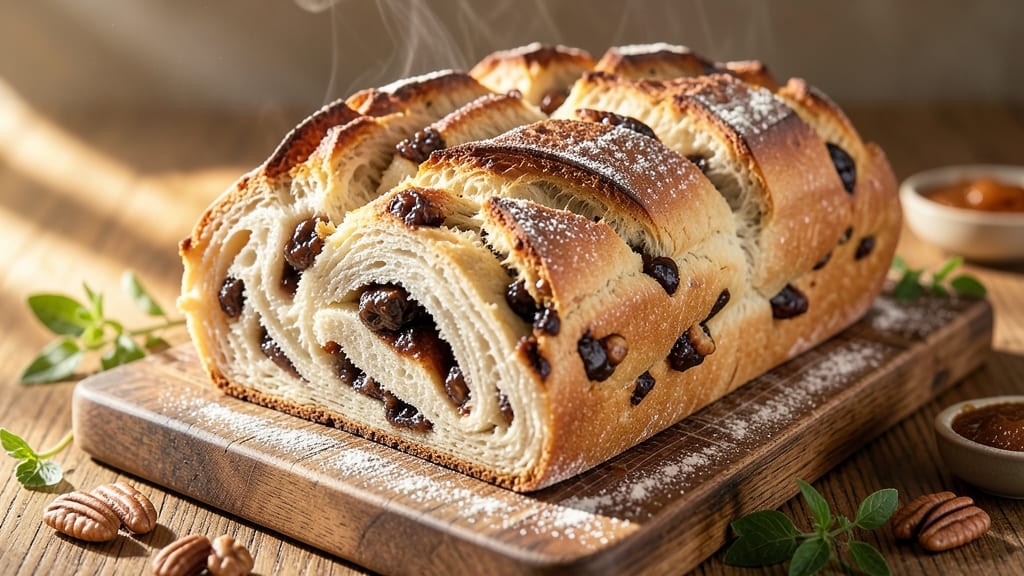
This Amish friendship bread recipe delivers the beloved buttery swirls and tender crumb without any yeast or starter—just a simple mix of flour, sugar, and baking soda. 💛 The traditional recipe has been adapted for modern kitchens, making it foolproof for home bakers.
What sets this version apart is its no-fuss preparation: no waiting for yeast to rise or starter to ferment, just a straightforward dough that comes together in minutes.
The secret to its signature texture—dense yet slightly crumbly—lies in the baking soda leavening and the careful layering of butter swirls. Unlike traditional yeast-based breads, this version relies on chemical leavening for a tender crumb without the need for long fermentation.
The result is a loaf that stays fresh for days, perfect for slicing with butter or pairing with jam and coffee.
Baking at 350°F ensures a golden crust and even rise, while the butter swirls melt into rich, flavorful pockets throughout. This recipe is designed to be beginner-friendly, with clear steps for shaping and baking that guarantee consistent results every time.
No special equipment is needed—just a mixing bowl, rolling pin, and a standard oven.
Once baked, the bread keeps well at room temperature for 3–5 days in an airtight container, making it ideal for meal prep or gifting.
Whether you're serving it warm from the oven or enjoying it the next day, the buttery swirls and comforting texture make it a staple for any table. Let’s get baking!
Ingredients for amish friendship bread no starter
Nine simple ingredients create this beloved buttery bread with tender crumb and signature swirls.
| Ingredient | Amount | Notes |
|---|---|---|
| All-Purpose Flour 🌾 | 4 cups | Sifted for even texture |
| Granulated Sugar 🍚 | ½ cup | White or light brown |
| Baking Soda 🧂 | 1 ½ tsp | Freshly opened for leavening |
| Salt 🧂 | 1 tsp | Diamond Crystal preferred |
| Unsalted Butter 🧈 | 1 cup | Cold and cubed for swirls |
| Milk 🥛 | ½ cup | Room temperature for dough |
| Vanilla Extract 🌸 | 1 tsp | Pure vanilla preferred |
| Ground Cinnamon 🍃 | 1 tsp | For subtle warmth |
| Ground Nutmeg 🌿 | ¼ tsp | Freshly grated nutmeg |
| Powdered Sugar 🍚 | ¼ cup | For topping (optional) |
The flour is the foundation—King Arthur or Gold Medal brands work best for that perfect crumb. Butter matters too: use European-style butter if you can find it, but any unsalted butter works. The milk should be room temperature so it blends smoothly into the dough. For the spices, Penzeys sells pre-ground nutmeg that’s fresher than most grocery store options. If you’re short on time, pre-sifted flour from the baking aisle saves a step. The baking soda needs to be fresh—if it’s older than six months, it won’t leaven properly.
No vanilla extract? Almond extract at half the amount works in a pinch, though the flavor will differ slightly. Swap powdered sugar for confectioners’ sugar if that’s what you have. For the butter swirls, melted butter can be used, but cold cubes create those classic pockets. If you’re avoiding dairy, vegan butter works, though the texture will be slightly denser. The cinnamon and nutmeg are optional but add that classic Amish touch—skip them if you prefer a simpler flavor.
This dough keeps for 2 days in the fridge, wrapped tightly in plastic. For longer storage, freeze the shaped loaf for up to 3 months. Once baked, store in an airtight container at room temperature for 3–5 days. The bread reheats beautifully—wrap a slice in foil and warm in a 350°F oven for 5 minutes. Leftovers make great toast or French toast the next day.
Why You'll Love This Recipe
- No-Yeast Hassle: I’ll admit, I used to dread making bread—until this. Just mix flour, sugar, baking soda, and butter, then fold it into that signature crisscross pattern. No waiting for starter, no kneading, no stress. The dough comes together faster than my coffee brews.
- Sweet-Butter Magic: That little pat of unsalted butter in the dough? It’s the star. The bread has this perfect balance—just sweet enough from the sugar but rich and tender from the butter melting into every bite. Honestly, I’ve made it plain, but I’m adding cinnamon next time just to see.
- Breakfast or Snack: Here’s what sold me—it’s always useful. Toast it for breakfast, pack slices for lunch, or serve warm with jam. My kids grab it after school, and my husband sneaks bites straight from the pan. (Yes, even on a Tuesday night.)
- Budget Baking Wins: Five ingredients, one bowl, zero waste. The butter gives it that homemade feel without breaking the bank, and the baking soda keeps it light. Plus, it keeps well for days—perfect for when I’m too tired to bake but still want something warm and comforting.
Step-by-step instructions for Amish friendship bread
Here's the method for tender, buttery layers with perfect swirls every time.
👨🍳 Step 1: Mix Dry Ingredients for Even Texture
In a large mixing bowl, combine the 4 cups All-Purpose Flour, 0.5 cup Granulated Sugar, 1.5 tsp Baking Soda, and 1 tsp Salt. Sift the flour first to eliminate lumps—this ensures a light, airy crumb. Use a whisk to distribute the baking soda and salt evenly throughout the flour mixture.
Real talk: Don't skip sifting. Those tiny lumps can create dense pockets in your bread. I like to press the sifted flour through my fingers to break up any remaining clumps before mixing. Set this bowl aside for now—we'll come back to it after preparing the wet ingredients.
🍳 Step 2: Prepare the Wet Ingredients and Butter Swirls
In a separate medium bowl, mix together the 0.5 cup Milk (room temperature), 1 tsp Vanilla Extract, 1 tsp Ground Cinnamon, and 0.25 tsp Ground Nutmeg until fully combined. This creates our flavor base. The milk should be at room temperature—cold milk can cause the butter to seize up when mixed.
Now for the signature swirls: Take the 1 cup Unsalted Butter and cut it into ½-inch cubes. I like to keep them uniform in size so they melt evenly during baking. Set these aside—we'll add them to the dough in the next step. This is what gives Amish Friendship Bread its iconic buttery layers.
🥘 Step 3: Combine Wet and Dry Ingredients
Create a well in the center of your dry ingredients and pour in the wet mixture. Using a wooden spoon or rubber spatula, gently fold everything together until just combined. You're looking for a shaggy dough that comes together but still has some crumbly bits—this prevents overmixing which makes bread tough.
Now add the butter cubes to the dough. Using your hands, gently work them into the dough until they're evenly distributed. Don't overwork the butter—just enough to incorporate it. The butter should remain mostly intact with a few pieces melting slightly. This creates those beautiful swirls when baked.
🔥 Step 4: Shape and Bake for Perfect Layers
Preheat your oven to 350°F and grease a 9x13-inch baking dish lightly with butter or nonstick spray. Transfer the dough to the prepared dish and spread it evenly into a ½-inch thick layer. Use a spatula to create clean edges—this helps the butter swirls form beautifully.
Bake for 35-40 minutes until the top is golden brown and a toothpick inserted in the center comes out clean. The bread is done when it pulls away slightly from the edges of the pan and has a beautiful caramelized top. If the edges brown too quickly, tent with foil after 25 minutes to prevent overbrowning.
⏰ Step 5: Cool and Finish with Powdered Sugar
Remove the bread from the oven and let it cool in the pan for 10 minutes. Then transfer it to a wire rack to cool completely. This resting period allows the layers to set properly. If you try to slice it too soon, the butter might ooze out and make a mess.
Once completely cool, dust the top with the 0.25 cup Powdered Sugar (optional but traditional). This adds a delicate sweetness that complements the warm cinnamon and nutmeg flavors. For best results, slice into squares and serve warm or at room temperature. The texture should be tender with distinct buttery layers throughout.
Pro Tips For Making Amish Friendship Bread No Starter
- MEASURE BUTTER PRECISELY: The recipe calls for cold butter cut into small cubes—don’t eyeball it. Use a kitchen scale for ½ cup (1 stick) and cut each cube the size of a pea. I learned this the hard way: larger chunks melt unevenly, leaving pockets of grease that make the bread greasy instead of flaky.
- MIX JUST UNTIL COMBINED: Stop mixing the moment the dry ingredients disappear. Overworking the dough after adding flour and sugar develops gluten, turning your tender crumb into a dense loaf. Use a spatula to fold—just until no dry bits remain.
- BAKE UNTIL GOLDEN, NOT WHITE: The bread’s done when the top is a deep golden brown, not pale. I used to pull mine out too soon, thinking it’d keep baking on the rack—it doesn’t. A toothpick should come out clean, but the color is your real guide.
- CUT IN HOT PAN: Let the bread sit in the pan for 5 minutes after baking—this keeps it from falling apart when you slice. Use a serrated knife and cut through the center first, then work your way out. (Yes, even if you’re impatient like me.)
Perfect pairings for this dish
Buttery Coffee Pairings
This bread is a match made in heaven with a steaming cup of black coffee—the rich, caramelized notes of the butter swirls cut through the bitterness beautifully. I recommend a medium-roast Arabica like Starbucks Sumatra or Peet’s Major Dickason’s Blend for the perfect balance.
The cinnamon and nutmeg in the bread also pair wonderfully with chai tea—just add a pinch of cardamom to your brew for extra harmony. 💛
Classic Jam Combinations
Spread warm slices with strawberry jam for a sweet-tart contrast that highlights the bread’s buttery richness. For something more decadent, try blackberry bourbon jam—the deep fruit flavors complement the nutmeg perfectly.
I also love pairing it with raspberry preserves for a bright, tangy bite. Store-bought jams work fine, but homemade versions elevate the experience even more.
Sweet Breakfast Additions
Top your toasted bread slices with a dollop of whipped cream cheese mixed with a touch of honey for a creamy, sweet contrast. Another favorite combo is peanut butter and banana—the nutty flavor balances the bread’s warmth.
For a gourmet touch, drizzle dark chocolate ganache over the top and sprinkle with crushed pistachios. These pairings turn a simple slice into a showstopper dessert.
Cheese and Charcuterie Boards
Use this bread as the base for a cheese board—its tender crumb soaks up flavors beautifully. Pair it with aged cheddar, brie, and sharp gouda, along with proscuitto and fig jam.
The buttery layers also work well with blue cheese and walnuts for a bold, savory contrast. For a lighter option, try goat cheese and honey with a sprinkle of flaky sea salt.
Warm Dessert Versions
Slice the bread into thick pieces, toast them lightly, and layer with vanilla ice cream and caramel sauce for a no-bake dessert. Another idea is to make French toast using leftover slices—dip in a mix of eggs, milk, and cinnamon, then pan-fry until golden.
The buttery swirls add an extra layer of richness to both treats. Perfect for breakfast or a cozy afternoon snack! 🍴
Nutrition facts
Frequently asked questions
Why doesn't this recipe use yeast or a starter?
This version relies on baking soda for leavening instead of yeast, creating a tender crumb without fermentation. The traditional Amish method often used yeast starters, but this adaptation makes it easier for modern bakers—no waiting for rise time! The result is a dense yet slightly crumbly texture perfect for slicing with butter or jam.
Can I make this bread in a smaller pan?
Yes! For a 9x9-inch pan, reduce the recipe by about 25% (use 3 cups flour, 0.375 cup butter, etc.). The baking time will be 25-30 minutes instead of 35-40. Just ensure the dough is ½-inch thick for even cooking. Smaller pans work well for individual servings or gift loaves!
What if my butter swirls don't melt properly?
If the butter stays too cold, your oven may not be hot enough. Double-check it's at 350°F and preheated for 10 minutes before baking. For extra melt, place the baking dish on the middle rack. If the butter melts too quickly, tent with foil after 20 minutes to prevent overbrowning.
How do I store leftovers to keep them fresh?
Wrap tightly in plastic wrap or store in an airtight container at room temperature for 3-5 days. For longer storage, freeze the baked loaf for up to 3 months. Thaw overnight in the fridge before serving. The bread reheats beautifully—wrap a slice in foil and warm in a 350°F oven for 5 minutes
Can I add nuts or chocolate chips?
Fold in ½ cup chopped pecans or walnuts with the butter cubes, or swap ½ cup butter for chocolate chips. For a festive touch, use white chocolate chunks and sprinkle with coarse sugar before baking. Just don't exceed 1 cup total add-ins to maintain the bread's signature texture.