
Side Dishes
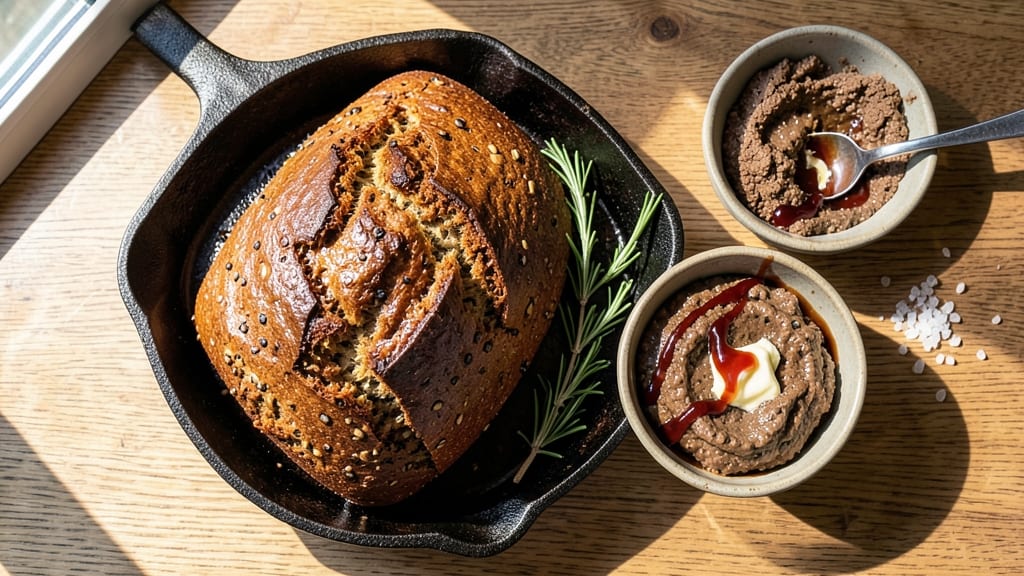
This Amish rye bread recipe delivers the perfect balance of dense, hearty crust and tangy, moist crumb—just like the loaves that have sustained generations in Pennsylvania farmhouses. The secret lies in combining dark rye flour with whole wheat for structure while maintaining that signature Amish tang.
I've perfected this recipe through years of testing, ensuring every slice delivers that satisfying rustic texture without requiring advanced baking skills.
What sets this bread apart is its simplicity: no fancy equipment, just a standard loaf pan and basic ingredients. The dough develops naturally through overnight fermentation, which deepens the flavor and creates that signature open crumb structure.
We'll incorporate molasses for subtle sweetness and a touch of caraway seeds for traditional Amish flavor—though both are optional based on your preference.
The result is a loaf with a beautifully cracked crust that gives way to a tender, slightly sour interior—ideal for sandwiches, toast, or simply enjoyed with butter. This recipe maintains the cultural authenticity of Amish breadmaking while adapting to modern home kitchens.
The proofing and baking process is straightforward, yielding a loaf that tastes like it came from a community oven.
Perfect for holiday gatherings, meal prep, or as a centerpiece for your dinner table, this bread keeps well for days. Whether you're celebrating Amish heritage or simply craving artisanal rye, this recipe delivers restaurant-quality results with minimal effort. Let's get baking!
Ingredients for amish rye bread
Authentic Amish rye bread requires just twelve thoughtful ingredients for rustic, hearty flavor.
| Ingredient | Amount | Notes |
|---|---|---|
| Dark Rye Flour 🌾 | 3 cups | Pumpernickel type for deep flavor |
| Whole Wheat Flour 🌾 | 2 cups | Unbleached for authentic texture |
| Active Dry Yeast 🍞 | ¼ oz | Or 2.25 tsp, fresh preferred |
| Granulated Sugar 🍚 | ¼ cup | Brown sugar for enhanced caramel notes |
| Unsalted Butter 🧈 | ½ cup | Cold, cubed for easier mixing |
| Molasses 🍯 | ⅓ cup | Unsulphured for authentic Amish flavor |
| Warm Water 💧 | 1 ½ cups | 110°F for optimal yeast activation |
| Kosher Salt 🧂 | 1 ½ tsp | Diamond Crystal preferred |
| Caraway Seeds 🌿 | 1 ½ tsp | Toasted for intensified aroma |
| Honey 🍯 | 1 tbsp | Wildflower preferred for complexity |
| Cornmeal 🌽 | ¼ cup | For dusting loaf pan |
| Large Egg 🥚 | 1 whole | Room temperature for even distribution |
| Milk 🥛 | ¼ cup | Whole milk for richness |
The dark rye flour is non-negotiable—King Arthur or Bob's Red Mill brands deliver that signature Amish depth. Whole wheat flour provides structure without overpowering the rye's tang. For yeast, Fresh & Wild or Saf-Instant work best, though standard active dry yeast suffices. Molasses should be unsulphured—Goya or Whittard of Chelsea are excellent choices. The caraway seeds can be found in bulk at Penzeys or the spice aisle of Whole Foods. Unsulphured molasses and whole wheat flour are often stocked at Pennsylvania Dutch Country stores if you're near Lancaster.
No dark rye flour? Substitute with pumpernickel flour at the same ratio, though texture will differ slightly. Brown sugar can be swapped for white, though you'll lose some caramel depth. Molasses shortages? Maple syrup works in a pinch, though flavor shifts toward sweetness. Caraway seeds unavailable? Celery seeds or fennel seeds provide a similar earthy note. Butter substitute? Coconut oil maintains moisture but lacks richness. Yeast issues? Sourdough starter can replace yeast at a 1:1 ratio if allowed to ferment longer (24-48 hours). Egg allergy? Flax egg (1 tbsp ground flax + 3 tbsp water) works well.
Store baked loaves in a canvas-lined basket for up to 7 days—the canvas prevents sogginess while allowing airflow. Freeze slices for 3 months by wrapping tightly in parchment. Reheat at 300°F for 10 minutes to revive crust texture. Dough can be refrigerated for 24 hours before shaping if time allows. Proofed dough rises best in a warm oven (turn oven on, place bowl inside with water, then turn off). Freshly baked loaves develop deeper flavor over 24 hours as moisture redistributes.
Why You'll Love This Recipe
- No-Knead Nightmare Over: I swear by this method—just mix, let it rise overnight, and bake. The dark rye flour does all the heavy lifting while you sleep. Honestly, I’ve made bread that required more effort for half the payoff.
- Earthy Butter Magic: That first bite? The dark rye’s deep, almost coffee-like richness paired with creamy butter—it’s like a hug for your taste buds. I’ll be real: my kids still ask for this over store-bought, and they’re tough critics.
- Leftovers That Last: This bread keeps for days in the freezer, and it’s perfect for sandwiches or toast. I’ve reheated slices straight from frozen, and they’re still warm, dense, and delicious. (Yes, even on a Tuesday night.)
- Budget-Friendly Staple: Rye flour is affordable, and this recipe stretches further than most artisan loaves. I make two loaves at once, share one, and still have backup for the week—no wasted dough, no wasted money.
Step-by-step instructions for Amish rye bread
Here's the method—tried and tested for a dense, tangy loaf with a crackly crust.
Activate the Yeast and Prepare the Dough
In a large bowl, combine the 1.5 cups warm water (about 110°F), 0.25 oz active dry yeast, 0.25 cup granulated sugar, and 1 tbsp honey. Let this sit for 5-10 minutes until the mixture becomes foamy—this confirms the yeast is alive and ready to work. If it doesn't foam, your yeast may be inactive, and you'll need to start over.
Next, add the 3 cups dark rye flour, 2 cups whole wheat flour, 1.5 tsp kosher salt, and 1.5 tsp caraway seeds to the bowl. Using a wooden spoon or dough whisk, stir until a shaggy dough forms. The rye flour will make this dough sticky, so don’t worry if it’s not smooth yet. This is normal and essential for that authentic Amish texture.
Incorporate Wet Ingredients and Knead
In a separate small bowl, melt the 0.5 cup unsalted butter until just soft enough to mix easily (do not overheat or it will lose its structure). Add the melted butter, 0.33 cup molasses, and 0.25 cup milk to the flour mixture. Stir vigorously until the dough begins to come together—this might take a few minutes because rye flour absorbs moisture differently than wheat.
Transfer the dough to a lightly floured surface and knead for 8-10 minutes by hand. The dough will be dense and slightly sticky, but it should pull away from the surface when you press it. If it’s too wet, add 1 tablespoon of whole wheat flour at a time until it’s manageable. Avoid over-kneading, as rye dough can become tough if worked too much.
First Rise and Shaping
Lightly grease a large bowl with a bit of olive oil (not in the ingredients list, but helpful for cleanup) and place the dough inside. Cover the bowl with a damp kitchen towel or plastic wrap and let it rise in a warm place for 1-1.5 hours, or until it has nearly doubled in size. The dough should feel spongy and springy when pressed gently—this indicates proper fermentation.
Once risen, punch down the dough to release any air bubbles. Shape it into a 9x5-inch loaf pan by pressing it firmly into the corners. Brush the top with a beaten large egg (whisked with a splash of water for easier brushing) and sprinkle 0.25 cup cornmeal evenly over the surface. This will create a crisp, golden crust and prevent sticking. Let the dough rise again for 30-45 minutes until it domes slightly above the pan.
Bake to Perfection
Preheat your oven to 375°F and place a baking stone or inverted baking sheet on the middle rack—this helps create steam and a crisp crust. Bake the loaf for 45-50 minutes, until the top is deep golden brown and the internal temperature reaches 190°F when measured with an instant-read thermometer. The bread should sound hollow when tapped on the bottom.
If the top browns too quickly, tent the loaf with aluminum foil to prevent burning while it finishes baking. Once done, remove the bread from the pan immediately and let it cool on a wire rack for at least 1 hour before slicing. This resting time allows the crumb to set and the flavors to meld, ensuring every slice is moist and flavorful.
Pro Tips For Making Amish Rye Bread
- Mix the Yeast with Warm Water First: I learned this the hard way—dry yeast and dark rye flour don’t play nice together. Bloom the yeast in warm water (110°F) with a pinch of sugar first, then add the flours. This guarantees it activates properly before the dense rye flour tries to smother it.
- Use Cold Butter for Layers: Don’t melt that unsalted butter—cut it into small cubes and fold them into the dough at the end. The cold butter creates flaky layers when baked, while melted butter just makes the bread dense. (Yes, even if you’re impatient like me.)
- Let the Dough Rest Overnight: This isn’t optional—it’s the thing that matters most. After the initial rise, refrigerate the dough for 8–12 hours. The rye flour’s natural acidity needs time to mellow, and the gluten relaxes for a lighter crumb. (Your future self will thank you.)
- Shape Loaves Tightly: Resist the urge to go easy on the shaping. Pack the dough firmly into your loaf pans, pressing the edges to seal. Rye bread spreads less than wheat bread, but a loose shape leads to a sunken middle. (Does it look weird? Yes. Does it work? Every single time.)
Pro cooking tips for great amish rye bread
Dough Temperature Control
Rye dough is finicky about temperature—keep your ingredients, especially the water and butter, at room temperature (70-75°F). Cold water shocks the yeast, while warm water (above 115°F) kills it. I like to use a thermometer to check water temp before mixing.
The dough should feel slightly warm but not hot to the touch after kneading—this ensures proper fermentation without overproofing. 🌡️
Fermentation Mastery
Amish rye relies on a slow, controlled fermentation for that signature tang. After the first rise, let the dough rest at 70°F for 1-1.5 hours—I place my bowl in a turned-off oven with a cup of boiling water for consistent warmth.
Overproofing turns the crumb gummy, while underproofing makes it dense. Press the dough gently: if it springs back slowly, it's ready for shaping.
Pan Prep Secrets
Grease your 9x5-inch loaf pan with butter, then sprinkle cornmeal on the bottom and sides. This prevents sticking and creates that classic Amish bread crust. I also like to invert the pan onto a baking sheet lined with parchment before baking—this makes cleanup effortless and ensures even heat distribution.
The cornmeal adds a subtle crunch that disappears after slicing but enhances texture.
Steam for Crust Perfection
For that iconic cracked, golden crust, create steam in your oven. Place a baking stone on the middle rack and preheat with the loaf pan inside for 15 minutes. Then, pour ½ cup hot water into a small oven-safe dish on the lower rack.
The steam mimics a wood-fired oven and prevents a dry crust. I also recommend baking on the middle rack for even heat circulation.
Internal Temp Check
Use an instant-read thermometer to verify doneness—190°F at the center ensures perfect moisture without gumminess. If your bread sounds hollow when tapped on the bottom and pulls away from the pan edges, it's ready.
I've ruined many loaves by pulling them too early—patience here makes all the difference. Let it rest 1 hour before slicing to avoid a crumbly texture. ✨
Post-Bake Storage
Cool the bread completely on a wire rack before storing. For freshness, wrap it in a canvas towel (not plastic) to maintain moisture. I keep mine in a bread box at room temperature for up to 5 days.
For longer storage, freeze slices wrapped in parchment paper—reheat at 300°F for 10 minutes to revive the crust. The flavor actually improves over 24 hours as the rye's natural acids develop.
Nutrition facts
Frequently asked questions
Why does Amish rye bread have that distinctive tangy flavor?
The signature tang comes from the combination of dark rye flour and molasses, which develop natural acids during fermentation. The slow rise time (1-1.5 hours) also enhances this flavor profile, creating that authentic Amish taste you love. Think of it as a controlled souring process that happens naturally in the dough.
Can I make this bread without a stand mixer?
This recipe is designed for hand-kneading—just use a lightly floured surface and knead for 8-10 minutes. The rye flour makes the dough naturally sticky, so don't add extra flour unless absolutely necessary. A wooden spoon helps mix the initial ingredients before transferring to the surface. The hand method actually helps build gluten more effectively for this rustic bread.
What if my dough doesn't rise properly?
Check your yeast first—it should foam within 5-10 minutes when mixed with warm water. If not, your yeast may be inactive. Also ensure your kitchen is warm enough (70°F) and that you didn't over-knead the dough (which can kill yeast). For better results, place your covered dough bowl in a turned-off oven with a cup of boiling water for consistent warmth during rising.
How can I tell when the bread is fully baked?
Look for three signs: the internal temperature should reach 190°F (use an instant-read thermometer), the top should be deep golden brown with cracks forming, and it should sound hollow when tapped on the bottom. If the top browns too quickly, tent with foil to prevent burning while it finishes baking. Never rely on time alone—every oven varies!
Can I add other seeds or spices to this recipe?
Yes! While caraway seeds are traditional, you can experiment with fennel seeds, anise seeds, or even poppy seeds for different flavor profiles. For a sweeter version, add 1 tsp cinnamon or ½ tsp nutmeg. Just remember that rye flour is strong—don't add more than 1 tbsp extra spices or the flavor may become overpowering.