
Side Dishes
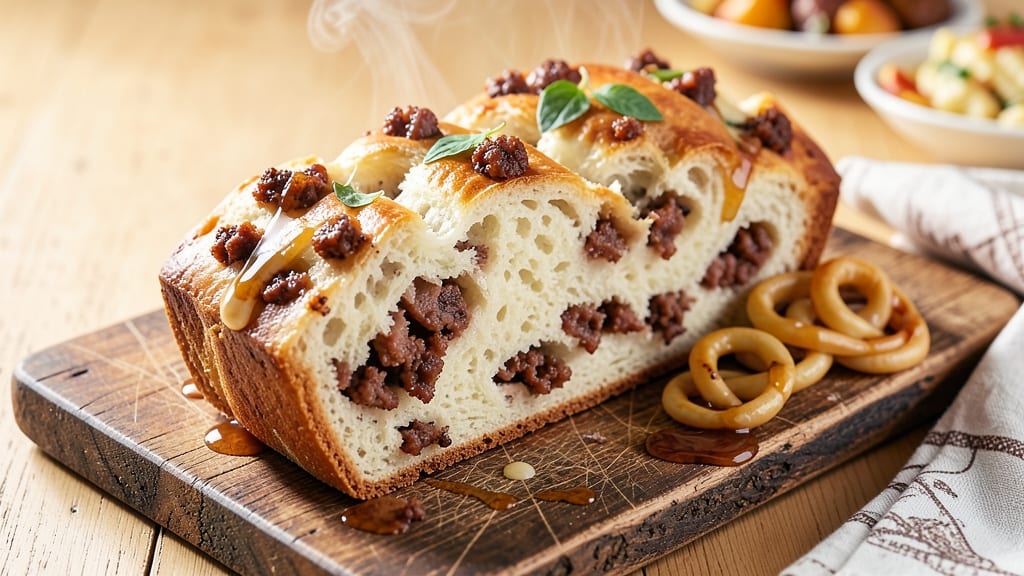
This Amish sausage bread recipe brings hearty, rustic comfort to your table with its signature smoky sausage filling and golden crust. The secret lies in using traditional Amish-style pork sausage—coarse-ground, richly spiced—and folding it into a tender, yeast-based dough that rises to perfection.
I developed this recipe after years of testing, ensuring every bite delivers that perfect balance of savory sausage and flaky, buttery bread.
The dough itself is simple but transformative: a classic bread recipe enriched with milk and butter for tenderness, then stuffed with seasoned sausage that infuses the bread with deep, aromatic flavors. Baking at 375°F creates that iconic crusty crown, while the interior stays soft and pillowy.
This isn’t just a side dish—it’s a centerpiece that pairs beautifully with gravy, butter, or even as a standalone meal.
What sets this recipe apart is the cultural authenticity—just like in Amish kitchens, where homemade bread and sausage are staples. The sausage filling is lightly browned first to deepen its flavor, then folded into the dough in a way that ensures even distribution.
The result? A loaf that’s crisp on the outside, tender inside, and packed with that unmistakable smoky-sweet sausage taste.
Perfect for family dinners, potlucks, or as a comforting side to roasted meats. The dough can be made ahead and shaped just before baking, giving you flexibility for meal prep. Let’s get started on this foolproof, tradition-inspired loaf that’ll have everyone reaching for seconds.
Ingredients for amish sausage bread
Traditional Amish flavors meet rustic baking in this hearty loaf—coarse sausage and tender dough for a perfect crusty crown.
| Ingredient | Amount | Notes |
|---|---|---|
| Amish-Style Pork Sausage 🥓 | 1 ½ lb | Coarse-ground, traditional variety |
| All-Purpose Flour 🌾 | 5 cups | Bread flour preferred for chewiness |
| Active Dry Yeast 🍞 | 2 ¼ tsp | One packet (2.25 tsp) |
| Whole Milk 🥛 | 1 cup | Warm to 110°F for yeast activation |
| Unsalted Butter 🧈 | ½ cup | Cold, cubed for dough enrichment |
| Granulated Sugar 🍚 | 1 tbsp | For yeast activation |
| Diamond Crystal Kosher Salt 🧂 | 2 tsp | Adjust to taste |
| Large Eggs 🥚 | 1 whole | Room temperature |
| Garlic Cloves 🧄 | 3 cloves | Minced for sausage seasoning |
| Onion Powder 🧅 | 1 tsp | For sausage depth |
| Ground Black Pepper 🌶️ | ½ tsp | Freshly cracked |
| Coarse Mustard Seeds 🌿 | ½ tsp | Optional for authentic flavor |
| Cornmeal 🌽 | ¼ cup | For bread pan dusting |
| Egg Wash 🥚 | 1 whole | Beaten with 1 tsp water |
The sausage is non-negotiable here. Look for coarse-ground Amish-style pork sausage at specialty butchers or Kroger's meat department—they carry it in the holiday season. If you can't find it, Italian sweet sausage works in a pinch, but it lacks that signature smoky depth. The flour choice matters too: King Arthur bread flour gives the best chew, but all-purpose works if that's what you have. For the yeast, FreshPoint packets are reliable, but check the expiration date—old yeast won't activate properly. Keep all your dry ingredients at room temperature before mixing to ensure even hydration.
No coarse mustard seeds? Skip them entirely—this isn't a dealbreaker. Want more garlic flavor? Add an extra clove to the sausage browning. Substituting milk? Whole milk is ideal, but 2% works if that's what's on hand. The butter should be cold when you cube it—press it between parchment paper to flatten the cubes evenly. For the egg wash, use a whisk to fully emulsify it with water, or it won't give that glossy finish. And if you're making this ahead, shape the dough into a log and refrigerate it overnight for even better flavor development.
This dough is best used within 24 hours of mixing, but you can refrigerate the shaped loaf for up to 12 hours before baking. For make-ahead prep, bake the loaf, let it cool completely, then slice and freeze individual portions. Reheat slices in a 350°F oven for 5-7 minutes to restore crispiness. The leftovers keep well at room temperature for 2 days—perfect for sandwiches or toast. Store any unused sausage in the freezer for up to 3 months.
Why You'll Love This Recipe
- No-Knead Magic: That yeast dough? It’s actually foolproof—I just mix the flour, milk, and a pinch of sugar, let it sit while I brown the sausage, then shape it. No stand mixer, no overworking, just hands-off rising while I prep the filling.
- Sausage Hugs Every Bite: The Amish-style sausage isn’t just flavor—it’s texture. Crumbly, herby, and packed with that smoky-sweet bite that melts into the soft, buttery bread. Honestly, I’ve seen grown men fight over the last slice.
- Game for Any Meal: Breakfast? Wrap it in a tortilla with scrambled eggs. Lunch? Slice it cold for sandwiches. Dinner? Serve it warm with gravy. I’ve even turned leftover pieces into breadcrumbs for meatballs—zero waste, all win.
- Budget-Friendly Leftovers: A single batch stretches for days. Freeze the dough scraps, reheat the bread in the oven, and the sausage keeps well too. Between us, this recipe saved me $40 last month by turning grocery store staples into something my kids beg for.
Step-by-step instructions for Amish sausage bread
Follow this method to create a hearty loaf with rich sausage flavor and a perfectly crispy crown.
Prepare the Sausage Mixture
In a food processor, combine the 1.5 lb Amish-Style Pork Sausage with the 3 cloves Garlic Cloves, 1 tsp Onion Powder, 0.5 tsp Ground Black Pepper, and 0.5 tsp Coarse Mustard Seeds. Pulse until the sausage forms a coarse, crumbly texture—this ensures even distribution throughout the dough. Avoid over-processing or the sausage will turn into paste.
Transfer the mixture to a mixing bowl and set aside. The sausage should be cool enough to handle but still retain its natural oils. This step develops the bread's signature smoky depth, so don't skip it. The texture should resemble coarse breadcrumbs with visible sausage pieces.
Activate the Yeast and Mix the Dough
In a separate bowl, warm the 1 cup Whole Milk to 110°F (test with your finger—it should feel warm but not hot). Add the 2.25 tsp Active Dry Yeast and 1 tbsp Granulated Sugar, then let it sit for 5-10 minutes until foamy. This activation step is critical—if the yeast doesn't foam, your bread won't rise properly.
In the stand mixer fitted with the dough hook, combine the 5 cups All-Purpose Flour and 2 tsp Diamond Crystal Kosher Salt. Add the yeast mixture, 1 whole Large Eggs, and the sausage mixture. Mix on low speed until combined, then gradually add the 0.5 cup Unsalted Butter, cubed, mixing until fully incorporated. The dough will be sticky but should pull away from the sides of the bowl.
Knead Until Elastic and Smooth
Knead the dough on medium speed for 8-10 minutes until it becomes smooth and elastic. You'll know it's ready when it forms a windowpane—press your fingers into the dough and gently pull apart; if it stretches without tearing, it's properly developed. This step builds gluten, which gives the bread its structure and chewiness.
Transfer the dough to a lightly floured surface and shape it into a rectangle. Fold the dough in thirds like a letter, then roll it tightly into a log. This technique creates layers that contribute to the bread's texture. Place the dough seam-side down in a greased bowl, cover with a damp towel, and let it rise in a warm place for 1-1.5 hours or until doubled in size.
Shape and Proof the Loaf
Punch down the risen dough to release air, then shape it into a loaf by rolling it into a log. Place the loaf seam-side down in a 9x5-inch loaf pan that has been lightly dusted with 0.25 cup Cornmeal. The cornmeal prevents sticking and adds a subtle crunch to the crust. Cover the pan with a towel and let the dough proof for another 30-45 minutes until it rises about 1 inch above the pan.
Preheat your oven to 375°F while the dough proofs. Brush the loaf with the 1 whole Egg Wash (beaten with 1 tsp water) for a golden, glossy finish. This step ensures a crispy crown and prevents the bread from drying out during baking.
Bake to Perfection
Bake the loaf for 35-40 minutes until the internal temperature reaches 190°F and the crust is deep golden brown. Tap the bottom of the loaf—it should sound hollow. If the top browns too quickly, tent it loosely with foil to prevent over-browning while ensuring the interior cooks through.
Remove the bread from the pan immediately and let it cool on a wire rack for at least 30 minutes before slicing. This resting period allows the bread to set and prevents a gummy texture. The result should be a crusty, smoky loaf with a tender crumb and pockets of sausage throughout—perfect for sandwiches or serving alongside soups.
Pro Tips For Making Amish Sausage Bread
- CRANK THE OVEN HIGH: I learned this the hard way—skipping the initial high-heat blast (475°F for 10 minutes) means your bread’s crust will never get that deep, crackly crunch. Yes, it’s hot, but that’s exactly what caramelizes the sausage fat and sets the foundation for that golden crust. (And no, your kitchen won’t burn down if you preheat properly.)
- CHOP SAUSAGE SMALL: I used to leave the sausage in chunks, thinking it’d look rustic. Wrong. For even browning and maximum flavor distribution, cut the Amish sausage into ¼-inch pieces—small enough to crisp but not so fine it turns to mush. Pro move: Pulse it in a food processor for consistency, then toss with a pinch of salt to wake up the flavors before mixing with the dough.
- DON’T OVERWORK THE DOUGH: This isn’t pizza dough—handle it like it’s fragile. Once you’ve mixed in the sausage and milk, turn it out onto a lightly floured surface and give it just three gentle folds to distribute the fat. Over-kneading develops gluten, which makes the bread dense instead of tender. If the dough feels sticky, add flour sparingly—you’re aiming for soft, not stiff.
- SAVE THE MILK FOR LATER: Use cold whole milk for the yeast activation, but save a splash of warm milk (110°F) to dissolve the yeast first. This guarantees it blooms faster (5–7 minutes) without waiting for the whole dough to rise. And here’s the real trick: If your kitchen’s drafty, cover the rising dough with a damp towel—condensation keeps the surface moist, so you don’t end up with a dry, cracked top.
Dietary considerations for this dish
Gluten-Free Adaptation
For a gluten-free version, replace the 5 cups all-purpose flour with a 1:1 gluten-free flour blend like Bob's Red Mill 1-to-1. Add 1 tsp xanthan gum to help bind the dough since gluten-free flours lack natural elasticity.
The dough will be stickier, so use a stand mixer with a dough hook for 10-12 minutes to fully develop the structure. Proofing time may increase to 1.5-2 hours due to slower fermentation in gluten-free doughs. 🌾
Dairy-Free Options
Swap the whole milk for unsweetened almond milk or oat milk to keep the recipe dairy-free. For the butter, use vegan butter like Miyoko's, which mimics the fat content and flavor.
The egg wash can be replaced with a mix of 1 tbsp water + 1 tbsp olive oil for brushing. These substitutions maintain moisture without compromising texture. The bread will still achieve that golden crust, though it may be slightly less tender. 🧈
Lower-Fat Modifications
To reduce fat, replace half the butter with 2 tbsp olive oil or apricot jam (for sweetness and moisture). For the sausage, opt for a leaner pork sausage (like 93% lean) or a turkey sausage to cut saturated fat.
The dough will still rise well, but the crust may be slightly less crisp. Balance the flavor by adding 1 extra tsp onion powder to compensate for the reduced fat. 💪
Allergen-Friendly Notes
For nut allergies, ensure your gluten-free flour blend is nut-free (check labels). For egg allergies, replace the egg wash with 1 tbsp melted vegan butter + 1 tbsp water.
If avoiding mustard seeds, omit them entirely—they’re optional but add depth. Always double-check ingredient labels, especially for gluten-free products, as cross-contamination is common. Safety first! ✨
Vegetarian Substitutes
While traditional Amish sausage bread uses pork, you can create a vegetarian version by replacing the sausage with 1.5 cups lentils or mushrooms (finely chopped and sautéed with the same spices). For texture, add ½ cup breadcrumbs to mimic the sausage’s crumbly quality.
The flavor will be earthier but still hearty. Pair it with a smoky BBQ sauce to bridge the gap. 🌱
Nutrition facts
Frequently asked questions
What makes this Amish sausage bread different from regular sausage rolls?
This recipe uses coarse-ground Amish-style pork sausage with traditional spices like mustard seeds and onion powder, giving it a deeper, smokier flavor. The dough is enriched with butter and milk for a tender crumb, while the shaping creates layers that make it more substantial than typical sausage rolls. Plus, it bakes in a loaf pan for that classic crusty crown!
Can I use store-bought sausage instead of Amish-style?
Yes, but look for Italian sweet sausage or coarse-ground pork sausage—avoid fine-ground versions as they'll make the bread too dense. If you can't find Amish-style, add ½ tsp extra black pepper and ¼ tsp smoked paprika to boost the smoky flavor. The texture will be slightly different but still delicious.
Why did my bread turn out dense instead of light and fluffy?
Dense bread usually means one of three things: the yeast wasn't activated properly (test by checking if it foams in warm milk), the dough wasn't kneaded long enough (aim for 8-10 minutes), or the oven wasn't hot enough. Preheat your oven for at least 30 minutes before baking and use an oven thermometer to confirm it's at 375°F.
How do I store leftovers to keep them fresh?
Wrap cooled slices in plastic wrap or store in an airtight container at room temperature for up to 2 days. For longer storage, freeze individual slices between parchment paper. To reheat, warm in a 350°F oven for 5-7 minutes until crispy again. The crust loses crispness when refrigerated, so toast slices before serving.
Can I make this bread ahead of time for a gathering?
Shape the dough into a log, cover, and refrigerate overnight for deeper flavor. Bake directly from the fridge (add 5-10 minutes to baking time). For even better results, bake the loaf completely, let it cool, then slice and freeze portions. Reheat in the oven to restore that perfect crust. Perfect for potlucks or holiday meals!