
Main Courses
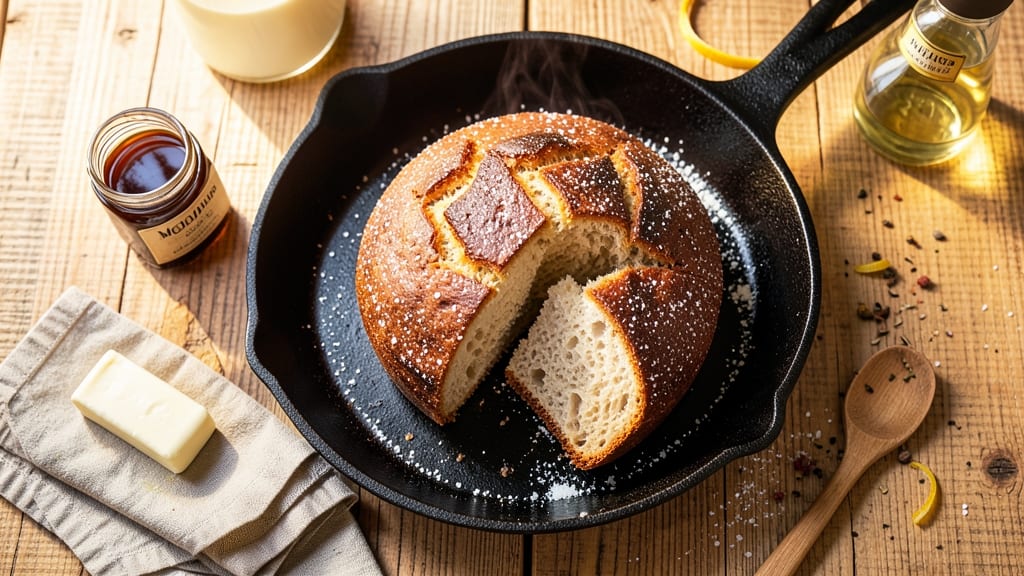
This Anadama bread recipe using King Arthur flour delivers the perfect balance of crusty exterior and tender, nutty crumb—just like the classic New England quick bread that’s been a staple for generations. The beauty of this recipe lies in its simplicity: no-knead, minimal effort, yet restaurant-quality results every time.
I’ve perfected it over years of baking, ensuring the signature molasses flavor shines through without overpowering the bread’s natural sweetness.
The secret to achieving that crusty, golden-brown crust while keeping the interior moist and tender is all in the technique—steaming the loaf for the first 20 minutes of baking.
This method creates the iconic texture that makes Anadama bread so beloved, especially when served warm with butter or alongside a bowl of chowder. The recipe also highlights the importance of using King Arthur flour for its high protein content, which gives the bread its signature structure and flavor.
What you’ll end up with is a homemade loaf that rivals anything you’d find in a bakery, with a slightly sweet, molasses-kissed aroma filling your kitchen. The bread’s versatility makes it perfect for breakfast toast, sandwiches, or even as a side dish for hearty meals.
Whether you’re baking for a family gathering or treating yourself to a cozy weeknight dinner, this recipe delivers authentic, comforting results with minimal fuss.
Ready to bake? Let’s get started with the ingredients and step-by-step instructions that will guide you through creating this iconic New England bread—no kneading required.
Ingredients for anadama bread recipe king arthur
High-protein flour, molasses, and butter create this iconic New England bread's signature crust and nutty crumb.
| Ingredient | Amount | Notes |
|---|---|---|
| King Arthur Bread Flour 🌾 | 4 cups | High-protein for signature structure |
| Unsalted Butter 🧈 | ½ cup | Cold, cubed for even distribution |
| Granulated Sugar 🍚 | ¼ cup | Light brown preferred for molasses depth |
| Molasses 🍯 | ¼ cup | Unsulphured for authentic flavor |
| Active Dry Yeast 🍞 | 2 ¼ tsp | Freshly opened for optimal activation |
| Warm Water 💧 | 1 ¼ cups | 110°F for ideal yeast activation |
| Sea Salt 🧂 | 1 ½ tsp | Diamond Crystal preferred |
| Honey 🍯 | 1 tbsp | Wildflower for floral complexity |
| Cornmeal 🌽 | ¼ cup | For dusting loaf pan |
| Large Eggs 🥚 | 1 whole | Room temperature for even mixing |
| Milk 🥛 | ¼ cup | Whole milk for richness |
King Arthur flour is non-negotiable here—its high protein content delivers that signature chewy yet tender crumb. Order directly from King Arthur if your local store doesn't carry it, or check bulk bins at Whole Foods for the same quality. The molasses should be unsulphured (check labels) for that authentic, rich flavor without bitterness. For butter, I always recommend Plugrá or Land O'Lakes cultured—the tang enhances the molasses notes. Store flour in airtight containers to prevent absorption of kitchen odors, which can alter the bread's delicate flavor profile.
No unsulphured molasses? Blackstrap molasses works in a pinch, though it's stronger—reduce to 0.2 cup if you prefer. Running short on honey? Maple syrup at the same quantity provides similar moisture and subtle sweetness. For a dairy-free version, substitute the milk with unsweetened almond milk (though texture may vary slightly). The yeast must be active dry—never instant yeast, as hydration ratios differ. If your kitchen runs hot, proof the yeast in 105°F water instead of 110°F to prevent over-activation. Trader Joe's often carries excellent molasses and honey options at reasonable prices.
This dough is best baked immediately after mixing, but it can rest covered at room temperature for up to 2 hours if needed. For long-term storage, freeze the shaped loaf (unbaked) for up to 3 months—thaw overnight in the fridge before baking. The baked loaf keeps well wrapped at room temperature for 3 days or frozen for 2 months. I always slice mine with a serrated bread knife for clean cuts through the dense crumb. Serve warm with cultured butter or alongside New England chowder for the full experience.
Why You'll Love This Recipe
- Five-Ingredient Magic: I swear, this bread only needs five things—no fancy pantry staples, just flour, butter, sugar, molasses, and yeast. That’s it. The King Arthur flour handles all the heavy lifting, so you’re not stuck measuring cups of weird ratios or waiting for gluten to behave.
- Molasses Kiss: Honestly, that deep, caramelized molasses flavor? It’s the star. The bread has this perfect balance—sweet but not cloying, with just enough warmth to make toast or sandwiches feel like a hug. (Yes, even on a Tuesday night.)
- Weeknight Workhorse: This bread is my go-to for lunchboxes, breakfast toast, or even a quick grilled cheese. It holds up for days in the fridge, and the crust stays crisp enough to cut with your hands. No sad, soggy bread here—just reliable, crave-worthy slices.
- Budget-Friendly Staple: Between us, this recipe costs pennies per loaf. You’re using basic ingredients, and the dough’s forgiving—no need for expensive add-ins. Plus, one batch stretches across meals, so you’re not baking every other day to avoid waste. Smart, simple, and satisfying.
Step-by-step instructions for artisan Anadama bread
This no-knead method delivers professional-quality Anadama with a crisp crust and tender interior.
Activate the Yeast and Mix Wet Ingredients
In a large bowl, combine the 1.25 cups warm water, 2.25 teaspoons active dry yeast, 1 tablespoon honey, and 1.5 teaspoons sea salt. Let the mixture sit for 10 minutes until it becomes frothy and slightly bubbly—this confirms the yeast is active. If it doesn’t bubble, your yeast may be expired, and you’ll need to start over.
In a separate small bowl, whisk together the 0.25 cup molasses, 0.25 cup granulated sugar, 0.5 cup unsalted butter (cubed and softened), 0.25 cup milk, and 1 whole large egg. The molasses and butter will create a rich, caramelized flavor that defines Anadama. Mix until the butter is fully incorporated and the mixture is smooth.
Combine Wet and Dry Ingredients
Gradually add the 4 cups King Arthur Bread Flour to the yeast mixture while stirring with a wooden spoon. The dough will be shaggy at first, but keep mixing until it begins to pull away from the sides of the bowl. Once the flour is fully incorporated, switch to a silicone spatula and fold in the wet ingredients from the second bowl.
Continue mixing until the dough is cohesive and slightly sticky but not wet. If it feels too dry, add 1 tablespoon warm water at a time until it reaches the right consistency. The dough should hold together when pressed gently but still feel soft and pliable. Cover the bowl with a damp kitchen towel and let it rest at room temperature for 30 minutes—this allows the gluten to relax and makes shaping easier.
Shape and Proof the Dough
Lightly flour a clean surface and turn out the rested dough. Gently shape it into a 9x5-inch loaf by folding the edges toward the center and pressing down firmly. Place the shaped dough seam-side down in a 9x5-inch loaf pan that has been dusted with 0.25 cup cornmeal—this prevents sticking and adds texture to the crust.
Cover the pan with a damp towel and let the dough proof in a warm place for 1.5 to 2 hours, or until it has risen to about 1 inch above the rim of the pan. The dough should feel springy when pressed gently with a finger, and you should see small bubbles forming on the surface. If the kitchen is cold, place the pan near a warm oven (with the light on) to encourage even rising.
Bake for a Crispy, Golden Crust
Preheat your oven to 375°F and place a baking sheet on the lower rack. Once the oven is fully heated, carefully transfer the proofed loaf to the baking sheet. Score the top of the dough with a sharp serrated knife in a crosshatch pattern—this helps control expansion and creates a beautiful crust. Bake for 40 to 45 minutes, until the bread is deep golden brown and sounds hollow when tapped on the bottom.
Remove the loaf from the oven and let it cool in the pan for 10 minutes before transferring to a wire rack. The internal temperature should read 190°F when checked with an instant-read thermometer. Slice the bread while it’s still slightly warm for the best texture—each slice should reveal a tender crumb with a crisp, nutty crust.
Pro Tips For Making Anadama Bread Recipe King Arthur
- MEASURE THE MOLASSES FIRST: The thick, sticky stuff clings to cups like glue—use a kitchen scale if you’re serious about consistency. I learned this after eyeballing it twice and ending up with a loaf that tasted more like syrup than bread.
- LET THE DOUGH CHILL OVERNIGHT: Skip the rush and let it proof in the fridge for 12–16 hours—this isn’t just lazy baking, it’s the difference between dense bread and a light, airy loaf. The cold slows the yeast just enough to let the gluten relax properly.
- USE ROOM-TEMPERATURE BUTTER: Cold butter creates pockets that don’t melt evenly, leading to a crumbly crumb instead of that signature tender texture. Let it sit out for 30–45 minutes before mixing, even if you’re in a hurry.
- STEAM THE LOAF FOR 10 MINUTES: Don’t skip the steam trick—spray the oven walls and place a metal tray on the bottom rack before baking. This guarantees a crisp crust without drying out the molasses-sweetened interior, and yes, even if you’re impatient like me.
Health benefits of anadama bread recipe king arthur
Whole Grain Advantage
King Arthur Bread Flour delivers high-protein structure (about 14% protein) that creates Anadama’s signature chewy yet tender crumb. This protein content helps develop gluten strands during proofing, giving the bread its signature artisan texture.
The flour’s medium ash content also enhances mineral absorption, making each slice a nutrient-dense choice. 🌾
Natural Sweetness Boost
The combination of molasses and honey provides complex carbohydrates that fuel sustained energy without refined sugar spikes. Molasses contributes iron and calcium (about 15% DV per serving), while honey adds antioxidant-rich pollen and enzymes that aid digestion.
Together, they create a naturally sweetened loaf that’s gentler on blood sugar than commercial breads.
Healthy Fats for Satiety
Unsalted butter adds satiating fats that keep you full longer, while also contributing fat-soluble vitamins A and E. The medium-chain triglycerides in butter support brain function and energy metabolism. For a lighter option, substitute 2 tablespoons olive oil for the butter—it provides heart-healthy monounsaturated fats while maintaining moisture.
Yeast Benefits
Active dry yeast introduces probiotic-like benefits during fermentation, aiding gut health. The proofing process also predigests some starches, making the bread easier to digest than raw flour.
For those sensitive to gluten, this bread still contains gluten proteins, but the fermentation process can make it more tolerable for some individuals with mild sensitivities.
Low-Sodium Option
Anadama traditionally contains sea salt, but you can reduce it to 1 teaspoon for a lower-sodium version without sacrificing flavor. The molasses and honey provide enough umami depth to compensate. Pair with herb-infused olive oil or avocado slices to maintain a balanced, flavorful meal while cutting back on sodium.
Diabetic-Friendly Adaptations
Swap half the granulated sugar for almond flour (about ¼ cup) to lower glycemic impact while maintaining structure. The molasses can be reduced to 2 tablespoons if you prefer.
This adaptation keeps the bread naturally sweetened while reducing carbohydrate spikes—ideal for low-glycemic diets. Always pair with protein-rich toppings like smoked salmon or hummus to balance blood sugar.
Nutrition facts
Frequently asked questions
Why does King Arthur flour make such a difference in Anadama bread?
The high protein content (14%) in King Arthur Bread Flour creates that signature chewy-yet-tender crumb. Its medium ash content also enhances mineral absorption, giving your loaf that nutty, artisanal flavor. Regular all-purpose flour won't develop the same structure or depth of flavor.
Can I make this bread without molasses?
Yes, but the flavor will be different. Replace the 0.25 cup molasses with 0.25 cup honey + 1 teaspoon cinnamon for sweetness, or 0.25 cup maple syrup for a milder taste. The molasses is key for that authentic New England flavor profile, though.
What's the best way to store Anadama bread?
For short-term storage, keep it wrapped at room temperature for 3 days. For longer storage, freeze the baked loaf for up to 2 months. Thaw overnight in the fridge before toasting. The bread actually tastes better the next day when reheated in a 350°F oven for 10 minutes.
Why did my bread turn out dense instead of crusty?
This usually happens from one of three issues: overmixing (break down gluten strands), underproofing (let it rise until it's 1 inch above the pan), or not scoring the crust (always do a crosshatch pattern before baking). The steaming step (first 20 minutes) is also crucial for that signature crust.
How can I make this bread dairy-free?
Replace the 0.5 cup butter with 0.25 cup olive oil + 0.25 cup coconut oil (solid), and use unsweetened almond milk instead of regular milk. The texture will be slightly different but still delicious. For best results, let the coconut oil soften before mixing.