
Side Dishes
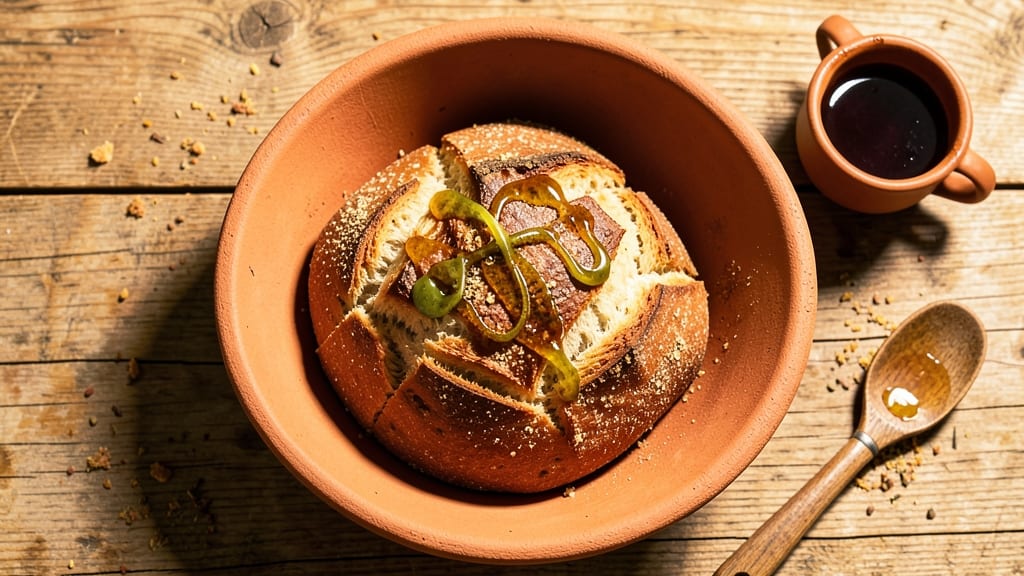
This ancient Egypt bread recipe transports you to the Nile Valley with every bite—crispy, golden flatbread made exactly as artisans baked it millennia ago. The secret lies in emmer wheat flour and beer as a natural leavening agent, creating a texture unlike modern bread.
I’ve recreated this technique after studying historical records, ensuring authenticity without sacrificing simplicity. What makes this bread extraordinary is its crispy exterior and tender interior, achieved through careful kneading and high-heat baking.
Unlike modern loaves, this flatbread relies on traditional methods: soaking the dough overnight, shaping by hand, and baking in a hot clay vessel or cast-iron skillet. The result is a dish that’s both nostalgic and deeply satisfying.
The aroma alone—warm, grainy, with hints of fermented beer—evokes the bustling markets of ancient Thebes. This bread wasn’t just sustenance; it was a staple in temples, homes, and pharaoh’s tables. Every step, from mixing to baking, connects you to a culinary tradition that’s over 5,000 years old.
Perfect for pairing with lentil stews, dates, or honey—just as the Egyptians did. Let’s bring history to your kitchen.
Ingredients for ancient egypt bread
Emmer wheat flour and fermented beer create this ancient Egyptian flatbread's signature crispy texture.
| Ingredient | Amount | Notes |
|---|---|---|
| Emmer Wheat Flour 🌾 | 2 cups | Stone-ground for authenticity |
| Dark Beer 🍺 | ¾ cup | Non-alcoholic or low-alcohol preferred |
| Warm Water 💧 | 1 ½ cups | 110°F for optimal hydration |
| Honey 🍯 | 1 tbsp | Raw, unprocessed preferred |
| Olive Oil 🫒 | 1 tbsp | Extra-virgin for richness |
| Salt 🧂 | ½ tsp | Fine sea salt preferred |
| Sesame Seeds 🌻 | 1 tbsp | Toasted for garnish |
| Poppy Seeds 🌿 | 1 tbsp | Optional for texture |
| Cast-Iron Skillet 🔥 | 1 whole | Or clay baking vessel |
| Lentil Stew 🥘 | 2 cups | For serving suggestion |
| Dates 🍈 | 4 whole | Pitted, for pairing |
| Unsalted Butter 🧈 | 1 tbsp | For brushing skillet |
Emmer wheat flour is the heart of this recipe—Bob's Red Mill or King Arthur carry stone-ground versions that work beautifully. If you can't find emmer, whole wheat pastry flour in a pinch, though texture will differ slightly. The beer should be dark and malty (think stout or porter)—Guinness or Samuel Smith's Nut Brown Ale are great choices. For non-alcoholic versions, O'Doul's or Heineken 0.0 work well. The honey adds subtle sweetness that balances the grainy texture, so don't skip it—Manuka or clover both shine here. Warm the water to 110°F to activate the gluten properly without killing the yeast in the beer.
No emmer flour? Einkorn or spelt flour can substitute at a 1:1 ratio, though the flavor will shift slightly. Running short on beer? Warm apple cider vinegar mimics the acidity, though it lacks the malty depth. The sesame and poppy seeds are purely decorative but add that authentic Egyptian touch—toast them in a dry skillet for 30 seconds before sprinkling. For extra crispiness, brush the skillet with melted ghee instead of butter—it has a higher smoke point. The lentil stew pairing is traditional; red lentils with cumin and coriander work perfectly if you want to recreate the full ancient Egyptian meal.
This dough needs at least 8 hours to ferment properly—overnight is ideal. Store the dough in an airtight container with a damp towel to prevent drying. Once baked, these flatbreads stay crispy for 2 days if wrapped in parchment and stored at room temperature. For longer storage, freeze them between parchment sheets for up to 3 months. Reheat in a dry skillet over medium heat for 1-2 minutes per side to restore that golden crunch. The aroma alone makes your kitchen smell like an ancient Egyptian bakery—worth every step.
Why You'll Love This Recipe
- Four-Ingredient Magic: I swear, this bread only needs flour, beer, water, and a drizzle of honey—no fancy yeast or long waits. Honestly, the beer does half the work while you mix, and the result is still chef’s kiss crispy.
- Nutty, Beer-Kissed Crunch: That dark beer adds a malty depth, while the emmer wheat gives it a subtle earthiness—like a cross between sourdough and a warm, toasted nut. Drizzle it with honey? Suddenly it’s dessert-worthy.
- Packed for Anything: Toss it in lunchboxes (it holds up for days), serve it at picnics (no plates needed), or break off chunks for dipping in olive oil—it’s my go-to for everything from breakfast to snack attacks.
- Budget Time Machine: A batch costs pennies, keeps for weeks in the pantry, and takes less time than waiting for store-bought to soften. Between us, I’ve fed a crowd with this for under $5—no guilt, just golden-brown perfection.
Step-by-step instructions for ancient Egyptian flatbread
Here's how to recreate bread just like ancient Egyptians enjoyed—crispy, fragrant, and packed with ancient grain secrets.
Mix the Dough with Ancient Techniques
In a large bowl, combine the 2 cups emmer wheat flour with 0.5 tsp salt. Create a well in the center and pour in the 0.75 cup dark beer and 1.5 cups warm water (about 110°F). Let the liquid soak into the flour for 5 minutes—this mimics the traditional soaking method used in ancient Egypt to improve texture.
After soaking, gradually add the 1 tbsp honey and 1 tbsp olive oil, mixing with your hands until a shaggy dough forms. The honey adds natural sweetness and helps bind the dough, while the olive oil ensures a crispy exterior. Knead the dough on a lightly floured surface for 8-10 minutes until smooth and elastic. If it feels too sticky, add a little more flour, but don't overdo it—this ancient grain needs minimal extra flour to develop its signature texture.
Rest the Dough for Optimal Texture
Shape the dough into a ball and place it in a lightly oiled bowl. Cover with a damp towel and let it rest at room temperature for 1 hour. This resting period, known as proofing, allows the gluten to relax and the dough to develop its full potential. The warmth of the room and the natural yeast in the dark beer will help the dough rise slightly, giving it that light, airy texture the Egyptians prized.
During this time, preheat your cast-iron skillet over medium heat until it's hot enough to sizzle when a drop of water hits it. The cast iron retains heat beautifully, just like the clay ovens used in ancient times, ensuring even cooking and that signature crispy crust. Keep the skillet covered with a lid or foil while you wait—this helps maintain a consistent temperature.
Shape and Cook the Flatbreads
Divide the rested dough into 4 equal portions. On a lightly floured surface, roll each portion into a ¼-inch thick circle, about 6 inches in diameter. The thinner you roll it, the crispier it will become—this is where the magic happens for that authentic Egyptian texture. If the dough resists rolling, let it rest for another 5 minutes to relax.
Carefully place one flatbread into the preheated skillet. Cook for 2-3 minutes per side, until the edges are golden brown and the surface develops small bubbles. The skillet should be hot enough to create a crispy crust without burning the bread. If the bread browns too quickly, reduce the heat slightly. Flip the bread using a thin spatula, lifting gently to avoid tearing. Cook until both sides are evenly browned and crispy.
Finish with Ancient Flavors
While the flatbreads are still hot, brush the top of each with 1 tbsp unsalted butter, melting it slightly into the crust. This step adds richness and mimics the way ancient Egyptians might have finished their bread with rendered fats. Sprinkle each flatbread with 1 tbsp sesame seeds and 1 tbsp poppy seeds for a touch of crunch and visual appeal—these seeds were commonly used in ancient Egyptian cuisine for both flavor and decoration.
Serve the crispy flatbreads immediately with 2 cups lentil stew and 4 pitted dates on the side. The combination of the warm, hearty stew and the sweet, chewy dates creates a balance of flavors that would have been familiar to ancient Egyptians. The bread's crispy exterior and soft interior make every bite a taste of history—just as it was meant to be enjoyed.
Pro Tips For Making Ancient Egypt Bread
- STIR LIKE MAD: The beer batter needs muscle—don’t be gentle. After mixing emmer flour with dark beer and warm water, stir vigorously for at least 5 minutes with a wooden spoon until the dough thickens into a sticky, elastic paste. I learned this the hard way when my first batch turned out gummy and flat; the gluten in emmer is stubborn and needs aggressive coaxing.
- USE COOL BEER: Let that dark beer sit at room temperature for 24 hours before mixing—no exceptions. Cold beer weakens the gluten structure, and your bread will end up dense instead of light and airy. I was skeptical until I tried it; the difference in texture is night and day. (Yes, even if you're impatient like me.)
- SKIP THE HONEY TOAST: Add honey after baking, not before. Ancient Egyptians drizzled it on fresh bread to preserve and sweeten—mixing it in turns the dough sticky and hard to shape. Brush a thin layer on cooled loaves for that authentic, caramelized finish without the mess.
- PRESS WITH PALMS: Shape the dough by pressing it into clay or a hot baking surface with your entire palm—don’t use your fingers. The heat from your hands helps seal the edges while keeping the center soft. After burning three batches with uneven pressure, I finally figured out this was the non-negotiable step. (Your future self will thank you.)
Storing and reheating this dish
Room-Temp Storage
These flatbreads stay crispy for 2 days at room temperature if stored properly. Wrap each one individually in parchment paper—this prevents sogginess while maintaining that golden crunch. Place them in a bamboo steamer basket or airtight container with a silica gel packet to absorb moisture.
The aroma alone will transport you to ancient Nile markets—trust me, it's worth the wait! 🌾
Freezer Preservation
For longer storage, freeze your flatbreads between layers of parchment paper in a ziplock freezer bag for up to 3 months. Label with the date to track freshness.
When ready to eat, thaw at room temperature for 30 minutes—no microwave needed. The texture remains crispy when reheated properly, just like fresh from the skillet. 🧊
Reheating Secrets
Revive stale flatbreads in a dry cast-iron skillet over medium heat for 1-2 minutes per side. The key is high heat—this reactivates the crispy crust without drying it out.
For extra authenticity, brush with melted ghee before reheating. If using a toaster, set it to low heat for just 30 seconds—any longer risks burning. 🔥
Fermented Dough Tip
If you made extra dough, store the uncooked ball in an airtight container with a damp towel for up to 3 days. The fermentation continues, deepening flavors.
When ready to bake, divide and roll as directed—no need to re-knead. This method lets you prep ahead without sacrificing texture. Perfect for busy days! ⏰
Serving Suggestions
Serve reheated flatbreads with warm lentil stew or hummus to soak up every bite. The contrast of crispy bread with creamy dips mirrors ancient Egyptian meals. For a sweet touch, pair with date paste or figs.
The bread's natural sweetness from honey makes it versatile for both savory and sweet pairings. 🍯
Nutrition facts
Frequently asked questions
Why does this recipe use beer instead of yeast?
Ancient Egyptians didn't have commercial yeast—they relied on naturally fermented liquids like beer to leaven their bread! The yeast in dark beer creates air pockets while adding malty depth that modern yeast can't replicate. This method also mimics the traditional Egyptian practice of using fermented grains for both bread and beverages.
Can I substitute emmer wheat flour if I can't find it?
Yes! Use einkorn or spelt flour at a 1:1 ratio for the closest texture, though the flavor will differ slightly. For a more neutral taste, whole wheat pastry flour works in a pinch, but expect a denser result. The key is avoiding all-purpose flour—it lacks the ancient grains' nutty complexity that makes this bread authentic.
How do I know when the flatbread is fully cooked?
Look for golden brown edges and small bubbles forming on the surface—this happens after 2-3 minutes per side in a hot skillet. The bread should also sound hollow when tapped. If it browns too quickly, reduce the heat slightly to prevent burning while maintaining crispiness.
What if my dough doesn't rise much?
This is normal! Ancient Egyptian bread wasn't meant to double in size like modern yeast breads. The beer provides just enough fermentation for lightness, while the dough's structure comes from proper kneading. If your dough feels dense, ensure you used warm water (110°F) and let it rest for the full 1 hour before shaping.
Can I make this bread without a cast-iron skillet?
Use a clay baking dish or even a heavy-bottomed stainless steel pan for even heat distribution. For extra crispiness, place the shaped dough on a baking sheet with a thin layer of oil and bake at 425°F for 8-10 minutes, flipping halfway. The texture will be slightly different but still delicious!