Side Dishes
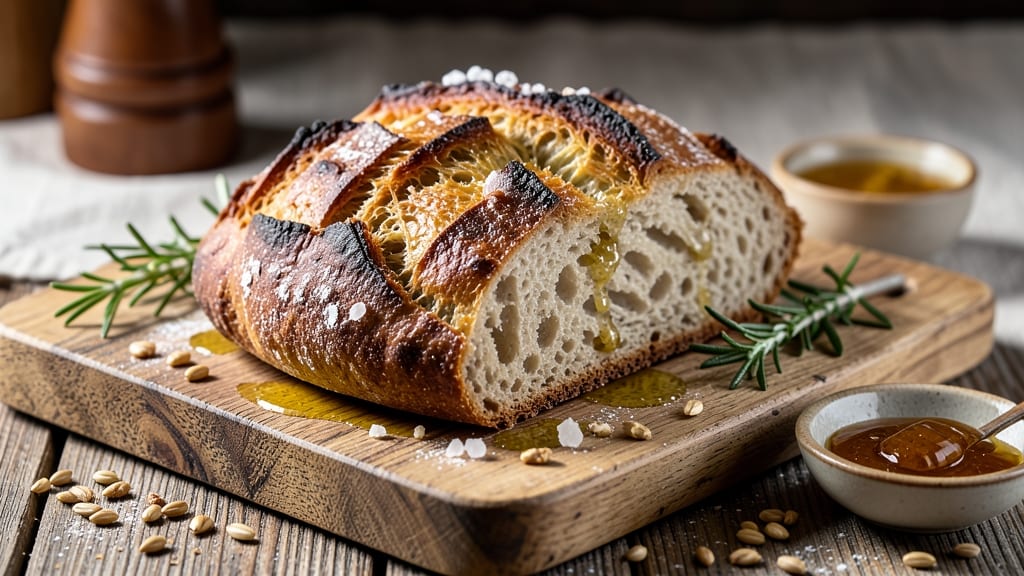
This ancient Greek barley bread recipe transports you straight to the agoras of Athens, where rustic loaves fueled philosophers and warriors alike. 🌾 The secret lies in barley flour's nutty depth—no refined wheat here, just whole grains that ancient bakers relied on for sustenance and texture.
This isn't your typical sandwich bread; it's a crusty, open-crumb loaf with an earthy aroma that develops as it bakes, promising a taste of history with every bite.
The beauty of this recipe is its simplicity: just barley flour, water, olive oil, and a touch of yeast—ingredients readily available in ancient Greece. Unlike modern breads that rise quickly, this version develops flavor through slow fermentation, creating a crumb that's both tender and slightly chewy.
The crust achieves that coveted golden-brown crust without needing fancy equipment, making it accessible yet authentic.
What you'll end up with is bread that's perfect for dipping in olive oil, pairing with olives and cheese, or serving alongside grilled meats.
The nutty, slightly sweet flavor profile makes it far more interesting than standard bread, while its open crumb structure holds up beautifully to both hearty soups and delicate spreads. This is bread that tells a story—of ancient kitchens, of frugality, and of flavors that have stood the test of time.
Whether you're recreating an ancient meal or simply craving something unique, this barley bread delivers restaurant-quality results with minimal effort. The process is straightforward, but the reward is a loaf that feels like a culinary time machine. Let's get started on bringing this piece of history to your table.
Ingredients for ancient greek barley bread
Four cups of barley flour and a few simple staples bring ancient Greek baking to your kitchen.
| Ingredient | Amount | Notes |
|---|---|---|
| Barley Flour 🌾 | 4 cups | Stone-ground for best texture |
| Active Dry Yeast 🍞 | 1 tsp | Or 1 packet (0.25 oz) |
| Warm Water 💧 | 1 ½ cups | 110°F for optimal yeast activation |
| Extra-Virgin Olive Oil 🫒 | ¼ cup | High-quality, fruity variety |
| Sea Salt 🧂 | 1 ½ tsp | Fine grain preferred |
| Honey 🍯 | 1 tbsp | For subtle sweetness |
| All-Purpose Flour 🌾 | ½ cup | For structure and rise |
| Cornmeal 🌽 | 2 tbsp | For dusting baking sheet |
Barley flour is the star here—look for stone-ground varieties at health food stores or bulk bins for that authentic texture. Bob's Red Mill or King Arthur carry great options. If you can't find it, spelt flour works in a pinch, though the flavor will be slightly different. The yeast needs to be fresh, so check the expiration date. Warm water is key—too hot and it kills the yeast, too cold and it won't activate properly. I always keep a thermometer handy for this step (110°F is perfect).
No honey? Maple syrup or agave work just as well for that subtle sweetness. Short on barley flour? Mix with whole wheat flour at a 3:1 ratio, but expect a denser loaf. The all-purpose flour is optional but helps with rise—skip it for a more rustic, dense bread. Olive oil matters here; use something fruity and high-quality. That cheap grocery store stuff won't give you the same depth of flavor. For the cornmeal, fine-ground works best—it prevents sticking without making the crust too thick.
This dough ferments overnight, so plan ahead. Store it in a covered bowl in the fridge for up to 12 hours. The longer it ferments, the more flavor develops. Once baked, let it cool completely on a wire rack—at least 1 hour. It keeps well wrapped at room temperature for 3-4 days or frozen for 3 months. I always slice it fresh before serving—it's perfect for dipping in olive oil or pairing with olives and feta.
Why You'll Love This Recipe
- Five-Ingredient Magic: I swear by this—just flour, yeast, water, olive oil, and salt. That’s it. No fussing with a dozen ingredients or last-minute grocery runs. The barley flour does all the heavy lifting while I handle the rest in one bowl.
- Nutty Earthy Crunch: Between us, that barley flour gives it a texture and flavor you won’t find in regular bread. The olive oil keeps it moist, but the crust? Crispy enough to hold up to soups or dips—no soggy disappointment here.
- Meal Prep MVP: I bake a batch on Sundays and it lasts me the whole week. Toast it for breakfast, tear it for salads, or serve it with olive oil and za’atar for a snack. Honestly, it’s the only bread I need in my pantry.
- Budget-Friendly Staple: Barley flour is cheaper than white flour, and a little goes a long way. Plus, this bread freezes beautifully—just wrap it in foil and reheat for fresh-out-of-the-oven taste. My wallet and my freezer thank me every time.
Step-by-step instructions for ancient Greek barley bread
Here's how to bake bread that tastes like it came straight from an Athenian bakery.
👨🍳 Step 1: Activate the Yeast with Warm Water and Honey
In a large mixing bowl, combine the 1.5 cups warm water (about 110°F) with the 1 tbsp honey and 1 tsp active dry yeast. Stir gently and let sit for 5-10 minutes until frothy. You'll know it's ready when you see bubbles forming on the surface and a yeasty aroma fills the air.
This activation step is crucial—it wakes up the yeast so it works properly in your dough. If the water feels too hot to the touch, it's too hot for the yeast. If nothing happens after 10 minutes, your yeast may be dead, and you'll need to start over with fresh yeast.
👨🍳 Step 2: Mix the Wet and Dry Ingredients
To the yeast mixture, add the 0.25 cup extra-virgin olive oil and 1.5 tsp sea salt. Stir well to combine, then gradually add the 4 cups barley flour and 0.5 cup all-purpose flour while mixing with a wooden spoon or your hands. The dough will be sticky—this is normal with barley flour.
Once all the flour is incorporated, knead the dough on a lightly floured surface for 5-7 minutes until it becomes smooth and elastic. Barley dough is denser than wheat dough, so don't be surprised if it feels heavier. If it's too sticky to handle, wet your hands slightly to prevent sticking.
🥘 Step 3: Let the Dough Rise Until Doubled
Place the dough in a lightly oiled bowl, cover it with a damp kitchen towel, and let it rise in a warm place for 1-2 hours or until it has doubled in size. You'll know it's ready when you poke it gently and the indentation springs back slowly rather than immediately.
Barley dough rises more slowly than wheat dough, so be patient. If your kitchen is cool, place the bowl near a warm spot like the top of the fridge or near a slightly warm oven with the light on. The dough should feel light and airy when ready—don't rush this step or your bread will be dense.
🔥 Step 4: Shape and Bake for Crusty Perfection
Preheat your oven to 425°F and line a baking sheet with parchment paper. Lightly dust your work surface with the 2 tbsp cornmeal and turn the dough out onto it. Shape the dough into a round loaf or traditional oval shape, about 1 inch thick. Place it on the prepared baking sheet.
Bake for 25-30 minutes until the bread is deep golden brown and sounds hollow when tapped on the bottom. The crust should be crisp, and the bread should have a rich, nutty aroma. If it browns too quickly, tent it loosely with aluminum foil to prevent over-browning while it continues to bake.
⏰ Step 5: Cool and Enjoy Your Ancient Bread
Remove the bread from the oven and transfer it to a wire rack to cool completely. This can take 30-45 minutes, but it's worth the wait—the bread will be much easier to slice and serve. The interior should be soft and slightly chewy with a hint of sweetness from the honey.
Slice the bread into thick pieces and serve warm with olive oil and sea salt for a true Greek experience. Store any leftovers in an airtight container for up to 3 days or freeze for longer storage. This bread pairs beautifully with soups, stews, or simply on its own as a rustic side.
Pro Tips For Making Ancient Greek Barley Bread
- Bloom the Yeast First: Mix your yeast with just the warm water and a pinch of salt in a small bowl—let it sit for 5-10 minutes until it’s frothy and active. I learned this the hard way: skipping this step means your barley dough will rise slower (or worse, not at all) because barley flour’s natural density fights yeast. Trust me, 10 minutes now saves 30 minutes later.
- Sift the Barley Flour: Barley flour is dense and clumpy—sift it directly into your mixing bowl before adding anything else. This prevents lumps that turn into dry pockets in the bread, and it also aerates the flour slightly, which helps the yeast do its job. (Yes, even if you’re impatient like me, take the extra 30 seconds.)
- Don’t Over-Knead: Barley dough is sticky and tough—resist the urge to knead it like wheat bread. Work it just until it comes together (about 5 minutes by hand), then let it rest. Over-kneading develops gluten, which makes the bread dense instead of light and crumbly. Ancient Greeks didn’t have stand mixers; they relied on patience.
- Oil the Loaf Pan Well: Coat your pan with extra-virgin olive oil (don’t skimp) and then dust it with a little more flour after shaping the bread. This prevents sticking and gives the crust that golden, crisp texture. I used to skip this, and my bread would tear when pulling it out—now it slides out clean every time.
Flavor customization for this dish
Nutty Depth Boost
For an even more pronounced nutty flavor, replace ½ cup of the barley flour with whole wheat flour or spelt flour. These alternatives enhance the earthy notes while adding a subtle sweetness.
I’ve found that 100% spelt flour creates a slightly sweeter, denser loaf that’s perfect for pairing with strong cheeses like feta or goat cheese. 🌾
Herb-Infused Variations
Ancient Greeks often incorporated fresh herbs into their bread. Try adding 1 tbsp chopped rosemary or 1 tbsp dried oregano directly to the dough for a fragrant twist. For a Mediterranean touch, mix in 1 tbsp finely chopped thyme along with the olive oil.
These herbs complement the barley’s earthiness beautifully and add a layer of complexity that transports you straight to a Greek island kitchen.
Sweet and Savory Twists
If you love a touch of sweetness, swap the honey for 1 tbsp maple syrup or 1 tbsp date syrup—both add depth without overpowering the barley’s natural flavor. For a savory version, add 1 tbsp finely chopped sun-dried tomatoes or 1 tsp dried crumbled feta to the dough.
These additions create a bold, umami-rich loaf that’s perfect for serving alongside grilled meats or roasted vegetables.
Seed and Nut Add-Ins
For extra texture and crunch, fold in 2 tbsp toasted sesame seeds or 2 tbsp chopped walnuts into the dough before shaping. These additions not only add visual appeal but also enhance the bread’s nutty profile.
I love sprinkling a few extra seeds or nuts on top before baking for a decorative finish that’s both functional and beautiful. 💫
Sourdough Fermentation
For a more authentic ancient Greek touch, replace the commercial yeast with ¼ cup sourdough starter. This requires an overnight fermentation, but the result is a tangier, more complex flavor with a lighter crumb.
If you’re new to sourdough, start with a small batch to test the flavor before committing to a full loaf. The extra effort is worth it for that artisanal depth that’s hard to replicate with yeast.
Olive Oil Variations
Experiment with different olive oils to tweak the flavor profile. A robust, peppery olive oil (like Kalamata) adds a bold, fruity note, while a milder, buttery olive oil (like Picual) keeps the focus on the barley’s natural taste.
For a unique twist, mix 1 tbsp of the olive oil with 1 tsp lemon zest before adding it to the dough—this brightens the flavor and pairs wonderfully with seafood or salads. 🫒
Nutrition facts
Frequently asked questions
Can I make this barley bread without yeast?
Yes! For a yeast-free version, replace the yeast with 1 tbsp baking soda and add 1 tbsp vinegar to the warm water. This creates a quick-rise bread with a denser crumb. The texture will be more compact but still delicious—perfect for dipping in olive oil.
Why does my barley bread turn out dense?
Barley dough is naturally denser than wheat dough, but over-kneading or skipping the rise time can make it even heavier. Let the dough rise until doubled (about 1-2 hours) and avoid adding too much flour when shaping. For a lighter texture, try adding ½ cup all-purpose flour as shown in the recipe.
How do I store leftover barley bread?
Wrap the cooled loaf tightly in plastic wrap or place it in an airtight container to keep it fresh for 3-4 days at room temperature. For longer storage, freeze slices wrapped in parchment paper for up to 3 months. Toast frozen slices directly in the oven for a crispy finish.
What's the best way to reheat sliced barley bread?
For crispy crusts, wrap slices in foil and warm in a 350°F oven for 5-7 minutes. To revive softness, place slices on a baking sheet and toast in a 400°F oven for 3-5 minutes. Avoid microwaving—it makes the bread gummy.
Can I use this bread for sandwiches?
While it's not as soft as sandwich bread, this barley loaf works beautifully for hearty sandwiches! Its open crumb holds up well to fillings like grilled meats, olives, and feta. For extra moisture, lightly brush slices with olive oil before assembling. The nutty flavor pairs perfectly with Mediterranean spreads.