
Side Dishes
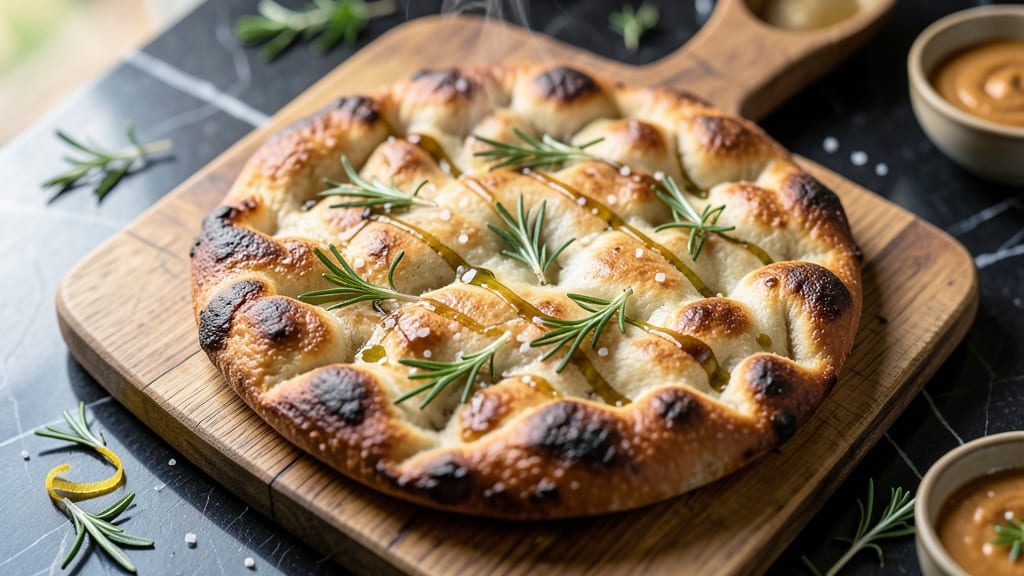
Anna Olson's focaccia bread delivers that restaurant-quality texture we all crave—crispy corners that shatter like glass and a soft, airy crumb that soaks up every drop of olive oil.
The secret lies in the dough's slow fermentation and the generous drizzle of olive oil before baking, which creates those signature golden pools. I've baked this version dozens of times, and it never fails to impress, whether served as a side or transformed into bruschetta.
This recipe starts with a simple yet forgiving dough that develops maximum flavor during an overnight cold proof. The key technique is shaping the dough into a wide rectangle, then dimpling it with your fingers before the final olive oil bath.
This creates those coveted pockets where the oil pools and caramelizes, giving focaccia its signature appearance and flavor. With just a few basic ingredients and minimal effort, you'll achieve professional results that taste like they came from a bakery.
By the time it emerges from the oven, your focaccia will have crispy edges that crackle with each bite and a tender interior that's perfect for dipping. The aroma alone—warm olive oil, fresh herbs, and toasted bread—transforms any meal into something special.
The best part? This recipe scales beautifully, so you can make a single loaf for two or double it for a crowd.
For extra flavor, consider adding fresh rosemary or sea salt flakes before baking. The dough can be made ahead and refrigerated for up to 48 hours, making this the perfect make-ahead bread for any occasion. Let's get started on creating your own perfect focaccia.
Ingredients for anna olson focaccia bread
Eight simple ingredients transform into golden, crispy focaccia with caramelized olive oil pools.
| Ingredient | Amount | Notes |
|---|---|---|
| Active Dry Yeast 🍞 | ¼ oz | Or 1 packet (2.25 tsp) |
| Warm Water 💧 | 1 ¼ cups | 110°F for activating yeast |
| All-Purpose Flour 🌾 | 5 cups | Plus extra for dusting |
| Extra-Virgin Olive Oil 🫒 | 1 ½ cups | High quality, fruity |
| Granulated Sugar 🍚 | 1 tbsp | For yeast activation |
| Diamond Crystal Kosher Salt 🧂 | 1 ½ tsp | Adjust to taste |
| Fresh Rosemary 🌿 | ¼ cup | Finely chopped, optional |
| Flaky Sea Salt 🧂 | ½ tsp | For finishing (optional) |
The olive oil is non-negotiable here—California Olive Ranch or Bertolli are my go-tos, but any extra-virgin with a fruity aroma works. The yeast should be fresh (check the date—it expires fast). For the flour, King Arthur or Gold Medal brands give the best texture. Rosemary adds that signature Italian aroma, but skip it if you prefer classic focaccia. The key to those crispy corners? Cold-proofing the dough overnight—it develops flavor and makes shaping easier.
No fresh rosemary? Dried works at one-third the amount, but fresh is ideal. Short on olive oil? Avocado oil is a decent substitute, though it won’t caramelize the same way. The flaky sea salt is optional but adds a gourmet touch—Maldon is the gold standard, but any good-quality flake salt does the trick. For the yeast, if it’s been sitting in your pantry for months, test it first by mixing with warm water and sugar—it should foam in 5-10 minutes. If not, toss it and grab a fresh packet.
The dough keeps beautifully in the fridge for up to 48 hours, so make it ahead. Once baked, focaccia stays fresh at room temperature for 2-3 days if wrapped tightly in foil. For extra crispiness, reheat slices in a 350°F oven for 5 minutes. Freeze unsliced focaccia for up to 3 months—thaw at room temperature before serving. The best part? Every bite tastes like it came from a bakery, and you made it yourself!
Why You'll Love This Recipe
- No-Knead Magic: The yeast and warm water do all the work—just mix, let it rise, then bake. No standing at the counter, no sore arms, just hands-off simplicity while the dough puffs up like a dream.
- Olive Oil Bliss: That first drizzle of extra-virgin olive oil? It’s the star. The crust gets golden and shatteringly crisp, while the inside stays soft—like a hug from Italy in every bite.
- Weeknight Wonder: Toss it with tomatoes and basil for lunch, tear it into sandwiches for dinner, or freeze slices for toast later. Honestly, I’ve eaten it cold, warm, and even as a side for eggs—it’s that reliable.
- Budget Stretch: A single batch feeds my family for days. The flour and yeast are cheap, the olive oil adds richness without breaking the bank, and leftovers? They disappear faster than I can say “second helping.”
Step-by-step instructions for anna Olson's focaccia bread
This is how you get that signature olive oil pool and crispy corners—every time.
Activate the Yeast for Maximum Rise
In a small bowl, combine the 1.25 cups warm water (around 110°F) with the 1 tbsp granulated sugar and 0.25 oz active dry yeast. Stir gently and let it sit for 5-10 minutes until it becomes frothy and bubbly. This is your signal the yeast is alive and ready to work its magic.
If the mixture doesn't bubble after 10 minutes, your yeast might be dead—start over with fresh yeast. I always use this quick test to avoid flat, dense bread. Once it's bubbly, proceed immediately to avoid overproofing.
Mix the Dough Until Just Combined
In a large mixing bowl, combine the 5 cups all-purpose flour and 1.5 tsp diamond crystal kosher salt. Make a well in the center and pour in the yeast mixture along with the 1.5 cups extra-virgin olive oil. Using a wooden spoon or your hands, mix until just combined—you should still see some dry flour pockets.
This dough is sticky, so don't overwork it. The goal is to bring everything together without developing too much gluten. If it feels too dry, add 1-2 tablespoons of warm water to help it come together. The dough should be soft and slightly tacky to the touch.
First Rise for Light, Airy Texture
Cover the bowl with a damp kitchen towel or plastic wrap and let the dough rise in a warm place for 1-2 hours, or until it has nearly doubled in size. A warm oven with the light on works perfectly for this step. You'll know it's ready when the dough springs back slowly when gently pressed.
Don't rush this rise—it's where all the flavor and texture develop. If your kitchen is cold, place the bowl on top of your turned-off oven with the light on to create a warm environment. Patience here ensures that golden, airy crumb we all love.
Shape and Second Rise for Maximum Flavor
Lightly grease a 9x13-inch baking pan with olive oil. Transfer the risen dough to the pan and gently stretch it to fit the dimensions. Use your fingers to create dimples all over the surface—this helps the olive oil pool beautifully later. Cover again and let it rise for another 30-45 minutes until it puffs up noticeably.
This second rise is crucial for that signature focaccia texture. The dough should feel light and springy. If it doesn't rise much, it might need more time—don't force it. The edges should be just about to overflow the pan when it's ready.
Bake to Golden, Crispy Perfection
Preheat your oven to 425°F with a baking sheet on the lower rack to create steam. Pour the remaining 2-3 tablespoons of olive oil over the dough, then sprinkle with the 0.25 cup finely chopped fresh rosemary and 0.5 tsp flaky sea salt. Bake for 20-25 minutes until the edges are deep golden brown and the top is crispy.
Here's the thing—you want those corners to be crispy enough to snap off but still tender underneath. If the top browns too quickly, tent it with foil. The bread is done when it sounds hollow when tapped on the bottom. Let it cool in the pan for 10 minutes before slicing—this prevents it from falling apart.
Pro Tips For Making Anna Olson Focaccia Bread
- Test Yeast First: Anna Olson’s recipe assumes your yeast is fresh, but if your dough takes forever to rise, it might be dead. Mix 1 teaspoon yeast with ¼ cup warm water and 1 teaspoon sugar—if it doesn’t bubble in 5–10 minutes, toss it and grab a new packet. No one wants to wait 2 hours for nothing.
- Oil the Pan Right: Slather that baking dish with extra-virgin olive oil—not just a light coat—then sprinkle a handful of coarse salt over it before adding the dough. The salt sticks to the oil, creating a crisp crust on the bottom while keeping the rest tender. (Yes, even if you’re lazy about it, this step matters.)
- Dimple Like a Pro: Use your fingers to press dimples into the dough, but don’t go full-on poking—just gentle, uneven indentations. If you press too hard, you’ll tear the surface and ruin that golden, airy top. Think "light pressure, deep enough for oil to pool."
- Bake Until Golden: The recipe says 25–30 minutes, but pull it out when the edges are deep golden, not just pale brown. If the top browns too fast, tent it with foil early—this bread should be crisp outside, soft inside, not dry. A toothpick test works, but so does your nose: that toasty aroma means it’s ready.
Perfect pairings for this anna olson focaccia bread
Olive Oil Drizzle
Focaccia's signature olive oil pools come from generously drizzling 2-3 tablespoons of high-quality extra-virgin olive oil just before baking. I recommend California Olive Ranch or Bertolli for their fruity notes that caramelize beautifully.
Pour the oil in a zigzag pattern over the dimpled dough—this creates those golden lakes that become crispy while keeping the center tender. 🫒
Herb & Salt Toppings
Fresh rosemary adds an aromatic punch, but you can swap it for thyme, sage, or even garlic if you prefer. Sprinkle 0.25 cup finely chopped rosemary evenly over the dough before baking.
For finishing, use flaky sea salt like Maldon—its delicate crystals melt into the bread as it bakes, enhancing every bite. A pinch of red pepper flakes adds subtle heat for a spicy twist.
Dipping Sauces
Serve warm focaccia with garlic-infused olive oil for dipping—simmer 3 tbsp olive oil with 2 minced garlic cloves and ½ tsp red pepper flakes for 2 minutes. Alternatively, pair with whipped ricotta mixed with lemon zest and fresh basil.
For a savory option, try sun-dried tomato tapenade—blend ½ cup sun-dried tomatoes, 2 tbsp capers, and 1 tbsp olive oil until smooth.
Cheese Variations
Add ½ cup shredded pecorino Romano or Parmigiano-Reggiano to the dough for a salty, umami kick. For a richer version, fold in 4 oz ricotta cheese into the dough before shaping.
Sprinkle extra cheese on top before baking so it melts into a golden crust. If you love gooey textures, try adding mozzarella pearls in the final minute of baking.
Breakfast Pairings
Transform focaccia into a breakfast star by topping it with crumbled feta, sliced cherry tomatoes, and a drizzle of honey. For a hearty option, spread with creamy goat cheese and thinly sliced prosciutto.
Warm the focaccia in a 350°F oven for 5 minutes to reactivate the crust before serving. Pair with a strong espresso or orange juice for a Mediterranean-inspired morning.
Wine & Beverage Pairings
A crisp Italian white wine like Pinot Grigio or Vermentino complements the focaccia’s olive oil richness. For red lovers, Chianti or Sangiovese balance the bread’s saltiness. Non-alcoholic options?
Try sparkling water with lemon or iced hibiscus tea—both refresh the palate between bites. If you’re serving with bruschetta, a dry rosé adds a fruity contrast. 🍷
Nutrition facts
Frequently asked questions
Why does Anna Olson's focaccia need cold proofing?
The overnight cold proof (refrigeration) develops deeper flavor and improves texture by slowing yeast activity. This creates a more tender crumb and those signature crispy corners. The dough can rest in the fridge for up to 48 hours, making it perfect for meal prep.
Can I make this focaccia without rosemary?
Rosemary is optional—swap it for thyme, sage, or even garlic for different flavors. For a classic version, simply omit it and focus on the olive oil pools. The dough's richness shines on its own without herbs.
How do I fix focaccia that's too dense?
Dense focaccia usually means overworking the dough or skipping proofing steps. For next time, mix gently (just until combined) and ensure both rises are complete. If your oven runs hot, reduce temperature to 400°F for baking. The key is patience—don't rush the rises!
Can I use this dough for other breads?
Yes! This high-hydration dough works great for pizza crusts or flatbreads. Just shape it differently—roll it out thin for pizza or fold it into a boule for a rustic loaf. The olive oil content makes it extra tender for any application.
How long will homemade focaccia stay fresh?
Wrap cooled focaccia tightly in foil and store at room temperature for 2-3 days. For longer storage, freeze unsliced for up to 3 months. To revive, warm slices in a 350°F oven for 5 minutes before serving. The crust stays crispy when properly stored!