
Side Dishes
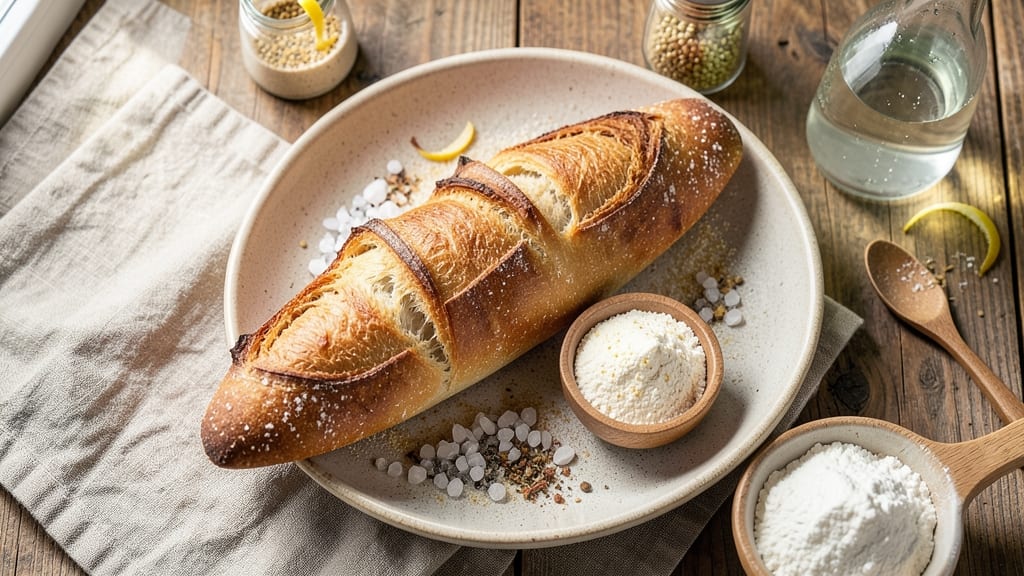
The artisan baguette bread recipe transforms simple ingredients into a masterpiece of French baking—crispy golden crust and airy, chewy interior. This method preserves tradition while offering modern efficiency, ensuring restaurant-quality results at home. The key lies in precise hydration, proper fermentation, and baking with steam for that signature crunch.
We begin with a straightforward dough of high-gluten flour, yeast, water, and salt—no fancy ingredients, just perfect technique. The kneading develops gluten structure, while resting allows flavors to deepen and gluten to relax. Shaping the baguette requires confidence; the classic "batard" form creates the ideal length-to-width ratio for even baking.
Baking with steam is non-negotiable for that coveted crust. A Dutch oven or steam tray creates the perfect environment, while scoring guides the oven spring. The result? A baguette with a shatteringly crisp exterior and tender, open crumb inside—each slice revealing the artistry of French breadmaking.
Whether serving with butter, olive oil, or as the perfect accompaniment to soups and stews, this baguette elevates any meal. The recipe scales beautifully for gatherings, and the dough can be prepped ahead for convenience. Let’s create bread that rivals your favorite Parisian boulangerie.
Ingredients for artisan baguette bread
Four simple ingredients transform into restaurant-quality baguettes with crisp crust and airy interior.
| Ingredient | Amount | Notes |
|---|---|---|
| High-Gluten Bread Flour 🌾 | 3 ½ cups | King Arthur or Caputo preferred |
| Active Dry Yeast 🍞 | ¼ tsp | Freshly opened packet |
| Water 💧 | 1 ¾ cups | Lukewarm, 90°F ideal |
| Kosher Salt 🧂 | ½ tsp | Diamond Crystal preferred |
| All-Purpose Flour 🌾 | ¼ cup | For dusting work surface |
| Cornmeal 🌽 | ¼ cup | For baking surface |
| Ice Cubes ❄️ | ½ cup | For dough shaping |
The flour makes all the difference here. High-gluten bread flour like King Arthur or Caputo has the protein content for that signature chewy interior. I always grab mine from King Arthur Flour—their website has a great guide on gluten content if you're curious. The yeast should be fresh, so check the expiration date on that packet. If it's been sitting in your pantry for months, toss it. For water, lukewarm is key—too hot kills the yeast, too cold slows fermentation. I use a thermometer to hit 90°F every time, but if you don't have one, just make sure it feels warm to the touch, like bathwater.
No high-gluten flour? All-purpose flour plus 2 tbsp vital wheat gluten works in a pinch—just mix it in with your dry ingredients. Short on yeast? Instant yeast at half the amount is a direct swap. The salt is non-negotiable for flavor, but if you're watching sodium, half the amount with extra herbs can work. For shaping, I keep a bowl of ice cubes nearby—dipping my hands in water keeps the dough from sticking. The cornmeal isn't just for show; it creates that crispy bottom crust that makes baguettes so special. Pro tip: Score the dough before baking—a sharp razor blade gives the cleanest cuts.
Freshly made dough keeps in the fridge for 24 hours wrapped tightly in plastic, but it's best baked within 4 hours. For longer storage, freeze shaped baguettes (unbaked) for up to 3 months. Thaw overnight in the fridge before baking. The cornmeal crust? That's your signal to bake immediately. And if you're making multiple baguettes, preheat your Dutch oven with the lid on for 30 minutes—that trapped steam is what creates that legendary crust. Leftovers? Toast them—crispy baguette croutons are my favorite snack.
Why You'll Love This Recipe
- No-Knead Magic: This dough comes together in five minutes—just mix, rest, and bake. Honestly, the high-gluten flour does most of the work, so you’re not stuck folding and stretching like a pro.
- Crust That Cracks: That golden, shatteringly crisp crust with a pillowy interior? It’s all in the steam and the kosher salt—no fancy equipment needed. I’ll be real: the first time I scored it wrong, my kids still ate every last bite.
- Weeknight Workhorse: Toss it in the freezer for sandwiches or crostini later—it reheats like a dream. My go-to? Sliced thin with olive oil and garlic for a 10-minute dinner. (Yes, even on a Tuesday night.)
- Budget Baguette Wins: Five dollars buys enough flour for two loaves—way cheaper than store-bought. Between us, this is the only bread I buy when I’m pinching pennies, and no one notices the difference.
Step-by-step instructions for artisan baguette bread
Here's how to craft the perfect baguette—crispy crust, airy crumb, and that signature French crunch.
Create the Perfect Dough with High-Gluten Flour
In a large mixing bowl, combine the 3.5 cups high-gluten bread flour and 0.25 tsp active dry yeast. Make a well in the center and add the 1.75 cups lukewarm water (around 90°F) and 0.5 tsp kosher salt. Mix with a wooden spoon until a shaggy dough forms—this ensures even hydration before kneading.
Transfer the dough to a lightly floured surface and knead vigorously for 8-10 minutes until smooth and elastic. You'll know it's ready when it springs back slowly when poked. The high-gluten flour develops gluten strands that give baguettes their signature chew and structure. If the dough feels sticky, add just enough of the 0.25 cup all-purpose flour to coat your hands—too much flour weakens the gluten network.
Bulk Ferment for Maximum Flavor Development
Place the dough in a lightly oiled bowl, cover with a damp towel, and let it rise at room temperature for 1.5-2 hours. You're looking for about 50-75% increase in volume—the dough should feel light and airy when pressed gently. This bulk fermentation develops flavor and creates the open crumb structure that makes baguettes so satisfying.
I like to do two sets of folds during this time—after 30 minutes and again after 1 hour. Wet your hands and gently stretch the dough outward, then fold it over itself like a letter. This technique strengthens the gluten strands without overworking the dough. If your kitchen is cold, the dough may take closer to 2.5 hours—just watch for that gentle rise and springiness.
Shape the Dough into Classic Baguette Forms
Turn the dough onto a lightly floured surface and divide it into 4 equal pieces (about 12 ounces each). Roll each piece into a 20-inch log, keeping the seams tight to prevent air pockets. The key here is tension—pull the dough gently toward you while rolling to create surface tension that prevents cracking during baking.
For that authentic baguette shape, use the 0.5 cup ice cubes to create a smooth, taut surface. Place each log on a piece of parchment paper, then gently press the ice cubes along the top. The cold temperature firms up the dough while creating those signature ridges. Let them rest, covered, for 20 minutes while you preheat your oven.
Preheat and Create Steam for Perfect Crust
Preheat your oven to 475°F with a baking stone or inverted baking sheet on the middle rack. Place a metal bowl filled with hot water on the lower rack—this creates the crucial steam that gives baguettes their crispy crust. When the oven reaches temperature, carefully transfer the baguettes (still on their parchment) to the stone.
Bake for 15-18 minutes until the crust turns a deep golden brown with those characteristic blisters and cracks. The interior should read 190-200°F on an instant-read thermometer. Don't peek! Every time you open the oven, you lose precious steam and heat. For that extra-crispy finish, I like to broil for 1-2 minutes at the very end, watching carefully to avoid burning.
Cool and Serve for Maximum Crunch
Remove the baguettes from the oven and let them cool on a wire rack for at least 30 minutes. This resting period allows the steam inside to redistribute, preventing a gummy crumb. The crust will continue to crisp up as it cools—this is when the magic happens.
Slice into 1-inch pieces and serve immediately while still warm. The contrast between the crispy exterior and airy interior is what makes this baguette truly special. Store any leftovers wrapped in a clean kitchen towel to maintain that bakery-fresh crunch for up to 2 days. For extra flavor, brush with garlic butter before serving—trust me, it takes this baguette to the next level.
Pro Tips For Making Artisan Baguette Bread
- STRETCH AND FOLD: Mix the dough by hand until it’s shaggy, then slap it onto a floured surface and stretch it with your knuckles—this develops gluten faster than kneading. I learned this the hard way after over-kneading and ending up with dense, chewy baguettes instead of airy ones.
- SALT THE WATER: Dissolve the kosher salt directly into the water before mixing with flour—this ensures even distribution and prevents clumpy dough. After burning my fingers on unevenly salted batches, I now measure the salt into the water first, no exceptions.
- LET IT RISE LONG: Don’t rush the bulk fermentation—aim for at least 1.5 to 2 hours at room temp (75°F) until the dough nearly doubles. I used to cut it short for convenience, and the crust never got that satisfying snap. Patience here makes all the difference.
- STEAM THE OVEN: Place a metal tray on the oven rack before preheating, then add boiling water when loading the baguettes. The steam mimics a professional bakery’s cuve, giving you that glossy crust without a steamer. Yes, it’s an extra step, but the texture is worth it.
Make-ahead tips for this recipe
Dough Prep Ahead
Make life easier by preparing the dough up to 24 hours in advance. After your bulk fermentation, shape the baguettes and place them on a parchment-lined tray. Cover tightly with plastic wrap and refrigerate.
When ready to bake, let them sit at room temperature for 1-2 hours to wake up the yeast—this gives you a 30-minute head start on baking time. 💡
Freeze Shaped Baguettes
For maximum convenience, shape your baguettes and freeze them unbaked on a tray lined with parchment. Once frozen solid (about 1 hour), transfer to a ziplock bag with parchment between layers.
Thaw in the fridge overnight before baking—this method preserves texture perfectly and saves you last-minute stress. Just add 5 minutes to your baking time when frozen.
Proofing Shortcut
Cold proofing is a game-changer for busy schedules. After shaping, place your baguettes in the fridge for 12-16 hours (overnight works great). The cold slows fermentation, creating intense flavor development.
When ready to bake, take them out and let them sit at room temperature for 1 hour before baking—this gives you 18 hours of hands-off prep while maintaining that perfect rise. ✨
Batch Baking Tips
Double or triple the recipe for gatherings, but bake in two batches to avoid overcrowding. Preheat your Dutch oven with lid on for 30 minutes before each batch—this ensures consistent steam and crust.
Label your frozen baguettes with baking dates to track freshness. Pro tip: Use a laser thermometer to check internal temps of multiple baguettes at once for precision. 🔥
Storage Hacks
Keep baked baguettes fresh by storing them in a brown paper bag at room temperature for up to 3 days. The paper bag mimics bakery conditions by trapping moisture and preventing staling.
For longer storage, freeze sliced baguettes (wrapped in foil) for up to 3 months—they reheat beautifully in a 350°F oven for 5 minutes. Toast frozen slices directly from the freezer for crispy croutons. 💫
Nutrition facts
Frequently asked questions
Why does my baguette dough feel too sticky?
The high hydration in artisan baguettes (around 65%) creates a naturally sticky dough. Just add a light dusting of all-purpose flour only to your hands, not the dough itself—too much flour weakens the gluten network. Wet your hands slightly and use the ice cubes to smooth the surface instead of flouring heavily.
Can I make baguettes without a Dutch oven?
Use a baking stone with a metal bowl of hot water on the lower rack to create steam. For extra crunch, try this: Place the shaped baguettes on parchment, then quickly pour 1 cup boiling water into the oven when you put them in—this mimics the steam effect.
What's the best way to score baguettes?
Use a sharp razor blade or lame (baguette scoring tool) at a 45-degree angle. Make quick, confident cuts about ½-inch apart—don't press too hard, just break the surface. The cuts should be ⅛-inch deep and ⅛-inch apart for even expansion. Score right before baking when the oven is fully preheated.
Why did my baguettes turn out dense instead of airy?
This usually happens from underproofing (not enough rise time) or overworking the dough during shaping. Let the dough rise until it's 50-75% larger and springs back slowly when poked. For shaping, handle gently—pull the dough toward you while rolling to create tension without compacting it.
How do I fix baguettes that didn't get crispy enough?
Next time, ensure your oven reaches 475°F before baking and use the steam method. For immediate results, try this: Wrap cooled baguettes in foil and bake at 375°F for 5-7 minutes to crisp up the crust. Brush with melted butter afterward for extra crunch.