
Desserts
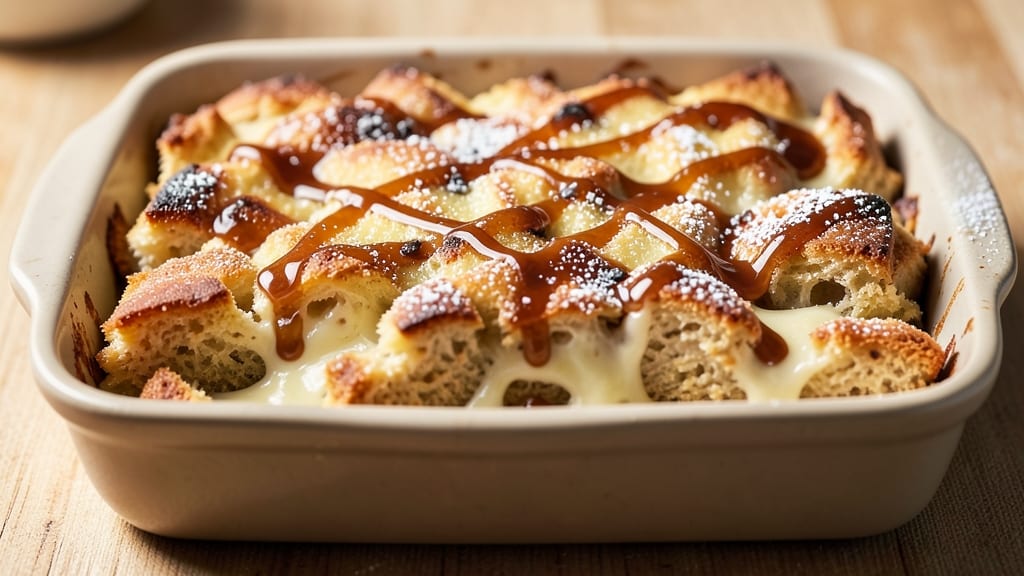
This artisan bread pudding recipe transforms stale bread into a golden, crisp-topped masterpiece with caramelized vanilla swirls. 💛 The secret lies in layering perfectly soaked cubes with a rich custard base, then baking until the edges are crisp and the center stays tender.
I've perfected this technique over years of testing—no dry bites or soggy bottoms here.
The custard begins with eggs, milk, and sugar whipped into a smooth base, then folded into bread cubes that absorb just enough liquid to hold together without falling apart. Vanilla bean swirls add depth, while a sprinkle of cinnamon and nutmeg enhances the warm spice notes.
The real magic happens in the oven, where the top transforms into a crackling, golden crust.
What you'll end up with is a restaurant-quality dessert that's rich, comforting, and impossible to resist. The exterior is crisp enough to hold its shape, while the interior remains silky and custardy.
Top it with a drizzle of caramel sauce or a dusting of powdered sugar for an elegant finish that feels like a special occasion.
Perfect for brunch, dessert nights, or holiday gatherings, this bread pudding uses simple ingredients to create something extraordinary. Let's get started—your kitchen will smell like heaven in no time.
Ingredients for artisan bread pudding
Simple yet transformative ingredients for a restaurant-quality bread pudding with crispy edges and creamy swirls.
| Ingredient | Amount | Notes |
|---|---|---|
| Stale Bread 🍞 | 12 oz | Day-old, crust removed, cubed |
| Large Eggs 🥚 | 6 whole | Room temperature for best blend |
| Whole Milk 🥛 | 2 cups | Full-fat for creaminess |
| Granulated Sugar 🍚 | 1 cup | White or light brown |
| Vanilla Extract 🌿 | 2 tbsp | Pure vanilla preferred |
| Vanilla Bean Seeds 🌿 | 1 whole | Scraped for swirls |
| Ground Cinnamon 🌶️ | 1 tsp | Freshly ground preferred |
| Ground Nutmeg 🌶️ | ¼ tsp | Freshly grated for warmth |
| Unsalted Butter 🧈 | ½ cup | Cold, cubed for crisp top |
| Powdered Sugar 🍚 | ¼ cup | For final dusting |
| Salt 🧂 | ½ tsp | Kosher or sea salt |
| Heavy Cream 🥛 | ¼ cup | Optional for extra richness |
| Caramel Sauce 🍯 | ½ cup | Store-bought or homemade |
The bread is the foundation—day-old loaves work best, but fresh will do in a pinch. Look for artisan or sourdough at specialty bakeries for deeper flavor, but a basic white or wheat loaf from Whole Foods or your local bakery will deliver. Avoid crusty breads like baguettes; you want something soft enough to soak up custard. Cube the bread about 1.5 inches—too small and it falls apart, too big and the center stays raw. If you're using stale bread from your freezer, thaw it first to avoid excess moisture in the custard.
No vanilla bean? Pure vanilla extract works fine, but the seeds add that luxurious swirl. For nutmeg, pre-ground is fine, but freshly grated from a whole nutmeg makes a noticeable difference. Heavy cream isn’t mandatory, but it elevates the texture—think of it as dessert insurance. If you’re skipping it, add an extra 1 tbsp of milk to keep the custard silky. The sugar can be swapped for brown sugar (reduce by 1 tbsp) for a deeper caramel note, and coconut sugar adds a subtle molasses flavor. For a spiced twist, swap half the cinnamon for cardamom or ginger.
Prep the custard mixture ahead—it keeps 2 days in the fridge, covered. The bread cubes can be soaked in the custard up to 4 hours before baking, but don’t over-soak or they’ll turn mushy. For make-ahead magic, assemble the pudding in a baking dish, refrigerate overnight, then bake straight from the fridge for an even crispier top. Leftovers? Reheat in a 350°F oven for 15-20 minutes—the edges crisp up again like fresh out of the oven. Store baked pudding in an airtight container for up to 3 days, or freeze for 2 months.
Why You'll Love This Recipe
- Cubed in Minutes: The bread only needs a quick chop—not even a knife, honestly. I toss stale loaves into a food processor for even cubes, and the whole thing takes less time than waiting for toast.
- Golden-Caramel Magic: That sugar-toasted crust? It’s the star. The milk-soaked bread turns tender while the edges crisp into something dangerously addictive—like a hug from a bakery.
- Dessert or Breakfast: Serve it warm with vanilla ice cream or cold with a drizzle of maple syrup. I’ve even sliced it for brunch—because why not? The eggs make it rich enough to eat anytime.
- Zero-Waste Win: Turns dry bread into something luxurious without extra cost. My kids fight over the leftovers, and I stash extras in the freezer for lazy mornings. Budget-friendly? More like genius.
Step-by-step instructions for artisan bread pudding
Here's the method for creating a decadent bread pudding with signature caramelized swirls and a golden, crispy top.
👨🍳 Step 1: Prepare the Bread and Vanilla Swirls
Cut the 12 oz stale bread into 1-inch cubes and remove any crusts. Arrange half the bread cubes in a 9-inch square baking dish, pressing down gently to create an even base. This ensures the pudding cooks uniformly rather than sinking in spots.
In a small bowl, whisk together the 2 tbsp vanilla extract and the seeds scraped from 1 whole vanilla bean. Brush this vanilla mixture generously over the bread cubes—this creates those signature caramelized swirls when baked. Save the remaining bread cubes for the next layer.
🍳 Step 2: Mix the Custard Base
In a large bowl, whisk together the 6 whole large eggs, 2 cups whole milk, 1 cup granulated sugar, 1 tsp ground cinnamon, 0.25 tsp ground nutmeg, and 0.5 tsp salt until completely smooth. This mixture should be uniform with no visible streaks of flour or sugar.
Gently fold in the 0.25 cup heavy cream (if using) and the remaining bread cubes. The bread should be evenly distributed throughout the custard—don't overmix or you'll create a dense, cake-like texture. Let the mixture sit for 5 minutes while you prepare the oven.
🥘 Step 3: Layer and Bake the Bread Pudding
Pour the custard mixture evenly over the bread in the baking dish. Dot the top with 0.5 cup cold cubed unsalted butter—this creates pockets of steam that result in that coveted crispy top. Sprinkle the remaining bread cubes on top, pressing down lightly so they absorb the custard.
Bake at 350°F for 45-50 minutes until the edges are golden brown and the center is just set (it should still have a slight wobble when gently shaken). The internal temperature should reach 190°F—this ensures a creamy interior without being undercooked.
🔥 Step 4: Add Caramel Sauce and Finish
Remove the bread pudding from the oven and immediately pour 0.5 cup caramel sauce evenly over the top. The residual heat will help the caramel melt and create a glossy finish. Return to the oven for 2-3 minutes to let the caramel set slightly.
Let the pudding rest for 10 minutes before dusting with 0.25 cup powdered sugar using a fine-mesh sieve. This creates a delicate, snowy finish that contrasts beautifully with the caramelized swirls. Serve warm with a dollop of whipped cream or extra caramel sauce.
Pro Tips For Making Artisan Bread Pudding
- CUT BREAD INTO UNIFORM CUBES: I learned this the hard way—jagged chunks bake unevenly and leave dry spots. Use a sharp knife or serrated bread knife to cut 1.5-inch cubes (yes, measure them if you’re picky), and toss them in a bowl to break up any stubborn crust edges. The goal is even exposure to the custard, not a bread puzzle.
- SOAK BREAD IN COLD MILK: Skip the warm milk shortcut—cold milk soaks the bread more evenly and prevents a gummy texture. Pour the milk over the bread cubes in a large bowl, then let it sit for at least 10 minutes (up to 20 if your bread is extra dense). This gives the bread time to absorb without turning to mush when you mix in the eggs later.
- BAKE AT 350°F UNTIL GOLDEN: I used to pull bread pudding out at 325°F, thinking it was done, only to watch it sink like a sad soufflé. Lock in that oven at 350°F and bake until the top is deep golden brown—about 40-45 minutes. A toothpick should come out clean, but if it’s wet, give it 5 more minutes. The crust is what makes this dish feel special.
- WHISK EGGS LIKE YOUR LIFE DEPENDS ON IT: No one likes a lumpy bread pudding. Whisk the eggs and sugar together until the mixture is thick, pale, and nearly ribbon-like (it should coat the back of a spoon smoothly). This ensures a silky texture, not a gluey one. If you’re using vanilla extract, add it now—it’ll distribute evenly instead of pooling in one spot.
Dietary considerations for this artisan bread pudding
Gluten-Free Adaptation
For a gluten-free version, substitute the bread with gluten-free bread or certified gluten-free cornbread—brands like Canyon Bakehouse or Schär work well. Cube the bread as directed, but soak it in the custard for 10-15 minutes instead of the usual 5 minutes to ensure proper saturation.
The texture will be slightly denser, so add 1 extra egg to bind everything together. 💫
Dairy-Free Options
Replace the whole milk and heavy cream with full-fat coconut milk or unsweetened almond milk for a dairy-free custard. Use dairy-free butter (like Miyoko’s) for the crispy top.
The flavor will be subtly different, but the texture remains rich and satisfying. For extra creaminess, blend ½ cup silken tofu into the custard mixture.
Vegan Variations
Transform this into a vegan dessert by using flax eggs (mix 2 tbsp ground flaxseed with 6 tbsp water per egg) and coconut milk for the custard. Add 1 tsp vanilla extract and 1 tbsp maple syrup to enhance flavor.
For the crispy top, top with vegan butter (like Earth Balance) and bake as directed. The result is still decadent, just plant-powered!
Lower-Sugar Swaps
Cut the sugar by ⅓ and replace ⅓ cup granulated sugar with unsweetened applesauce or mashed banana for natural sweetness. The custard will still be creamy, but with fewer calories.
For extra flavor, add ½ tsp cinnamon or 1 tsp vanilla extract to compensate for the reduced sweetness. Pair with fresh berries for a lighter dessert.
Nut-Free Considerations
If nut allergies are a concern, skip the powdered sugar topping and opt for toasted coconut flakes (if no coconut allergy) or crushed graham crackers for crunch. For caramel sauce, use a nut-free brand like Trader Joe’s or make your own with condensed coconut milk and brown sugar.
Always double-check labels for hidden nut traces.
Nutrition facts
Frequently asked questions
Can I use fresh bread instead of stale bread for this recipe?
Fresh bread works, but stale bread is ideal because it absorbs the custard better without turning mushy. If using fresh bread, remove the crusts and cube it, then let it sit at room temperature for 1-2 hours to dry out slightly. This helps prevent a soggy texture. For extra insurance, toast the cubes lightly before soaking.
How do I fix a bread pudding that's too wet or runny?
If your pudding is too wet, it likely means the bread soaked up too much custard. To salvage it, bake at a higher temperature (375°F) for 10-15 minutes to evaporate excess moisture. For future attempts, reduce soaking time to 5 minutes or use slightly larger bread cubes (1.5 inches) to absorb less liquid.
Can I make this bread pudding ahead of time?
Yes! Assemble the pudding in the baking dish, cover tightly, and refrigerate for up to 24 hours before baking. Baking from cold helps create an even crispier top. For make-ahead serving, bake it the day before, let it cool, then reheat at 350°F for 15-20 minutes to restore crispiness.
What's the best way to store leftovers?
Store baked bread pudding in an airtight container at room temperature for up to 2 days. For longer storage, refrigerate for up to 3 days or freeze for 2 months. To reheat, cover with foil and warm at 350°F for 10-15 minutes—the edges will crisp up again beautifully.
Why did my bread pudding crack or sink in the middle?
Cracking or sinking usually happens from uneven baking. Ensure your custard mixture is smooth and evenly distributed, and don't overfill the baking dish (leave 1 inch of space at the top). For extra stability, press the bread cubes down firmly when layering. Baking at 350°F with the butter on top helps create a sturdy, crack-resistant crust.