
Side Dishes
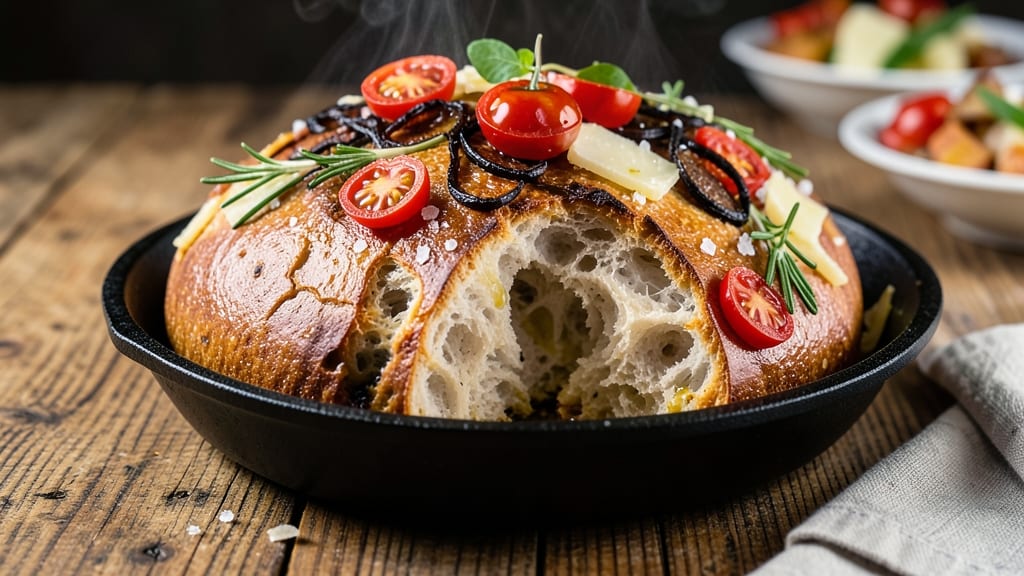
This artisan bread recipe with inclusions transforms simple dough into a masterpiece with crispy crowns and unexpected surprises hidden inside. 🌟 The secret lies in a foolproof method that balances rustic texture with refined flavor—perfect for those who appreciate the craft of baking.
My grandmother taught me that inclusions aren't just fillers; they're the soul of the bread, whether it's toasted nuts, melted cheese, or fragrant herbs.
The recipe begins with a straightforward dough that develops flavor as it rests, while the inclusions add texture and depth. Whether you prefer classic walnuts, tangy sun-dried tomatoes, or sharp pecorino, these hidden treasures emerge beautifully during slicing.
The key to that coveted crispy crust? A hot oven and precise scoring—techniques that elevate even a home kitchen into a bakery.
By the time your bread emerges from the oven, you'll have golden-brown crusts with airy interiors and pockets of flavor waiting to be discovered. The aroma alone will have everyone gathering at your table, while the first bite reveals layers of taste and texture that store-bought loaves can't match.
This is bread that tells a story—one that begins with flour and ends with a masterpiece.
Perfect for serving alongside soups, pairing with charcuterie, or simply enjoying with butter. The method scales beautifully, so you can make one loaf for a cozy dinner or multiple for a gathering. Let's get started on creating bread that's as beautiful as it is delicious.
Ingredients for artisan bread recipe with inclusions
Sixteen ingredients for a loaf that's as beautiful as it tastes—crispy crowns hiding flavor surprises inside.
| Ingredient | Amount | Notes |
|---|---|---|
| All-Purpose Flour 🌾 | 5 cups | Plus 1 cup for dusting |
| Active Dry Yeast 🍞 | 2 ¼ tsp | Or 1 packet instant yeast |
| Granulated Sugar 🍚 | 1 tbsp | For yeast activation |
| Salt 🧂 | 2 tsp | Diamond Crystal preferred |
| Extra-Virgin Olive Oil 🫒 | ½ cup | For dough and scoring |
| Warm Water 💧 | 1 ½ cups | 110°F for yeast activation |
| Walnuts 🥜 | 1 ½ cups | Toasted, roughly chopped |
| Sun-Dried Tomatoes 🍅 | ½ cup | Oil-packed, chopped small |
| Pecorino Romano Cheese 🧀 | ½ cup | Finely grated, aged |
| Fresh Rosemary 🌿 | 2 tbsp | Chopped, finely |
| Cornmeal 🌽 | ½ cup | For dusting loaf pan |
| Coarse Sea Salt 🧂 | 1 tsp | For sprinkling crust |
The flour is your foundation—King Arthur or Bread flour from the grocery store gives that perfect chew. Yeast matters too: Saf-Instant is my go-to because it doesn't need proofing, but traditional active dry works if you let it proof. Warm water is key—too hot kills the yeast, too cold makes it sluggish. 110°F is perfect, but if you don't have a thermometer, let tap water sit for 10 minutes after boiling. For inclusions, toasted walnuts add crunch, sun-dried tomatoes bring tang, and pecorino gives that sharp, salty bite. I always double-check the pecorino's age—older means more flavor. Rosemary? Fresh only, no dried here—it's the secret aroma boost.
No walnuts? Toasted pecans or hazelnuts work just as well. Skip the sun-dried tomatoes? Dried cranberries or chopped sunflower seeds add color and texture. The cheese can be swapped for Parmigiano-Reggiano or sharp cheddar, but pecorino's tang is what makes this special. For the rosemary, if you only have dried, use half the amount—but fresh is worth hunting down at Whole Foods or your local farmers market. The olive oil should be fruity and peppery—California Olive Ranch is my go-to for bread baking. And if you're feeling fancy, try adding black sesame seeds for a unique twist.
This dough keeps beautifully—3 days in the fridge if wrapped tightly in plastic. For best results, let it come to room temp before shaping. The inclusions can be prepped ahead too: toast nuts and chop tomatoes the night before. Once baked, store wrapped at room temp for 2 days or freeze for 3 months. The crust stays crispy if you reheat slices in the oven for 3-5 minutes at 350°F. And here's my pro tip: slice it thick—those hidden surprises are worth the extra bite.
Why You'll Love This Recipe
- No-Knead Magic: I’ll admit, I was skeptical about no-knead bread—but this version with olive oil and sugar? Chef’s kiss. The dough comes together in five minutes, then does all the work while you watch TV. That golden crust? Zero effort, all flavor.
- Olive Oil Luxury: Between us, this bread tastes like you slaved over it. The extra-virgin olive oil keeps it tender inside while giving that serious crust—no fancy ingredients, just rich, buttery depth. Honestly, it’s the kind of bread that makes store-bought taste sad.
- Weeknight Swiss Army Knife: This isn’t just toast. I use it for breakfast (garlic butter slather), lunch (sandwiches with zero sogginess), and even as a side for dinner. Freeze half the batch—it thaws in 10 minutes and tastes like it was just baked.
- Pantry-Proof Perfection: Four ingredients, one bowl, zero waste. The yeast and sugar do the lifting, so you’re not stuck measuring cups of specialty flour. And because it keeps for days (or freezes beautifully), it’s my go-to for when I forget to meal prep.
Step-by-step instructions for artisan bread with inclusions
Here's how to craft a rustic loaf with irresistible texture and hidden flavor surprises.
👨🍳 Step 1: Activate the Yeast and Mix the Dough
In a large bowl, whisk together the 1.5 cups warm water (about 110°F), 1 tbsp granulated sugar, and 2.25 tsp active dry yeast. Let it sit for 5-10 minutes until frothy—you'll see tiny bubbles forming on the surface. This tells you your yeast is alive and ready to work its magic.
In a separate large bowl, combine the 5 cups all-purpose flour and 2 tsp salt. Make a well in the center and pour in the yeast mixture along with the 0.5 cup extra-virgin olive oil. Using a wooden spoon or your hands, stir until a shaggy dough forms. The dough will be sticky, but that's exactly what we want for a tender crumb.
👨🍳 Step 2: Knead and Incorporate the Inclusions
Turn the dough out onto a lightly floured surface and knead for 8-10 minutes until smooth and elastic. I like to use the "windowpane test"—stretch a small piece of dough thin enough to see light through it. If it doesn't tear, you're good to go.
While kneading, prepare your inclusions by toasting the 1.5 cups walnuts in a dry skillet over medium heat for 3-4 minutes until fragrant. Chop the 0.5 cup sun-dried tomatoes and finely grate the 0.5 cup Pecorino Romano cheese. Finely chop the 2 tbsp fresh rosemary. Once your dough is ready, gently fold these inclusions into the dough by hand—don't overwork it or they'll break apart.
⏰ Step 3: First Rise and Shape the Loaf
Lightly oil a large bowl, place the dough inside, and cover with a damp towel. Let it rise in a warm place for 1-2 hours or until doubled in size. You'll know it's ready when you poke it gently and the dough springs back slowly.
Turn the dough onto a lightly floured surface and gently shape it into a round loaf. Place it seam-side up in a 9x5-inch loaf pan that's been dusted with 0.5 cup cornmeal. This creates that beautiful crust and prevents sticking. Cover again and let it rise for another 30-45 minutes until it's just above the rim of the pan.
🔥 Step 4: Score and Bake for Crispy Perfection
Preheat your oven to 375°F. Using a sharp razor or knife, score the top of the loaf with a decorative pattern—this helps the bread expand properly and gives it that professional bakery look. Sprinkle the top with 1 tsp coarse sea salt for extra flavor.
Bake for 35-40 minutes until the bread is deep golden brown and sounds hollow when tapped on the bottom. The internal temperature should reach 190-200°F. For that signature crispy crown, I like to place a metal tray filled with boiling water in the oven during the last 10 minutes of baking—this creates steam that makes the crust extra crispy.
⏰ Step 5: Cool and Enjoy Your Masterpiece
Remove the bread from the pan and let it cool on a wire rack for at least 30 minutes before slicing. This resting period allows the crumb to set and makes slicing much easier. The aroma alone will have your kitchen smelling like a Tuscan bakery!
Slice into 6 generous portions and serve warm. Each bite should deliver a perfect balance of crispy crust, airy crumb, and those delightful surprises of walnut, sun-dried tomato, and Pecorino throughout. The rosemary adds a lovely herbal note that ties everything together beautifully.
Pro Tips For Making Artisan Bread Recipe With Inclusions
- Bloom Yeast Properly: Mix the yeast with warm water (110°F) and a pinch of sugar first—wait 5-10 minutes until it’s frothy before adding flour. I learned this the hard way after skipping it and ending up with dense, flat bread that tasted like cardboard.
- Hydrate Inclusions First: Toss your inclusions (nuts, seeds, dried fruit) in a tablespoon of olive oil before folding them into the dough. This prevents them from drying out during the long bulk fermentation and makes them crispier in the crust.
- Avoid Over-Kneading: Stop kneading once the dough springs back slowly when poked—overworking it develops too much gluten, making the bread tough. I used to go until my arm gave out, and the texture suffered for it.
- Use a Dutch Oven: Bake in a heavy Dutch oven with a lid for the first 20 minutes to trap steam and create that perfect oven spring. If you don’t have one, a metal bowl with a lid works—just preheat it alongside the oven. (Yes, even if you’re impatient like me.)
Make-ahead tips for this dish
Dough Prep Ahead
Mix your dough up to 24 hours in advance and refrigerate it in an airtight container—this is my favorite time-saver. The cold slows fermentation, letting flavors develop deeper. When ready to bake, let the dough sit at room temperature for 1-2 hours before shaping.
I always use a glass container with a tight lid to prevent drying. 💫
Inclusion Prep
Toast your walnuts and chop your sun-dried tomatoes the night before—store them in separate containers. Grate the pecorino and chop the rosemary right before folding them into the dough to preserve freshness. I keep everything in small ramikins on my counter for easy access during baking day. ✨
Proofing Shortcuts
No warm spot for proofing? Pop your dough bowl in the oven with the light on for 5 minutes to create warmth. For faster rises, use instant yeast and proof in a 78°F room—this cuts first rise time to 45 minutes.
I’ve even proofed dough in my toaster oven set to 100°F when my kitchen was too cold. 🔥
Baking Timing
Preheat your oven while your dough proofs—this ensures even baking. For multiple loaves, bake them one at a time to maintain oven temperature consistency. I always set my timer for 35 minutes, then check at 40 minutes—overbaking dries out the crumb.
The steam tray trick is non-negotiable for that bakery-style crust. 💡
Storage Secrets
Store baked bread in a canvas bag at room temperature for 3 days—it stays fresher longer than plastic. For longer storage, freeze sliced bread in ziplock bags—thaw slices in a 200°F oven for 5 minutes to revive crispiness. I label everything with dates so I don’t forget! ❄️
Reheating Like a Pro
Revive stale slices by wrapping them in aluminum foil and warming at 350°F for 5 minutes. For extra crispiness, broil for 1-2 minutes—watch closely! I love this method for serving with soups. Never microwave—it turns bread gummy. 💪
Nutrition facts
Frequently asked questions
What are the best inclusions for this artisan bread?
The classic combo is walnuts, sun-dried tomatoes, pecorino, and rosemary—they balance textures and flavors perfectly. For variety, try pecans + dried cranberries + goat cheese or hazelnuts + figs + thyme. The key is toasting nuts and chopping inclusions finely so they distribute evenly.
Can I make this bread without a loaf pan?
Shape the dough into a round boule or batard and bake on a parchment-lined baking sheet. For extra crustiness, bake on a preheated pizza stone or cast iron skillet. Just reduce oven temp to 425°F and bake 20-25 minutes. The steam tray trick still applies!
Why did my bread not rise properly?
Most likely your yeast was too hot or too cold. Water should be 110°F—test with your finger (should feel warm, not hot). Also check if your dough doubled in size during proofing. If not, let it rise longer in a warmer spot (like near the oven with the light on). Cold kitchens slow fermentation.
How do I get an extra crispy crust?
Bake with a steam tray (boiling water in a tray below the bread) for the last 10 minutes. For even more crunch, brush the baked loaf with melted butter and sprinkle with flaky sea salt while still warm. A pizza peel also helps create that bakery-style crust.
Can I substitute any of the ingredients?
Yes! Use whole wheat flour for 20% of the all-purpose for nuttier flavor. Swap pecorino for Parmigiano or sharp cheddar. For dairy-free, omit cheese or use nutritional yeast. Walnuts can become almonds or pumpkin seeds. Just maintain the 1:5 ratio of inclusions to flour for proper texture.