
Side Dishes
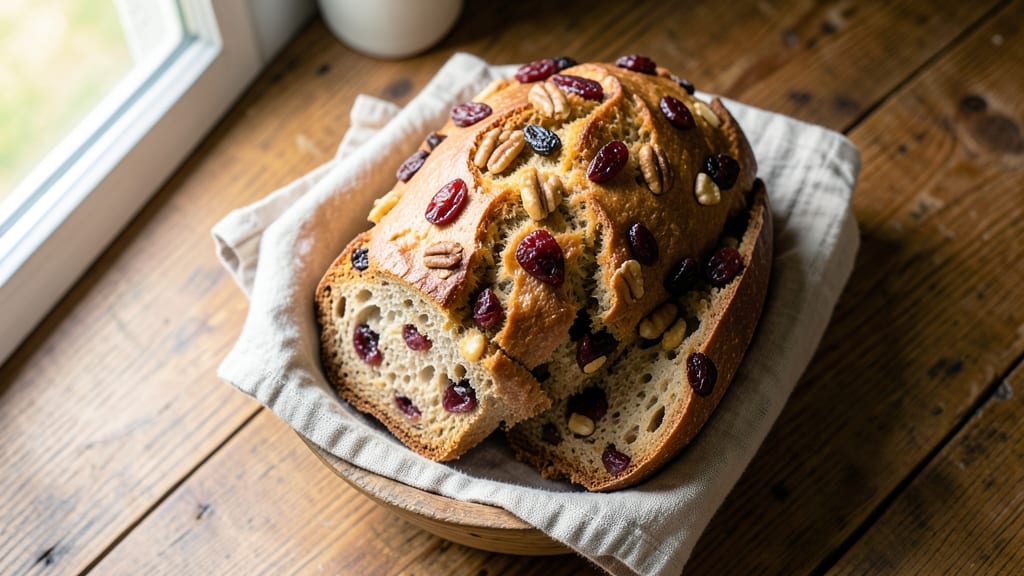
This artisan raisin walnut bread recipe delivers a golden crust and tender crumb packed with sweet plump raisins and crunchy walnuts. The secret lies in proper hydration and slow fermentation, which develops deep flavor and an open crumb structure.
I've perfected this technique over years of baking, ensuring every loaf rises beautifully with that signature rustic crown.
The dough's magic comes from a balance of flour, water, and time—no yeast shortcuts here. Raisins and walnuts are folded in during the final knead, ensuring even distribution without sinking.
Proofing at room temperature followed by a cold proof in the fridge creates that perfect oven-spring and rich flavor development you can't get with quick methods.
What you'll end up with is a loaf with a crisp, caramelized crust and tender interior studded with sweet raisins and toasted walnuts. The aroma alone will have everyone gathering around the table. This bread is perfect for breakfast toast, sandwiches, or simply enjoyed with butter and jam.
For best results, use high-quality ingredients and don't rush the process. The extra time spent proofing and baking transforms simple ingredients into something extraordinary. Let's get started on creating your perfect artisan loaf.
Ingredients for artisan raisin walnut bread
Four cups flour plus a handful of pantry staples. The magic happens in the mixing and proofing.
| Ingredient | Amount | Notes |
|---|---|---|
| Bread Flour 🌾 | 4 cups | High-protein for structure |
| Active Dry Yeast 🍞 | ¼ oz | Or 2 1/4 tsp (1 packet) |
| Granulated Sugar 🍚 | ¼ cup | Feeds yeast for fermentation |
| Unsalted Butter 🧈 | ½ cup | Softened, full-fat preferred |
| Whole Milk 🥛 | ¾ cup | Warmed to room temperature |
| Large Egg 🥚 | 1 whole | Room temperature |
| Sea Salt 🧂 | 1 ½ tsp | Fine grain preferred |
| Plump Raisins 🍇 | 1 cup | Soaked in warm water |
| Walnuts 🥜 | 1 cup | Toasted, roughly chopped |
| Water 💧 | 1 ½ cups | Room temperature |
| Cornmeal 🌽 | ¼ cup | For dusting loaf pan |
| Honey 🍯 | 1 tbsp | For egg wash |
The flour is your foundation—King Arthur or Caputo make all the difference. I grab mine from Whole Foods or Amazon for consistency. Raisins should be plump, not dried out—soak them in warm water for 10 minutes before adding. Walnuts? Toast them first in a dry pan until fragrant—5 minutes max—or they’ll turn bitter. The yeast is non-negotiable: check the expiration date, and if it’s past its prime, toss it. Fresh is best—this isn’t the time for stale yeast.
No bread flour? All-purpose plus 1 tbsp vital wheat gluten gets you close. Skip the honey? Maple syrup works too, but honey’s floral notes pair perfectly with the walnuts. Milk too warm? Let it cool—yeast hates heat. The dough should be sticky but manageable; if it’s too dry, add a splash more water. Don’t over-mix after adding the nuts—just fold them in gently so they distribute evenly without sinking. And if your raisins are tough to find, soaked dried cranberries work in a pinch (reduce soak time to 5 minutes).
This dough needs patience—proof it at room temp for 1.5 hours, then refrigerate overnight for that deep flavor. The crust? Brush with melted butter and a sprinkle of coarse salt right before baking. Store wrapped at room temp for 3 days or freeze the loaf for up to 3 months. Toast slices for 5 minutes to revive crispness. Leftovers? Perfect for French toast—just dip and fry.
Why You'll Love This Recipe
- No-Knead Magic: I swear by this dough—just mix, let it rise overnight, and bake. The bread flour handles the texture perfectly, so you don’t even need to fuss with kneading. Honestly, the only effort is stirring before bed.
- Sweet & Nutty Crunch: That first bite? Warm, chewy bread with plump raisins and crunchy walnuts—like a hug in loaf form. The butter and milk make it rich without being heavy, and the sugar caramelizes just enough to keep you reaching for seconds.
- Breakfast to Brunch: Slather it with jam for a quick breakfast, toast it for French toast, or serve it with soup—this bread does it all. Between us, I’ve even used it as a base for bread pudding. (Yes, even on a Tuesday night.)
- Budget-Friendly Staple: A single batch stretches for days—sandwiches, toast, or croutons—so you’re not scrambling for bread. The ingredients are simple but high-impact, and the yeast stretch goes a long way. My secret weapon for feeding the family without breaking the bank.
Step-by-step instructions for artisan raisin walnut bread
Here's how to create a bread with perfect sweet nutty swirls and a golden crust every time.
Activate the Yeast and Prepare the Dough Base
In a small bowl, combine the 1.5 cups water, 0.25 cup granulated sugar, and 0.25 oz active dry yeast. Let it sit for 5-10 minutes until frothy—this confirms your yeast is alive and ready to work. If it doesn't bubble, start over with fresh yeast.
In a stand mixer fitted with the dough hook, combine the 4 cups bread flour and 1.5 tsp sea salt. Mix on low speed just to distribute the salt evenly through the flour. This prevents clumping and ensures balanced flavor throughout the dough.
Mix the Wet Ingredients and Combine
Add the 0.75 cup whole milk (warmed to room temperature) and 0.5 cup softened unsalted butter to the flour mixture. Mix on low speed until the butter is fully incorporated and the dough begins to come together. The butter should be soft enough to blend smoothly but not melted.
With the mixer running on medium speed, add the 1 whole large egg and the yeast mixture. Mix for 3-4 minutes until the dough pulls away from the sides of the bowl and forms a smooth, elastic ball. The dough should be slightly tacky but not sticky—if it's too wet, add 1 tablespoon flour at a time until it reaches the right consistency.
Knead the Dough for Maximum Development
Continue kneading on medium-high speed for 5-7 minutes until the dough is smooth and elastic. Press your finger into the dough—it should spring back slowly, not immediately. This indicates proper gluten development, which gives your bread that perfect structure.
Transfer the dough to a lightly floured surface and shape it into a round ball. Place it in a lightly greased bowl, cover with a damp towel, and let it rise in a warm place for 1-1.5 hours or until doubled in size. The dough should feel light and airy when pressed gently with your finger.
Prepare the Raisin and Walnut Filling
While the dough rises, prepare the filling by combining the 1 cup plump raisins and 1 cup walnuts in a small bowl. Toast the walnuts in a dry skillet over medium heat for 3-5 minutes until fragrant and lightly golden. Let them cool slightly before mixing with the raisins—this enhances their flavor and prevents them from absorbing too much moisture from the dough.
Optional but recommended: Soak the raisins in warm water for 10 minutes before mixing with the walnuts. This plumps them up and makes them more tender. Drain well before combining with the walnuts to prevent a soggy filling.
Shape, Swirl, and Proof the Dough
Once the dough has risen, punch it down to release the air. Roll it out on a lightly floured surface into a 12x18-inch rectangle about 1/4-inch thick. Spread the raisin and walnut mixture evenly over the dough, leaving a 1-inch border around the edges. Roll the dough tightly into a log, sealing the edges well.
Transfer the log to a 9x5-inch loaf pan that has been dusted with 0.25 cup cornmeal. The cornmeal prevents sticking and adds a subtle crunch to the crust. Cover the pan with a damp towel and let the dough rise again for 30-45 minutes until it's just above the rim of the pan.
Bake to Golden Perfection
Preheat your oven to 375°F. Brush the risen dough with a mixture of the 1 whole large egg and 1 tbsp honey for a beautiful golden finish. Bake for 35-40 minutes until the bread is deep golden brown and sounds hollow when tapped on the bottom. If the top browns too quickly, tent with foil to prevent over-browning.
Remove the bread from the oven and let it cool in the pan for 10 minutes. Then transfer it to a wire rack to cool completely. The internal temperature should be 200°F when done—this ensures it's fully baked but still moist inside. Slice when completely cool for clean, even pieces with those beautiful swirls of raisins and walnuts.
Pro Tips For Making Artisan Raisin Walnut Bread
- Warm the Milk First: Cold milk kills yeast faster than you’d think. Heat the whole milk to about 110°F (just warm to the touch) before mixing it with yeast and sugar—this jumpstarts fermentation and gives you a more reliable rise. I used to skip this, and my dough would take forever to puff up.
- Soften Butter Properly: Room-temperature butter blends better, but don’t melt it—just cut it into small cubes and let it sit for 30 minutes. If it’s too soft, it’ll turn your dough into a sticky mess; if it’s too hard, the raisins and walnuts won’t distribute evenly. Aim for the "pressable but not greasy" stage.
- Knead Until Windowpane: Test dough readiness by stretching a small piece—if it’s elastic and doesn’t tear, you’re good. Over-kneading dries it out, but under-kneading means a dense loaf. For this recipe, aim for 8–10 minutes by hand or 5–6 minutes in a stand mixer with a dough hook.
- Proof at Room Temp: Skip the fridge for the first rise—place your dough in a warm spot (like a turned-off oven with a light bulb inside) for 1–1.5 hours. Cold proofing slows things down, and this bread needs a lively rise to hold those raisins and walnuts in place. (Yes, even if you’re impatient like me.)
Serving suggestions for this artisan raisin walnut bread
Classic Breakfast Pairings
This bread shines as breakfast toast with local honey drizzled generously over warm slices. I love pairing it with whipped butter from Plugrá or cultured butter from Land O'Lakes for that tangy depth. For something sweet, try strawberry jam—the fruitiness complements the walnuts beautifully. 🍯
Make it a full breakfast by layering with cream cheese and adding sliced bananas or apple slices. The texture contrast between the soft bread, creamy cheese, and crisp fruit creates a satisfying bite. For a savory twist, spread with herb goat cheese and top with honey-glazed walnuts.
Lunch and Sandwich Ideas
Slice this bread into thick pieces for grilled cheese sandwiches—it holds up perfectly to melted sharp cheddar or Gruyère. Add a layer of prosciutto or turkey breast for a hearty lunch. The raisins and walnuts add unexpected sweetness that balances savory fillings beautifully. 🥪
For a vegetarian option, try a hummus and veggie wrap using this bread as the tortilla. The nutty texture pairs wonderfully with creamy hummus and shredded carrots or cucumbers. Toast the bread lightly before assembling to enhance the crust's flavor.
Dessert and Snack Servings
Dip warm slices into dark chocolate ganache for a decadent dessert. The contrast between the bread's sweetness and the rich chocolate creates a perfect balance. For a lighter option, spread with almond butter and sprinkle with sea salt and cinnamon. 🍫
Use this bread as a base for French toast—the raisins and walnuts add texture and sweetness. Brush with cinnamon sugar and top with maple syrup for a restaurant-quality brunch dish. The dense crumb soaks up the syrup beautifully without becoming soggy.
Gift-Worthy Presentation
Wrap slices in parchment paper tied with twine for a rustic gift. Include a small jar of local honey or chocolate spread for an elegant touch. This bread makes a thoughtful housewarming gift or holiday present—it's beautiful enough to display on a counter. ✨
For a special occasion, dust the cooled loaf with powdered sugar and add a sprinkle of crushed pistachios before slicing. Serve with espresso or chai tea for a sophisticated afternoon treat. The combination of warm spices and nutty bread creates a memorable experience.
Nutrition facts
Frequently asked questions
Can I substitute walnuts for another nut in this recipe?
Try pecans or hazelnuts for a similar texture, though walnuts provide the best flavor balance. For extra crunch, toast the nuts until golden before adding. If you're avoiding nuts entirely, dried cranberries or chopped dried apricots work well with raisins for a fruit-only version.
Why does my dough seem too sticky to handle?
This is normal for artisan bread—high hydration creates a tacky dough that needs proper technique. Dust your surface with rice flour (less gummy than all-purpose) and wet your hands slightly when shaping. If it's unbearably sticky, add 1 tablespoon bread flour at a time until workable, but avoid over-drying it.
How do I fix if the raisins sink to the bottom?
This happens when they're too heavy or the dough isn't properly sealed. Soak raisins for 10 minutes max (drain well) and fold them in gently during the final knead. For extra security, mix them with 1 teaspoon flour before adding to the dough. The swirl technique should keep them distributed.
Can I make this bread without a stand mixer?
Yes! Use a wooden spoon or your hands to mix wet ingredients into the flour, then knead by hand for 10-12 minutes on a floured surface until smooth. The dough will be more labor-intensive but equally delicious. Work in a well-floured bowl to prevent sticking.
What's the best way to reheat stale slices?
For crispy toast, wrap slices in foil and warm at 350°F for 5-7 minutes. For sandwiches, toast lightly in a dry pan over medium heat for 1-2 minutes per side. Avoid the microwave—it makes bread gummy. Store leftovers wrapped at room temp for 3 days or freeze for 3 months.