
Side Dishes
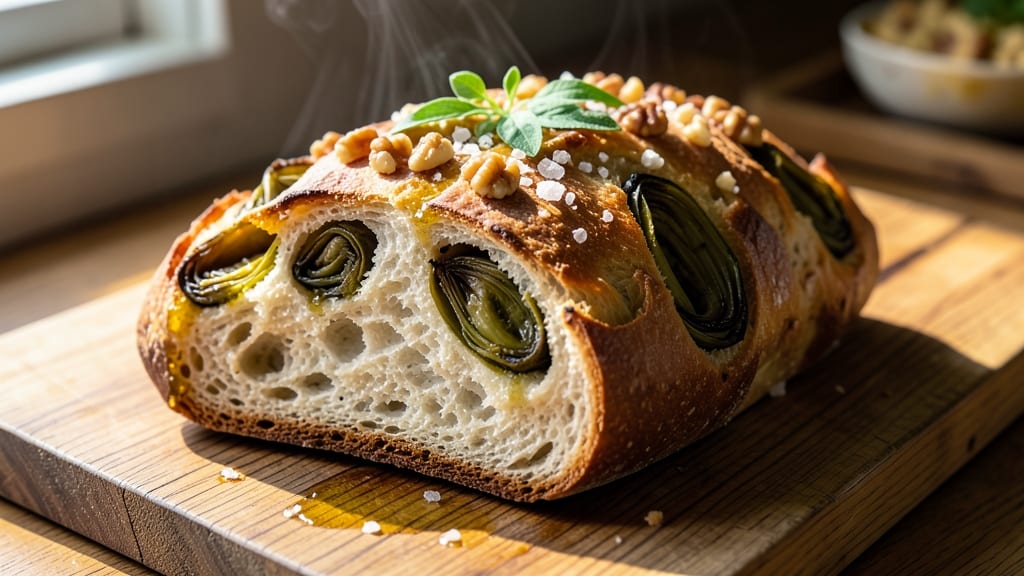
This Artoklasia bread recipe brings a taste of Greece to your kitchen with its signature nutty walnut swirls and artichoke-infused dough. 🌟 Traditional yet adaptable, this rustic bread delivers a crispy crust and tender crumb that pairs perfectly with olive oil and feta.
The secret lies in the artichoke paste—its earthy depth transforms ordinary bread into something extraordinary.
The beauty of Artoklasia lies in its simplicity: just flour, olive oil, and a few key ingredients that work together to create a bread with character. Walnuts add a satisfying crunch, while artichokes lend their unique, slightly bitter note that balances the richness.
Baking at 375°F ensures a golden crust, while the dough's slow rise develops that signature open crumb structure.
What you'll end up with is a loaf that's as impressive to look at as it is to eat—crusty on the outside, tender within, with pockets of walnut and artichoke that make every bite worth savoring.
Serve warm with olive oil drizzled over the top, or pair it with Greek salads, grilled meats, or even as a side to soups.
This recipe is perfect for those who love rustic bread with a twist. The artichoke paste can be made ahead, and the dough rises overnight, making it ideal for a hands-off baking experience.
Whether you're making it for a special occasion or just to enjoy a taste of Greece, this bread never disappoints.
Ingredients for artoklasia bread
Gather these simple ingredients for a rustic Greek loaf with artichoke depth and nutty crunch.
| Ingredient | Amount | Notes |
|---|---|---|
| All-Purpose Flour 🌾 | 5 cups | Plus 1 tbsp for dusting |
| Extra-Virgin Olive Oil 🫒 | ¾ cup | Plus 2 tbsp for dough |
| Active Dry Yeast 🍞 | 2 ¼ tsp | Or 1 packet instant yeast |
| Artichoke Hearts 🌿 | 14 oz | Drained, chopped fine |
| Walnuts 🥜 | 1 ½ cups | Chopped, toasted lightly |
| Granulated Sugar 🍚 | 1 tbsp | For yeast activation |
| Salt 🧂 | 1 ½ tsp | Diamond Crystal preferred |
| Warm Water 💧 | 1 ¼ cups | 110°F for yeast activation |
| Honey 🍯 | 1 tbsp | For dough enrichment |
| Dried Oregano 🌿 | 1 tsp | For Mediterranean flavor |
| Sesame Seeds 🌾 | 1 tbsp | For topping (optional) |
| Coarse Sea Salt 🧂 | 1 tbsp | For crust sprinkle |
The artichoke hearts are the star—Trader Joe's or Whole Foods carry the best quality in jars. Look for hearts that are plump and vibrant, not shriveled or discolored. Walnuts should be fresh, not rancid—Costco's bulk section is unbeatable for price. If you can't find artichoke hearts, fresh artichokes work too, but jarred makes prep a breeze. The olive oil matters here too—Kalamata or Greek varieties add that authentic Mediterranean touch. Store-bought yeast is fine, but if you're feeling fancy, cultivate your own from flour for extra flavor.
No artichoke hearts? Sun-dried tomatoes at half the amount give a similar depth, though not identical. Walnuts too pricey? Pecans or almonds work, though texture changes slightly. The honey can be swapped for maple syrup if you're avoiding it, but honey's floral notes complement the artichokes beautifully. For the yeast, active dry yeast requires proofing in warm water—don't skip this step. If your dough feels too sticky, add 1 tbsp more flour, but don't overdo it or the crumb will get dense. The oregano is non-negotiable—it's what makes this taste authentically Greek.
Artichoke hearts keep for up to 6 months in the fridge once opened, but walnuts should go in the freezer after opening to prevent rancidity. The dough can rise overnight in the fridge—cover tightly with plastic wrap to prevent drying. Baked loaves stay fresh for 3-4 days at room temperature, but freeze beautifully for up to 3 months. Wrap cooled loaves in foil, then plastic, for best results. Toast slices before serving to revive crispiness—worth the extra minute for that bakery-fresh crunch.
Why You'll Love This Recipe
- No Chopping Needed: I swear by this—just toss jarred artichoke hearts straight into the dough. No dicing, no mess, and the texture stays perfect. Honestly, it’s the kind of recipe where I can have a glass of wine while mixing.
- Earthy Crunch Magic: That combo of walnuts and artichokes? Chef’s kiss. The walnuts add a satisfying bite, while the artichokes bring this briny, herby depth. It’s the kind of flavor that makes you reach for seconds without even thinking.
- Weeknight & Holiday Hero: I bake this for lazy Tuesdays and also pull it out for Thanksgiving. Same dough, different vibes—serve it warm with olive oil for a snack or slice it for a charcuterie board. It’s my secret weapon for effortless eating.
- Budget-Friendly Staple: Flour, olive oil, yeast—those are pantry basics. The artichokes and walnuts stretch far, and a loaf keeps well for days. Between us, I’ve fed a crowd with one batch and still had leftovers for toast the next morning.
Step-by-step instructions for Artoklasia bread with nutty walnut swirls
Here's how to make this Mediterranean-inspired bread with a golden crust and walnut-studded center.
👨🍳 Step 1: Activate the Yeast and Prepare the Dough Base
In a large bowl, combine the 1.25 cups warm water (about 110°F), 1 tbsp granulated sugar, and 2.25 tsp active dry yeast. Let it sit for 5-10 minutes until frothy—you'll see bubbles forming on top. If it doesn't bubble, your yeast might be dead, and you'll need to start over.
Once bubbly, add the 5 cups all-purpose flour, 1 tbsp honey, 1.5 tsp salt, and 1 tsp dried oregano. Mix with a wooden spoon until a shaggy dough forms. Then add the 0.75 cup extra-virgin olive oil and mix again until just combined. The dough will be sticky, but that's normal—this is a wet dough that needs time to develop.
🥘 Step 2: Knead and Incorporate the Walnut-Artichoke Filling
Transfer the dough to a lightly floured surface and knead for 5 minutes until smooth and elastic. If it's too sticky, wet your hands slightly to help handle it. Shape the dough into a rectangle about 12x8 inches on a baking sheet lined with parchment paper.
In a separate bowl, mix the 14 oz chopped artichoke hearts and 1.5 cups chopped walnuts. Spread this mixture evenly over the dough, leaving a 1-inch border around the edges. Gently fold the edges of the dough inward to create a sealed packet with the filling inside. Press down lightly to flatten.
🔥 Step 3: First Rise and Shape for Crusty Texture
Cover the baking sheet loosely with plastic wrap and let the dough rise at room temperature for 1 hour until it's puffed about 50% larger. Preheat your oven to 375°F while it rises. This initial rise helps develop the flavor and structure of the bread.
After rising, use a sharp knife to score the top of the dough in a crosshatch pattern (about ½-inch deep). Brush the top lightly with the remaining 2 tbsp olive oil and sprinkle with 1 tbsp coarse sea salt. This scoring helps the bread expand evenly and gives it that beautiful crusty texture.
🔥 Step 4: Bake Until Golden and Crisp
Bake the bread for 35-40 minutes until it's deep golden brown and sounds hollow when tapped on the bottom. The internal temperature should reach 190°F at the center. If the top browns too quickly, tent loosely with aluminum foil to prevent over-browning.
During the last 5 minutes of baking, sprinkle the 1 tbsp sesame seeds on top for a nutty crunch. Let the bread cool on a wire rack for 15 minutes before slicing—this prevents the crust from becoming soggy. The walnut filling should be warm and fragrant, with a perfect balance of nutty and artichoke flavors.
⏰ Step 5: Slice and Serve Warm
Once cooled slightly, slice the bread into 4 equal servings (about 2-inch thick slices). The center should reveal the beautiful walnut and artichoke swirl, surrounded by a crispy, golden crust. Serve warm with your favorite Mediterranean dips or simply enjoy as-is—this bread is delicious on its own.
Here's the thing—this bread tastes even better the next day when the crust fully develops its crunch. Store leftovers wrapped in a cloth bag at room temperature for up to 3 days, or freeze slices for up to 1 month.
Pro Tips For Making Artoklasia Bread
- CHOP ARTICHOKES SMALL: Artichoke hearts hold moisture like sponges—if you skip chopping them into ¼-inch pieces, they’ll turn your dough into a soggy mess. I learned this the hard way when my first batch looked like a wet brick instead of a rustic loaf.
- TOAST WALNUTS FIRST: Crunch is everything in artoklasia, and raw walnuts just don’t cut it. Toast them in a dry pan for 5–7 minutes until fragrant, then chop—this prevents them from turning mushy in the oven and adds depth to every bite.
- DON’T OVERKNEAD: This dough is delicate. Knead just until the walnuts and artichokes are evenly distributed—about 3–4 minutes by hand. Overworking it will break down the gluten, and your bread will end up dense instead of light and airy.
- USE COLD OLIVE OIL: Pour the extra-virgin olive oil straight from the fridge into the dough. The chill slows yeast activity just enough to give you time to shape the loaf without it rising too fast in the bowl—no waiting around for a second rise.
Make-ahead tips for artoklasia bread
Artichoke Paste Prep
Make the artichoke paste the night before to save time—this is where the magic happens! In a food processor, blend the 14 oz chopped artichoke hearts with 2 tbsp olive oil and 1 tsp salt until smooth.
Store in an airtight container in the fridge for up to 3 days. Pro tip: Add 1 tsp lemon juice to prevent browning and enhance flavor. 🌿
Overnight Dough Rise
For a hands-off approach, shape your dough after the first rise, then refrigerate it overnight. Cover tightly with plastic wrap and let it chill for 12-16 hours—this slow rise deepens the flavor and makes the crust extra crispy.
When ready to bake, simply remove from the fridge and proceed with scoring and baking as directed. The cold dough will take 5-10 minutes longer to come to room temperature before baking.
Freezer-Friendly Dough
Pre-shape your dough, wrap it tightly in plastic wrap, then place it in a freezer bag for up to 1 month. When ready to bake, thaw in the fridge overnight, then proceed with the recipe.
The texture remains just as good as fresh dough—perfect for meal prep Sundays! Just add 5-10 minutes to your baking time to account for the cold start. ❄️
Storage Secrets
Baked loaves stay fresh for 3-4 days at room temperature when wrapped in a clean kitchen towel. For longer storage, slice the bread and freeze individual portions in airtight containers. Toast frozen slices directly from the freezer for 2-3 minutes at 375°F—they’ll crisp up beautifully.
The artichoke and walnut flavors actually intensify when reheated, making every bite taste like fresh-baked goodness.
Batch Baking Tips
Double the recipe for a large gathering! Use two 9x13-inch baking sheets and divide the dough evenly. Bake both loaves simultaneously for 30-35 minutes—rotate pans halfway for even browning.
Label baked loaves with the date and store in the freezer. When company comes, simply reheat slices in a 350°F oven for 5-7 minutes to serve warm and inviting. 💫
Flavor Boost Shortcut
No time to make artichoke paste? Use ½ cup artichoke hearts (chopped, not blended) mixed with 1 tbsp olive oil and 1 tsp dried oregano. Fold this mixture into the dough after kneading for a simpler but still flavorful version.
The texture will be slightly different, but the Mediterranean essence remains intact—perfect for busy weeknights!
Nutrition facts
Frequently asked questions
Can I substitute jarred artichoke hearts with fresh ones?
Fresh artichokes work but require more prep! Trim the leaves, remove the choke, and steam for 15 minutes until tender. Then chop the hearts and follow the recipe. Jarred artichokes are more convenient and give consistent texture.
Why does my dough feel too sticky?
This wet dough is normal—it needs time to develop gluten. If it's unbearable, add 1 tbsp flour at a time while kneading. Overworking it can make the bread dense, so keep it minimal. Wet hands help handle sticky dough without adding extra flour.
Can I make this bread without walnuts?
Swap walnuts for 1.5 cups chopped pecans or 1 cup sunflower seeds for a seed version. For nut-free, use ½ cup dried cranberries mixed with 1 tsp cinnamon instead. The artichoke flavor will still shine through.
How do I fix a dense, heavy loaf?
Dense bread usually means over-kneading or under-proofing. Next time, knead just until smooth (5 minutes) and let it rise longer (1.5 hours). Also check your yeast—it should bubble within 5-10 minutes when mixed with warm water. Cold dough needs extra time to rise.
What's the best way to reheat slices?
Toast slices in a 375°F oven for 3-5 minutes until crispy, or warm in a skillet over medium heat for 1 minute per side. For microwave, wrap in a damp paper towel and heat for 10-15 seconds—this revives the crust without drying it out. Freshly baked is best, but reheating works wonders!