
Main Courses
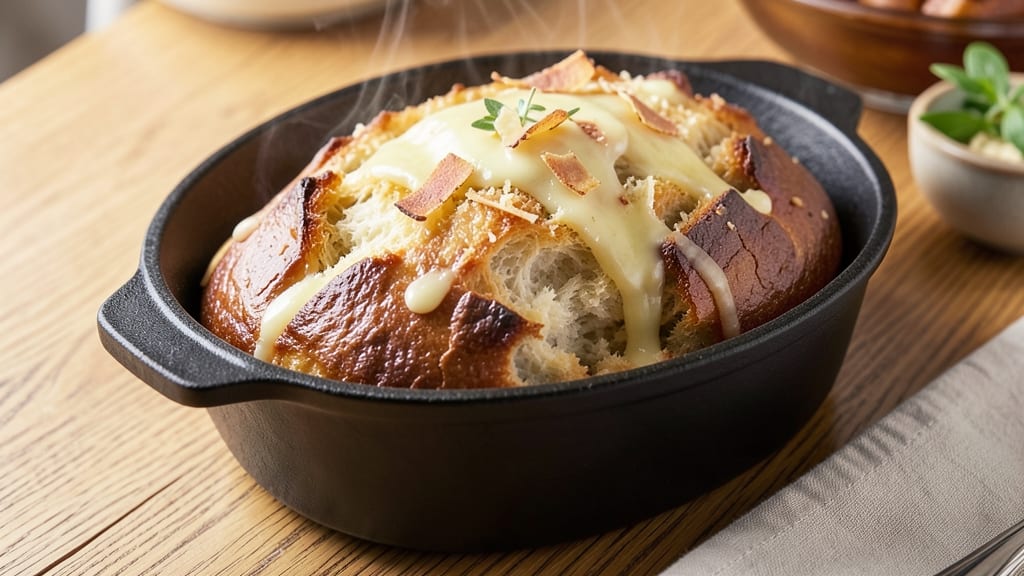
This Asiago bread recipe in a Dutch oven delivers the perfect marriage of crispy crust and gooey, stretchy cheese pulls you can't resist. 🔥 The Dutch oven's steam retention creates that signature oven-baked texture, while sharp Asiago cheese adds nutty depth with every bite.
I've baked this recipe countless times—it's the one that finally convinced my family to ditch store-bought bread for good.
The beauty of this method lies in its simplicity: just five key ingredients come together to create a loaf that's both impressive and foolproof. The dough gets its signature texture from the Dutch oven's even heat distribution, while the cheese stretches dramatically as it bakes, creating those irresistible cheese strings.
Unlike traditional sourdough, this recipe delivers restaurant-quality results in under an hour with minimal effort.
By the time it emerges from the oven, you'll have a loaf with a golden, crackly crust that gives way to soft, chewy interior punctuated by those glorious cheese pulls. The aroma alone will have everyone gathering around your table.
This bread is perfect for sandwiches, toast, or simply enjoyed warm with butter—each slice reveals more of that magical cheesy goodness.
The Dutch oven's role is critical here—it traps steam during the first few minutes of baking, creating that professional bakery texture. For even better results, try adding a sprinkle of garlic powder or dried herbs to the dough before baking.
Let's get started on this crowd-pleasing loaf that's sure to become your new favorite.
Ingredients for asiago bread recipe dutch oven
Five simple ingredients transform into a golden loaf with magical cheese pulls—just a Dutch oven and patience needed.
| Ingredient | Amount | Notes |
|---|---|---|
| All-Purpose Flour 🌾 | 4 cups | Sifted for light texture |
| Active Dry Yeast 🍞 | 2 ¼ tsp | One packet or 0.25 tsp |
| Granulated Sugar 🍚 | 1 tbsp | For yeast activation |
| Warm Water 💧 | 1 ¼ cups | 110°F for yeast activation |
| Asiago Cheese 🧀 | 1 ½ cups | Shredded, sharp variety |
| Unsalted Butter 🧈 | ½ cup | Cold, cubed for dough |
| Kosher Salt 🧂 | 1 ½ tsp | Diamond Crystal preferred |
| Garlic Powder 🧄 | ½ tsp | Optional for extra flavor |
| Dried Parsley 🌿 | 1 tsp | Optional garnish |
The Asiago cheese is non-negotiable here. Look for sharp, aged Asiago—the kind that crumbles easily when shredded. Whole Foods or specialty cheese shops carry the best, but any well-stocked grocery store should have it in the cheese section. If you can't find Asiago, Parmigiano-Reggiano works in a pinch, though it won't stretch quite the same. For the flour, King Arthur or Gold Medal brands are my go-to—they've got the right protein content for that perfect chewy crust. The yeast? One packet is all you need—just make sure it's not expired, or you'll be waiting all day for that dough to rise.
No garlic powder? Fresh minced garlic at half the amount works wonders, though it's a bit more work. Short on Asiago? Pepper Jack or sharp cheddar can mimic that stretchy texture, but you'll lose some of that nutty depth. The butter should be cold and cubed—don't let it melt into the dough before mixing. For the parsley, fresh is ideal but dried works in a bind. If you're feeling extra fancy, toss in a pinch of smoked paprika with the garlic powder—it adds a subtle kick that pairs perfectly with the cheese. And trust me, measure that salt carefully—too much will kill the yeast, and too little means bland bread.
This dough is a beast when it comes to storage. Freshly baked loaves keep beautifully wrapped at room temperature for 3 days, though they'll go faster than that. For longer storage, freeze slices wrapped in parchment—they'll stay fresh for up to 3 months. The Dutch oven itself? Clean it immediately after baking—those cheese bits are a nightmare if they dry on. I like to reheat slices in a 350°F oven for 5-10 minutes to bring back that fresh-baked magic. And if you've got leftovers? Toast them—the cheese gets all melty and delicious again.
Why You'll Love This Recipe
- No-Knead Magic: I swear by this—just mix, let it rise, and bake. The yeast does all the work while I sip coffee, and that golden crust? Worth every minute of waiting.
- Cheese Pulls Hard: That Asiago stretches and melts into gooey strands when you pull it apart. Honestly, it’s the kind of bread that makes you pause mid-bite just to admire the cheese threads.
- Weeknight Hero: Toss it in a Dutch oven, bake it, and you’ve got dinner covered. Serve it with marinara for pasta night, tear it over salads, or just eat it straight—it’s always the right call.
- Budget Stretch: A single batch feeds four, and the ingredients won’t break the bank. Between us, it’s the kind of bread that makes store-bought loaves feel like a waste of money.
Step-by-step instructions for Dutch oven Asiago bread
Here's how to make that perfect cheesy loaf with a crispy crust and gooey, pull-apart cheese strands.
👨🍳 Step 1: Activate the Yeast and Mix the Dough
In a large bowl, combine the 1.25 cups warm water (about 110°F) with the 1 tbsp granulated sugar and 2.25 tsp active dry yeast. Let it sit for 5-10 minutes until frothy—this means your yeast is alive and ready to work. If it doesn't bubble, start over with fresh yeast.
In a separate bowl, whisk together the 4 cups all-purpose flour, 1.5 tsp kosher salt, and 0.5 tsp garlic powder. Create a well in the center and pour in the yeast mixture. Add the 0.5 cup cold unsalted butter and 1.5 cups shredded Asiago cheese to the well. Using a wooden spoon, gently mix until a shaggy dough forms.
👨🍳 Step 2: Knead the Dough Until Smooth
Turn the dough onto a lightly floured surface and knead for 8-10 minutes until smooth and elastic. You'll know it's ready when it springs back slowly when poked. I like to use a dough scraper to help gather the dough and keep it from sticking to my hands.
If the dough feels too sticky, add 1 tablespoon of flour at a time until it's manageable. The dough should be slightly tacky but not wet. Once kneaded, place it back in the bowl, cover with a damp towel, and let it rise in a warm place for 1-2 hours or until doubled in size.
🔥 Step 3: Shape and Preheat the Dutch Oven
Punch down the risen dough and turn it onto a lightly floured surface. Gently shape it into a 12-inch round loaf, tucking the edges under to create a smooth, tight surface. Place the dough seam-side up in a greased 9-inch cast-iron Dutch oven.
Preheat your oven to 375°F with the Dutch oven inside for at least 30 minutes. This ensures the oven and pot are piping hot when you add the dough. The hot Dutch oven creates that signature crispy crust and steamy interior we're after.
🔥 Step 4: Bake to Golden Perfection
Carefully remove the Dutch oven from the oven and place the shaped dough inside. Bake uncovered for 30 minutes, then remove the lid and bake for another 15-20 minutes until the bread is deep golden brown and sounds hollow when tapped on the bottom.
Here's the thing—don't open the oven during the first 20 minutes of baking. The steam inside is crucial for that light, airy texture. If the top browns too quickly, tent it loosely with foil. When you pull it out, you should see a beautiful, crackly crust with those gorgeous Asiago cheese pulls throughout.
⏰ Step 5: Cool and Serve
Let the bread cool in the Dutch oven for 10 minutes, then transfer it to a wire rack. The cheese will continue to melt slightly as it cools, creating that perfect gooey texture. Sprinkle with 1 tsp dried parsley if you like for a pop of color and freshness.
Slice into wedges and serve warm. The crust should be crispy enough to hold up to your cheese pull, while the interior remains soft and cheesy. This bread is perfect for dipping in soups or enjoying on its own—just be ready for leftovers because it disappears fast!
Pro Tips For Making Asiago Bread Recipe Dutch Oven
- Preheat That Dutch Oven: The oven needs to scream hot—500°F (260°C) for at least 30 minutes before baking. I learned this the hard way when my first batch came out pale and doughy. A screaming-hot oven guarantees that crusty, golden-brown top you crave.
- Grated Cheese Matters: Skip the pre-shredded stuff—it’s coated with anti-caking agents that make the bread gummy. Use a box grater or food processor for freshly grated Asiago; it melts cleaner and packs more flavor. (Yes, even if it’s a pain to clean up.)
- Don’t Overhandle the Dough: Once you mix in the cheese, fold just until combined—overworking it turns the bread dense. I used to knead like I was making pizza dough, and the result was tough. Treat it like a gentle hug, not a workout.
- Steam the First 10 Minutes: Toss a handful of ice cubes or spray the dough with water before baking. The steam shock helps the bread rise faster and gives it that professional-looking oven spring. (Pro move: Use a metal bowl upside-down as a makeshift lid for the first 5 minutes.)
Regional styles of this recipe
Italian Tradition
This recipe traces back to Northern Italian bakeries where sharp Asiago cheese became a staple in rustic breads. Traditional versions often used whole wheat flour and included herbs like rosemary or thyme.
The Dutch oven method was later adopted by home bakers to replicate that professional bakery texture without expensive equipment. 🌍
Authentic Italian versions sometimes include a splash of milk in the dough for extra tenderness. I've found that adding 1-2 tablespoons of milk (about 15-30ml) alongside the water creates a lighter crumb without altering the cheese's dominant flavor.
The key difference is in the cheese—Italian recipes often use a mix of Asiago and Parmigiano-Reggiano for complexity.
American Adaptations
American home bakers have put their own spin on this classic, often adding extra garlic powder or smoked paprika to complement the cheese. The Dutch oven method became popular in the US after Alton Brown's Food Network show featured a similar recipe, making it accessible to home cooks.
Many American versions also include a pinch of cayenne pepper for subtle heat.
One regional variation I love is the New England-style version, where bakers add crumbled bacon to the dough before baking. This adds a smoky depth that pairs beautifully with the nutty Asiago.
For a Southern twist, some recipes incorporate a touch of honey into the dough to balance the saltiness of the cheese.
European Variations
In France, this bread is often made as a cheese pull-apart loaf with Gruyère instead of Asiago, creating a creamier texture. The French technique involves baking the dough in a floured banneton before transferring to a hot Dutch oven for the final bake.
This two-stage process creates an even more dramatic cheese pull effect.
German bakeries sometimes make a similar loaf using Emmental cheese, which has larger holes and a milder flavor. The dough is often enriched with an extra egg for richness.
For a Spanish adaptation, you'll find versions with Manchego cheese and a sprinkle of smoked paprika on top, giving it a distinct smoky aroma.
Modern Twists
Today's creative bakers are putting unique spins on this classic. One of my favorites is the truffle-infused version, where 1 teaspoon of truffle oil is mixed into the dough.
This adds an earthy depth that complements the cheese beautifully. For a vegan adaptation, I've seen recipes using nutritional yeast and vegan cheese blends that surprisingly mimic the stretchy texture.
Another modern approach is the sourdough-Asiago hybrid, where bakers replace half the all-purpose flour with sourdough starter. This creates a tangier flavor profile while maintaining the signature cheese pull. For a gluten-free option, some recipes use a gluten-free flour blend with xanthan gum to bind the dough.
Nutrition facts
Frequently asked questions
Can I use a different type of cheese instead of Asiago?
For the best stretchy texture, try sharp cheddar or Pepper Jack. If you want a milder flavor, Gruyère or Parmigiano-Reggiano work well too. Just note that Asiago gives that signature nutty depth—other cheeses may change the flavor profile slightly.
Why does my Dutch oven bread have a dense crust instead of crispy?
This usually happens when the oven isn't hot enough or the lid is removed too early. Preheat your Dutch oven for 30 minutes before adding the dough, and keep the lid on for the first 30 minutes of baking. The trapped steam creates that crispy crust. If it still feels dense, try brushing the top with water before baking.
How do I know when the bread is fully cooked?
Your bread is done when it's deep golden brown and sounds hollow when tapped on the bottom. The internal temperature should reach 190°F. If the top browns too quickly, tent it loosely with foil. The cheese pulls should be gooey but not runny when cool.
Can I make this bread without a Dutch oven?
Yes! Use a heavy oven-safe pot with a lid or even a baking stone. Preheat your oven to 425°F and bake for 25-30 minutes with the lid on, then remove the lid and bake for another 10-15 minutes. The steam retention is key—just be patient and monitor closely.
How should I store leftovers to keep them fresh?
Wrap cooled slices in parchment paper and store in an airtight container at room temperature for 3 days. For longer storage, freeze slices for up to 3 months. To reheat, warm in a 350°F oven for 5-10 minutes until the cheese is melty again. The crust stays crispy when reheated this way!