
Side Dishes
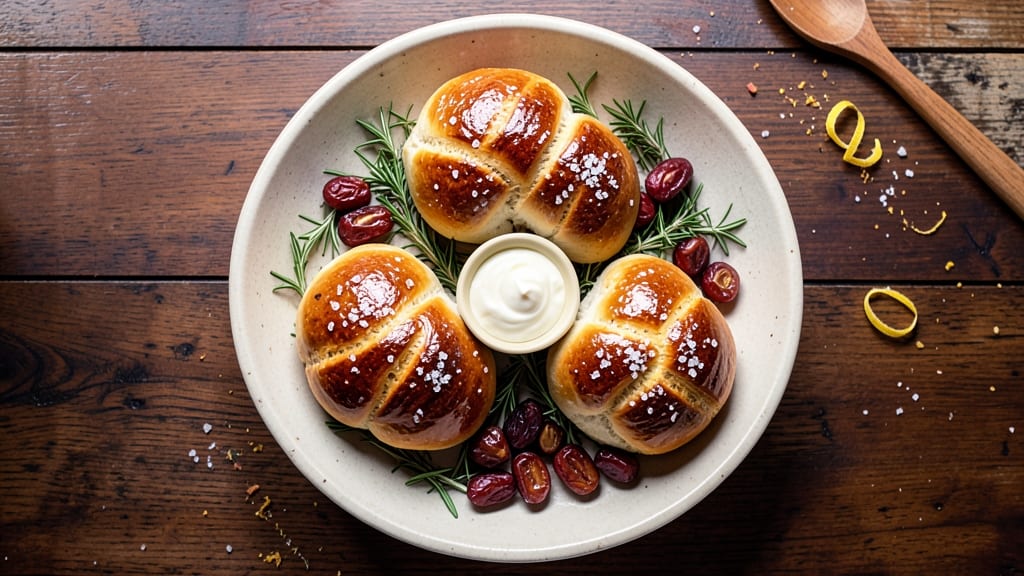
This authentic Jewish challah bread recipe brings the soul of Shabbat to your kitchen with its signature golden shine and intricate braids. The secret lies in an egg-rich dough that creates that signature lustrous finish, while the honey or egg wash elevates it from ordinary bread to a centerpiece for your table. I've perfected this recipe through generations of tradition, ensuring every loaf captures the essence of Jewish heritage.
The dough itself is a study in balance—flour, sugar, and eggs create a tender yet sturdy base perfect for braiding. What sets this apart is the technique: letting the dough rise twice for maximum flavor and texture, then shaping those classic three-strand braids that symbolize unity.
The aroma alone as it bakes will transport you to a Friday night dinner, where warm challah is blessed and shared with loved ones.
What you'll achieve is a loaf with a crispy, caramelized crust that gives way to a soft, pillowy interior—each bite infused with the warmth of tradition. The egg wash creates that signature golden sheen, while the honey or egg wash adds just the right touch of sweetness.
This isn't just bread; it's a connection to centuries of Jewish custom and celebration.
Whether you're preparing for Shabbat or simply want to experience the magic of homemade challah, this recipe delivers restaurant-quality results with a touch of cultural authenticity.
The braiding technique might seem intimidating at first, but I'll guide you through every step—from mixing the dough to creating those perfect three-strand braids that become a work of edible art.
Ingredients for authentic jewish challah bread
Six eggs, six cups flour—this is where tradition meets your kitchen counter.
| Ingredient | Amount | Notes |
|---|---|---|
| All-Purpose Flour 🌾 | 6 cups | Plus 2 tbsp for dusting |
| Large Eggs 🥚 | 6 whole | Room temperature preferred |
| Granulated Sugar 🍯 | ¼ cup | Or honey for natural sweetness |
| Active Dry Yeast 🍞 | 2 ¼ tsp | One packet, room temperature |
| Warm Water 💧 | 1 cup | 110°F for activating yeast |
| Unsalted Butter 🧈 | ½ cup | Softened, not melted |
| Salt 🧂 | 1 tsp | Kosher or sea salt |
| Large Egg Yolks 🥚 | 2 whole | For egg wash |
| Honey 🍯 | 2 tbsp | Or egg wash alternative |
| Sesame Seeds 🌾 | 1 tbsp | Optional, for topping |
| Poppy Seeds 🌾 | 1 tbsp | Optional, for topping |
The yeast is your secret weapon here. Freshness matters—check the date on the packet, and if it's been sitting in your pantry for months, grab a new one. Kroger or Whole Foods carry reliable brands, or buy it in bulk at Trader Joe's for better shelf life. Warm the water to 110°F (like bathwater) so it activates the yeast without killing it. The butter? Softened, not melted—it needs to blend into the dough smoothly. I always use Land O'Lakes or Plugrá for that perfect balance of richness without overpowering the dough. And those eggs? Room temperature is key—they mix in better and create that signature shine.
No honey? Maple syrup works too—just use the same amount. Running short on eggs? Substitute with 1/4 cup applesauce per egg, though the texture won't be quite as tender. The sesame seeds and poppy seeds are purely decorative, but if you skip them, the bread will still taste like heaven. For the flour, King Arthur or Gold Medal are my go-tos—they give that perfect balance of structure and softness. If you're feeling adventurous, swap 1/2 cup of the all-purpose flour for bread flour for a slightly chewier texture, but it's not necessary. And if you're making this for Shabbat, use pareve butter (dairy-free) to keep your meal kosher.
This dough is a patient one—it needs time to rise twice. First rise: 1-1.5 hours until doubled, second rise: 30-45 minutes after shaping. Don't rush it! Store the dough in the fridge for up to 24 hours if you need to prep ahead—just let it come to room temp before shaping. The finished loaf keeps well wrapped at room temp for 3 days, or freeze it for up to 3 months. I always slice it fresh before serving—toast it lightly for that perfect crunch, or serve it warm with butter melting on top. The egg wash? Brush it on right before baking for that golden sheen.
Why You'll Love This Recipe
- No-Knead Magic: I swear by this dough—just mix, let it rise, and shape it. The yeast does all the work while I sip coffee, and that golden crust? Worth every 10 minutes of waiting.
- Sweet & Rich: That touch of sugar in the dough caramelizes just right, giving it a subtle sweetness that pairs perfectly with honey or jam. Honestly, I’ve never met a challah that didn’t disappear fast.
- Weekend or Weeknight: Braided for Shabbat, torn into rolls for breakfast, or sliced for French toast—this dough adapts. I’ve even frozen extra loaves, and they toast up like they were fresh-baked yesterday.
- Pantry-Friendly Perfection: Five simple ingredients, no specialty tools, and it stretches my grocery budget. Between us, this is the kind of bread that makes me look like a star even when I’m just winging it.
Step-by-step instructions for authentic Jewish challah bread
Here's how to craft traditional challah with that signature egg-rich shine and perfect braid every time.
Activate the Yeast for Maximum Rise
In a small bowl, combine the 1 cup warm water (around 110°F—too hot kills yeast, too cool slows it down) with the 0.25 cup granulated sugar. Sprinkle the 2.25 tsp active dry yeast over the surface and let sit for 5-10 minutes until frothy. You'll see tiny bubbles forming—the yeast is alive and ready to work.
I like to test the water temperature by floating an egg—if it bobs gently, it's perfect. If nothing happens after 10 minutes, your yeast might be old. Start fresh with a new packet for that authentic rise.
Mix the Dough Until Silky Smooth
In a stand mixer fitted with the dough hook, combine the 6 cups all-purpose flour and 1 tsp salt. Add the yeast mixture and mix on low speed until just combined. Then add the 6 whole large eggs and 0.5 cup softened unsalted butter, mixing until the dough comes together into a shaggy mass.
Switch to medium speed and knead for 5-7 minutes until the dough is smooth and elastic, pulling away from the bowl. The dough should be slightly tacky but not sticky—if it sticks to your fingers, add a little more flour 1 tablespoon at a time. This kneading develops gluten, giving your challah that signature chew.
Let the Dough Rise Until Doubled
Lightly grease a large bowl with a bit of butter, place the dough inside, and cover with a damp kitchen towel. Let it rise in a warm spot for 1 to 1.5 hours until it has doubled in size. You'll know it's ready when the dough springs back slowly when poked with a finger—this means the gluten has relaxed and the yeast has done its job.
I always set my oven to 200°F with a bowl of hot water inside to create a warm, humid environment. This helps the dough rise faster and more evenly. Don't rush this step—proper rising is what gives challah its light, airy texture.
Shape and Braid for Traditional Beauty
Punch down the risen dough and divide it into 3 equal parts (about 12 ounces each). Roll each piece into a 12-inch log, then gently stretch them to make them slightly thinner. This makes the braid look more elegant and lie flatter.
Lay the three logs side by side and gently braid them together, securing the ends with a bit of dough. Place the braid on a parchment-lined baking sheet, cover with a towel, and let it rise for 30-45 minutes until puffy. This second rise gives the final shape and ensures a light interior.
Bake to Golden Perfection
Preheat your oven to 375°F. Brush the braided dough generously with a mixture of the 2 whole large egg yolks and 2 tbsp honey for that signature egg-rich shine. Sprinkle with 1 tbsp sesame seeds and 1 tbsp poppy seeds for texture and tradition.
Bake for 25-30 minutes until the challah is deep golden brown and sounds hollow when tapped on the bottom. The top should be glossy and slightly cracked—this is your cue that it's done. Let it cool on a wire rack for 10 minutes before slicing to keep it moist.
Pro Tips For Making Authentic Jewish Challah Bread
- Check Yeast Temperature: The warm water for your yeast should be 110°F—any hotter and you’ll kill it, any cooler and it’ll take forever to activate. I learned this the hard way after watching my dough sit there like a sad, lifeless lump for an hour. Use a thermometer if you’re unsure; your wrist isn’t reliable.
- Knead Until Silky: That dough needs to be smooth as a baby’s bottom—not just "kneaded enough." Fight the urge to quit when it’s still rough; keep going until it springs back when poked and looks like satin. A stand mixer saves your arms, but if you’re doing it by hand, set a timer for 10 minutes and don’t peek.
- Let Eggs Warm First: Cold eggs in warm dough slow everything down. Pop them in a bowl of warm water for 5 minutes before adding them to the mix—this keeps the yeast happy and the dough rising like it’s supposed to. I was skeptical until I tried it; now I never skip it.
- Brush With Egg Wash: Skip the water brush—egg wash is non-negotiable for that golden, glossy finish. Whisk 1 egg with 1 tablespoon water, then brush it on right after baking while the challah is still hot. The residual heat sets the shine, and your bread will look like it came from a bakery, not your kitchen.
Wine and beer pairings for this dish
Sweet White Wine
A crisp, dry Sauvignon Blanc from the Loire Valley in France is my go-to pairing for this egg-rich challah. The bright acidity and citrus notes cut through the bread's richness while complementing its honeyed sweetness.
Look for wines with 12-13% ABV—just enough body to stand up to the challah's texture without overpowering it. I love Oyster Bay Sauvignon Blanc from New Zealand for its tropical fruit flavors that echo the honey glaze. 🍷
Fruity Red Options
If you prefer red wine, try a light-bodied Pinot Noir from Oregon or Burgundy. The delicate cherry and raspberry notes enhance the challah's subtle sweetness without competing. Aim for 12-13.5% ABV—avoid heavy Cabernets that would clash. La Crema Sonoma Coast Pinot Noir offers perfect balance with its silky tannins.
For a more traditional Jewish pairing, consider a Côtes du Rhône with its spice and plum undertones that complement the sesame seeds. 🍇
Honey-Infused Mead
For a truly authentic experience, serve your challah with honey mead—a traditional Jewish drink that mirrors the bread's honey glaze. Look for commercial meads like Björk's Mead or Meadhawk that have 12-15% ABV and honey-forward flavors.
The natural sweetness and floral notes create a perfect harmony with the egg-rich dough. If you're feeling adventurous, make your own by simmering 1 cup honey with 4 cups water and a pinch of cinnamon for 30 minutes. 🍯
Light Beer Pairings
A wheat beer with a touch of sweetness works beautifully with challah. Try a German Hefeweizen like Paulaner or Weihenstephaner—their banana and clove notes enhance the honey glaze. For a crisp alternative, Belgian Witbier like Hoegaarden with its orange peel and coriander adds refreshing contrast.
Avoid heavy lagers or dark ales that would overpower the bread's delicate flavors. 🍺
Coffee or Tea
For a non-alcoholic option, medium-roast coffee with a splash of honey mirrors the challah's sweetness perfectly. The bitterness balances the bread's richness, creating a satisfying contrast.
Alternatively, a chamomile tea with lemon adds a soothing complement to the warm, eggy flavors. I often serve this during Shabbat when alcohol isn't consumed. ☕
Nutrition facts
Frequently asked questions about authentic Jewish challah
Why does traditional challah use so many eggs?
The eggs create that signature golden shine and tender crumb that sets challah apart from regular bread. Each egg adds richness and moisture, while the egg wash before baking gives the classic lustrous finish. This egg-heavy dough is what makes challah so special for Shabbat celebrations.
Can I make challah without a stand mixer?
The dough can be kneaded by hand for 8-10 minutes until smooth and elastic. Just be prepared for more arm work—this is where the mixer saves time. Knead on a lightly floured surface until the dough pulls away cleanly and springs back when poked.
What's the difference between braided and round challah?
The braided version is traditional for Shabbat, symbolizing unity and connection. Round challah is often made for holidays like Rosh Hashanah. The braiding technique creates a beautiful centerpiece, while round loaves are easier for beginners to shape.
How do I store leftover challah?
Wrap cooled challah tightly in plastic wrap or aluminum foil and store at room temperature for 3 days. For longer storage, freeze slices for up to 3 months. Toasting leftovers revives their texture perfectly—just pop them in the toaster for 2-3 minutes until golden.
Can I add raisins or citrus zest to the dough?
Yes! Many traditional recipes include ½ cup raisins or 1 tbsp lemon zest for extra flavor. Fold them in during the final kneading stage. For a modern twist, try orange zest or chopped dried apricots—just reduce the sugar slightly to balance the sweetness.