
Desserts
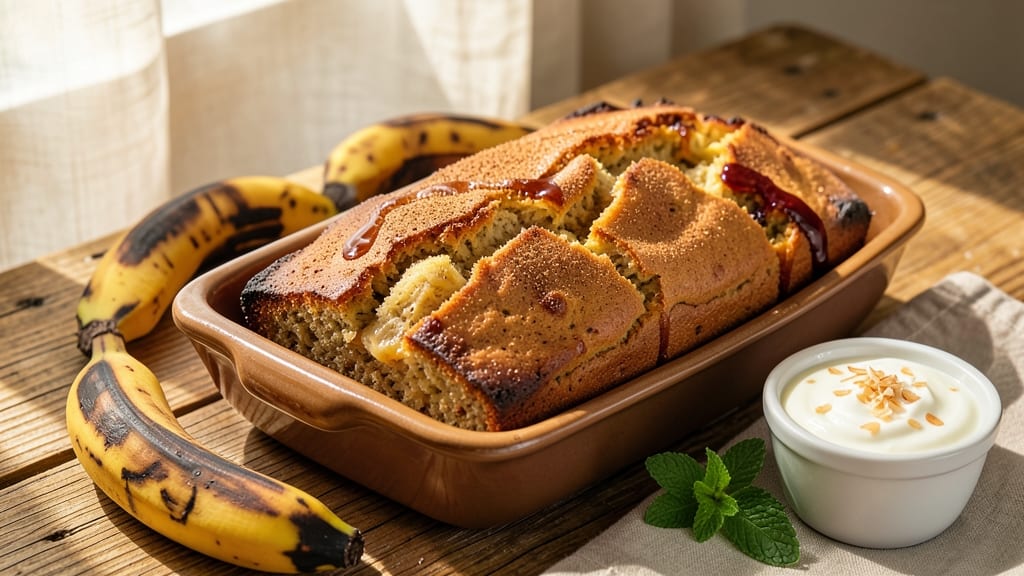
This Ayurvedic banana bread recipe transforms overripe bananas into a gut-friendly, spice-infused loaf that balances Vata energy while satisfying sweet cravings. 🌿 The secret lies in warming spices like cinnamon and ginger—traditional Ayurvedic ingredients that aid digestion and reduce inflammation—paired with moist, dense texture that stays fresh for days.
I developed this version after years of experimenting with Ayurvedic baking, ensuring every bite supports wellness without sacrificing flavor.
The recipe begins with ripe bananas mashed into a velvety base, enriched with coconut oil (or ghee for non-vegetarian) and Ayurvedic spices that create harmony in every slice. Unlike conventional banana bread, this version avoids refined sugar, instead using maple syrup or jaggery for natural sweetness and added mineral benefits.
The result? A loaf with a tender crumb, subtle spice notes, and a moistness that rivals bakery versions—perfect for breakfast, snacks, or paired with coconut yogurt.
What makes this Ayurvedic banana bread truly special is its adaptability: swap almond milk for dairy-free needs or add flaxseeds for extra fiber. The spices—cinnamon for warmth, cardamom for digestion, and ginger for circulation—work together to create a loaf that nourishes both body and mind.
Bake at 350°F for 50-60 minutes until golden, then slice and serve with a drizzle of honey or a dollop of coconut yogurt for the ultimate gut-soothing treat.
This recipe isn’t just dessert—it’s a mindful indulgence. Whether you’re balancing Vata energy or simply craving a healthier banana bread, the combination of traditional spices and whole-food ingredients makes every bite intentional. Ready to bake? Let’s create something both delicious and deeply nourishing.
Ingredients for ayurvedic banana bread
Eight wholesome ingredients blend Ayurvedic wisdom with classic banana bread comfort, balancing sweetness and spice for gut harmony.
| Ingredient | Amount | Notes |
|---|---|---|
| Overripe Bananas 🍌 | 3 medium | Mashed until smooth |
| Organic All-Purpose Flour 🌾 | 2 cups | Unbleached, sifted |
| Unsweetened Almond Milk 🥛 | 1 cup | Room temperature |
| Pure Maple Syrup 🍯 | ½ cup | Grade B for depth |
| Organic Coconut Oil 🫒 | ½ cup | Melted, not solid |
| Ground Cinnamon 🌶️ | 2 tsp | Ceylon preferred |
| Fresh Ginger 🌿 | 1 tbsp | Grated, aromatic |
| Ground Cardamom 🌿 | ½ tsp | True cardamom pods |
| Baking Soda 🧂 | 1 tsp | Pure, aluminum-free |
| Sea Salt 🧂 | ½ tsp | Fine grain preferred |
| Flaxseeds 🌾 | 2 tbsp | Ground, for binding |
| Vanilla Extract 🌸 | 1 tsp | Pure, alcohol-free |
| Chopped Walnuts 🌰 | ½ cup | Optional, toasted |
The bananas are non-negotiable—overripe with brown speckles ensures natural sweetness and moisture. Trader Joe's and Whole Foods carry organic bananas perfect for this, but any browned grocery store bunch works. For the spices, Penzeys Spices offers the highest quality Ceylon cinnamon and cardamom pods, but even grocery store brands suffice if labeled 'pure.' Fresh ginger is essential here—dried loses its aromatic punch. Toast your walnuts separately for 3 minutes in a dry pan to enhance their nutty flavor, then chop coarsely for texture.
No almond milk? Coconut milk or oat milk works equally well, though coconut adds subtle sweetness. Running short on maple syrup? Jaggery or date syrup maintains Ayurvedic benefits, though maple has a cleaner flavor profile. The flaxseeds are a game-changer—they bind without eggs and add fiber, but if you forget them, 1 tbsp chia seeds soaked in 3 tbsp water works as a 1:3 ratio substitute. For a richer texture, substitute coconut oil with ghee (non-vegetarian), though it alters the flavor profile slightly. The baking soda and salt must be fresh—old baking soda loses its lift, and iodized salt can affect the bread's subtle sweetness.
Store the loaf wrapped in parchment paper at room temperature for 3 days to maintain freshness, or refrigerate for 5 days if you prefer longer storage. For extended shelf life, slice and freeze portions for up to 3 months—simply reheat in a 350°F oven for 5-7 minutes to restore moisture. The spices lose potency over time, so if storing for more than a week, transfer to an airtight glass jar away from light. This bread reheats beautifully—microwave 20 seconds or warm in the oven to revive its comforting aroma.
Why You'll Love This Recipe
- Here’s what sold me: the maple syrup keeps it rich but not cloying, while the coconut oil adds a subtle nuttiness. It’s the kind of bread that tastes like a treat but won’t leave you crashing by 3 PM. (Yes, even on a Tuesday night.)
- No Waste, All Flavor: I swear by this trick—those brown, squishy bananas on your counter? They’re the secret weapon. Mash them up with coconut oil and maple syrup, and suddenly you’ve got a bread that’s moist, lightly sweet, and actually good for you (or at least feels that way).
- One-Bowl Miracle: Honestly, I don’t even preheat the oven until I’m done mixing. Dump the flour, stir in the almond milk, fold in the bananas—done. No separate bowls, no messy scraps. The only cleanup is licking the spoon, and that’s non-negotiable.
- Sweet Without Guilt: Here’s what sold me: the maple syrup keeps it rich but not cloying, while the coconut oil adds a subtle nuttiness. It’s the kind of bread that tastes like a treat but won’t leave you crashing by 3 PM. (Yes, even on a Tuesday night.)
Step-by-step instructions for Ayurvedic banana bread
Transform overripe bananas into a nourishing loaf with Ayurvedic warmth and gut-friendly balance.
👨🍳 Step 1: Prepare the Banana Base and Wet Ingredients
Mash the 3 medium overripe bananas in a large mixing bowl until completely smooth—no lumps should remain. The fruit should be dark speckled with brown, indicating perfect ripeness for natural sweetness and easy digestion. In a separate small saucepan, gently warm the 1 cup unsweetened almond milk and 0.5 cup melted organic coconut oil over low heat until just combined, about 1 minute. Remove from heat and let cool slightly.
To the mashed bananas, add the warmed almond milk mixture, 0.5 cup pure maple syrup, 1 tsp vanilla extract, and the 2 tbsp ground flaxseeds. Stir vigorously for 2 minutes until the flaxseeds form a gel-like consistency—this acts as our egg substitute while adding omega-3s. The mixture should be thick but pourable, with a rich golden hue from the maple syrup and coconut oil.
👨🍳 Step 2: Combine Dry Ingredients and Spices
In a medium bowl, whisk together the 2 cups organic all-purpose flour, 1 tsp baking soda, 0.5 tsp sea salt, 2 tsp ground cinnamon, 0.5 tsp ground cardamom, and the 1 tbsp freshly grated ginger. The spices should be evenly distributed—cardamom adds warmth while ginger aids digestion, both key components of Ayurvedic balance. Sift the mixture through a fine-mesh sieve directly into the banana mixture to prevent lumps.
Gently fold the dry ingredients into the wet mixture using a spatula, mixing just until combined—overmixing develops gluten and creates a denser crumb. The batter should be thick but spreadable, with visible streaks of cinnamon and cardamom. This is where the Ayurvedic magic happens: the spices work together to support circulation and metabolism while the flaxseeds provide fiber for gut health.
🥘 Step 3: Fold in Walnuts and Prepare the Pan
Gently fold in the 0.5 cup chopped walnuts using a rubber spatula, ensuring even distribution throughout the batter. If using toasted walnuts, their nutty aroma will deepen the bread's complexity. Lightly grease an 8x4-inch loaf pan with coconut oil or line it with parchment paper for easy removal. The pan should be at room temperature to prevent uneven baking.
Pour the batter into the prepared pan and smooth the top with a spatula. The batter will fill about ¾ of the pan—don't overfill as it will rise. Tap the pan gently on the counter 2-3 times to release any air bubbles. For extra Ayurvedic benefits, sprinkle a light dusting of cardamom over the top before baking. This creates a fragrant crust that supports respiratory health according to Ayurvedic principles.
🔥 Step 4: Bake to Perfection
Preheat your oven to 350°F and place a small baking dish filled with 1 cup hot water on the lower rack to create steam. This helps create a moist, tender crumb. Bake the banana bread for 50-55 minutes, or until a toothpick inserted in the center comes out clean with just a few moist crumbs clinging to it. The edges should be golden brown while the top may have a slightly cracked appearance—this indicates proper baking.
I like to tent the loaf with aluminum foil after 30 minutes to prevent over-browning while maintaining moisture. The steam from the water bath ensures the bread stays soft and digestible, aligning with Ayurvedic principles of easy-to-digest foods. Remove from the oven and let cool in the pan for 10 minutes before transferring to a wire rack to cool completely. This resting period allows the internal structure to set properly for clean slices.
Pro Tips For Making Ayurvedic Banana Bread
- Mash Bananas First: Don’t just toss in those black-spotted bananas straight from the peel. Give them a good mash with a fork—break them down into a thick, chunky purée. This ensures even distribution of sweetness and moisture in the batter, so every slice stays tender instead of turning gummy in spots.
- Preheat Pan to 325°F: This isn’t your average banana bread—coconut oil behaves differently than butter. A preheated oven at 325°F guarantees the bread rises smoothly without burning the edges before the center sets. I learned this the hard way when my first batch came out dense and greasy.
- Sift the Flour Twice: Almond milk and coconut oil make this batter heavier than usual. Sifting the flour twice removes lumps and incorporates air, which keeps the crumb light. Skip this, and you’ll end up with a brick that’s delicious but disappointingly dense.
- Use Warm Maple Syrup: Cold syrup just sits there, making the batter sluggish. Heat the maple syrup gently (just until it’s warm to the touch) before mixing it in—it blends better and caramelizes slightly, giving the bread a deeper, richer flavor. It’s a small tweak, but it makes a real difference.
Storing and reheating your ayurvedic banana bread
Room-Temp Storage
Let your loaf cool completely before storing at room temperature for up to 3 days. Wrap it tightly in parchment paper or place it in an airtight container like a glass jar with a lid.
I find this works best when the bread is still slightly warm—it preserves that comforting, freshly baked aroma while keeping the crumb tender. Store it away from direct sunlight to prevent the spices from losing their potency. 🌿
Refrigerator Refresh
For longer storage, refrigerate the loaf for up to 5 days in an airtight container. The cold temperature helps maintain moisture, but the bread may dry out slightly. To revive it, slice and warm in a 350°F oven for 5-7 minutes with a splash of water in the pan.
This method works especially well if you've added walnuts—they stay crunchy and flavorful when reheated properly. I often make a batch on Sundays and keep slices ready for quick breakfasts all week.
Freezer Magic
Slice the cooled loaf and freeze individual portions in quart-sized freezer bags for up to 3 months. Remove as much air as possible to prevent freezer burn.
When ready to enjoy, thaw overnight in the fridge or reheat directly from frozen in a 350°F oven for 10-12 minutes until warmed through. The spices retain their warmth beautifully after freezing, making this my go-to method for meal prep.
For extra convenience, I keep a few slices frozen for those days when I just don't have time to bake. ❄️
Reheating Secrets
For the best results, reheat slices in a 350°F oven for 5-7 minutes—this method restores moisture without making the bread gummy.
If you're short on time, the microwave works in a pinch: place a slice on a plate, cover with a damp paper towel, and heat on 50% power for 20-30 seconds.
For a restaurant-quality finish, brush the warmed slice with a tiny bit of melted coconut oil and sprinkle with ground cinnamon before serving. This simple step brings back that freshly baked feel every time.
Spice Preservation
If you've stored your loaf for more than a week, transfer slices to an airtight glass container and keep them in the freezer. The spices—especially cardamom and cinnamon—can lose their aromatic qualities over time when exposed to light or air.
For maximum flavor retention, I recommend storing no more than 2 weeks' worth of slices at room temperature before transferring to the freezer. This keeps every bite tasting like it just came out of the oven. 💫
Nutrition facts
Frequently asked questions
Can I substitute regular flour for the organic all-purpose flour?
Yes, but for the best Ayurvedic benefits, organic flour is ideal as it retains more natural nutrients. If you must use conventional flour, choose unbleached white flour to avoid chemical additives. For a whole-grain option, substitute ½ cup whole wheat flour for every 1 cup of all-purpose flour, but reduce the almond milk by 2 tbsp to maintain moisture. The spices will still work their magic, though the texture may be slightly denser.
How do I know when my bananas are ripe enough?
Look for bananas with dark brown speckles covering most of the peel—this indicates peak ripeness for baking. The fruit should yield slightly to gentle pressure. Overripe bananas (completely black with soft spots) still work but may be too mushy. For extra flavor, let them sit at room temperature for 1-2 days after purchase to ripen further. The riper the bananas, the sweeter and more moist your bread will be!
What makes this banana bread Ayurvedic?
The Ayurvedic magic comes from the spice blend—cinnamon warms Vata energy, ginger aids digestion, and cardamom supports metabolism. The absence of refined sugar and use of maple syrup or jaggery also align with Ayurvedic principles. Plus, ingredients like flaxseeds and coconut oil provide balanced nutrients without disrupting doshas. It's not just dessert—it's a mindful treat designed to nourish your body's natural rhythms.
Can I make this recipe dairy-free?
Simply replace the coconut oil with melted vegan butter or olive oil and use almond milk or coconut milk instead of dairy. For extra richness, add 1 tbsp ground almonds to the dry ingredients. The texture remains moist, and the Ayurvedic benefits stay intact. Just ensure all substitutes are organic when possible to maintain the recipe's wholesome qualities.
Why does my banana bread turn out dense?
Overmixing the batter or using underripe bananas are the most common culprits. Mix just until combined to avoid developing gluten, and always use overripe bananas for natural sweetness and moisture. Another tip: don't overfill the pan—batter should reach only ¾ of the way up. If your oven runs hot, reduce the temperature to 325°F and bake for 5-10 minutes longer. The spices help balance texture, but proper technique is key!