
Side Dishes
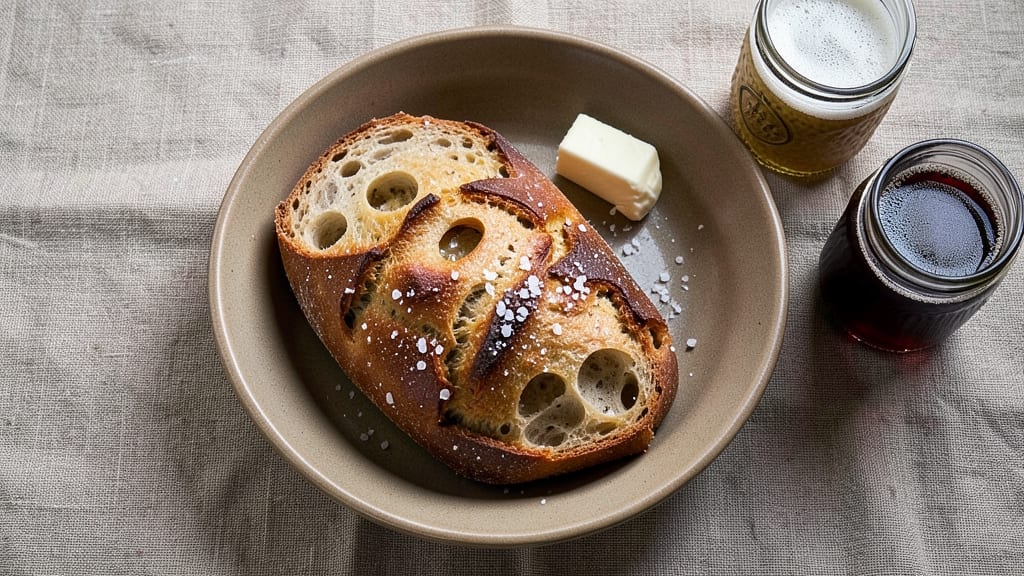
This Guinness sourdough bread recipe transforms your kitchen into an Irish pub with its dark beer crust and rich malty flavor. The secret lies in replacing some water with Guinness, which adds depth and a subtle roasted note that develops during fermentation.
I perfected this recipe after years of experimenting with sourdough starters and beer-infused doughs.
What makes this bread special is the balance between traditional sourdough technique and the unique properties of Guinness. The beer contributes natural carbonation, creating a lighter crumb while maintaining the signature tang of sourdough. The dough requires careful hydration management—about 70%—to prevent stickiness while maximizing flavor development.
By the time it emerges from the oven, you'll have a loaf with a deep mahogany crust that crackles when sliced, revealing an open crumb structure with pockets of air.
The malty aroma fills your kitchen, and each bite delivers layers of roasted barley and hoppy bitterness balanced by the familiar tang of sourdough. This is bread that tastes like a masterpiece.
Perfect for serving with butter, jam, or alongside stews, this Guinness sourdough becomes the star of any meal. The recipe includes step-by-step instructions for building your starter, mixing the dough, and achieving that signature dark crust. Let's create something extraordinary together.
Ingredients for guinness sourdough bread
Four cups flour plus a cold Guinness bottle—this is where magic happens.
| Ingredient | Amount | Notes |
|---|---|---|
| Active Sourdough Starter 🍞 | ½ cup | 100% hydration, bubbly and active |
| Guinness Draught 🍺 | ¾ cup | Cold, straight from the bottle |
| All-Purpose Flour 🌾 | 4 cups | King Arthur or similar high-gluten |
| Unsalted Butter 🧈 | ¼ cup | Cold, cut into small cubes |
| Granulated Sugar 🍚 | 1 tbsp | For crust development |
| Diamond Crystal Kosher Salt 🧂 | 1 ½ tsp | Fine grain preferred |
| Instant Yeast 🍄 | ¼ tsp | Optional for extra lift |
| Water 💧 | ½ cup | Room temperature |
| Cornmeal 🌽 | ¼ cup | For dusting baking surface |
| Ice Water ❄️ | ¼ cup | For final dough shaping |
| Coarse Sea Salt 🧂 | ½ tsp | For crust sprinkle |
| Honey 🍯 | 1 tbsp | Optional for scoring |
The Guinness is non-negotiable here—Draught has the right carbonation and maltiness. Grab it cold from the fridge (not the freezer) to preserve those bubbles. For the starter, if yours isn't ready, King Arthur's sourdough starter kit is foolproof. The butter? European-style unsalted like Plugrá melts cleaner. Flour choice matters too—high-gluten bread flour gives that open crumb, but King Arthur all-purpose works in a pinch. Just don't skimp on the hydration—this dough needs to be sticky but manageable.
No cold Guinness? Dark stout or porter works, but expect less depth. Starter too weak? Add 1/4 tsp instant yeast to jumpstart fermentation. The honey scoring is optional but worth it—brush it on right before baking for a glossy, caramelized crust. For the salt, Diamond Crystal kosher dissolves better than table salt. And if you're feeling lazy, pre-mixed sourdough starter from Whole Foods works, though homemade always tastes better. The butter cubes should stay cold until the very end—microwave 10 seconds to soften just before mixing.
This dough is a beast—plan for 24 hours from start to finish. The starter needs 12 hours to ferment fully, then another 8-10 hours for the final proof. Store any extra dough in the fridge for up to 3 days, letting it come to room temp before baking. The loaf keeps 3-4 days wrapped at room temp, but it's best fresh. Freeze slices for up to 3 months—toast straight from frozen. And save that leftover Guinness—it's perfect for soups or stews.
Why You'll Love This Recipe
- No-Fuss Mixing: I swear by this—just toss in your starter, pour the Guinness, and let the dough come together with almost no effort. The butter and sugar melt right into the flour, so even if I’m distracted (hello, laundry), the dough still behaves.
- Rich, Roasted Depth: That Guinness isn’t just flavor—it’s the secret to a bread with a malty, almost caramelized warmth. The sourdough tang cuts through it perfectly, and the crust? Crisp enough to hold a pint of beer without crumbling.
- Weeknight Workhorse: This bread is my go-to for sandwiches, toast, or even French toast—no one will guess it’s sourdough unless you tell them. Honestly, I’ve made it three times this week already, and it never disappoints.
- Leftovers That Last: A full loaf keeps for days, and the slices toast up like fresh-baked magic. Between us, I’ve reheated cold slices in the oven with butter and called it “breakfast” more times than I can count. Budget-friendly? Absolutely.
Step-by-step instructions for Guinness sourdough bread
This method delivers a rich, malty crust with a tender crumb—all thanks to the Guinness and active starter.
Mix the Sourdough Starter and Wet Ingredients
In a large mixing bowl, combine the 0.5 cup active sourdough starter, 0.75 cup cold Guinness Draught, 0.5 cup room-temperature water, 1 tbsp granulated sugar, and 0.25 tsp instant yeast. Use a wooden spoon or dough whisk to stir until fully incorporated. The Guinness should look slightly frothy, and the mixture will have a thick, batter-like consistency. This step activates the yeast and incorporates the beer's depth of flavor into the dough.
Here's the thing—don't rush this part. Let the mixture sit for 5 minutes while you prepare the dry ingredients. This brief rest allows the yeast to begin working, which will make the final dough more elastic and easier to handle later. The beer's carbonation will also help create that signature open crumb structure we're after.
Incorporate the Dry Ingredients and Form the Dough
Add the 4 cups all-purpose flour and 1.5 tsp diamond crystal kosher salt to the wet mixture. Using your hands or a dough scraper, gently fold the dry ingredients into the wet until a shaggy dough forms. The texture should be sticky but manageable. At this stage, the dough will feel more like a thick batter than traditional bread dough.
Once combined, turn the dough out onto a lightly floured surface and knead for 5-7 minutes by hand. You're not looking for a smooth, elastic dough here—the Guinness and active starter create a different texture. Instead, focus on developing gluten just enough to give the bread structure. The dough should be soft, slightly tacky, and cohesive. If it's too sticky to handle, wet your hands slightly to prevent sticking.
First Rise and Shaping
Lightly oil a large mixing bowl and transfer the dough to it. Cover with a damp towel or plastic wrap and let rise at room temperature for 1.5 to 2 hours, or until the dough has nearly doubled in size. You'll notice it's less puffy than traditional bread dough due to the beer's weight, but it should still show noticeable expansion. The surface might look slightly cracked, which is perfect for our dark beer crust.
After rising, turn the dough out onto a lightly cornmeal-dusted surface. Gently shape it into a 12-inch round loaf by pulling the edges toward the center and sealing the seam. The dough will be soft and slightly sticky—this is normal. Place the shaped loaf seam-side down on a parchment-lined baking sheet and cover loosely with plastic wrap. Let it rest for 30 minutes at room temperature before scoring. This resting period relaxes the gluten, making it easier to create clean, sharp scores.
Score and Proof Before Baking
Preheat your oven to 425°F with a Dutch oven inside for 30 minutes. While the oven heats, score the loaf by making 4 shallow cuts about ½-inch deep through the top using a razor blade or sharp knife. Brush the scored areas with 1 tbsp honey for extra browning and flavor. Transfer the loaf to the hot Dutch oven and bake, covered, for 30 minutes. The honey will caramelize beautifully, enhancing the beer's malty notes.
After 30 minutes, remove the lid and bake for an additional 15-20 minutes until the crust is deep golden brown and the internal temperature reaches 205-210°F. The bread should sound hollow when tapped on the bottom. Sprinkle the loaf with 0.5 tsp coarse sea salt immediately after removing it from the oven for that classic breadhouse finish. Let it cool on a wire rack for at least 1 hour before slicing—this ensures the crumb sets properly and prevents a gummy texture.
Pro Tips For Making Guinness Sourdough Bread
- Chill the Dough: DESCRIPTION:
- Warm the Guinness: DESCRIPTION:
- Skip the Overmixing: DESCRIPTION:
- Brush with Warm Beer: DESCRIPTION:
Storing and reheating your leftovers
Refrigerator Storage
Store your freshly baked Guinness sourdough in an airtight container or wrapped tightly in plastic wrap at room temperature for up to 2 days—this preserves the crust's crispness. For longer storage, refrigerate for 3-4 days, but the texture softens slightly.
I always keep a loaf wrapped on my counter for freshness, using the fridge as a backup. The beer-infused flavor actually intensifies overnight, making it taste even better the next day. ❄️
Freezing for Later
Slice the loaf and freeze individual portions in quart-sized freezer bags with all air removed. This method prevents freezer burn and keeps slices crisp for up to 3 months.
Thaw overnight in the fridge or toast straight from frozen for 2-3 minutes at 375°F—the crust stays crackly while the crumb warms through. I freeze extra slices whenever I bake, ensuring I always have fresh-tasting bread on hand. 💫
Reviving Stale Bread
If your Guinness sourdough loses its crunch, revive it by wrapping in a damp towel and microwaving for 10-15 seconds. The steam reactivates the crust's texture without drying it out further.
For a crispier result, place slices on a baking sheet and broil for 2-3 minutes—this works especially well for toast. The beer's malty notes shine even more when reheated this way. 🔥
Dough Storage Tips
Unused dough can be refrigerated in an airtight container for up to 3 days. Let it come to room temperature before shaping and baking—cold dough won't rise properly. For longer storage, freeze the dough (unshaped) for up to 2 weeks.
Thaw overnight in the fridge, then proceed with the proofing and baking steps. The Guinness flavor develops more deeply during extended fermentation, making frozen dough worth the wait. ⏰
Serving Freshly Reheated
For the best experience, serve reheated slices straight from the oven or toaster. The combination of butter and honey pairs perfectly with the malty crust.
I often reheat slices in a cast-iron skillet over medium heat for 1-2 minutes per side—this creates a crispy exterior while keeping the crumb soft. The beer's aroma becomes even more pronounced when warm. 🍯
Nutrition facts
Frequently asked questions
What makes this Guinness sourdough different from regular sourdough?
The key difference is the 0.75 cup cold Guinness Draught replacing part of the water, which adds a deep malty flavor and subtle roasted notes. The beer's natural carbonation also creates a lighter, airier crumb while maintaining the signature tang of sourdough. Plus, the dark crust develops a rich mahogany color that's impossible with traditional recipes.
Can I substitute Guinness with another beer?
Yes, but expect less depth. Use a dark stout or porter for similar maltiness, or a wheat beer for a lighter flavor. Avoid lagers—they lack the roasted character that makes this bread special. If you're in a pinch, even black coffee can mimic some of the malty notes, though the texture will differ slightly.
Why does my dough feel so sticky?
The high hydration (about 70%) from the Guinness and starter creates a tackier dough than traditional bread. This is normal! Wet your hands slightly when handling it, and use cornmeal or semolina instead of flour for dusting. The stickiness actually helps develop the bread's signature open crumb structure. Don't add extra flour—it'll make the crust tough.
How do I know when the starter is ready?
Your starter should be bubbly, doubled in size, and have a slightly sour aroma. It should float in water (the "float test"). If it's sluggish, feed it with equal parts flour and water and wait 4-6 hours before using. A weak starter will make your bread dense—don't rush this step!
Can I make this in a regular oven without a Dutch oven?
Yes, but you'll need to create steam. Place a baking tray on the lower rack, fill it with hot water, then bake the loaf on the middle rack. Cover the loaf with a damp towel during the first 20 minutes to mimic the steam from a Dutch oven. The crust won't be as dark, but the bread will still be delicious.