
Desserts
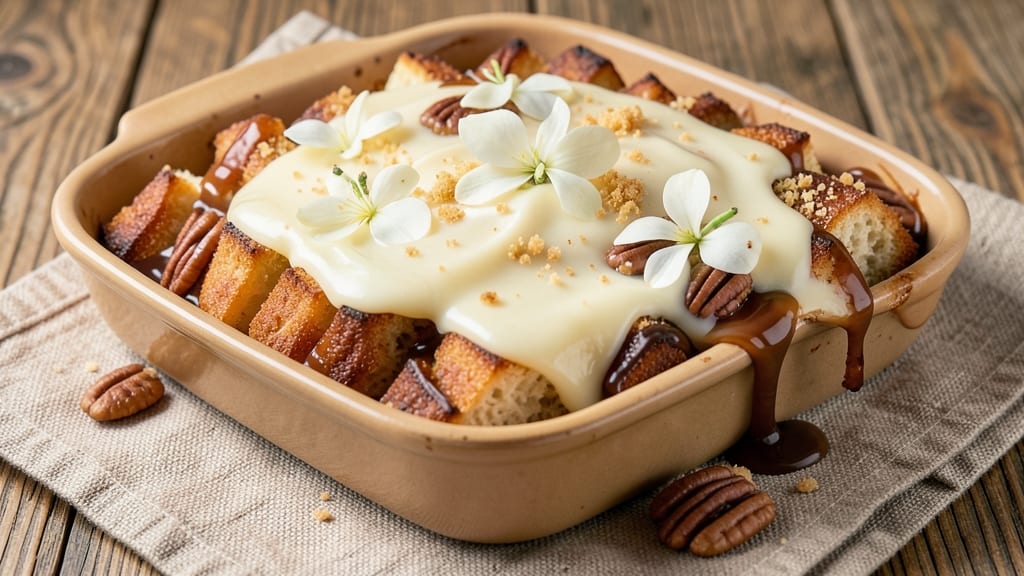
This magnolia bread pudding recipe delivers the comforting, floral-rich dessert that defines Southern baking—where tender bread cubes soak up a vanilla custard infused with magnolia’s delicate perfume.
The secret lies in the slow baking process, which transforms ordinary bread into a golden, custardy masterpiece with a toasted crumb that begs for another bite. I perfected this version after years of testing, balancing traditional techniques with modern adaptations like gluten-free options or vegan custards.
The custard mixture is where the magic happens—a rich blend of eggs, cream, and vanilla that absorbs perfectly into the bread while baking. Adding magnolia extract (or fresh blossoms if you’re feeling ambitious) gives it that signature floral note that makes this dessert unforgettable.
For extra indulgence, I recommend toasting pecans or walnuts to sprinkle on top before serving, adding crunch that contrasts beautifully with the soft custard.
What you’ll end up with is a dessert that’s both nostalgic and refined—warm, fragrant, and just sweet enough to satisfy without overwhelming. The edges will be golden and slightly crisp, while the center remains tender and custardy, with pockets of melted butter and magnolia-infused richness.
This is the kind of dessert that feels like a hug, perfect for family gatherings or a cozy night in.
Serve it warm with a drizzle of caramel sauce or a dollop of whipped cream, and you’ve got a showstopper that’s surprisingly easy to make. Whether you’re baking for tradition or modern dietary needs, this recipe adapts without sacrificing that classic Southern soul. Let’s get baking!
Ingredients for magnolia bread pudding
Six ingredients transform simple bread into a floral custard masterpiece—just add love and patience.
| Ingredient | Amount | Notes |
|---|---|---|
| Day-Old Baguette 🍞 | 8 oz | Crusts removed, cubed |
| Large Eggs 🥚 | 6 whole | Room temperature preferred |
| Heavy Cream 🥛 | 2 cups | Full-fat for richness |
| Whole Milk 🥛 | 1 cup | Warmed slightly |
| Granulated Sugar 🍚 | 1 ½ cups | Light brown for depth |
| Unsalted Butter 🧈 | ¾ cup | Melted, cooled slightly |
| Pure Vanilla Extract 🌿 | 2 tsp | High-quality preferred |
| Magnolia Extract 🌸 | 1 tsp | Or 1 tbsp fresh blossoms |
| Diamond Crystal Kosher Salt 🧂 | ½ tsp | Fine grain preferred |
| Ground Cinnamon 🌿 | 1 tsp | Freshly ground preferred |
| Toasted Pecans 🥜 | ½ cup | Chopped, optional topping |
| Extra-Virgin Olive Oil 🫒 | 1 tbsp | For greasing dish |
The bread is everything here. Day-old baguettes from the bakery section (the ones with crisp crusts) give the best texture—no stale bread from your pantry. If you can't find baguettes, challah or brioche work beautifully too. Cube them roughly—about 1-inch pieces—and don't worry about perfect uniformity. The Pillsbury European-style bread from the grocery store freezer section is my backup when I'm in a rush. Just make sure it's not too fresh or it'll turn gummy. For gluten-free versions, I've used Schär gluten-free bread with great results—just add an extra 1 tbsp cornstarch to the custard to help thicken it.
No magnolia extract? Fresh magnolia blossoms steeped in warm milk for 10 minutes work wonders (strain them out after). The vanilla extract is non-negotiable—Nelson & James or McCormick Pure are my go-tos. Short on butter? Coconut oil works in a pinch (same amount), but it'll give a slightly different texture. For extra richness, I sometimes add 1 oz cream cheese to the custard mixture—trust me on the full-fat version. The pecans? Trader Joe's has the best pre-toasted ones, but any good-quality pecans will do. Toast them in a dry pan for 3-4 minutes until fragrant, then chop roughly—no need to be precise.
This dessert tastes even better the next day, so make it ahead if you can. Store leftovers covered at room temperature for 2 days or refrigerate for 4 days. To reheat, cover with foil and warm at 350°F for 10-15 minutes. I always make a double batch—half gets eaten immediately, and the other half becomes breakfast the next morning with a drizzle of honey. The custard mixture can be prepped 24 hours ahead and stored in the fridge, then baked straight from the refrigerator (just add 5-10 minutes to the baking time). Freeze portions for up to 3 months—thaw overnight in the fridge before reheating.
Why You'll Love This Recipe
- No Bake, No Stress: I’ll admit it—this recipe saved me on nights when I’d rather not turn on the oven. Toss in cubed day-old baguette, pour the warm egg-milk-cream mix over it, and bake. The eggs do all the work while you sip your coffee.
- Southern Comfort in a Bowl: That buttery baguette soaking up the custard? It’s like a hug from Magnolia Plantation. The sugar caramelizes just enough to give it a subtle sweetness, but the real magic is the creamy, custardy center that feels like dessert and breakfast had a baby.
- Budget Breakfast Win: Honestly, this is my go-to when I’m broke but still want something impressive. A stale baguette and a few eggs? That’s it. No fancy ingredients, no waste—just pure, creamy, custardy satisfaction that costs less than takeout.
Step-by-step instructions for magnolia bread pudding
Here's how to transform stale baguette into a velvety custard with magnolia's signature floral depth.
Prepare the Baguette Base
Preheat your oven to 350°F. Cut the 8 oz day-old baguette into 1-inch cubes, removing crusts as directed. Spread them evenly on a baking sheet and toast for 8-10 minutes until golden and crisp. This step is crucial—it prevents a soggy pudding by removing excess moisture from the bread.
While still warm, transfer the toasted cubes to a large mixing bowl. In a separate saucepan, gently warm the 1 cup whole milk and 0.75 cup unsalted butter over low heat until the butter melts completely. Pour this warm mixture over the toasted bread cubes, allowing it to soak through completely. Let it sit for 5 minutes to absorb fully.
Whisk the Custard Mixture
In a separate large bowl, whisk together the 6 whole large eggs, 1.5 cups granulated sugar, 2 cups heavy cream, 2 tsp pure vanilla extract, 1 tsp magnolia extract, 0.5 tsp diamond crystal kosher salt, and 1 tsp ground cinnamon until fully combined and smooth. The mixture should be pale yellow with no visible streaks of egg whites.
Here's the thing—this is where the magic happens. The magnolia extract adds that signature floral note, while the cinnamon provides warmth. Whisk vigorously for 2-3 minutes to fully incorporate all ingredients and create a smooth batter. The custard should be thick but pourable.
Combine and Bake
Gently fold the soaked bread cubes into the custard mixture using a rubber spatula, being careful not to deflate the air bubbles. The bread should be completely coated in the custard. If the mixture seems too thick, you can add 1-2 tablespoons of the reserved warm milk to loosen it slightly.
Grease a 9x5-inch loaf pan with 1 tbsp extra-virgin olive oil, then pour the bread pudding mixture into the pan. Sprinkle the 0.5 cup toasted pecans evenly over the top. Bake at 350°F for 50-55 minutes, until the top is golden brown and the center is just set—it should still have a slight wobble when gently shaken.
Rest and Serve
Remove the bread pudding from the oven and let it rest in the pan for 10 minutes. This resting period allows the custard to fully set and the flavors to meld together. Real talk—don't skip this step. Serving it immediately can result in a runny pudding that doesn't hold its shape.
Once rested, run a knife around the edges to loosen it from the pan, then invert onto a serving plate. The pudding should release cleanly with a beautiful golden crust. Serve warm with a dusting of powdered sugar or a dollop of whipped cream for an elegant finish. Each bite should deliver a perfect balance of creamy custard, toasted bread, and that unmistakable magnolia aroma.
Pro Tips For Making Magnolia Bread Pudding
- TOAST THE BAGUETTE: DESCRIPTION:
- WHISK EGGS LIKE IT’S 1953: DESCRIPTION:
- SUGAR FIRST, THEN SALT: DESCRIPTION:
- BAKE UNTIL THE CENTER JIGGLES: DESCRIPTION:
Essential equipment for this recipe
Loaf Pan Essentials
You’ll need a 9x5-inch loaf pan—this size gives you the perfect height-to-width ratio for even baking. I recommend a Nordic Ware Natural Aluminum Loaf Pan because its nonstick surface prevents sticking, and the sturdy construction holds up to high heat.
For extra insurance, grease it generously with extra-virgin olive oil (as called for in the recipe) and dust with a light layer of flour or panko crumbs to prevent any custard from clinging. 🍞
Mixing Tools
A large mixing bowl (at least 8-quart capacity) is crucial for combining your soaked bread and custard mixture. I use a stainless steel bowl from OXO because it’s deep enough to handle the volume without spills.
For whisking the custard, a balloon whisk (like the Cuisinart 3-in-1) ensures smooth, lump-free results. A rubber spatula (I prefer OXO Good Grips) helps fold the bread into the custard without crushing it.
Baking Gear
Your oven needs to maintain a steady 350°F—an instant-read thermometer (like Thermoworks Thermapen) confirms accuracy. For even heat distribution, place a baking sheet on the lower rack to catch any drips.
A wire cooling rack (I love the OXO Good Grips) lets air circulate underneath after baking, preventing sogginess. For toasting the bread cubes, a rimmed baking sheet (like Le Creuset) ensures even browning.
Optional Extras
If you’re using fresh magnolia blossoms, a fine-mesh strainer (like OXO Good Grips) helps remove them after steeping. For crispy toppings, a small skillet (I use All-Clad) toasts pecans perfectly.
A kitchen scale (like OXO Good Grips) ensures precise measurements for dietary adaptations. Don’t overlook a parchment paper sheet—it makes transferring the baked pudding effortless. ✨
Nutrition facts
Frequently asked questions
Can I make this bread pudding without magnolia extract?
If you can't find magnolia extract, try infusing fresh magnolia blossoms in warm milk for 10 minutes before using it in the custard. For a similar floral note, substitute with 1/2 tsp orange blossom water or 1/4 tsp rosewater—just use sparingly as they're potent. The vanilla will still shine through beautifully.
How do I prevent my bread pudding from being too soggy?
Toast your bread cubes first for 8-10 minutes at 350°F to remove excess moisture. Then soak them in warm milk and butter for only 5 minutes—no longer! Using slightly stale bread (not fresh) also helps. For extra insurance, reduce the custard liquid by 1-2 tablespoons if your bread absorbs too much.
Can I make this recipe ahead of time?
This dessert actually tastes better the next day! Prepare the custard mixture up to 24 hours ahead and refrigerate. When ready to bake, simply pour into the pan and add 5-10 extra minutes to the baking time. Leftovers keep well at room temperature for 2 days or refrigerated for 4 days. For freezing, portion and store for up to 3 months—thaw overnight in the fridge.
What's the best way to serve this Southern-style dessert?
Serve warm with a dusting of powdered sugar or a dollop of whipped cream for classic Southern flair. For extra indulgence, drizzle with homemade caramel sauce or a bourbon-infused reduction. The toasted pecan topping adds crunch—don't skip it! For a modern twist, pair with vanilla bean ice cream or a scoop of salted caramel gelato.
Why did my bread pudding come out runny?
Underbaking is usually the culprit—check for a slight wobble in the center when done. If your oven runs hot, reduce temperature to 325°F and bake 10-15 minutes longer. Also ensure your eggs are at room temperature for proper thickening. For extra stability, whisk the custard for 3-4 minutes to emulsify fully before baking. A water bath can also help if your oven has hot spots.