
Main Courses
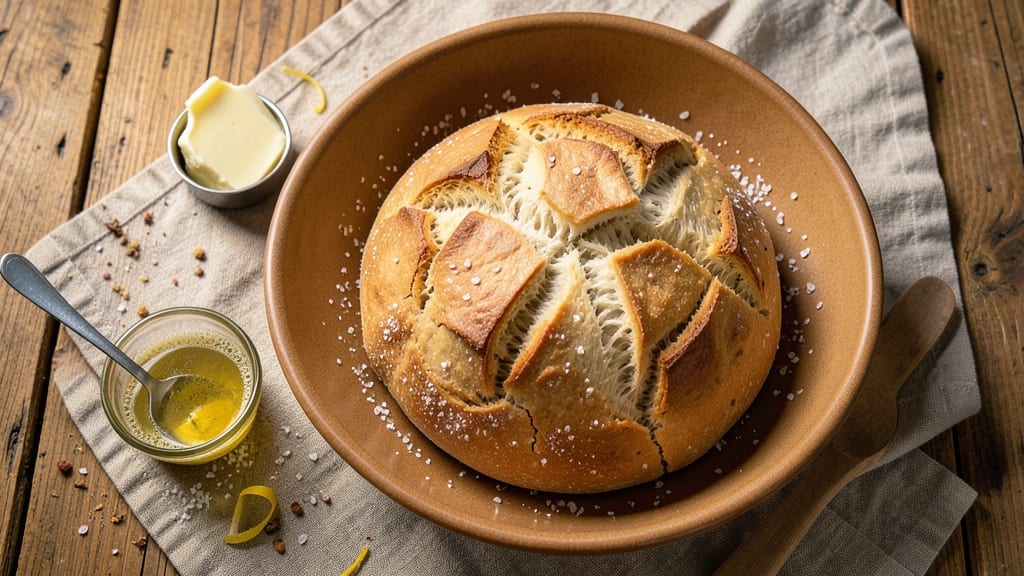
This 4-hour bread recipe transforms simple ingredients into an artisanal loaf with a crackling crust and airy interior—no fancy equipment required. The secret lies in slow fermentation, which develops deep flavor and a perfect texture. I've baked countless loaves, and this method consistently delivers restaurant-quality results at home.
What makes this recipe stand out is the balance between simplicity and technique. You'll work with just five core ingredients—flour, yeast, water, salt, and a touch of sugar—but the process ensures professional-level outcomes.
The dough undergoes two rises: an overnight cold proof in the fridge and a final room-temperature rise before baking.
By the time it emerges from the oven, you'll have a loaf with a deep golden crust that shatters satisfyingly and a soft, pillowy interior that crumbles gently.
The aroma alone will have everyone gathering around your table. This bread stays fresh for days when stored properly, making it perfect for meal prep or gifting.
Whether you're a beginner or experienced baker, this recipe builds confidence with clear steps and foolproof techniques. Let's get started on creating your perfect loaf.
Ingredients for 4h bread
Five simple ingredients transform into a restaurant-worthy loaf with perfect crust and pillowy crumb.
| Ingredient | Amount | Notes |
|---|---|---|
| Bread Flour 🌾 | 4 cups | High-protein for structure |
| Active Dry Yeast 🍞 | ¼ oz | Freshly opened for viability |
| Granulated Sugar 🍚 | 1 tbsp | Feeds yeast for activation |
| Warm Water 💧 | 1 ½ cups | 95-105°F for yeast activation |
| Unsalted Butter 🧈 | 2 tbsp | Cold, cubed for flavor |
| Diamond Crystal Kosher Salt 🧂 | 1 ½ tsp | Fine grain for even distribution |
| Extra-Virgin Olive Oil 🫒 | 1 tbsp | For dough handling |
| Cornmeal 🌽 | ¼ cup | For dusting parchment |
| Coarse Sea Salt 🧂 | 1 tsp | For final crust sprinkle |
The flour makes all the difference here—King Arthur or Caputo bread flour are my go-tos for that professional crumb. If you're using all-purpose, add 1 tbsp vital wheat gluten for better structure. The yeast should be freshly opened—check the date, and if it's been sitting in your pantry for months, toss it. Warm water is critical: too hot kills the yeast, too cold slows activation. Use an instant-read thermometer if you're unsure. For the butter, I always grab Plugrá from Trader Joe's—it's cultured and adds a tangy richness that store brands miss.
No bread flour? All-purpose plus 1 tbsp vital wheat gluten works in a pinch, but the texture won't be as refined. Running out of yeast? Instant yeast at half the amount will work, but you'll need to dissolve it in the water first. The sugar can be swapped for honey or maple syrup, but it might darken the crust slightly. For the olive oil, avoid heavily flavored oils—stick to mild varieties like Arbequina or a good supermarket extra-virgin. The cornmeal is just for dusting, but if you're feeling fancy, semolina gives a prettier crust. And that final sprinkle of coarse salt? Maldon or Diamond Crystal are my favorites—they melt dramatically for a perfect crust.
This dough is a game-changer because it gets an overnight cold proof, which develops insane flavor. Wrap it tightly in plastic wrap and refrigerate up to 24 hours—the longer it rests, the better it tastes. When you're ready to bake, let it sit at room temperature for 1-2 hours before shaping. The baked loaf stays fresh for 3-4 days at room temperature if you wrap it in a clean kitchen towel. For longer storage, freeze slices in a bag for up to 3 months—they'll taste like they just came out of the oven when toasted.
Why You'll Love This Recipe
- No-Knead Magic: I swear by this recipe because it’s literally hands-off after the first stir. Just toss in bread flour, yeast, sugar, and warm water—no punching, no rolling, no stress. The butter melts into golden pockets while you’re watching TV or scrolling.
- Buttery Crust, Soft Core: That crispy, caramelized crust? Pure reward. The butter works its way into the dough during the slow rise, creating layers so tender they melt in your mouth. Honestly, it’s the kind of bread that makes you pause mid-bite just to savor it.
- Meal Prep MVP: Between us, this bread is my lazy Sunday secret weapon. Bake a loaf, let it cool, and it stays fresh for days—perfect for toast, sandwiches, or soaking up soup. I make two loaves at once and freeze one; no more sad, stale bread at the back of the pantry.
- Budget-Friendly Luxury: Five ingredients, all pantry staples. No fancy sourdough starter, no expensive artisanal flours—just reliable, affordable basics that taste like you spent hours slaving over it. (Yes, even on a Tuesday night.)
Step-by-step instructions for slow-baked artisan bread
Here's how to transform simple ingredients into a bread with a crackling crust and airy interior.
Activate the Yeast for Maximum Rise
In a large bowl, combine the 1.5 cups warm water (between 95-105°F—too hot kills yeast, too cold slows it) with the 1 tablespoon granulated sugar and 0.25 oz active dry yeast. Stir gently and let sit for 5-10 minutes until frothy. You'll see bubbles forming and the mixture looking lively—this confirms your yeast is alive and ready to work.
If no bubbles appear after 10 minutes, your yeast may be dead. Start fresh with a new packet—this is your foundation for a proper rise. Once active, proceed immediately to avoid overproofing.
Mix and Knead the Dough
Add the 4 cups bread flour and 1.5 teaspoons diamond crystal kosher salt to the yeast mixture. Stir with a wooden spoon until a shaggy dough forms, then add the 2 tablespoons cold cubed butter and 1 tablespoon extra-virgin olive oil. Mix until fully incorporated, then turn onto a lightly floured surface.
Knead vigorously for 8-10 minutes until the dough becomes smooth and elastic, pulling away from the sides of the bowl. You'll know it's ready when it springs back slowly when poked. The high-protein bread flour gives this dough excellent structure—don't rush this step or your bread will lack oven spring.
First Rise and Shaping
Lightly oil a large bowl, place the dough inside, and cover with a damp towel. Let rise in a warm place for 1.5-2 hours until doubled in size. The dough should feel light and airy when pressed gently—it should spring back immediately. If it doesn't rise properly, your kitchen may be too cold; try placing the bowl near a warm oven with the light on.
Once risen, punch down the dough to release air, then divide it into 4 equal portions (about 1 pound each). Shape each into a round boule by pulling the edges toward the center and sealing tightly. Place on a parchment-lined baking sheet dusted with 0.25 cup cornmeal, cover, and let rise again for 30-45 minutes until puffy.
Bake for Perfect Crust and Crumb
Preheat your oven to 450°F with a Dutch oven inside for 30 minutes to create steam. Carefully transfer the shaped dough (still on parchment) into the hot Dutch oven, cover, and bake for 20 minutes. Remove the lid and bake 10-15 minutes longer until the crust is deep golden brown and sounds hollow when tapped on the bottom.
For that signature crust, immediately after removing from the oven, sprinkle generously with 1 teaspoon coarse sea salt. The salt enhances flavor and creates beautiful crust patterns as the bread cools. Let cool on a wire rack for at least 1 hour—this prevents a gummy interior and allows the crust to set properly.
Slice and Serve for Maximum Enjoyment
Once cooled, slice the bread with a serrated knife for clean cuts. The interior should be tender and open, with a crispy yet shatterable crust. Serve warm with your favorite butter or olive oil for dipping. This bread keeps well for 3-4 days at room temperature, or you can freeze slices for up to 3 months—perfect for sandwiches or toast.
The long fermentation gives this bread incredible flavor development. Each slice should reveal an airy crumb with just the right chew, while the crust offers satisfying texture contrast. The slow bake is what makes this bread truly special—don't rush it!
Pro Tips For Making 4h Bread
- USE A THERMOMETER FOR WATER: I learned this the hard way—yeast is picky. Your "warm water" should hit 105–110°F (40–43°C). Too hot and you kill it; too cool and it takes forever to activate. A cheap instant-read thermometer solves guesswork forever.
- LET THE YEAST BLOOM ALONE: Mix the yeast, sugar, and warm water, then wait 5–10 minutes before adding flour. You’ll see bubbles—this means it’s alive and ready. Skipping this step often leads to flat, dense bread because the yeast isn’t fully primed.
- DON’T OVER-KNEAD THE DOUGH: This recipe relies on time, not brute force. Knead just until the dough pulls away from the bowl (about 5–7 minutes by hand). Overworking it develops gluten too much, making the bread tough. Your arms will thank you later.
- SWAP GRANULATED FOR COSMOPOLITAN SUGAR: It’s a small upgrade, but 1 tablespoon of light brown sugar in place of granulated adds subtle depth. The molasses notes caramelize better during baking, giving the crust a richer, slightly sweeter edge—without extra effort.
Best sauces and condiments for these flavors
Butter Spreads
Whipped butter with a touch of honey and a pinch of flaky sea salt is my go-to pairing—it melts beautifully into the warm bread's open crumb. For a richer option, mix 2 tablespoons softened butter with 1 teaspoon lemon zest and 1 teaspoon maple syrup.
This brightens the bread's caramelized notes while adding a subtle tang. 🧈
Olive Oil Drizzles
Extra-virgin olive oil with a sprinkle of crushed red pepper flakes elevates this bread to gourmet status. Use 2 tablespoons high-quality EVOO (like Colavita or California Olive Ranch) and drizzle over slices while still warm.
For extra flair, add a few drops of balsamic glaze—the sweet-tart contrast cuts through the bread's richness. 🫒
Herb Compounds
Fresh herbs transform simple butter into a sophisticated spread. Blend 2 tablespoons softened butter with 1 tablespoon finely chopped rosemary, 1 tablespoon chopped thyme, and ½ teaspoon garlic powder.
Spread on warm bread for an aromatic, earthy flavor that pairs perfectly with the bread's crusty exterior. Store leftovers in an airtight container for up to 5 days.
Sweet Toppings
For a breakfast or dessert twist, try mascarpone cheese mixed with 1 tablespoon powdered sugar and a splash of vanilla extract. The creamy sweetness balances the bread's savory crust. Another winner: peanut butter with a drizzle of honey—the nutty richness complements the bread's airy crumb. 🍯
Savory Condiments
Spicy harissa or sriracha adds a kick to this bread's pillowy interior. Spread a thin layer on toasted slices, then top with avocado slices or crumbled feta for a Mediterranean-inspired bite.
For a smoky option, mix 1 tablespoon smoked paprika into softened butter before spreading. The heat and crusty texture create an irresistible combo. 🌶️
Nutrition facts
Frequently asked questions
Why does this bread take 4 hours to bake?
The 4-hour process includes both fermentation and baking for optimal flavor and texture. The dough undergoes an overnight cold proof (2-24 hours) that develops deep, complex flavors through slow fermentation. Then, the 20-30 minute bake at 450°F creates a perfect crust while keeping the interior pillowy. This method mimics artisanal techniques that take hours in professional kitchens.
Can I make this bread without a Dutch oven?
Yes, but you'll need to create steam another way. Place a metal bowl of boiling water on the oven rack while baking, or use a baking stone with a tray of ice cubes below it. The bread will still develop a good crust, though it may be slightly less crackly. For best results, bake on the middle rack where heat is most even.
How do I know when the dough is properly kneaded?
The dough is ready when it becomes smooth, elastic, and springs back slowly when poked. For a visual test, stretch a small piece of dough—it should form a thin windowpane without tearing. Kneading should take 8-10 minutes with bread flour. If it feels sticky, add flour 1 tablespoon at a time until it pulls away cleanly from your hands.
What if my bread doesn't rise properly?
Check your yeast first—it may be old or dead. For future attempts, ensure your water is 95-105°F, your kitchen is warm (try a proofing box or warm oven with light on), and you're using active dry yeast (not instant). If using instant yeast, dissolve it in water first. For this recipe, the cold overnight proof is forgiving—just let it sit longer if needed.
How should I store leftover bread?
Wrap cooled bread in a clean kitchen towel and store at room temperature for 3-4 days. For longer storage, freeze slices in an airtight container for up to 3 months. To revive, toast frozen slices for 2-3 minutes or warm in a 350°F oven for 5-10 minutes until crispy again. Avoid plastic bags—they trap moisture and make bread soggy.