Side Dishes
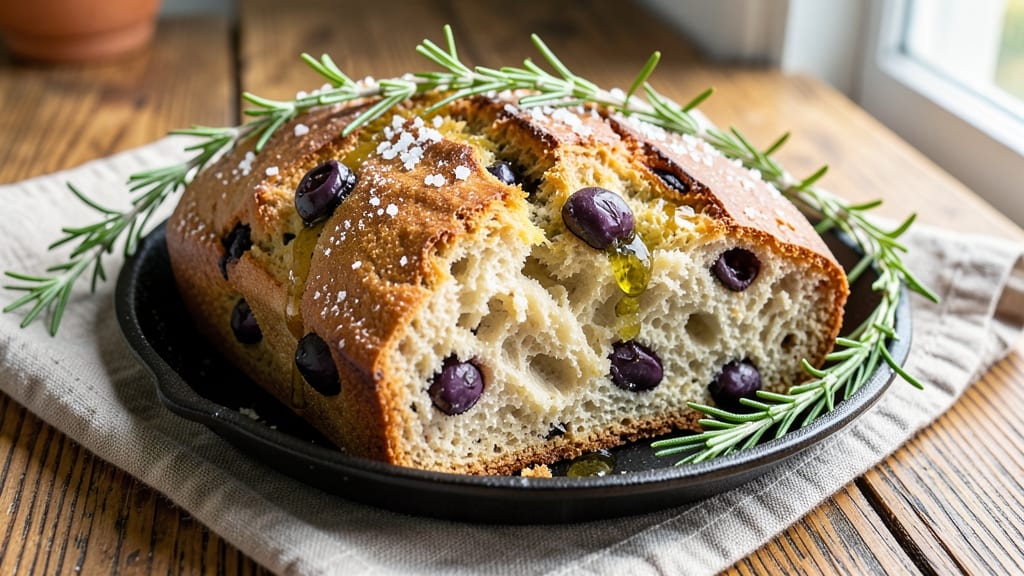
This Acme olive bread recipe delivers the perfect balance of briny olives, fragrant herbs, and a crispy crust that makes every bite irresistible. 💛 The secret lies in a simple dough enriched with Kalamata olives and fresh rosemary, creating a savory loaf that pairs beautifully with soups, charcuterie, or simply on its own.
I've baked this version countless times, and it never fails to impress—whether you're serving it at a dinner party or enjoying a casual weeknight meal.
The dough comes together with basic pantry staples—flour, yeast, and olive oil—while the olives and herbs add depth without overpowering. Unlike store-bought versions, this recipe lets you control the texture: crisp on the outside, tender on the inside, with pockets of briny goodness in every slice.
The proofing process is key here, allowing the dough to develop its signature airy crumb while keeping the olives evenly distributed.
Once baked, you'll have a loaf with a golden, crackly crust that shatters at the touch and a soft, flavorful interior. The olives stay plump and the herbs release their aroma, creating a symphony of savory notes.
This bread is versatile enough for any occasion—serve it warm with olive oil and balsamic for dipping, or pair it with aged cheeses and cured meats for an elevated spread.
The best part? This recipe scales effortlessly, so you can bake one loaf for a small gathering or double the batch for a crowd. Whether you're a seasoned baker or just starting out, the foolproof method ensures success every time. Let's get started on this savory masterpiece.
Ingredients for acme olive bread
Pantry staples meet Mediterranean flavors in this foolproof olive bread recipe.
| Ingredient | Amount | Notes |
|---|---|---|
| All-Purpose Flour 🌾 | 4 cups | Sifted for light texture |
| Instant Yeast 🍞 | 2 ¼ tsp | Active dry works too |
| Kalamata Olives 🫒 | 1 cup | Pitted, sliced lengthwise |
| Fresh Rosemary 🌿 | ¼ cup | Chopped, stems removed |
| Extra-Virgin Olive Oil 🫒 | ½ cup | High quality, fruity |
| Granulated Sugar 🍚 | 1 tbsp | For yeast activation |
| Sea Salt 🧂 | 1 ½ tsp | Fine grain preferred |
| Warm Water 💧 | 1 ¼ cups | 110°F for yeast activation |
| Cornmeal 🌽 | ¼ cup | For dusting baking sheet |
| Large Egg 🥚 | 1 whole | For egg wash |
| Coarse Sea Salt 🧂 | 1 tbsp | For sprinkling crust |
The olives make this bread special, so grab Kalamata olives—their briny flavor stands up to the rosemary. Trader Joe's or Whole Foods usually carry them in jars, but any pitted olives work. Fresh rosemary is ideal, but dried works in a pinch (use half the amount). The flour? King Arthur or Bob's Red Mill—both bake consistently. For the yeast, check the expiration date—old yeast won't activate properly. I always keep a small jar in my pantry for quick breads like this.
No Kalamata olives? Green olives or even sun-dried tomatoes add a similar depth. Short on rosemary? Thyme or oregano work too—just halve the amount. The olive oil matters here—skip the cheap stuff. California Olive Ranch or Colavita are my go-tos. For the egg wash, you can use milk if you're avoiding eggs, but it won't brown as beautifully. The sugar? Brown sugar adds a subtle caramel note if you're feeling fancy, but white works just fine. Proofing the dough is where the magic happens—don't rush it.
This dough keeps for 2 days in the fridge if you want to prep ahead. For best results, let it come to room temp before shaping. The baked loaf stays fresh for 3-4 days at room temperature, wrapped tightly. Freeze slices for up to 3 months—toast straight from frozen. I always bake an extra loaf and freeze it. Nothing beats warm bread straight from the oven, but the reheated version is a close second. Store-bought? Never again after this.
Why You'll Love This Recipe
- No-Knead Magic: I swear by this dough—just mix, let it rise, and bake. The olives and rosemary do all the work while you’re scrolling or watching TV. (Yes, even on a Tuesday night.)
- Salty, Herby Bliss: That burst of briny Kalamata olives and fresh rosemary? It’s like a Mediterranean vacation in every bite. The olive oil keeps it moist without tasting greasy—just pure, satisfying flavor.
- Weeknight & Picnic Hero: Tear it for sandwiches, pack it for lunch, or serve it warm with soup. It’s my go-to when I don’t want to fuss but still crave something impressive. (Between us, it’s foolproof.)
- Budget-Friendly Staple: A loaf costs pennies to make but feels like a fancy bakery buy. Leftovers? Toast them for crunchy croutons or freeze slices for quick meals. Minimal ingredients, maximum payoff.
Step-by-step instructions for savory olive bread
Here's how to craft this briny, herby loaf with perfect texture and flavor.
👨🍳 Step 1: Mix the Dough with Olive and Rosemary
In a large bowl, whisk together the 4 cups all-purpose flour, 2.25 tsp instant yeast, 1 tbsp granulated sugar, and 1.5 tsp sea salt. I like to sift the flour first for a lighter texture—this prevents dense pockets in the bread. Make a well in the center and pour in the 1.25 cups warm water and 0.5 cup extra-virgin olive oil. Mix with a wooden spoon until a shaggy dough forms.
Now the fun part—fold in the 1 cup sliced Kalamata olives and 0.25 cup chopped fresh rosemary. I distribute them evenly throughout the dough so every bite gets that briny olive punch and aromatic rosemary. The olives should be spread out rather than clustered, or you'll get uneven texture. Once incorporated, turn the dough onto a lightly floured surface and knead for 8-10 minutes until smooth and elastic. You'll know it's ready when it springs back slowly when poked.
🥘 Step 2: First Rise for Flavor Development
Lightly oil a large bowl, place the dough inside, and cover with a damp towel. Let it rise in a warm place for 1-2 hours until it nearly doubles in size. This first rise develops the gluten structure and allows the yeast to activate fully. I usually place my oven light on to create a warm environment—it's more reliable than my kitchen's ambient temperature.
While waiting, prep your baking sheet by sprinkling 0.25 cup cornmeal evenly over the surface. The cornmeal creates a crispy, golden crust that's perfect for this savory bread. After the dough rises, punch it down gently to release air bubbles, then shape it into a round loaf. This shape helps maintain moisture during baking and gives you that classic rustic look.
🔥 Step 3: Second Rise and Egg Wash
Place the shaped dough on the prepared baking sheet and let it rise again for 30-45 minutes until puffy. The dough should feel firm to the touch but still springy. While it rises, beat the 1 whole large egg in a small bowl, then brush it lightly over the dough's surface. This egg wash gives the bread that beautiful golden-brown finish and adds a subtle richness that complements the briny olives.
Just before baking, sprinkle the dough generously with 1 tbsp coarse sea salt. I like to use a fine-mesh strainer for even distribution. This final salt layer enhances the crust's flavor and gives that classic breadhouse taste. Preheat your oven to 375°F while the dough finishes its final rise—this ensures even baking and a crispy exterior.
🔥 Step 4: Bake to Golden Perfection
Bake the bread for 30-35 minutes until the crust is deep golden brown and sounds hollow when tapped on the bottom. The internal temperature should reach 190°F—this guarantees it's fully baked through. I usually check at the 25-minute mark because ovens vary. If the top browns too quickly, tent the bread with foil to prevent over-browning while the interior finishes cooking.
Remove from the oven and let the bread cool on a wire rack for at least 20 minutes before slicing. This resting period allows the moisture to redistribute, preventing a gummy interior. The aroma alone will make your kitchen smell like a Mediterranean bakery. Once cooled, slice into thick pieces to showcase the beautiful olive and rosemary flecks throughout the crusty bread.
Pro Tips For Making Acme Olive Bread
- CHOP OLIVES SMALL: Kalamata olives lose their punch when left whole—chop them into ¼-inch pieces so they distribute evenly and infuse the dough properly. I learned this the hard way after pulling out a dense, uneven loaf with olives clumped like little black islands.
- DON’T SKIP THE ROSEMARY WASH: Fresh rosemary’s needles pack more flavor than the stems, but they also harbor dirt. Give the sprigs a quick rinse, then pat them very dry—wet herbs in dough make it gummy. (Yes, even if you’re impatient like me.)
- USE A THERMOMETER FOR THE OVEN: Olive bread’s crust needs to hit 375°F consistently—many home ovens run 25°F hotter or colder. Bake until internal temp reaches 205°F (use a thermometer) for a crisp exterior and tender crumb. I was skeptical until I tried it.
- BRINE THE OLIVES FIRST: Drain, rinse, and soak chopped Kalamata olives in warm water for 10 minutes to mellow their saltiness—this balances the dough’s flavor without diluting it. Sounds weird, but it works: no more briny bites ruining each slice.
Creative variations of these flavors
Herb Variations
Swap the rosemary for thyme or oregano to create a different Mediterranean profile. I’ve found that fresh thyme adds a subtle earthiness that pairs beautifully with the olives, while dried oregano (use ½ tsp) brings a bold, slightly bitter contrast.
For a brighter twist, try fresh basil or parsley, but reduce the amount to 2 tbsp chopped—they’re more delicate and can overpower the briny olives if overused. 🌿
Olive Alternatives
No Kalamata olives? Green olives work in a pinch, but their milder flavor means you might want to add 1 tsp lemon zest to brighten the dough. Sun-dried tomatoes (finely chopped, ½ cup) add a sweet-tangy depth, though they’ll make the bread slightly softer.
For a smoky kick, try black olives or even capers (2 tbsp), which add a salty punch without the same texture. Always slice or chop them finely so they distribute evenly.
Citrus Zest Twist
Brighten the dough with 1 tbsp lemon zest or orange zest for a refreshing contrast to the olives. I love adding this to the dough during the initial mix—it infuses the crust with a subtle citrus aroma that cuts through the saltiness.
For extra zing, brush the baked loaf with a mix of 1 tbsp honey and 1 tsp lemon juice after baking. This works especially well if you’re using sun-dried tomatoes or green olives, which need that extra pop. 🍋
Spicy Kick Option
Add ½ tsp red pepper flakes or 1 tsp crushed dried chili to the dough for a subtle heat that pairs perfectly with the olives. I’ve also experimented with 1 tsp smoked paprika, which adds a smoky depth without overpowering.
For a bolder kick, sprinkle ½ tsp cayenne on top before baking—it’ll caramelize into the crust for a crispy, spicy finish. This works especially well with green olives or capers.
Cheesy Olive Bread
Fold in ½ cup shredded feta or Pecorino Romano during the final kneading stage for a salty, tangy twist. The cheese melts slightly during baking, creating pockets of creamy goodness that contrast beautifully with the olives.
For a richer version, use ½ cup ricotta mixed with 1 egg—it adds moisture and a delicate tang. Just be sure to reduce the water slightly (1 cup instead of 1.25 cups) to balance the extra liquid from the cheese.
Gluten-Free Adaptation
Replace the all-purpose flour with a 1:1 gluten-free bread flour blend (like King Arthur’s Measure for Measure). You’ll need to add 1 tsp xanthan gum to the dough for structure, and increase the olive oil to ⅔ cup to keep it tender.
The texture will be slightly denser, but the flavor remains rich. Proofing times may also extend—keep an eye on the dough and let it rise until it’s 75% puffed before baking. 💪
Nutrition facts
Frequently asked questions
Can I use dried rosemary instead of fresh?
Yes, but adjust the amount! Use 1 teaspoon dried rosemary instead of ¼ cup fresh—it's more concentrated. Crush the dried leaves between your fingers first to release the flavor. The aroma will be slightly different, but the savory depth remains. For best results, combine with ½ teaspoon dried thyme to mimic fresh rosemary's complexity.
Why did my bread turn out dense instead of crusty?
Most likely, your dough didn't rise long enough or the oven wasn't hot enough. The first rise should take 1-2 hours until doubled, and the second rise 30-45 minutes. Preheat your oven to 375°F for at least 15 minutes before baking. Also, ensure you sifted the flour and kneaded for 8-10 minutes—under-kneading creates dense bread.
How do I store this olive bread?
Wrap the cooled loaf tightly in plastic wrap or place it in an airtight container to maintain freshness. It stays good at room temperature for 3-4 days. For longer storage, slice and freeze the bread for up to 3 months. Toast straight from frozen for best results—no thawing needed! The crust will crisp up beautifully.
Can I make this bread without yeast?
Yes! For a quick version, replace the yeast with 1 teaspoon baking powder and ½ teaspoon baking soda. Use 1 cup buttermilk instead of water, and bake immediately at 375°F for 25-30 minutes. The texture will be denser (like focaccia) but still delicious. For extra flavor, add 1 tablespoon lemon juice to the dough.
What's the best way to reheat sliced olive bread?
For crispy crust and warm interior, wrap slices in foil and heat at 350°F for 5-7 minutes. For extra crunch, toast in a toaster oven or skillet until golden brown. Avoid microwaving—it makes the bread gummy. Pro tip: Brush reheated slices with a little olive oil and sprinkle with flaky sea salt for restaurant-quality flavor.