
Side Dishes
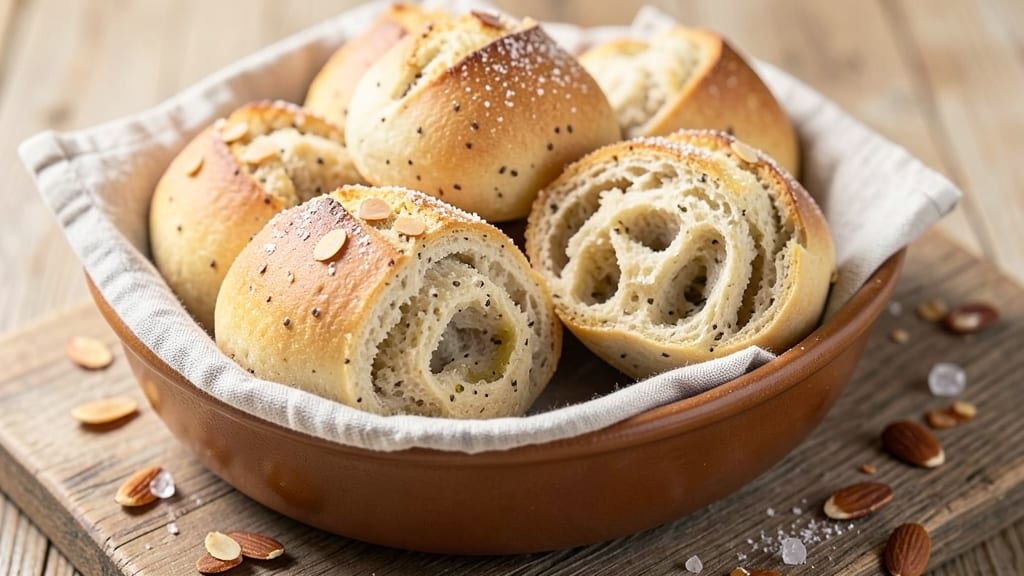
This almond flour bread rolls recipe delivers nutty crunch and pillowy softness in every bite—perfect for vegan diets or gluten-free needs. 💛 The secret lies in balancing almond flour’s density with flax eggs and proper hydration, creating rolls that stay tender yet sturdy.
I’ve baked these dozens of times, refining the texture until they’re crisp at the edges and soft inside, with just enough chew to satisfy.
The process is straightforward: mix almond flour with flax eggs, water, and leavening agents until the dough forms, then shape into rolls and proof for 1 hour. Baking at 350°F for 15–18 minutes ensures golden-brown tops without drying out.
No special equipment needed—just patience for the proofing step, which makes all the difference. What you’ll end up with are warm, fragrant rolls that pair beautifully with soups, stews, or holiday meals. The nutty flavor shines without overpowering, and the texture holds up even when sliced.
For extra flair, brush with an aquafaba glaze before baking—it adds a subtle sheen and sweetness. These rolls freeze well too, so you can bake a batch ahead for busy days. Here’s how to make them from scratch!
Ingredients for almond flour bread rolls
Pantry staples plus a few specialty items for nutty, vegan-friendly bread rolls.
| Ingredient | Amount | Notes |
|---|---|---|
| Almond Flour 🌰 | 3 cups | Superfine, unsweetened preferred |
| Ground Flaxseed 🌾 | ½ cup | Freshly ground for best binding |
| Warm Water 💧 | 1 cup | 110°F for flax egg activation |
| Active Dry Yeast 🍞 | 1 tbsp | Instant yeast works too |
| Granulated Sugar 🍚 | 1 tbsp | Or coconut sugar for less refinement |
| Salt 🧂 | ½ tsp | Fine sea salt preferred |
| Olive Oil 🫒 | ¼ cup | Extra-virgin for best flavor |
| Aquafaba 🥫 | ¼ cup | From canned chickpeas, unsweetened |
| Apple Cider Vinegar 🍎 | 1 tsp | Or white vinegar in a pinch |
| Vanilla Extract 🌿 | ½ tsp | Pure vanilla preferred |
| Sesame Seeds 🌻 | 2 tbsp | Optional for topping (toasted) |
Almond flour is your star here—Bob's Red Mill or Anthony's Goods are my go-tos, but any superfine brand works. The finer the grind, the smoother your dough. Flaxseed needs to be freshly ground—pre-ground loses binding power fast. For the yeast, check the expiration date: if it smells like vinegar or doesn't bubble in warm water, toss it. Sesame seeds? Toast them 2 minutes in a dry pan before using—they'll add that extra crunch. If you can't find almond flour, blend whole almonds into powder, but it'll be grittier.
No flaxseed? Chia seeds soaked in water work at the same ratio, but flax has a better texture. Subbing almond flour? Oat flour or coconut flour changes the texture—expect denser rolls. The aquafaba glaze can be skipped, but it's worth it for that golden sheen. If you don't have vanilla, almond extract at half the amount gives similar warmth. For extra richness, add 1 tbsp of melted coconut oil to the dough. And if your kitchen's humid? Chill the dough 15 minutes before shaping to prevent sticking.
These rolls keep 3 days at room temperature wrapped in a clean towel, or 1 week in the fridge. For freezing, bake fully, cool completely, then store in an airtight container with parchment between layers. Reheat at 300°F for 5-10 minutes until warm. The aquafaba glaze? Brush on right before baking—it dries fast. Double the batch and freeze half for lazy days. Trust me, they're even better reheated.
Why You'll Love This Recipe
- Here’s what sold me: make a batch, freeze them unbaked, and pull one out whenever you need rolls. Toss them in the oven while dinner simmers—no last-minute store runs, no sad, stale bread.
- I’ll be real: almond flour isn’t cheap, but this recipe stretches further than you’d think. A little goes a long way, and the flaxseed adds fiber, so you’re feeding your family and saving money on store-bought rolls. (Yes, even on a Tuesday night.)
Step-by-step instructions for almond flour bread rolls
These nutty, pillowy rolls rise beautifully while keeping their signature crunch.
👨🍳 Step 1: Activate the Flax Egg and Yeast
In a small bowl, whisk together the 0.5 cup ground flaxseed with the 1 cup warm water (about 110°F) and let it sit for 5 minutes. You'll see it thicken into a gel-like consistency—that's your flax egg, the perfect egg substitute. Meanwhile, in another small bowl, dissolve the 1 tbsp active dry yeast and 1 tbsp granulated sugar in ¼ cup warm water. Let it sit for 5-10 minutes until it becomes frothy. This activates the yeast and ensures your rolls rise properly.
Here's the thing—if your yeast doesn't bubble, start over. Fresh yeast is key for these rolls to rise perfectly. I always test mine first by dropping a pinch in warm water with sugar—if it bubbles within 5 minutes, it's good to go.
🍳 Step 2: Mix the Wet and Dry Ingredients
In a large mixing bowl, combine the 3 cups almond flour, 0.5 tsp salt, and 0.5 tsp vanilla extract. In a separate bowl, whisk together the 0.25 cup olive oil, 0.25 cup aquafaba, 1 tsp apple cider vinegar, and the activated yeast mixture. Pour the wet ingredients into the dry ingredients and gently fold with a spatula until just combined. You'll notice the dough will be sticky—this is normal with almond flour.
Don't overmix here. Just until everything comes together. The aquafaba adds structure and helps with rise, while the apple cider vinegar enhances flavor and tenderizes the texture. If the dough feels too dry, add 1 teaspoon warm water at a time until it's workable but still sticky.
🥘 Step 3: Knead and Rest the Dough
Turn the dough onto a lightly floured surface and knead gently for 3-4 minutes until smooth. I like to use my hands for this—just fold and press the dough without overworking it. The dough should be soft but not sticky to the touch. If it's too sticky, wet your hands slightly while kneading. Place the dough in a lightly oiled bowl, cover with a damp towel, and let it rest at room temperature for 1 hour.
This resting period allows the gluten to relax and the yeast to work its magic. The dough will puff up slightly—this is your signal that it's ready for shaping. Real talk: if your kitchen is cold, extend this rest to 1.5 hours to help the yeast activate properly.
🔪 Step 4: Shape and Proof the Rolls
Preheat your oven to 350°F and line a baking sheet with parchment paper. Divide the dough into 12 equal pieces (about 2 tablespoons each) and roll each piece into a ball, gently tucking the seams underneath. Place the rolls on the prepared baking sheet, spacing them about 1 inch apart. Cover loosely with a towel and let them proof for 30-45 minutes until they've risen about 50%.
Here's where it gets fun—the rolls should look slightly puffy and feel springy when pressed gently. If they're not rising enough, your yeast might need more time or warmth. I sometimes place my proofing rolls near a warm oven or under a lightbulb to help them along. Once they're ready, sprinkle with the 2 tbsp sesame seeds (if using) for that extra crunch.
🔥 Step 5: Bake to Golden Perfection
Bake the rolls for 20-25 minutes until they're golden brown on top and sound hollow when tapped on the bottom. The edges should be set, but the centers should still feel slightly soft. If they brown too quickly, tent them with foil to prevent over-browning. Let them cool on the baking sheet for 5 minutes before transferring to a wire rack.
You'll love how these rolls stay soft and pillowy inside while maintaining that delightful nutty crunch from the almond flour. Serve them warm with your favorite butter or jam—each bite delivers that perfect balance of texture and flavor. And don't worry if they don't rise as high as traditional bread rolls; almond flour has its own unique characteristics that make these rolls uniquely delicious.
Pro Tips For Making Almond Flour Bread Rolls
- Mix the Flaxseed First: Almond flour’s dryness will steal moisture from your ground flaxseed if you add it last. Whisk the flaxseed with warm water (about 3 tablespoons per 1 tablespoon flaxseed) for 5 minutes before mixing—this gives the "flax egg" time to thicken properly, so your dough doesn’t turn into crumbly sadness.
- Don’t Skip the Proof Test: After the first rise, poke a finger into a roll. If it springs back slowly (like a tired sponge), it’s ready. If it bounces back fast, give it 15–20 more minutes—almond flour dough needs patience. Overproofed rolls collapse; underproofed ones stay dense. Trust the finger test, not the clock.
- Use a Scale for Yeast: Measuring yeast by volume is a gamble, especially in almond flour dough where hydration matters. Weigh it out (1 packet = 2.25g) and proof it in warm water (110°F/43°C) with sugar for 5–10 minutes until foamy. Cold water kills yeast; hot water cooks it. No foam? Start over.
- Steam the First 10 Minutes: Almond flour rolls dry out fast. Place a metal tray on the oven rack below your baking sheet, then pour boiling water into it when the oven hits 375°F (190°C). The steam creates a moist environment for the first critical minutes—no more tough, crackly crusts. (Yes, even if you’re impatient like me.)
Creative variations of almond flour bread rolls
Sweet Glazed Rolls
Drizzle the tops of your shaped rolls with a simple glaze made from 2 tbsp aquafaba, 1 tbsp maple syrup, and ½ tsp vanilla extract before baking. Whisk these ingredients together and brush lightly over the rolls.
Bake as directed, then finish with a sprinkle of flaky sea salt while still warm. This adds a subtle sweetness that pairs perfectly with savory dishes like chili or roasted vegetables. 🍯
Herb-Infused Rolls
For a savory twist, mix 1 tbsp finely chopped fresh rosemary or thyme directly into the dough during the mixing step. The herbs will infuse the rolls with a fragrant aroma that complements any meal.
If using dried herbs, reduce to ½ tbsp since they’re more concentrated. These herb rolls are fantastic with soups or as a side to roasted meats.
Cinnamon Swirl Rolls
Add a touch of warmth by mixing 1 tsp ground cinnamon into the dough. For extra indulgence, roll out the dough into a rectangle, spread with a thin layer of almond butter, then roll it up tightly.
Slice into 12 equal pieces and shape into rolls. Bake as usual for rolls with a subtle cinnamon flavor that’s perfect for breakfast or dessert.
Seed-Encrusted Rolls
Swap out sesame seeds for a mix of sunflower seeds, pumpkin seeds, or toasted flaxseeds before baking. Toast the seeds in a dry pan for 2-3 minutes until fragrant, then sprinkle generously over the proofed rolls.
This adds a satisfying crunch and extra nutritional boost. These rolls are especially great with hearty stews or as a side for sandwiches.
Garlic & Parmesan Rolls
For a cheesy, savory variation, mix ¼ cup nutritional yeast (for a cheesy flavor) and 1 tsp garlic powder into the dough. After shaping, brush the tops with a mix of 2 tbsp olive oil and 1 tsp lemon juice before baking.
These rolls have a rich, garlicky depth that pairs wonderfully with pasta dishes or as a bread basket centerpiece. 🧄
Chocolate-Dipped Rolls
After baking, let the rolls cool completely, then dip the bottom half into melted vegan dark chocolate (at least 70% cocoa). Place them on parchment paper and let the chocolate set for 10 minutes before serving.
These decadent rolls are perfect for dessert or a special treat. Store them in an airtight container in the fridge for up to 5 days.
Nutrition facts
Frequently asked questions
Why do my almond flour rolls turn out dense instead of light?
Almond flour absorbs more liquid than wheat flour, so overmixing or underhydrating creates dense rolls. Use 1 cup warm water (not cold) and mix just until combined—no need to knead like traditional dough. Also ensure your yeast is fresh (it should bubble within 5 minutes in warm water with sugar). If your kitchen is cold, extend proofing time to 1.5 hours.
Can I make these without flax eggs?
Yes! Substitute the flax egg with 1 tbsp chia seeds + 3 tbsp water (mix and let sit 5 minutes) or ¼ cup unsweetened applesauce. Both work as binders, though flax gives the best texture. For extra insurance, add 1 extra tbsp aquafaba to improve elasticity. The rolls will still be tender but may be slightly less sturdy.
How do I store or reheat these rolls?
Store at room temperature for 3 days in an airtight container, or freeze fully baked rolls for up to 3 months. To reheat, wrap in a damp towel and warm at 300°F for 5-10 minutes until steaming. For extra crispiness, broil for 1-2 minutes after reheating. Never microwave—they’ll turn gummy!
What if my dough is too sticky to handle?
Wet your hands slightly and work quickly! Almond flour dough is naturally sticky due to its high fat content. If shaping is impossible, wet a silicone mat or parchment paper, then transfer the dough. For extra help, chill the dough 15 minutes before shaping. Avoid adding more flour—it’ll make the rolls tougher. The stickiness is normal and won’t affect texture!
Are these rolls gluten-free?
Yes, this recipe is naturally gluten-free since it uses only almond flour and no wheat products. However, cross-contamination can occur if shared tools/kitchen surfaces have gluten. For extra safety, use dedicated gluten-free equipment. The texture differs from wheat rolls (less chewy, more tender), but the flavor and nutrition make it worth it!