
Desserts
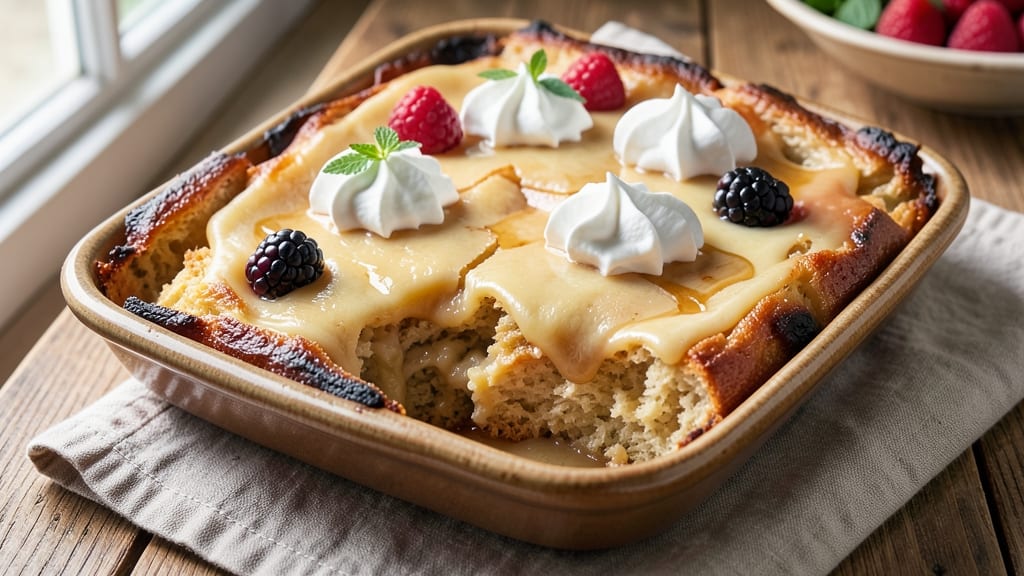
America's Test Kitchen bread pudding recipe delivers that perfect balance of custardy core and caramelized top we all crave. 🔥 The secret lies in soaking the bread just right—neither soggy nor dry—and using a precise custard mixture that creates that signature texture.
This isn't your grandmother's bread pudding; it's a refined dessert with restaurant-quality depth.
What sets this recipe apart is the technique: we bake the bread pudding in a single layer, allowing the custard to set perfectly while developing that coveted caramelized crust on top. The slow baking process ensures even cooking throughout, with no undercooked centers or burnt tops.
It's the kind of dessert that transforms an ordinary dinner into something special without requiring advanced skills.
By the time you pull it from the oven, you'll have a golden-brown pudding with a crisp caramelized exterior and a velvety custard center that practically melts in your mouth. The aroma alone will have everyone gathering in the kitchen.
This recipe serves 6-8 and can be made ahead, making it ideal for holiday gatherings or when you want to impress guests with minimal effort.
The best part? This version uses simple ingredients you likely already have in your pantry, yet achieves professional results. Whether you're serving it warm with vanilla ice cream or letting it cool slightly for easier slicing, this bread pudding will become your new go-to dessert.
Let's get started on creating this crowd-pleaser!
Ingredients for america's test kitchen bread pudding
Simple pantry staples transform into a restaurant-quality dessert with golden crust and custardy center.
| Ingredient | Amount | Notes |
|---|---|---|
| Stale Bread 🍞 | 8 cups | Day-old white or brioche preferred |
| Large Eggs 🥚 | 4 whole | Room temperature for best mixing |
| Heavy Cream 🥛 | 1 cup | Full-fat for richest texture |
| Whole Milk 🥛 | 1 cup | Warmed slightly for better incorporation |
| Granulated Sugar 🍚 | ¾ cup | Light brown sugar adds caramel notes |
| Unsalted Butter 🧈 | ½ cup | Cold, cubed for even melting |
| Vanilla Extract 🍃 | 1 tbsp | Pure Madagascar bourbon preferred |
| Salt 🧂 | ½ tsp | Diamond Crystal kosher preferred |
| Ground Cinnamon 🌿 | 1 tsp | Freshly ground for best flavor |
| Ground Nutmeg 🌶️ | ¼ tsp | Freshly grated nutmeg preferred |
| Turbinado Sugar 🍚 | ½ cup | For caramelized crust |
| Dark Brown Sugar 🍚 | ¼ cup | Packed for moisture |
The bread is everything here—stale is key (day-old works best) for perfect texture. Brioche or challah adds richness, but basic white bread delivers too. Tear into 1-inch pieces for even soaking. If you've got Costco's large loaf, it's perfect for this—just cube it yourself. The custard mixture needs to be just right: too much liquid makes it soggy, too little and it's dry. Trust the measurements, don't eyeball it. For the sugars, Turbinado gives that caramelized crust while brown sugar adds depth to the custard.
No vanilla extract? Vanilla bean paste works too—just scrape the seeds. Short on heavy cream? Whole milk plus 2 tbsp melted butter mimics the richness. The cinnamon and nutmeg are non-negotiable for that classic flavor, but if you're out of one, allspice or cardamom can play the role. For the sugars, substitute regular granulated sugar if needed, but you'll lose that caramelized top. The butter should be cold when adding to the custard—microwave for 20 seconds to soften if it's rock hard from the fridge.
This keeps beautifully—3 days in the fridge or 3 months frozen. For freezing, slice before storing. Reheat slices in a 350°F oven for 10-15 minutes until bubbly. The aroma alone will have everyone gathering. Make ahead? Assemble the day before, cover, and refrigerate overnight—flavors meld perfectly. And if you've got leftover custard mixture? Pour into ramekins and bake as custard cups—same flavors, different presentation.
Why You'll Love This Recipe
- No Waste Magic: I swear by this trick—toss in whatever stale bread you’ve got lurking in your drawer. The ATK method actually improves with day-old loaves, so you’re saving money and reducing clutter in one go.
- Creamy Caramel Core: That perfect balance of custardy richness from the heavy cream and whole milk, plus the caramelized sugar crust? It’s the kind of texture that makes you groan with every bite—honestly, I’ve caught myself sneaking seconds when I know I should be saving it.
- Weeknight Hero: Throw it together while dinner simmers, pop it in the oven, and walk away. The eggs and milk do all the work while you handle the rest of the meal—no babysitting required. (Yes, even on a Tuesday night.)
- Budget Breakfast Hack: Make a double batch and stash portions in the freezer. Reheat slices for a lazy morning treat—warm, gooey, and way cheaper than buying pastries. My college-student self still thanks me for this.
Step-by-step instructions for america's test kitchen bread pudding recipe
Here's how to create that perfect custardy center and caramelized top every time.
👨🍳 Step 1: Prep the Bread and Mix the Custard Base
Start by tearing the 8 cups stale bread into 1-inch chunks—this size ensures even cooking. Spread them on a baking sheet and toast in a 350°F oven for 10 minutes until just dry and fragrant. This step prevents a soggy pudding.
While the bread toasts, whisk together the 4 whole large eggs, 1 cup heavy cream, 1 cup whole milk, 0.75 cup granulated sugar, 1 tbsp vanilla extract, 0.5 tsp salt, 1 tsp ground cinnamon, and 0.25 tsp ground nutmeg in a large bowl. The mixture should be smooth with no lumps. I like to warm the milk slightly first—just enough to feel cozy to the touch—because it incorporates better into the eggs.
🍳 Step 2: Combine Bread and Custard Mixture
Remove the toasted bread from the oven and let it cool slightly. Transfer it to a 9x13-inch baking dish and pour the custard mixture evenly over the bread. Gently press down with a spatula to ensure the bread absorbs the liquid completely—this prevents a watery center. Let it sit for 15 minutes while you prepare the caramel topping.
Here's where it gets fun: the caramelized top is what makes this bread pudding special. In a small saucepan, melt the 0.5 cup unsalted butter over low heat. Once melted, remove from heat and stir in the 0.5 cup turbinado sugar and 0.25 cup dark brown sugar. The mixture will look like wet sand at first, but don't worry—it's normal. Let it cool slightly before spreading.
🥘 Step 3: Assemble and Bake for the Perfect Texture
Pour the sugar-butter mixture evenly over the bread pudding mixture. Use a spatula to spread it into an even layer—this ensures consistent caramelization. The bread pudding should look like it's wearing a beautiful golden sugar coat. Bake in the 350°F oven for 50-55 minutes until the edges are golden brown and the center is just set.
To test doneness, gently press the center with a clean finger. It should feel firm but still slightly jiggly—like a custard should. If it looks underdone, tent with foil and bake for another 5-10 minutes. The caramel top should be deep golden brown with some crispy spots—this is what gives that perfect contrast to the custardy interior.
⏰ Step 4: Rest and Serve for Maximum Richness
Remove the bread pudding from the oven and let it rest for 15 minutes before serving. This resting time allows the custard to fully set and the flavors to meld together. I know it's tempting to dig in right away, but trust me—waiting makes all the difference.
Serve warm with a dollop of whipped cream or a scoop of vanilla ice cream. The contrast between the warm, custardy bread pudding and the cold topping is pure perfection. Each bite should deliver that creamy, spiced custard with a hint of caramelized sweetness from the top. Leftovers? Store in an airtight container and reheat in the oven at 350°F for 10 minutes to restore that perfect texture.
Pro Tips For Making America'S Test Kitchen Bread Pudding
- Soak Bread in Batches: The recipe calls for a 12x8-inch baking dish, but if your bread cubes are still soggy after the initial soak, don’t just pour more custard—it’ll make the pudding watery. Instead, drain the first batch, pat the cubes lightly with paper towels (just enough to remove surface moisture), then redistribute them. This keeps the texture creamy without turning it into a custard soup.
- Whisk Eggs Until Thick: The ATK recipe stresses whisking the eggs and sugar until thick and pale—don’t skip this. I used to rush it, and the pudding always ended up dense and gluey. Whisk for at least 3–4 minutes until the mixture coats the back of a spoon and holds a ribbon when you lift the whisk. This ensures a silky, not gummy, finish.
- Skip the Crowding in Oven: If you’re baking multiple puddings (or tempted to stack them), resist. The ATK recipe relies on even heat circulation for a golden crust and perfect custard set. Crowding traps steam, leading to a sad, pale top. Bake one at a time, and if your oven runs hot, rotate the pan halfway through for even browning.
- Use Room-Temp Dairy: Cold heavy cream and milk curdle when mixed with eggs, no matter how gently you whisk. Take them out of the fridge 30 minutes before mixing—this small step prevents lumpy custard. (Yes, even if you’re impatient like me, the pudding will thank you.)
Regional styles of this dish
Southern Comfort
In the South, bread pudding gets a rich, buttery twist with additions like pecans and bourbon. I like to fold in 1 cup chopped pecans to the bread mixture and add 2 tbsp bourbon to the custard—just enough to enhance the vanilla flavor without overpowering.
Top with a sprinkle of powdered sugar before baking for that classic Southern touch. Serve with a scoop of homemade vanilla ice cream for the ultimate comfort dessert. 🥛
New England Classic
Up north, bread pudding often features maple syrup and brown sugar for a deeper, caramelized flavor. Replace 0.25 cup dark brown sugar with 0.25 cup maple syrup> in the custard mixture, and add 1 tsp maple extract> for extra depth.
A dusting of cinnamon sugar> on top before baking creates a crunchy, maple-kissed crust. Pair with whipped cream and a drizzle of extra maple syrup for a true New England experience. 🍁
French-Inspired Pain Perdu
For a French twist, use baguette or brioche> for the bread and add 1 tsp orange zest> to the custard mixture. Replace half the milk with orange juice> for brightness, and top with a sprinkle of powdered sugar> before baking.
Serve with a dollop of crème fraîche or a scoop of orange sorbet for a sophisticated dessert that feels like a Parisian café treat. 🍊
Midwest Homestyle
The Midwest loves a hearty, spiced bread pudding with a caramelized top. Add ½ tsp cardamom> to the custard mixture for warmth, and top with a layer of cinnamon-sugar> before baking. For extra richness, fold in ½ cup raisins> or chopped dates> to the bread.
Serve warm with a scoop of vanilla ice cream or a drizzle of caramel sauce for a nostalgic, homey dessert. 🏡
West Coast Modern
On the West Coast, bread pudding gets a gourmet makeover with unexpected ingredients. Swap the turbinado sugar for coconut sugar> and add 1 tsp coconut extract> to the custard. Top with toasted coconut flakes> and a sprinkle of flaky sea salt> before baking.
Serve with coconut whipped cream or a scoop of coconut sorbet for a tropical-inspired twist that feels fresh and modern. 🌴
Nutrition facts
Frequently asked questions
Can I use fresh bread instead of stale bread?
Fresh bread works, but stale bread is ideal because it absorbs the custard better without turning soggy. If you only have fresh bread, tear it into 1-inch pieces and toast it in a 350°F oven for 10 minutes before mixing with the custard. This mimics the texture of stale bread and prevents a watery center.
Why does my bread pudding come out watery? Watery bread pudding usually means the bread didn't absorb enough custard or the baking time was insufficient.
How do I make this bread pudding ahead of time?
This recipe is perfect for making ahead! Assemble the bread pudding in the baking dish, cover it tightly with plastic wrap, and refrigerate it for up to 24 hours before baking. The flavors will meld beautifully overnight, and it reheats perfectly. For freezing, bake the bread pudding first, then slice it and freeze the portions in an airtight container for up to 3 months. Reheat slices in a 350°F oven for 10-15 minutes until warm.
What's the best way to reheat leftovers?
Leftovers taste just as good reheated! Slice the bread pudding and place the pieces on a baking sheet. Warm them in a 350°F oven for 10-15 minutes until bubbly and golden. Avoid microwaving, as it can make the texture rubbery. For extra crispiness, broil for 1-2 minutes at the end.
Can I substitute heavy cream with something else?
Yes! If you don't have heavy cream, you can substitute it with whole milk plus 2 tablespoons of melted butter for richness. Alternatively, use half-and-half for a slightly lighter texture. Just remember that heavy cream gives the custard its signature velvety mouthfeel, so these substitutes will make the pudding a bit less luxurious.