
Desserts
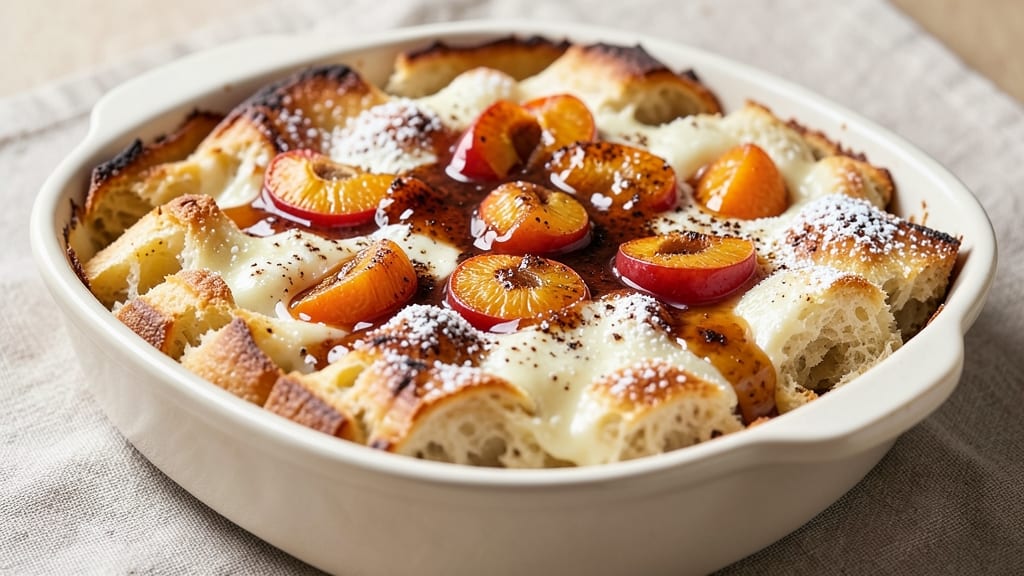
This apricot bread pudding recipe transforms stale bread and juicy apricots into a velvety custard masterpiece with caramelized fruit at its heart. The secret lies in layering cubed bread with halved apricots, then pouring a rich vanilla custard over the top—creating a dessert that feels indulgent yet balanced.
I developed this recipe after realizing how often I had leftover bread and wanted to repurpose it into something extraordinary.
The custard base—made with eggs, milk, and sugar—absorbs perfectly into the bread, while the apricots caramelize beautifully in the oven, releasing their sweet-tart juices. Baking at 350°F ensures a golden crust on top while keeping the center tender and custardy.
This dessert is ideal for brunch, dessert, or even a comforting after-dinner treat.
What makes this recipe special is its versatility. You can use day-old brioche for extra richness, gluten-free bread for dietary needs, or even add a splash of bourbon to the custard for depth.
The result is a dessert that’s foolproof, restaurant-quality, and packed with warm, comforting flavors. The aroma alone will have everyone gathering around the table.
Serve it warm with a drizzle of caramel sauce or a dollop of whipped cream for the ultimate indulgence. The combination of tender bread, custardy filling, and caramelized apricots creates a harmony of textures and flavors that’s impossible to resist.
Let’s get started on this dessert that’s sure to become a family favorite.
Ingredients for apricot bread pudding
Six servings of golden custard, caramelized apricots, and buttery bread—all you need for this showstopper dessert.
| Ingredient | Amount | Notes |
|---|---|---|
| Stale Bread 🍞 | 12 cups | Day-old brioche or challah preferred |
| Fresh Apricots 🍑 | 1 ½ cups | Pitted, halved, and sliced (about 6-8 apricots) |
| Large Eggs 🥚 | 6 whole | Room temperature for even baking |
| Whole Milk 🥛 | 3 cups | Full-fat for creamiest custard |
| Granulated Sugar 🍚 | 1 ½ cups | Divided: 1 cup for custard, 0.5 cup for apricots |
| Unsalted Butter 🧈 | ½ cup | Melted, plus extra for greasing |
| Pure Vanilla Extract 🌿 | 2 tsp | Or 1 vanilla bean, scraped |
| All-Purpose Flour 🌾 | ½ cup | For thickening custard |
| Ground Cinnamon 🌶️ | 1 tsp | Plus extra for dusting |
| Sea Salt 🧂 | ½ tsp | Fine grain preferred |
| Lemon Zest 🍋 | 1 tbsp | Brightens custard flavor |
| Dark Brown Sugar 🍚 | ¼ cup | For caramelizing apricots |
| Bourbon or Brandy 🍷 | 2 tbsp | Optional, for custard depth |
The bread is the star here—day-old brioche or challah gives that perfect staleness for soaking up custard, but regular sandwich bread works too. If you're gluten-sensitive, grab a gluten-free loaf from Whole Foods or Trader Joe's—just cube it a little smaller so it cooks through. For apricots, fresh is ideal but canned apricot halves (drained) in water work in a pinch. Look for plump, vibrant apricots at the store—they should yield slightly to gentle pressure. If using fresh, pat them dry before tossing with sugar so they caramelize better.
No bourbon? Skip it—this isn't a bourbon dessert, but it's worth the splurge if you've got it. The vanilla is non-negotiable—real extract or a scraped vanilla bean makes all the difference. For the sugar, I use Domino brand because it's consistent, but any granulated works. The brown sugar should be packed for caramelizing. If you're making this ahead, prep the custard mix and store it covered in the fridge—just whisk and pour when ready to bake. The bread can be cubed a day ahead too, stored in a sealed container.
This dessert reheats beautifully—just 10 minutes at 300°F brings it back to life. Store leftovers in an airtight container for 3-4 days, though I rarely have any. The custard thickens as it cools, so reheat with a splash of milk if it seems too firm. For serving, a drizzle of homemade caramel sauce or store-bought salted caramel takes it over the top. I always make a double batch—it disappears fast, especially when I'm pretending it's brunch.
Why You'll Love This Recipe
- No-Waste Magic: I swear by this trick—toss in whatever day-old bread you have lurking in your pantry. No crusty loaves or fancy techniques needed. Just tear, soak, and bake.
- Sunshine in Every Bite: Those fresh apricots? They burst with juicy sweetness while the eggs and milk create that perfect custardy hug. Honestly, the caramelized sugar on top makes it taste like dessert even when I serve it for breakfast.
- Crowd-Pleaser Flex: Bring it to brunch, pack it for lunch, or reheat slices for dinner—it’s that adaptable. My kids ask for it after school, and my in-laws request it at holiday dinners. (Yes, even on a Tuesday night.)
- Budget Breakthrough: Eggs, milk, and stale bread? Check. Apricots on sale? Double check. This recipe stretches ingredients without sacrificing flavor. I’ve made it for under $5 and still had leftovers for days.
Step-by-step instructions for apricot bread pudding
This dessert delivers warm, custardy layers with caramelized apricots—simple steps for restaurant-quality results.
Prepare the Apricot Compote
In a medium saucepan, combine the 1.5 cups fresh apricots, 0.25 cup dark brown sugar, and 1 tbsp lemon zest. Cook over medium heat for 5-6 minutes until the apricots soften and release their juices. You'll see a glossy syrup forming—this is what makes the pudding irresistibly moist.
Stir occasionally to prevent sticking, and watch for the sugar to begin caramelizing slightly around the edges. Once the apricots are tender but still hold their shape, remove from heat and stir in 2 tbsp bourbon or brandy (if using). Let this mixture cool slightly while you prepare the bread—this prevents the custard from curdling when combined later.
Cube and Assemble the Bread
Tear the 12 cups stale bread into 1-inch cubes, discarding any hard crusts. This texture ensures each bite has that perfect balance of chewy and tender. Place half the bread cubes in a 9x13-inch baking dish, then spread the warm apricot mixture evenly over the bread. The heat from the fruit will help infuse flavor into the bread as it soaks up the custard.
Top with the remaining bread cubes, pressing down gently to create an even layer. This step is crucial—it prevents the bread from floating during baking and ensures consistent texture throughout. Dust the top lightly with 1 tsp ground cinnamon for warmth and aroma.
Make the Custard Mixture
In a large bowl, whisk together the 6 whole large eggs, 3 cups whole milk, 1 cup granulated sugar, 0.5 cup all-purpose flour, 0.5 tsp sea salt, and 2 tsp pure vanilla extract until smooth. The mixture should be thick but pourable—this ensures a rich, velvety custard rather than a watery one. For extra depth, melt the 0.5 cup unsalted butter and whisk it into the custard until fully incorporated.
Here's the thing—room temperature eggs blend more easily, so if they're straight from the fridge, let them sit for 10 minutes before mixing. This prevents lumps and gives you a silky texture. Taste the custard and adjust sweetness if needed, though the apricot compote will contribute natural sweetness as it bakes.
Bake to Golden Perfection
Preheat your oven to 350°F. Pour the custard mixture evenly over the bread, pressing down gently to help it seep into every nook. Let it rest for 15 minutes at room temperature—this allows the bread to absorb some of the custard before baking, preventing a soggy bottom.
Bake for 45-50 minutes until the top is golden brown and the edges pull away slightly from the pan. A toothpick inserted in the center should come out clean, but don't overbake—the custard should still have a slight wobble. If the top browns too quickly, tent loosely with foil to prevent over-browning while the center finishes.
Rest and Serve Warm
Remove the bread pudding from the oven and let it rest for 10 minutes before serving. This resting period allows the custard to set slightly, making it easier to slice without falling apart. The pudding will be warm, custardy, and infused with the caramelized apricot flavor throughout.
Serve warm with a dusting of extra ground cinnamon and a scoop of vanilla ice cream for the ultimate contrast. The texture should be creamy in the center with slightly chewy bread edges, and each bite should burst with apricot sweetness balanced by the vanilla custard. Leftovers? Reheat in a 350°F oven for 10-15 minutes to restore that warm, gooey perfection.
Pro Tips For Making Apricot Bread Pudding
- Soak Bread Properly: Cut your bread into 1-inch cubes and spread them in a single layer on a baking sheet. Pour just enough warm milk (about 1 cup per 4 slices) to lightly moisten them—no swimming here. Let them sit for 10 minutes, then flip the cubes to soak the other sides. This keeps the bread from turning to mush while still absorbing flavor.
- Poke Apricots First: Slice your fresh apricots and place them cut-side down in the baking dish before adding the bread mixture. Give each slice a quick stab with a fork—this prevents them from curling up during baking and ensures they release their juices evenly into the pudding.
- Don’t Overmix Eggs: Whisk your eggs and sugar together until just combined—no need for a ribbons test here. Overmixing introduces too much air, which can make your bread pudding dense instead of light. A few streaks of sugar are fine; the heat will do the rest.
- Bake Low and Slow: Start at 350°F (175°C), but after 20 minutes, reduce the heat to 325°F (165°C). This prevents the top from browning too fast while the center stays undercooked. A toothpick should come out clean but slightly sticky—it’ll set as it cools.
Troubleshooting this dish
Curdled Custard Fix
If your custard looks lumpy, it’s likely from cold eggs or too much flour. First, whisk in 1 tbsp melted butter to smooth it out. For extra insurance, strain the custard through a fine-mesh sieve before pouring over the bread.
I’ve found that whisking eggs and milk separately before combining helps prevent curdling too. 💡
Soggy Bottom Prevention
This happens when the custard doesn’t set properly or the bread absorbs too much liquid. To fix it, press the bread cubes firmly into the pan before adding custard, and bake on the middle rack for even heat.
If it’s already soggy, broil for 1-2 minutes at the end to crisp the bottom—just watch it closely! 🔥
Undercooked Center
If the center stays too wet, your oven may run hot or the pudding wasn’t baked long enough. Check the internal temperature with an instant-read thermometer—it should reach 160°F.
If it’s still runny, tent with foil and bake for another 10-15 minutes. For future attempts, try reducing the milk by ¼ cup to thicken the custard. 🌡️
Apricots Too Tart
If the apricots overpower the custard, balance them with extra sugar in the compote (1-2 tbsp more) or a pinch of salt to enhance sweetness. For future batches, use slightly riper apricots or add ½ tsp ground cardamom to the custard for warmth. 🍑
Dry or Crumbly Texture
This usually means the bread was too dry or the custard wasn’t rich enough. Soak the bread cubes in warm milk for 5 minutes before assembling, or add 2 tbsp extra butter to the custard. For a quick fix, drizzle warm caramel sauce over slices to restore moisture. 💛
Nutrition facts
Frequently asked questions
Can I use dried apricots instead of fresh?
For every 1.5 cups fresh apricots, use 1 cup dried apricots rehydrated in warm water for 10 minutes. Drain well before mixing with sugar and lemon zest. The texture will be slightly chewier but still delicious. Just reduce the compote cooking time to 3-4 minutes since dried apricots soften faster.
How do I make this gluten-free?
Swap regular bread for a gluten-free loaf (like King Arthur's GF blend) and use a 1:1 gluten-free flour blend for the custard. Cube the GF bread slightly smaller (½-inch pieces) since it may need less baking time. Test for doneness at 40 minutes—GF versions often cook faster.
Can I make this ahead of time?
Yes! Assemble the pudding up to 24 hours ahead and refrigerate uncovered. When ready to bake, let it sit at room temperature for 30 minutes before baking (add 5-10 minutes to baking time). For make-ahead custard, mix all ingredients except bread and apricots, then refrigerate in an airtight container for up to 3 days.
What's the best way to reheat leftovers?
Slice and reheat individual portions in a 350°F oven for 10-12 minutes with a splash of milk to restore creaminess. For microwave reheating, cover with a damp paper towel and heat for 30-45 seconds at 50% power. Avoid reheating in the microwave without covering—it dries out the custard.
Why did my custard turn out watery?
This usually happens from overmixing or using too much milk. For future batches, whisk just until combined, then let the custard rest for 15 minutes before baking. If it's still too thin, bake for 5-10 minutes longer or reduce the milk by ¼ cup. The internal temp should reach 160°F for proper custard consistency.