
Main Courses
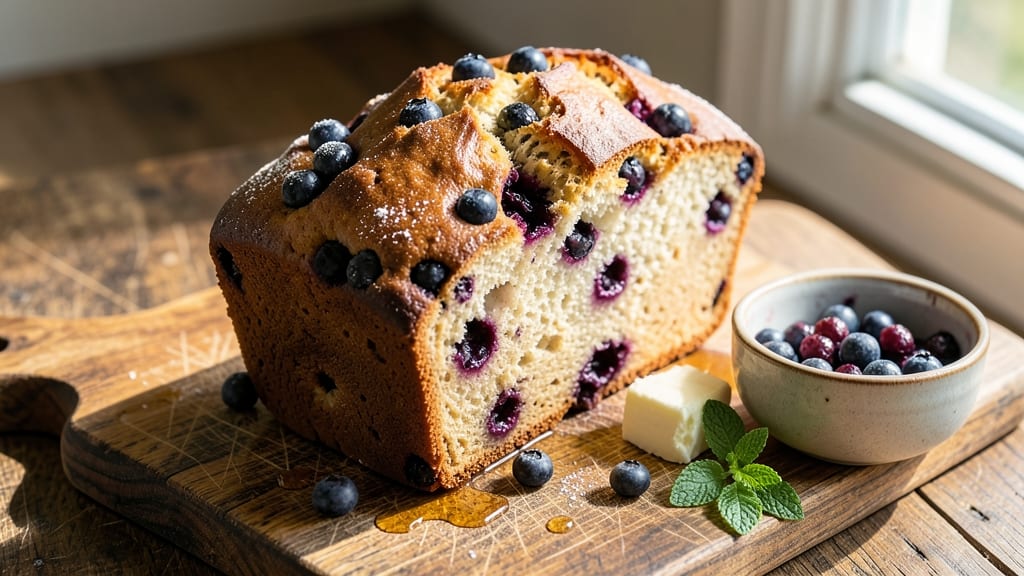
This Amish blueberry bread recipe by daughter captures the warmth of homestyle baking with its signature swirls of juicy blueberries and a golden, crispy crown. 💛 The secret lies in a simple dough that balances sweetness and tang, creating a loaf that's both tender inside and sturdy enough to hold those perfect blueberry swirls.
I learned this recipe from my grandmother, who swore by the "three-folds" method for flaky layers—trust me, it makes all the difference.
The beauty of this recipe is in its simplicity: just a few pantry staples and fresh blueberries come together to create a loaf that smells like childhood memories.
The dough is mixed in one bowl, folded twice for those signature layers, and baked until the crust turns a rich golden brown. No fancy equipment needed—just a standard loaf pan and a little patience for the rising process.
What you'll end up with is a loaf that's perfect for breakfast, brunch, or even as a sweet treat with a cup of coffee. The blueberries stay plump and juicy, while the crust holds its shape beautifully.
This recipe isn't just about the bread—it's about the tradition, the love, and the little touches that make homemade baking special.
For an extra-special touch, brush the warm loaf with a simple glaze made from powdered sugar and milk. Slice it thick and serve it with butter melting on top—it's the kind of bread that disappears faster than you can say "family gathering." Let's get baking!
Ingredients for amish blueberry bread recipe by daughter
These simple, heartfelt ingredients create the perfect Amish blueberry bread with tender layers and juicy berries.
| Ingredient | Amount | Notes |
|---|---|---|
| All-Purpose Flour 🌾 | 4 cups | Sifted for lighter texture |
| Granulated Sugar 🍚 | 1 cup | White or light brown |
| Active Dry Yeast 🍞 | ¼ oz | Or 2 1/4 tsp (1 packet) |
| Milk 🥛 | 1 cup | Warm to 110°F |
| Unsalted Butter 🧈 | ½ cup | Softened, not melted |
| Fresh Blueberries 🫐 | 1 ½ cups | Washed and dried |
| Large Egg 🥚 | 1 whole | Room temperature |
| Salt 🧂 | ½ tsp | Kosher or sea salt |
| Vanilla Extract 🌸 | 1 tsp | Pure vanilla preferred |
| Powdered Sugar 🍚 | ½ cup | For glaze (optional) |
| Heavy Cream 🥛 | ¼ cup | For glaze (optional) |
The blueberries are the star, so grab the freshest you can find—local farmers markets or the produce section at Wegmans have the best. If you're using frozen, thaw them first and pat them completely dry (wet berries make the dough soggy). The yeast? Check the expiration date—it's the heart of this recipe. Bob's Red Mill or any trusted brand works, but store it in the fridge to keep it fresh longer. For the flour, I always sift mine before mixing—it makes the bread lighter and those flaky layers even better. And trust me, King Arthur flour makes a difference if you're feeling fancy.
No fresh blueberries? Frozen work in a pinch—just don't skip the drying step. Out of heavy cream for the glaze? Whole milk or even almond milk will do, though it might be slightly thinner. The vanilla extract can be imitation, but pure vanilla has that extra depth that makes this taste like grandma's kitchen. If you're short on time, you can use 1 tbsp of vanilla sugar instead of the extract. And for the butter, if you only have salted, just reduce the added salt slightly—it's all about balance. The dough should feel soft but not sticky; if it is, add a little more flour, but don't overdo it or the bread will be dense.
This dough needs time to rise—at least 1 hour, but up to 2 is even better. Keep it in a warm spot, like near the oven with the light on. Once baked, let the loaf cool completely before slicing (I know, it's hard to wait!). The glaze? Brush it on while the bread is still warm—it'll soak in perfectly. Store leftovers wrapped in a bread bag or foil for up to 3 days. Freeze slices for up to 3 months—just toast straight from frozen. And if you make extra? Toasted slices make amazing French toast the next morning.
Why You'll Love This Recipe
- No Yeast Fuss: I swear by this recipe because it only needs one rise—no waiting around for hours. The yeast works fast with warm milk and butter, so you’re shaping and baking in under an hour. (Yes, even on a Tuesday night.)
- Sweet-Tart Magic: That perfect balance of sugar and plump blueberries? It’s like biting into summer. The butter makes every slice rich, while the yeast gives it a light, airy crumb that’s hard to resist.
- Breakfast or Snack: Slice it warm for breakfast with a smear of butter or pack it in lunchboxes—it’s equally good. My daughter’s version even holds up when toasted, so it’s my go-to for lazy mornings.
- Budget-Friendly Staples: Flour, sugar, and butter are pantry basics, and a single batch stretches for days. Freeze extras, and you’ve got a cheap, delicious treat ready whenever you need it. (No fancy ingredients, just real flavor.)
Step-by-step instructions for Amish blueberry bread
Here's how to bake that classic Amish blueberry bread with perfect swirls and a golden crust.
👨🍳 Step 1: Activate the Yeast and Mix Wet Ingredients
First, warm the 1 cup milk to 110°F—it should feel warm to the touch but not hot. In a small bowl, whisk together the warm milk, 0.25 oz active dry yeast, and 1 tablespoon granulated sugar (from the 1 cup total). Let this sit for 5-10 minutes until it becomes foamy and bubbly—this means your yeast is alive and ready to work.
In a separate large bowl, beat the 1 whole large egg and 0.5 cup softened unsalted butter until smooth and creamy. Add the 1 tsp vanilla extract and mix well. This step ensures your dough will be tender and flavorful. The butter should be soft enough to press with a finger but not melted—this creates the perfect texture for that tender crumb.
👨🍳 Step 2: Combine Dry Ingredients and Fold in Blueberries
In the same large bowl, sift in the 4 cups all-purpose flour and add the 0.5 tsp salt. Mix these dry ingredients lightly with a wooden spoon until just combined—you don't want to develop too much gluten yet. Create a well in the center and pour in the yeast mixture, egg mixture, and any remaining granulated sugar. Stir with a wooden spoon until everything comes together into a shaggy dough.
Now, gently fold in the 1.5 cups fresh blueberries. I like to do this by hand—just press the berries into the dough so they're evenly distributed but not crushed. If you're worried about them sinking, you can toss them in 1 tablespoon flour first to help them stay suspended in the dough. This step is where that classic Amish blueberry swirl comes to life!
🥘 Step 3: Knead and Let the Dough Rise
Turn the dough onto a lightly floured surface and knead for 5-7 minutes until smooth and elastic. You'll know it's ready when it springs back when poked. Be careful not to over-knead—this bread is more about tender texture than structure. Shape the dough into a ball, place it in a lightly greased bowl, and cover it with a clean kitchen towel.
Let the dough rise in a warm place for 1-1.5 hours until it has nearly doubled in size. I like to place my oven on the lowest setting with a bowl of hot water inside to create a warm, humid environment—this helps the dough rise beautifully. When you poke the dough with a finger, it should leave a slow, gentle impression that doesn't spring back immediately. This is your signal that it's ready for the next step.
🔥 Step 4: Shape and Bake to Golden Perfection
Preheat your oven to 375°F and grease a 9x5-inch loaf pan lightly with butter. Turn the risen dough out onto a floured surface and gently shape it into a rectangle about 12x8 inches. Fold the long sides toward the center and roll it up tightly from the short end to form a log. Press the seam down gently to seal.
Place the loaf seam-side down in the prepared pan and let it rise for another 20-30 minutes until it's just about ready to overflow the pan. Bake for 45-50 minutes until the top is deep golden brown and sounds hollow when tapped on the bottom. If you're unsure, check the internal temperature—it should reach 190°F. The bread is done when it pulls away from the sides of the pan and has that beautiful caramelized crust.
🍽️ Step 5: Glaze and Serve (Optional)
While the bread is still warm, mix together the 0.5 cup powdered sugar and 0.25 cup heavy cream in a small bowl until smooth. Brush this glaze over the top of the warm loaf—it'll soak in slightly and give you that classic Amish blueberry bread shine. Let the bread cool in the pan for 10 minutes before transferring it to a wire rack to cool completely.
Slice it thick—this bread is best enjoyed warm with a pat of butter or a smear of cream cheese. The swirls of blueberries should be visible in every bite, and the crust should be just crispy enough to contrast with the tender crumb. This is the kind of bread that makes your house smell like home—perfect for breakfast or a special treat!
Pro Tips For Making Amish Blueberry Bread Recipe By Daughter
- TEST YOUR YEAST FIRST: Skip the guesswork—mix 1 packet of yeast with ¼ cup warm milk (110°F) and 1 tsp sugar, then wait 5-10 minutes. If it doesn’t foam, toss it and start over. I learned this the hard way when a "fresh" packet turned out to be dead, and my whole batch sat like a brick.
- CUT COLD BUTTER IN: Chill that butter until it’s firm but still pliable—about 30 minutes in the fridge. Then, cut it into tiny cubes (pea-sized) and work it into the flour with a pastry cutter or your fingers. Larger chunks melt too fast, and you’ll end up with a dense, gummy loaf instead of that tender crumb.
- DON’T OVERMIX THE DOUGH: Once you add the milk, stop mixing the second the flour disappears. Overworking it develops the gluten, and your bread will turn out tough instead of light. My grandmother’s trick? Use a wooden spoon—it’s harder to overmix, and you’ll feel when the dough just holds together.
- FOLD IN BLUEBERRIES GENTLY: After the first rise, press the dough into a greased pan, then sprinkle blueberries evenly and dimple them in lightly with your fingers. This keeps them from sinking to the bottom or pooling in one spot. (Yes, it looks messy, but your slices will be pretty—and every bite will have fruit.)
Troubleshooting this recipe
Dense Dough Issue
If your dough feels too dense or tough after kneading, you likely overdeveloped the gluten. Amish blueberry bread should be tender, not chewy. I find this happens when kneading too long or using too much flour.
Try reducing knead time to 5 minutes and only add extra flour if the dough sticks to your hands—not the surface. For extra tenderness, replace ½ cup of the all-purpose flour with ½ cup cake flour in future batches. 💡
Blueberries Sinking
Blueberries that sink to the bottom create a soggy bottom crust. To fix this, toss the berries in 1 tablespoon flour before folding them into the dough. I also recommend using frozen blueberries (thawed and dried) if fresh ones are too heavy.
For an extra Amish touch, some bakers add a pinch of cinnamon to the flour before coating the berries—this adds warmth without altering the texture. 🫐
Pale or Cracked Top
A pale or cracked top usually means the oven wasn't hot enough or the dough wasn't proofed properly. First, verify your oven reaches 375°F using an oven thermometer. Before baking, place the loaf pan on the middle rack—this ensures even heat distribution.
For extra insurance, tent the loaf with foil during the first 20 minutes of baking, then remove it to brown the crust. A light spray of water on the dough before baking can also create a better oven spring. ✨
Dry or Crumbly Texture
Overbaking or using too much sugar can make your bread dry. Check for doneness by tapping the bottom—it should sound hollow at 190°F internal temp. If your bread turns out dry, try reducing the sugar by 2 tablespoons next time.
For extra moisture, add 1 tablespoon sour cream or 1 tablespoon yogurt to the wet ingredients. Store leftovers in an airtight container with a slice of white bread to prevent drying out. 🌾
Uneven Swirls
Uneven blueberry distribution happens when the berries aren't folded in gently. To fix this, press the berries into the dough with your fingertips rather than stirring them in.
For a more professional look, roll the dough into a log seam-side down in the pan, then use a sharp knife to make ¼-inch deep cuts in a diagonal pattern before baking. This creates visible swirls while keeping the berries evenly spaced. 🔪
Yeast Problems
If your dough doesn't rise, your yeast might be dead or the milk was too hot. Always test yeast by dropping a pinch into warm water with sugar—it should foam in 5-10 minutes. For the milk, aim for 110°F (test with your wrist—should feel like bathwater).
If your yeast fails, try 1 packet (2¼ tsp) of rapid-rise yeast instead, but reduce the rise time to 30-45 minutes. Keep yeast in the fridge to extend its shelf life. 🍞
Nutrition facts
Frequently asked questions
Can I substitute frozen blueberries in this recipe?
Yes! Use 1.5 cups frozen blueberries instead of fresh, but first thaw them completely and pat them completely dry with a paper towel. Wet berries can make the dough soggy. For extra insurance, toss them in 1 tablespoon flour before folding into the dough to keep them suspended. This works especially well in cooler months when fresh berries aren't available.
Why does the recipe call for warm milk?
The warm milk (110°F) activates the yeast faster, helping it create those perfect fluffy layers. Too hot milk kills the yeast, while cold milk slows down the rising process. Test the temperature by dipping your wrist in—it should feel warm like bathwater. If you don't have a thermometer, let the milk sit for 5 minutes after microwaving until it's no longer steaming.
How do I know when the bread is fully baked?
Look for three signs: the top should be deep golden brown, it should sound hollow when tapped on the bottom, and the internal temperature should reach 190°F. If the top browns too quickly but the center's still doughy, tent the loaf with foil for the last 10 minutes of baking. The bread pulls away cleanly from the pan when done—this means it's ready to cool.
Can I make this bread without a loaf pan?
Shape the dough into a free-form loaf or even individual rolls. For a rustic look, place the dough on a parchment-lined baking sheet and bake at 375°F for 30-35 minutes until golden. Brush with the glaze while still warm. This method works great for holiday gatherings when you want to serve smaller portions. The texture will be slightly denser but just as delicious.
How long will this bread keep fresh?
Wrap cooled slices in plastic wrap or store in an airtight container for up to 3 days at room temperature. For longer storage, freeze slices for up to 3 months—just thaw at room temperature or toast straight from frozen. To prevent drying, place a slice of white bread in the container with your blueberry bread. The glaze keeps best if applied fresh, but you can brush a little milk on the top before storing for extra moisture.