
Main Courses
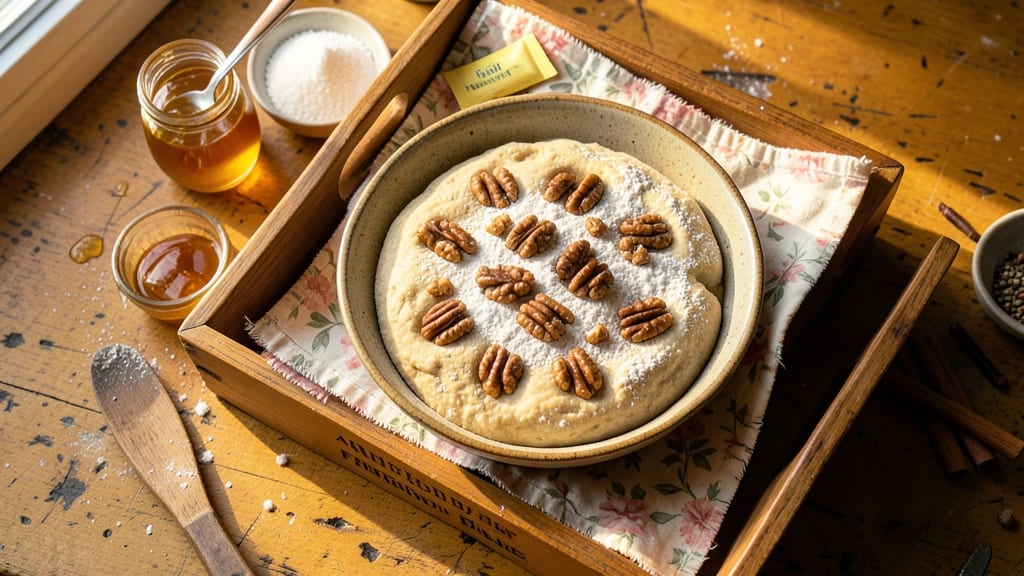
This Amish friendship bread recipe box delivers the heartwarming tradition of no-knead walnut swirls and a golden crusty crown—perfect for gifting or savoring at home. The simplicity of this recipe reflects its cultural roots, where shared baking fosters community and warmth.
With just a few pantry staples—flour, sugar, and walnuts—you’ll create a loaf that’s as meaningful as it is delicious.
The beauty of this recipe lies in its foolproof technique: no kneading, no fuss, just a straightforward mix that transforms into tender, swirled bread with a crisp exterior. The walnuts add a satisfying crunch, while the honey or butter topping elevates every bite.
It’s the kind of bread that feels like a hug in edible form, whether wrapped as a gift or enjoyed fresh from the oven.
Baking takes about 45 minutes, leaving you with a loaf that’s perfect for slicing and sharing. The crust develops a beautiful golden-brown hue, while the interior remains soft and inviting.
This recipe isn’t just about the bread—it’s about the tradition, the generosity, and the joy of creating something special with your own hands.
Pair it with jam, honey, or a pat of butter for the full experience. Whether you’re baking for a friend or treating yourself, this Amish friendship bread is a timeless classic that brings comfort and connection to every slice.
Ingredients for amish friendship bread recipe box
Simple pantry staples transform into a timeless loaf of Amish friendship bread, perfect for gifting or sharing.
| Ingredient | Amount | Notes |
|---|---|---|
| All-Purpose Flour 🌾 | 4 cups | Unbleached, sifted for lightness |
| Granulated Sugar 🍚 | ¼ cup | Light brown preferred for depth |
| Instant Yeast 🍞 | 2 tsps | Ensures quick activation |
| Salt 🧂 | 1 ½ tsps | Diamond Crystal preferred |
| Unsalted Butter 🧈 | ½ cup | Cold, cubed for swirl |
| Walnuts 🥜 | 1 cup | Chopped, toasted lightly |
| Honey 🍯 | ¼ cup | Wildflower preferred for floral notes |
| Milk 🥛 | ½ cup | Warm, whole milk preferred |
| Egg 🥚 | 1 whole | Room temperature for even mixing |
| Vanilla Extract 🌿 | 1 tsp | Pure, high-quality preferred |
| Ground Cinnamon 🌶️ | ½ tsp | Freshly ground for warmth |
| Olive Oil 🫒 | 2 tbsps | For greasing loaf pan |
The flour serves as the foundation, and for this recipe, King Arthur or Gold Medal brands are ideal—they provide the perfect balance of structure and tenderness. Walnuts should be raw, not pre-toasted to preserve their natural oils, and chopping them finely ensures even distribution throughout the swirls. Honey adds both moisture and a subtle floral note, so opt for local wildflower varieties if available. The butter must be cold when mixed with the walnuts to create a firm, workable dough for the swirls—this is non-negotiable for that signature Amish texture. For the milk, whole milk at room temperature ensures the yeast activates properly without overproofing.
No honey? Maple syrup at the same ratio works beautifully, though the flavor profile will differ slightly. Running short on walnuts? Pecans or almonds are acceptable substitutes, though texture may vary. If you prefer a sweeter loaf, increase the sugar to 0.375 cups while reducing the honey by the same amount. For those avoiding dairy, unsweetened applesauce can replace the butter in the swirls, though the texture will be slightly softer. Always measure your flour by spooning it into the cup and leveling it off—never scooping directly from the bag—to avoid overpacking and dense bread.
Store the baked loaf in an airtight container at room temperature for up to 5 days, though it’s best enjoyed within the first two days for optimal freshness. For longer storage, wrap tightly in plastic wrap followed by foil, then freeze for up to 3 months. To revive, thaw at room temperature and warm in a 200°F oven for 10-15 minutes to restore crispness. This bread freezes beautifully, making it perfect for gifting—simply wrap in parchment paper before placing in a freezer bag. The crust will soften slightly upon thawing, but a quick broil restores its golden crunch.
Why You'll Love This Recipe
- I’ll be real: this bread disappears fast. But if you somehow have scraps, toast them with a little extra butter—suddenly, you’ve got a second breakfast. And since it’s just flour, sugar, and butter, it’s the kind of recipe that stretches your budget without stretching your patience.
- No-Fuss Mixing: I swear by this recipe because it’s literally just dumping dry ingredients into a bowl. No kneading, no fuss—just a quick toss with softened butter and sugar, then let the yeast do its magic. Honestly, my hands stay clean, and the dough comes together faster than I can make coffee.
- Sweet-Buttery Magic: That perfect balance of warm sugar and rich butter? It’s what makes this bread dangerously shareable. The crust gets just crisp enough to hold its shape, while the inside stays soft and pillowy—like a hug in bread form. (Yes, even on a Tuesday night.)
- Gift-Worthy in Minutes: This is my go-to for show-and-tell baking. Toss the dough into a box, let it rise overnight, and boom—you’ve got a handmade gift that looks like it took hours. Between us, my neighbors think I’m a baking genius because of this trick.
Step-by-step instructions for Amish friendship bread
A no-knead approach yields tender swirls and a golden crust with minimal effort.
Prepare the Walnut-Honey Filling
In a small bowl, combine the 1 cup walnuts and 0.25 cup honey until fully coated. The walnuts should be evenly moistened—this ensures they distribute evenly through the dough. Set aside while you prepare the dough base. I like to toast the walnuts lightly before chopping to enhance their nutty flavor, but this step is optional if you're short on time.
In the same bowl, sprinkle 0.5 tsp ground cinnamon over the walnut mixture and toss gently. The cinnamon will infuse warmth into the filling, complementing the sweetness of the honey. This aromatic blend is what makes Amish friendship bread so distinctive—don't skip it. Cover the bowl and set it aside until you're ready to incorporate it into the dough.
Mix the Dough Base
In a large mixing bowl, whisk together the 4 cups all-purpose flour, 2 tsps instant yeast, and 1.5 tsps salt. This step ensures even distribution of the yeast and salt throughout the flour, which prevents uneven rising later. Use a whisk or your fingers to break up any flour lumps—smooth texture is key for a tender crumb.
Create a well in the center of the dry ingredients and add the 0.5 cup milk, 1 whole egg, 1 tsp vanilla extract, and 0.25 cup granulated sugar. Using a wooden spoon or spatula, gently mix the wet ingredients into the dry until a shaggy dough forms. Avoid overmixing at this stage—you're not creating gluten development, just combining the components. The dough will come together better later when you incorporate the butter.
Incorporate Butter and Form the Dough
Cut the 0.5 cup unsalted butter into small cubes and add them to the dough. Using your hands or a dough scraper, work the butter into the dough until it's fully incorporated and the mixture becomes smooth. The butter should be cold enough to hold its shape initially but soft enough to blend evenly. If the dough feels too sticky, add 1 tablespoon flour at a time until it comes together without sticking to your hands.
Turn the dough out onto a lightly floured surface and knead gently for 2-3 minutes just to bring everything together. You're not developing gluten here—the goal is to create a cohesive mass. Shape the dough into a rough rectangle about 12x8 inches and roll it out to ½-inch thickness. This step prepares the dough for the walnut filling.
Add the Filling and Shape the Loaves
Spread the walnut-honey-cinnamon mixture evenly over the rolled-out dough, leaving a ½-inch border uncovered. This border prevents the filling from leaking out during baking. Using a spatula or offset spatula, gently lift one long side of the dough and roll it up tightly, sealing the filling inside. The goal is to create a log shape—press the seam lightly to secure it.
Cut the log into 4 equal pieces (about 3 inches each) and shape each piece into a round loaf. Place them on a parchment-lined baking sheet, spacing them about 2 inches apart. Cover the baking sheet with a clean kitchen towel and let the dough rise at room temperature for 1 hour. The loaves should nearly double in size—this indicates proper yeast activation. If they don't rise well, your kitchen might be too cold; try placing the baking sheet in a slightly warmer spot.
Bake to Golden Perfection
Preheat your oven to 375°F. Brush the tops of each loaf with olive oil using a pastry brush—this creates a beautiful golden crust and adds subtle flavor. Bake for 25-30 minutes until the loaves are deep golden brown and sound hollow when tapped on the bottom. The internal temperature should reach 190-200°F when checked with an instant-read thermometer.
Remove the loaves from the oven and let them cool on a wire rack for 10 minutes before slicing. The bread will continue to set as it cools, developing that perfect crusty exterior and tender interior. For the best texture, serve warm with a pat of butter or a drizzle of honey—this is where the flavors truly shine. These loaves keep well at room temperature for 2-3 days or can be frozen for up to 3 months for freshness whenever you need it.
Pro Tips For Making Amish Friendship Bread Recipe Box
- SOFTEN THE BUTTER FIRST: Skip the microwave—take the cold butter straight from the fridge and cut it into ½-inch cubes. Toss them into the dry ingredients and let the flour work its magic while you mix. The butter melts faster this way, and you’ll end up with flaky layers instead of greasy dough. (Yes, even if you’re impatient like me.)
- WEIGH THE FLOUR: Scooping flour from the bag packs too much air and changes the texture. Use a kitchen scale for 3½ cups—tap the bowl lightly to settle it before measuring. This keeps the dough light and prevents a dense, heavy loaf. (Your future self will notice the difference.)
- DON’T OVERMIX THE DOUGH: The second the dough comes together, stop stirring. Overworking it develops gluten, and you’ll end up with a tough, chewy loaf instead of the tender, crumbly texture friendship bread needs. Two turns past the sticky stage is all you need.
- BAKE UNTIL 190°F: The recipe says "golden brown," but that’s vague. Use an instant-read thermometer—pull the bread out at 190°F. It’ll firm up as it cools, and you’ll avoid the gummy center that happens when you eyeball it. (I learned this the hard way after cutting into a lukewarm loaf.)
Best sauces and condiments for this amish friendship bread recipe box
Classic Honey Butter
This is the ultimate pairing for Amish friendship bread—a simple yet irresistible combination. Warm the bread slightly, then spread with a mix of ½ cup softened butter and 2 tbsp honey, gently heated together until smooth.
The honey's floral notes complement the walnuts perfectly, while the butter adds richness. I like to use local wildflower honey for extra depth of flavor. 🍯
Spiced Jam Glaze
For a fruity twist, create a quick glaze by simmering ½ cup apple butter with 1 tsp cinnamon and ½ tsp vanilla extract until smooth. Brush this warm mixture over freshly baked slices.
The cinnamon echoes the bread's spice, while the jam's tang cuts through the richness. Store-bought apple butter works, but homemade is even better—just blend cooked apples with a pinch of salt and sugar.
Cream Cheese Swirl
Spread a thin layer of 4 oz softened cream cheese on warm bread slices, then drizzle with 1 tbsp maple syrup and a pinch of salt. The cream cheese adds a velvety contrast to the bread's texture, while the maple syrup enhances the walnut sweetness.
This is especially delicious for breakfast or as a sweet snack. For extra flair, sprinkle with toasted coconut flakes before serving.
Caramelized Walnut Topping
Take the walnut theme further by making a caramelized walnut topping. Toast ½ cup walnuts in a dry skillet over medium heat for 3-4 minutes until fragrant, then add 1 tbsp brown sugar and 1 tbsp butter, stirring until caramelized.
Sprinkle this over warm bread slices for a crunchy, sweet contrast. This topping works beautifully with either honey butter or plain butter.
Coffee Syrup Drizzle
For a sophisticated touch, drizzle warm bread with a homemade coffee syrup made by simmering ½ cup strong brewed coffee with ¼ cup sugar and 1 tbsp brown sugar until dissolved.
The coffee's bitterness balances the bread's sweetness beautifully. Pair with a dollop of whipped cream for a dessert-like treat. Instant coffee works in a pinch, but freshly brewed is ideal.
Herbed Olive Oil
For a savory option, mix 2 tbsp extra-virgin olive oil with ½ tsp dried rosemary, ½ tsp dried thyme, and a pinch of salt. Drizzle over warm bread slices and finish with a sprinkle of flaky sea salt.
This herbed oil adds an unexpected but delightful herbal note that pairs surprisingly well with the sweet bread. Use within a few days of making for best flavor.
Nutrition facts
Frequently asked questions
Why is this called "friendship bread"?
This bread carries deep cultural roots in Amish communities, where it's traditionally baked and shared as a gesture of goodwill. The name reflects its purpose—loaves are often wrapped in cloth and given to neighbors, symbolizing friendship and generosity. It's a staple at gatherings, celebrations, and as a thoughtful gift.
Can I make this bread without walnuts?
Swap the walnuts for pecans, almonds, or even dried fruit like raisins or cranberries. For a nut-free version, use chopped dates or apricots instead. The key is maintaining the same moisture level—adjust honey or butter if needed to keep the dough workable. The swirl technique works with any filling!
How do I properly wrap it for gifting?
After cooling, wrap each loaf in parchment paper first, then in a clean kitchen towel or linen cloth. Tie with a ribbon or twine for that classic Amish touch. For extra presentation, place in a wooden box or decorative basket. The cloth wrapping helps maintain freshness while adding to the gift's charm.
Why did my bread turn out dense instead of light?
Dense bread usually means overmixing the dough or insufficient yeast activation. Make sure your yeast is fresh (test it in warm water first) and that all ingredients are at room temperature. Also, avoid kneading too much—this develops gluten and makes the bread tough. The no-knead method relies on gentle handling for that tender crumb.
Can I bake this in a Dutch oven for a crustier texture?
Yes! Shape the dough into a single round loaf and bake in a preheated 425°F Dutch oven for 35-40 minutes. This creates a crispy, rustic crust while keeping the interior moist. For best results, place a baking sheet on the oven rack below to catch any drips. The Dutch oven method works especially well for a single large loaf to share.