
Side Dishes
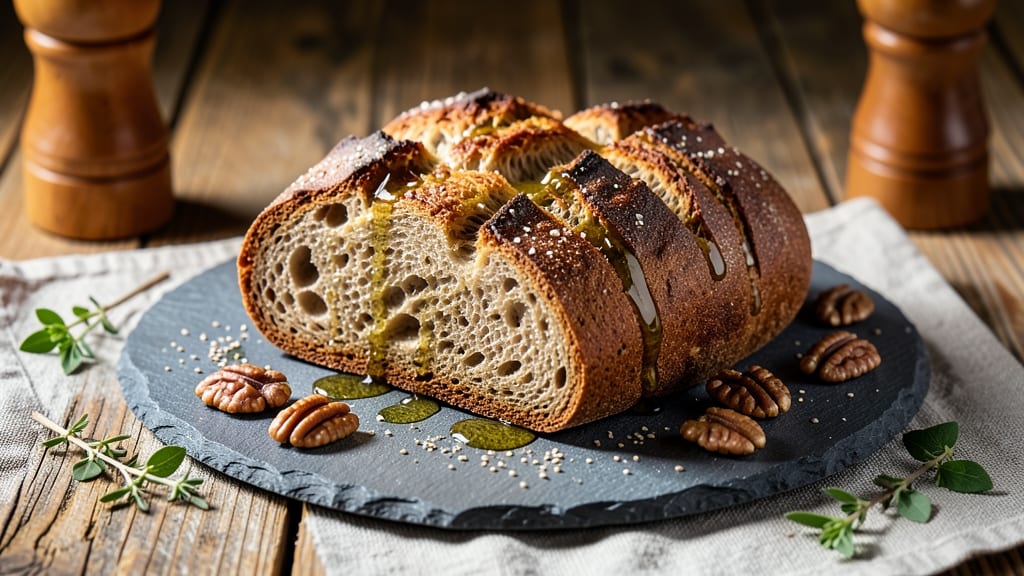
This anti-inflammatory sourdough bread recipe transforms traditional baking into a gut-friendly powerhouse, blending tangy fermentation with nutrient-packed ingredients. The long fermentation process breaks down gluten and phytic acid, making it easier to digest while reducing inflammation—no shortcuts here, just time-honored technique with modern benefits.
I developed this recipe after discovering how whole-grain sourdough could support digestive health while delivering that signature tangy depth we love.
The secret lies in the anti-inflammatory ingredients—whole-grain flour, flaxseed, and walnuts—not only boost fiber and omega-3s but also enhance the bread’s natural probiotic properties. Rosemary and turmeric add subtle anti-inflammatory benefits while deepening flavor, while the slow fermentation (up to 24 hours) ensures maximum digestibility.
This isn’t just bread; it’s a functional food that nourishes from the first bite.
What you’ll end up with is a crusty yet tender loaf with a golden, crackly exterior and a soft, airy crumb—rich in flavor and texture, yet gentle on digestion. The tangy depth comes from a well-fed starter, while the seeds and herbs create pockets of nutrition in every slice.
Perfect for sandwiches, toast, or simply enjoyed with olive oil and sea salt, this bread proves wholesome can also be delicious.
Whether you’re managing inflammation or simply seeking a healthier sourdough option, this recipe delivers restaurant-quality results with a focus on wellness. The process is straightforward, but the benefits are transformative—proof that traditional methods and modern nutrition can work hand in hand. Ready to bake?
Ingredients for anti inflammatory sourdough bread
These carefully selected ingredients transform ordinary sourdough into a gut-friendly, anti-inflammatory powerhouse.
| Ingredient | Amount | Notes |
|---|---|---|
| Active Sourdough Starter 🍞 | ½ cup | Well-fed, bubbly starter (100% hydration) |
| Whole-Grain Flour Blend 🌾 | 4 cups | Mix of einkorn, spelt, or whole wheat |
| Filtered Water 💧 | 2 ¼ cups | Room temperature preferred |
| Ground Flaxseed 🌰 | ¼ cup | For omega-3s and binding |
| Walnuts 🌰 | ½ cup | Chopped, for crunch and nutrition |
| Extra-Virgin Olive Oil 🫒 | ¼ cup | Cold-pressed for flavor and health |
| Honey or Maple Syrup 🍯 | 1 tbsp | Natural sweetener for fermentation |
| Sea Salt 🧂 | 1 ½ tsp | Diamond Crystal preferred |
| Fresh Rosemary 🌿 | 1 tbsp | Finely chopped, anti-inflammatory |
| Ground Turmeric 🌿 | ½ tsp | For color and anti-inflammatory benefits |
| Cornmeal 🌽 | ¼ cup | For dusting bread basket |
| Sesame Seeds 🌻 | 1 tbsp | Optional, for topping |
The foundation of this recipe lies in the whole-grain flour blend—einkorn or spelt are ideal for their lower gluten content and higher nutrient density. Bob’s Red Mill or King Arthur carry excellent options, but any high-quality whole-grain flour works. The sourdough starter must be active and well-fed; discard any starter that smells sour or has a grayish hue. For the flaxseed and walnuts, Trader Joe’s offers pre-ground flaxseed at a reasonable price, while walnuts should be fresh and free of rancidity—check the sell-by date. The extra-virgin olive oil should be cold-pressed and have a fruity aroma; California Olive Ranch is a reliable choice for consistent quality. Rosemary should be vibrant green, not wilted, and turmeric should be a bright, warm orange—never dull or grayish.
No whole-grain flour? Substitute with a 50/50 mix of whole wheat and white bread flour for better rise. Flaxseed can be omitted, but the omega-3 benefits are worth it—chia seeds at the same quantity work as a backup. Walnuts too expensive? Pecans or almonds provide similar crunch, though with a different flavor profile. The honey or maple syrup can be swapped for date syrup or agave nectar for a vegan option, though honey aids fermentation slightly better. Fresh rosemary unavailable? Dried rosemary at one-third the amount suffices, but fresh is preferred for its bright, piney flavor. Turmeric can be omitted entirely if you dislike its earthy taste, but it adds beautiful color and subtle anti-inflammatory benefits.
This dough requires 24 hours of cold fermentation for optimal digestion and flavor development—plan ahead. Store the dough in an airtight container in the fridge, covered with a damp towel to prevent drying. The finished loaf keeps well at room temperature for 3 days wrapped in a clean kitchen towel, or 1 week in the fridge. For longer storage, freeze the loaf wrapped in parchment and plastic for up to 3 months. Toasting slices restores freshness and enhances digestibility by reducing phytic acid content. The seeds and herbs create pockets of nutrition, so distribute them evenly throughout the dough for balanced bites.
Why You'll Love This Recipe
- No-Fuss Starter: I’ll be real—this bread only needs three active ingredients (starter, water, flour) plus a handful of walnuts and flaxseed. No kneading, no fussing, just mix, fold, and let time do the work. My lazy Sundays thank me.
- Nutty Crunch Magic: That toasted walnut bite with the chewy, tangy sourdough? It’s like a hug for your taste buds. The flaxseed adds a subtle earthiness that makes every slice feel intentional—no bland loaves here.
- Weeknight Workhorse: I use this for toast in the morning, sandwiches at lunch, and even crusty bits for soups. Freeze half the batch, and you’ve got backup for days when takeout wins. Honestly, it’s the only bread I bake anymore.
- Gut-Friendly & Budget-Smart: Whole grains and flaxseed mean my wallet and my digestion stay happy. A single batch stretches across meals, and the starter cuts down on wasted ingredients. Plus, walnuts add richness without breaking the bank. Win-win.
Step-by-step instructions for anti-inflammatory sourdough bread
This method delivers a nutrient-dense, gut-friendly loaf with perfect fermentation and texture.
👨🍳 Step 1: Prepare the Dough Base
In a large mixing bowl, combine the 0.5 cup active sourdough starter, 4 cups whole-grain flour blend, 0.25 cup ground flaxseed, 1 tbsp honey or maple syrup, 1.5 tsp sea salt, and 0.5 tsp ground turmeric. Mix until just combined—you want to avoid overworking the gluten, as this can make the bread dense. The turmeric will give the dough a subtle golden hue, while the flaxseed adds omega-3s for anti-inflammatory benefits.
Gradually add the 2.25 cups filtered water while mixing with a wooden spoon or dough whisk. The dough should come together into a shaggy, sticky mass. If it feels too dry, add 1 tablespoon more water—whole-grain flours absorb moisture differently than refined flours. Cover the bowl with a damp towel and let it rest for 30 minutes at room temperature. This initial rest helps hydrate the flours and activates the starter.
🍳 Step 2: Develop the Dough with Olive Oil and Rosemary
After the rest, add the 0.25 cup extra-virgin olive oil and 1 tbsp finely chopped fresh rosemary to the dough. The olive oil not only enriches the bread but also contributes to its moist texture and anti-inflammatory properties. Use your hands to knead the dough gently for 5-7 minutes—just until the ingredients are fully incorporated and the dough becomes slightly smoother. Over-kneading can develop too much gluten, making the bread tough.
Shape the dough into a loose ball and place it back in the bowl. Cover again with the damp towel and let it ferment at room temperature for 4-6 hours, or until it has nearly doubled in size. You’ll know it’s ready when the dough feels light and airy, and small bubbles form on the surface. This fermentation step is critical—it breaks down phytic acid in the whole grains, making the nutrients more bioavailable and enhancing digestibility.
🥘 Step 3: Shape and Proof the Dough
Lightly dust a clean surface with 0.25 cup cornmeal to prevent sticking. Turn the dough out and gently shape it into a round loaf, about 8 inches in diameter. Place the dough seam-side up in a well-floured banneton (proofing basket) or a bowl lined with a floured kitchen towel. Cover loosely with plastic wrap or a damp towel and let it proof at room temperature for 1-2 hours, or until it has risen significantly and feels springy to the touch.
For a more pronounced flavor and texture, you can also place the shaped dough in the refrigerator overnight. This cold fermentation, known as retardation, enhances the bread’s flavor and improves its crumb structure. If you choose this method, allow the dough to come to room temperature for 1 hour before baking.
🔥 Step 4: Preheat and Bake for Maximum Crust Development
Preheat your oven to 425°F with a Dutch oven or heavy baking stone inside. The Dutch oven is ideal for trapping steam and creating a crispy crust. Once the oven reaches temperature, carefully transfer the dough to a parchment-lined baking sheet. Using a sharp knife or razor, score the top of the loaf in a decorative pattern—this helps control expansion and adds visual appeal.
Bake the bread for 35-40 minutes, until the crust is deep golden brown and the internal temperature reaches 205-210°F. The bread should sound hollow when tapped on the bottom. If the crust isn’t browning quickly enough, tent the loaf with foil and continue baking. Remove the bread from the oven and let it cool on a wire rack for at least 1 hour before slicing. This resting period allows the crumb to set and prevents a gummy texture.
🍽️ Step 5: Finish with Optional Toppings
Once the bread has cooled slightly, brush the top with a little extra-virgin olive oil if desired. Sprinkle generously with 1 tbsp sesame seeds for added crunch and a nutty flavor. The sesame seeds also provide extra anti-inflammatory benefits and a beautiful contrast to the soft, airy crumb. Slice the bread with a serrated knife for clean, even pieces, and serve warm or at room temperature.
This anti-inflammatory sourdough bread is perfect for reducing gut inflammation, thanks to its fermented properties, whole-grain base, and nutrient-rich additions like flaxseed, olive oil, and rosemary. Store any leftovers in an airtight container at room temperature for up to 3 days, or freeze for longer storage.
Pro Tips For Making Anti Inflammatory Sourdough Bread
- Hydrate the Flaxseed: Mix ground flaxseed with filtered water first—it thickens like egg wash and binds better than tossing it dry. I used to just fold it in, but the bread ended up denser; pre-mixing guarantees even distribution and that satisfying chew.
- Skip the Over-Kneading: Whole-grain flours are stubborn—resist the urge to punch and fold like white bread dough. Let the starter’s fermentation do the work; overworking develops gluten but dulls the nutty, tangy flavor this recipe is built on.
- Soak Walnuts First: Toss chopped walnuts in warm water for 10 minutes before mixing—they soften slightly and release less bitterness when baked. Trust me, your bread won’t taste like a walnut-scented gym sock.
- Dutch Oven at 425°F: Preheat that Dutch oven for 30 minutes at 425°F—hotter than you think. Whole-grain dough needs that initial blast to rise properly; I learned this after a batch that looked like a pancake. (Yes, even if you’re impatient like me.)
Perfect pairings for anti inflammatory sourdough bread
Top Anti-Inflammatory Spreads
Pair your sourdough with almond butter mixed with 1 tsp cinnamon and 1 tsp honey—this combo reduces inflammation while adding natural sweetness. I like Justin’s almond butter for its smooth texture and no added sugars.
For a savory option, try avocado mash with lemon juice, sea salt, and fresh dill—the healthy fats and antioxidants complement the bread’s nutrients perfectly. 🥑
Probiotic Toppings
Spread unsweetened coconut yogurt (like So Delicious) with a drizzle of extra-virgin olive oil and a sprinkle of hemp seeds for a probiotic-rich topping. The coconut yogurt adds creaminess, while hemp seeds provide omega-3s and fiber.
For extra tang, mix in 1 tsp apple cider vinegar—this enhances digestion and balances flavors beautifully.
Herb-Infused Olive Oils
Drizzle the bread with rosemary-infused olive oil (store-bought or homemade) for an anti-inflammatory boost. I love California Olive Ranch’s infused oils—their rosemary version adds depth without overpowering. Pair it with sliced figs or walnut halves for a sweet-savory contrast that highlights the bread’s nutty undertones. 🌿
Gut-Friendly Jam Options
Skip the sugar-laden jams and opt for chocolate-hazelnut spread (like Nutella, but in moderation) or berry compote made with 1 cup mixed berries, 1 tbsp chia seeds, and 1 tsp maple syrup.
The berries provide antioxidants, while chia seeds add fiber. For a savory twist, try whipped goat cheese with black pepper and honey drizzle—the tangy creaminess cuts through the bread’s crusty exterior.
Warm Pairings
Toast slices lightly and top with mashed sweet potato mixed with cinnamon, walnuts, and a pinch of turmeric for warmth and anti-inflammatory benefits.
For a protein boost, spread with hummus (like Sabra Classic) and add sliced cucumber and red onion—the fiber and plant-based protein make this pairing satisfying and nutrient-dense. 🥕
Beverage Pairings
Sip on ginger-green tea (like Yogi Tea) to enhance digestion and reduce inflammation. The ginger’s spice complements the bread’s tangy depth, while the green tea adds antioxidants.
For a non-caffeinated option, try golden milk (turmeric latte) made with 1 cup almond milk, ½ tsp turmeric, pinch of black pepper, and 1 tsp honey—this warm, creamy drink amplifies the bread’s anti-inflammatory properties. 🍵
Nutrition facts
Frequently asked questions
Why does this sourdough bread claim to be anti-inflammatory?
The recipe uses whole-grain flours, flaxseed, and walnuts—all rich in omega-3s and fiber that support gut health. The rosemary and turmeric add natural anti-inflammatory compounds, while the long fermentation process breaks down phytic acid, making nutrients more bioavailable. Plus, the extra-virgin olive oil provides heart-healthy fats that reduce inflammation.
Can I make this bread without a sourdough starter?
No, but you can create one! Start with 1 cup whole-grain flour and 1 cup water, let it ferment at room temperature for 5-7 days until bubbly. Feed it daily with equal parts flour and water. For a quicker option, use 1 tbsp apple cider vinegar + 1 tbsp sugar in place of the starter—it mimics the acidity but lacks probiotic benefits.
How do I know when the dough is fully fermented?
Look for these signs: the dough should have nearly doubled in size, feel light and airy, and have small bubbles on the surface. Press your finger gently—if it springs back slowly (not immediately), it’s ready. For whole-grain doughs, this often takes 8-12 hours at room temperature. Cold fermentation (overnight in the fridge) enhances flavor and texture.
What if my bread turns out too dense?
Density usually means over-kneading or under-fermentation. For next time, mix just until combined, avoid kneading more than 5-7 minutes, and extend fermentation to 12-24 hours (including cold proofing). Whole-grain flours need extra hydration—add 1-2 tbsp more water if the dough feels dry. Also, ensure your oven reaches 425°F before baking.
Can I add other anti-inflammatory ingredients?
Try 1 tbsp ground chia seeds (for extra omega-3s), 1 tsp cinnamon (blood sugar regulation), or finely chopped ginger (digestive aid). For topping, sprinkle hemp seeds or pumpkin seeds—both are packed with nutrients. Just keep the total additions to 10% of the flour weight to avoid altering texture.