Side Dishes
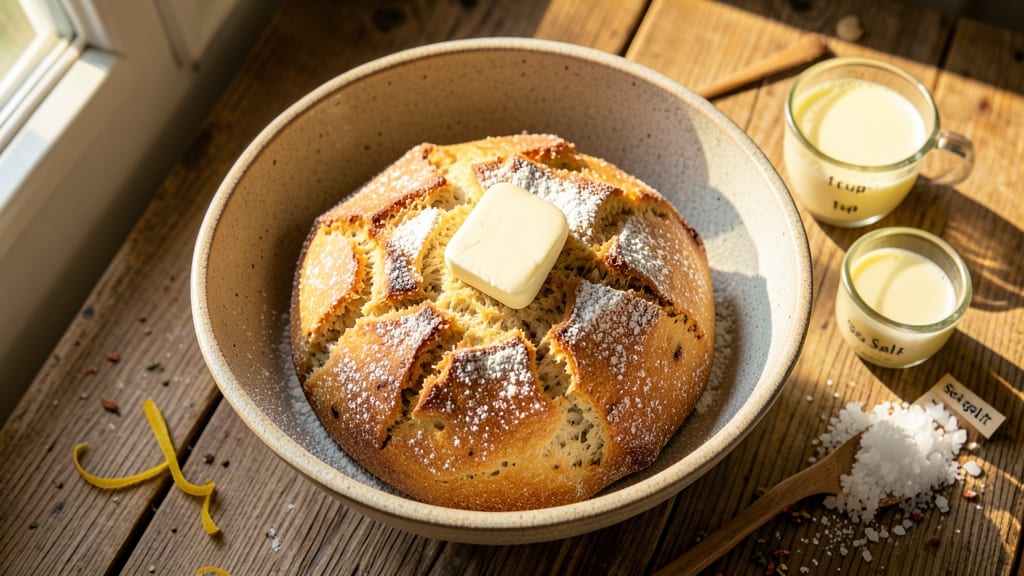
This American soda bread recipe delivers rustic, buttermilk-light loaves with no-knead simplicity—perfect for weeknight dinners or holiday tables. The secret lies in baking soda's chemical reaction with buttermilk, creating that signature tender crumb and slightly tangy flavor.
I've perfected this version to stay moist for days without drying out, a common issue with traditional recipes.
The beauty of soda bread is its foolproof nature—just mix, shape, and bake. Traditional methods often require kneading, but this version relies on the natural gluten development from the buttermilk and baking soda.
The result is a loaf with a crisp crust and airy, slightly dense interior, ideal for soaking up soups or pairing with butter.
What makes this recipe truly special is its cultural heritage as an Irish-American staple, now beloved across the country. The no-knead technique saves time while preserving authentic texture, and the buttermilk keeps it light despite its hearty appearance.
This is the kind of bread that transforms ordinary meals into something memorable.
Perfect for serving alongside chili, stews, or as a simple side with jam and tea. The recipe yields one 9-inch loaf that bakes in 35 minutes at 425°F, making it ideal for busy cooks who still want homemade quality. Let's get baking!
Ingredients for american soda bread
The foundation of perfect soda bread: flour, buttermilk, and baking soda working together for that signature tender crumb.
| Ingredient | Amount | Notes |
|---|---|---|
| All-Purpose Flour 🌾 | 4 cups | Unbleached preferred for texture |
| Buttermilk 🥛 | 1 ½ cups | Full-fat for authentic flavor |
| Baking Soda 🧂 | 1 tbsp | Freshly opened for potency |
| Salt 🧂 | 1 tsp | Diamond Crystal preferred |
| Granulated Sugar 🍚 | 2 tbsp | Light brown sugar for depth |
| Unsalted Butter 🧈 | ½ cup | Cold, cubed for even distribution |
| Milk 🥛 | ¼ cup | Whole milk for richness |
| Fresh Chives 🌿 | 2 tbsp | Finely chopped for garnish |
| Poppy Seeds 🌱 | 1 tbsp | Optional traditional topping |
| Cornmeal 🌽 | ¼ cup | For dusting baking sheet |
The flour makes or breaks this recipe—King Arthur or Gold Medal are my go-tos for that ideal gluten development. Buttermilk is non-negotiable; cultured buttermilk delivers the best tang, but plain buttermilk (milk + vinegar) works in a pinch. Baking soda must be freshly opened—old powder loses its lift. For the butter, European-style brands like Plugrá melt beautifully, while American brands work fine. The baking soda-to-buttermilk ratio here is critical—too much creates a metallic aftertaste, too little flattens the rise. Whole milk in the dough ensures a moist crumb, while skim can make the bread dry faster.
No buttermilk? Mix 1 cup milk + 1 tbsp vinegar or lemon juice, let sit 5 minutes. Almond milk works too, though the texture may be slightly denser. Substituting baking powder for soda? Use half the amount—it won’t replicate the same chemical reaction. For the sugar, light brown sugar adds subtle caramel notes, but white granulated keeps it classic. The chives and poppy seeds are optional but add that Irish-American touch. If you’re avoiding gluten, King Arthur’s gluten-free flour blend works surprisingly well—just expect a denser texture. The cornmeal isn’t just for dusting; it adds a subtle crunch to the crust when toasted.
Store the dough in the fridge for up to 24 hours before baking—this enhances flavor development. Once baked, let the loaf cool completely on a wire rack to prevent sogginess. Wrap tightly in foil and keep at room temperature for 2-3 days for the best texture, or freeze slices for up to 3 months. For reheating, 30 seconds in the microwave restores freshness without drying it out. The buttermilk mixture can be prepped a day ahead and stored in the fridge, saving you morning prep time. This bread freezes beautifully too—slice before freezing for perfect portions later.
Why You'll Love This Recipe
- No Mixer Needed: Mixing this dough is like folding a blanket—just a bowl and a spoon. The buttermilk and baking soda do all the work, creating that signature tangy rise without a single whisk stroke.
- Tangy-Sweet Magic: That touch of granulated sugar in the dough? It’s subtle but game-changing—balances the buttermilk’s sharpness while keeping the crumb tender. Honestly, it’s the kind of flavor that makes you reach for a second slice before the first is even gone.
- Weeknight Hero: Pull it from the oven while your pasta boils or serve it alongside chili—this bread handles the chaos. Between us, it’s my go-to when I forget to plan dinner, and somehow, it always feels intentional.
- Budget-Friendly Staple: Four ingredients, zero guilt. The flour and buttermilk stretch across meals, and the baking soda? A pantry staple that turns this into a reliable, cheap-as-can-be side. My kids call it "poor man’s sourdough," but they’re wrong—it’s just smart cooking.
Step-by-step instructions for American soda bread
This no-knead method delivers a tender crumb and crispy crust every time—no yeast, no fuss.
Mix the Wet Ingredients
In a large mixing bowl, combine the 1.5 cups buttermilk, 0.25 cup milk, 0.5 cup cold cubed unsalted butter, 2 tbsp granulated sugar, 1 tbsp baking soda, and 1 tsp salt. Use a wooden spoon to stir vigorously for 30 seconds—you'll notice the mixture begin to thicken and bubble slightly as the baking soda activates.
This reaction is crucial for the bread's rise. The buttermilk's acidity reacts with the baking soda, creating tiny air pockets that give soda bread its signature texture. Don't worry if the butter doesn't fully melt yet—it will incorporate as you add the dry ingredients. The mixture should be thick but still pourable at this stage.
Combine with Dry Ingredients
Gradually add the 4 cups all-purpose flour to the wet mixture, stirring constantly with the wooden spoon. The dough will come together quickly—it should form a soft, slightly sticky mass that pulls away from the sides of the bowl. Avoid overmixing; once the flour is fully incorporated, stop stirring immediately.
Overworking the dough develops gluten, which can make the bread dense rather than tender. The ideal consistency is like a thick pancake batter—cohesive but still workable. If it feels too sticky, you can wet your hands slightly to help shape it, but resist the urge to add more flour. This dough needs just enough moisture to create that signature moist crumb.
Shape and Prepare the Loaf
Lightly flour a clean work surface and turn out the dough. Gently shape it into a round loaf about 8 inches in diameter, using your hands to press it into a smooth, even shape. The surface should be slightly rough—this texture will contribute to the crust's character. Place the loaf on a parchment-lined baking sheet.
Here's the thing—don't worry about a perfect shape. Soda bread is forgiving. The key is to create a compact loaf with a smooth top. If you notice any tears or cracks, simply press them gently back together. The dough should hold its shape well enough to transfer easily to the baking sheet without falling apart.
Score and Bake
Preheat your oven to 425°F while you prepare the loaf. Using a sharp serrated knife, score the top of the loaf in a simple cross pattern (about ½-inch deep). This allows the bread to expand as it bakes, preventing it from cracking unpredictably. Sprinkle the 1 tbsp poppy seeds and 2 tbsp chopped fresh chives evenly over the scored surface.
Bake the loaf for 30-35 minutes until it's deep golden brown and sounds hollow when tapped on the bottom. The internal temperature should reach 190-200°F when measured with an instant-read thermometer. The crust should be crisp and slightly crackled, while the interior should remain tender and moist. Don't overbake—soda bread continues cooking slightly as it cools.
Cool and Serve
Remove the loaf from the oven and transfer it to a wire rack to cool for 10-15 minutes. This resting period allows the steam inside to redistribute, ensuring a moist crumb. While it's still warm, brush the top with a bit of melted butter if desired—this adds extra richness and enhances the crust's flavor.
Serve the bread warm or at room temperature. The interior should be tender with a fine crumb, while the crust remains crisp. Each slice should reveal a lightly speckled interior from the poppy seeds and chives, with a golden crust that's just slightly crisp. This bread is best enjoyed the day it's made, though it can be wrapped and stored at room temperature for up to 2 days or frozen for longer storage.
Pro Tips For Making American Soda Bread
- MEASURE BUTTERMILK PRECISELY: Use a liquid measuring cup, not a dry one—this stuff fools you. A splash short or over means your dough will either collapse or turn out dense. I learned this after making a batch that looked like a hockey puck instead of bread.
- MIX JUST UNTIL COMBINED: Overworking the dough kills the rise. Stop stirring the moment the flour disappears—about 10-12 turns with a wooden spoon. My first batch turned out flat because I kept mixing like I was kneading pizza dough.
- DON’T SKIP THE RESTING TIME: Let the dough sit for 10 minutes after mixing—no exceptions. This lets the baking soda activate fully and gives the gluten time to relax. I rushed it once and ended up with a brick instead of tender bread.
- USE A LIGHT HAND WITH FLOUR: Sift the flour first, then fold it in gently—no piling or scooping from the bag. Packed flour adds weight and makes the bread dense. My grandmother’s trick: use a fine-mesh sieve and tap it lightly to avoid clumps.
Common mistakes when making this recipe
Overmixing the Dough
This is the #1 mistake I see beginners make—they keep stirring long after the dough comes together. Once the flour is fully incorporated, stop immediately. Overmixing develops too much gluten, which creates a tough, dense loaf instead of that signature tender crumb.
The dough should pull away from the sides of the bowl within 30-45 seconds of adding flour. I promise, it doesn't need more mixing—trust the process! 💫
Skipping the Resting Time
Rushing the 10-15 minute cooling period after baking is another common error. This resting time lets steam redistribute, preventing a gummy interior. I've seen people slice into bread immediately, only to find it dense and moist.
Let it cool completely on a wire rack—patience here makes all the difference for that perfect texture.
Using Old Baking Soda
Freshness matters! Old baking soda loses its potency, which means your bread won't rise properly. Always check your baking soda's expiration date—it should be within 6 months of opening. For a quick test, mix 1 tsp baking soda with 1 tbsp vinegar in a cup.
If it doesn't bubble vigorously, replace it immediately. This simple check saves you from flat, disappointing loaves.
Incorrect Scoring Technique
The crosshatch pattern isn't just decorative—it's functional! A shallow ½-inch deep cut prevents random cracking while allowing the bread to expand. I've seen people make deep cuts that create messy gaps or shallow cuts that don't guide the expansion.
Use a sharp serrated knife and cut confidently—this small step makes a big difference in your bread's presentation.
Overbaking the Loaf
Soda bread continues cooking as it cools, so removing it too early leads to a gummy interior. Aim for 190-200°F internal temperature and a deep golden brown crust. I've learned this the hard way—overbaked bread turns dry and crumbly.
The moment it sounds hollow when tapped on the bottom is your cue to pull it out. Trust your ears as much as your eyes!
Substituting Buttermilk Improperly
Not all milk substitutes work the same! While you can make buttermilk with milk and vinegar, the texture differs from real buttermilk. For best results, use 1 cup milk + 1 tbsp vinegar or lemon juice, but let it sit for 5 minutes to properly curdle.
I've tried using plain milk without the acid, and the bread turns out dense. The acidity in buttermilk is what creates those perfect air pockets during baking.
Nutrition facts
Frequently asked questions
Why does my American soda bread turn out dense?
The most common causes are overmixing the dough or using old baking soda. Stir only until the flour is fully incorporated (30-45 seconds max), then stop immediately. Also check your baking soda's freshness—it should bubble vigorously when mixed with vinegar. Overworking develops gluten, which makes the bread tough rather than tender.
Can I make this recipe without buttermilk?
Yes! Mix 1 cup milk with 1 tablespoon vinegar or lemon juice, then let it sit for 5 minutes to curdle. This mimics buttermilk's acidity, which is crucial for activating the baking soda. For best results, use whole milk rather than skim to maintain moisture in the finished loaf. The texture won't be identical but will still be delicious.
How do I store leftover soda bread?
Wrap the cooled loaf tightly in plastic wrap or foil and store at room temperature for up to 2-3 days. For longer storage, slice and freeze the bread for up to 3 months. To reheat, warm slices in a 350°F oven for 5-10 minutes or microwave for 20-30 seconds. The bread tastes best fresh but reheats beautifully without drying out.
Is soda bread gluten-free?
Traditional soda bread contains gluten from all-purpose flour, but you can make a gluten-free version using a 1:1 gluten-free flour blend like King Arthur's. The texture will be denser, but it still delivers that signature buttermilk flavor. Just be sure to measure your gluten-free flour precisely—these blends absorb moisture differently than regular flour.
What's the best way to serve American soda bread?
This rustic bread pairs perfectly with soups, stews, or chili, but it's also wonderful on its own. Try serving warm slices with Irish butter or a smear of jam. For a hearty meal, pair it with smoked salmon, cheddar cheese, or even as a side to roasted meats. The crisp crust and tender crumb make it ideal for soaking up flavors from any dish.