
Side Dishes
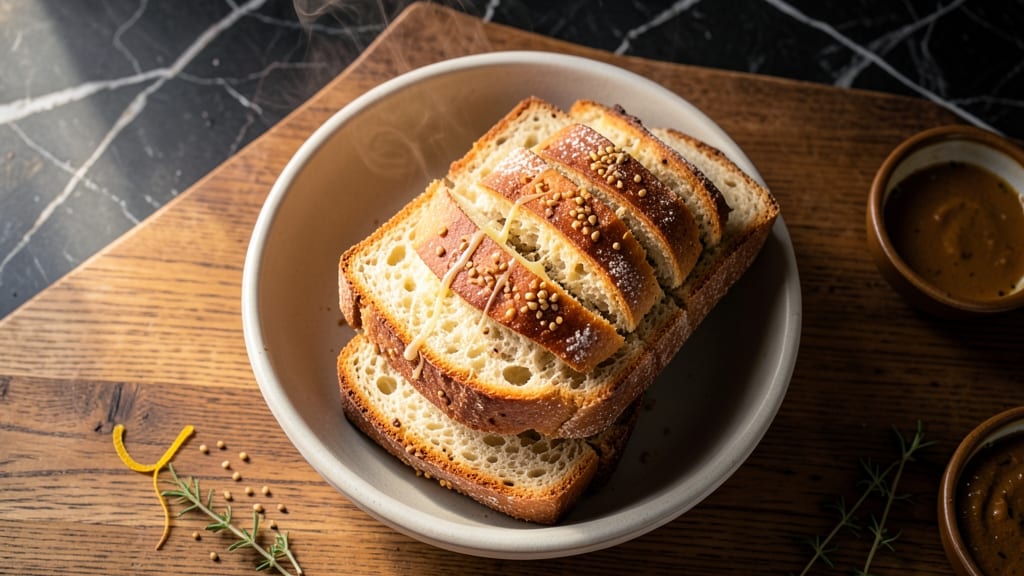
This arrowroot flour bread recipe delivers a gluten-free loaf with a crispy crust and airy crumb that rivals traditional wheat bread—without the gluten. The secret lies in arrowroot’s unique properties: it creates a light, tender texture while binding just enough to hold shape during baking.
Unlike wheat flour, which relies on gluten for structure, arrowroot develops its own delicate network when hydrated, making this bread surprisingly sturdy yet delicate.
The recipe combines arrowroot with a small amount of xanthan gum (for elasticity) and psyllium husk (for structure), creating a loaf that’s both gluten-free and foolproof.
Proofing isn’t required—this dough comes together quickly and bakes in under an hour, yielding a golden-brown crust that’s irresistibly crispy while the interior remains soft and even.
The absence of gluten means no dense, heavy texture; instead, you get a bread that’s naturally light and slightly sweet, with a subtle nutty flavor from the arrowroot.
Perfect for toast lovers, sandwiches, or simply enjoyed with butter, this bread stays fresh for up to 3 days when stored properly. The recipe also includes troubleshooting tips to avoid common pitfalls, like gumminess or cracking, so even beginners can achieve bakery-quality results.
Whether you’re avoiding gluten or simply curious about alternative flours, this loaf proves that gluten-free doesn’t mean sacrificing texture or taste.
For those who want to experiment, substitutions like tapioca starch or almond flour can be used, though they may alter the final texture slightly. The key to success is precise measurement and gentle handling—arrowroot flour is sensitive to overmixing.
Once baked, the bread’s crispy crust and tender crumb make it a standout addition to any meal, proving that gluten-free baking can be just as satisfying as the traditional kind.
Ingredients for arrowroot flour bread
Arrowroot flour takes center stage in this gluten-free loaf, delivering a crispy crust and airy crumb without gluten's help.
| Ingredient | Amount | Notes |
|---|---|---|
| Arrowroot Flour 🌾 | 2 cups | Sifted for even texture |
| Xanthan Gum 🧪 | ¼ tsp | Ensures elasticity |
| Psyllium Husk Powder 🌿 | 1 tbsp | For structural integrity |
| Unsalted Butter 🧈 | ¼ cup | Cold, cubed for texture |
| Granulated Sugar 🍚 | ½ cup | Enhances browning |
| Active Dry Yeast 🍞 | 1 tsp | Instant yeast preferred |
| Warm Water 💧 | 1 ¼ cups | 110°F for yeast activation |
| Salt 🧂 | 1 tsp | Fine sea salt preferred |
| Large Eggs 🥚 | 1 whole | Room temperature |
| Milk 🥛 | ¼ cup | Any variety for richness |
| Cornstarch 🌽 | 1 tbsp | Optional for extra crispiness |
| Honey 🍯 | 1 tbsp | For subtle sweetness |
Arrowroot flour is the star here, and Bob’s Red Mill or Anthony’s Goods brands are your best bets for quality. Look for fine-ground flour—coarse particles can create a gritty texture. The xanthan gum and psyllium husk are non-negotiable for structure; Bob’s Red Mill carries both in their gluten-free section. For the butter, use unsalted to control the final flavor profile. If you're sensitive to dairy, Earth Balance vegan butter works perfectly. The yeast must be fresh—test it by dropping a packet into warm water; if it doesn’t foam within 5 minutes, replace it. Honey adds subtle sweetness, but maple syrup is a great 1:1 substitute if you prefer.
No arrowroot flour? Tapioca starch or sweet rice flour can substitute at a 1:1 ratio, though texture may differ slightly. Swap psyllium husk for chia seeds soaked in water (1 tbsp chia + 2 tbsp water = 1 tbsp psyllium), but expect a denser crumb. The butter can be replaced with coconut oil or olive oil for a dairy-free version. If you’re avoiding yeast, baking powder (1 tsp) + 1 tsp apple cider vinegar creates a quick-rise alternative. For extra crispiness, brush the baked loaf with melted butter mixed with 1 tsp cornstarch before baking—this creates that irresistible golden crust. The honey can be omitted entirely if you prefer a neutral flavor.
This loaf stays fresh for 3 days when wrapped tightly in a bread bag at room temperature. For longer storage, freeze the cooled loaf in slices wrapped individually in parchment paper—it reheats beautifully in a toaster or oven. The dough is sensitive to overmixing, so handle it gently. If the dough feels too sticky, add 1 tbsp more arrowroot flour gradually. For a crispier crust, bake at 375°F instead of 350°F for the last 10 minutes. Leftovers? Toast them immediately—they lose crispiness fast. Store butter and milk separately until ready to use for best texture.
Why You'll Love This Recipe
- No-Fuss Mix-In: I swear by this recipe because it’s literally just whisking dry ingredients together—no kneading, no waiting for dough to rise. The arrowroot and psyllium husk powder do all the heavy lifting while I sip my coffee.
- Buttery Sweet Surprise: That touch of brown sugar and cold butter baked right in? It’s like a cross between a brioche and a cookie—rich, tender, and just sweet enough to make you want to eat it straight from the pan. (Yes, I’ve done it.)
- Gluten-Free Crowd-Pleaser: I’ve made this for dinner parties, potlucks, and even my gluten-sensitive cousin’s birthday—no one ever guesses it’s not wheat-based. The xanthan gum keeps it sturdy, so it holds up to toast, sandwiches, or French toast.
- Zero-Waste Leftovers: This bread actually improves the next day—more caramelized edges, still soft inside. I slice it thin for toast, cube it for French toast, or pack it for lunches. Honestly, the only waste is the last crumb I can’t reach.
Step-by-step instructions for arrowroot flour bread
Master this gluten-free technique for a bread with impressive texture and golden crust.
Prepare the Hydrated Binder
In a medium bowl, combine the 1 tbsp psyllium husk powder with 1.25 cups warm water (around 110°F) and 1 tbsp honey. Let this mixture sit for 5 minutes until it thickens significantly—it should form a gel-like consistency that holds its shape when lifted. This binder replaces gluten's structural role in traditional bread.
While waiting, whisk together the 1 tsp active dry yeast, 1 tsp salt, and 0.5 cup granulated sugar in a separate bowl. Add the 1 whole large egg and 0.25 cup milk, mixing until fully combined. The sugar will help activate the yeast while adding subtle sweetness to the final loaf.
Combine Wet and Dry Ingredients
In a large mixing bowl, sift the 2 cups arrowroot flour and add the 0.25 tsp xanthan gum. Whisk to eliminate any lumps, as arrowroot flour tends to clump when dry. Create a well in the center and pour in the yeast mixture, followed by the psyllium gel you prepared earlier.
Using a rubber spatula, gently fold the ingredients together until just combined. Avoid overmixing—this can develop unwanted density in gluten-free bread. The batter should be thick but pourable, similar to pancake batter. If it appears too stiff, add 1-2 tablespoons of warm water to reach the right consistency.
Shape and Proof the Loaf
Lightly grease a standard 9x5-inch loaf pan with unsalted butter and dust it with a thin layer of the arrowroot flour. Transfer the batter to the prepared pan, spreading it evenly to the edges. Sprinkle the 1 tbsp cornstarch over the top—this creates the crispy crust you're aiming for.
Cover the pan loosely with plastic wrap and let the bread proof at room temperature for 1 hour. You'll know it's ready when the batter has risen about 50% and small bubbles form on the surface. The proofing stage is critical—it develops the bread's light crumb structure that gluten-free loaves often lack.
Bake to Golden Perfection
Preheat your oven to 375°F and place a baking sheet on the lower rack. This creates steam that enhances crust development. Bake the loaf for 40-45 minutes until the top is deep golden brown and a toothpick inserted in the center comes out clean. The cornstarch topping will crisp beautifully while the interior remains tender.
For extra crispiness, transfer the baked loaf to the preheated baking sheet and return it to the oven for 3-5 minutes. This final step intensifies the crust's crunch while keeping the crumb moist. Let the bread cool in the pan for 10 minutes before transferring to a wire rack to prevent sogginess.
Pro Tips For Making Arrowroot Flour Bread
- MIX DRY INGREDIENTS FIRST: Arrowroot flour clumps like a jealous ex—don’t let it catch you off guard. Whisk the arrowroot, xanthan gum, and psyllium husk powder together before adding wet ingredients. I learned this the hard way when my first batch turned into a lumpy, sad excuse for bread.
- WEIGH YOUR BUTTER COLD: Unsalted butter straight from the fridge is your friend here. If you cut it at room temperature, you’ll end up with greasy dough instead of a proper crumb. Use a scale for precision—aim for 50% of the butter’s weight in sugar (e.g., 100g butter, 50g sugar)—and keep everything chilled until mixing.
- STEAM THE LOAF: Arrowroot bread dries out faster than a stand-up comedian’s jokes. Before baking, place a shallow tray of boiling water in your oven, then slide the bread in once the oven hits 350°F (175°C). The steam keeps the crumb tender for the first 15 minutes—no sad, cracker-like results.
- SKIP THE PSYLLIUM IF YOU HATE CHEWING: Psyllium husk powder is the glue, but if you’re not into that fibrous texture, swap it for an extra ¼ teaspoon of xanthan gum. The bread will still hold together—just less "health-food" vibes. (I know, I know, but sometimes you just want soft.)
Regional styles of this arrowroot flour bread
Caribbean Sweet Style
In the Caribbean, arrowroot flour is a staple, and this bread gets a tropical twist. Replace the honey with 2 tbsp coconut sugar and add ½ tsp ground nutmeg to the dry ingredients for warmth.
Top the loaf with toasted coconut flakes before baking for a golden, nutty crust. Serve warm with guava jam or fresh mango slices—this variation is a hit at Jamaican breakfast tables. 🌴
Southern U.S. Sourdough
For a Southern-inspired take, skip the yeast and use a ¼ cup active sourdough starter instead of the yeast mixture. Add 1 tsp apple cider vinegar to the wet ingredients for tang.
Bake at 350°F for 50-55 minutes until the crust is deep amber. This version has a tangy depth reminiscent of classic Southern bread but with arrowroot’s signature lightness. 🍞
Mexican Corn-Inspired
Blend in ¼ cup masa harina with the arrowroot flour for a subtle corn flavor. Add ½ tsp ground cumin and ¼ tsp smoked paprika to the dry mix. Brush the baked loaf with melted lard (or butter) mixed with 1 tsp chili powder for a smoky, crispy finish.
Perfect for serving with refried beans or as a base for quesadillas. 🌶️
European-Style Crust
For a European bakery feel, replace the cornstarch topping with 1 egg wash (beat the egg with 1 tbsp water). After baking, slice the loaf lengthwise and fill with herbed goat cheese or whipped ricotta. This method mimics traditional French fougasse but keeps the gluten-free integrity. 🥖
Asian-Inspired Sesame
Add 1 tbsp toasted sesame seeds and ½ tsp grated ginger to the dough. Before baking, brush the loaf with soy sauce mixed with 1 tbsp melted butter.
Sprinkle with extra sesame seeds for a nutty, umami-rich crust. This variation pairs beautifully with miso soup or as a side for teriyaki dishes. ✨
Nutrition facts
Frequently asked questions
Why does this bread use both xanthan gum and psyllium husk?
Arrowroot flour lacks gluten's elasticity, so we use xanthan gum (0.25 tsp) to mimic gluten's stretchiness and psyllium husk (1 tbsp) to create structure. The psyllium forms a gel when hydrated, replacing gluten's binding properties while keeping the crumb light. Together, they prevent crumbling and create that satisfying chewiness.
Can I make this bread without yeast?
Yes! Replace the yeast with 1 tsp baking powder + 1 tsp apple cider vinegar for a quick-rise version. The psyllium husk still provides structure, but you'll lose the airy crumb. Bake at 375°F for 35-40 minutes instead, as the loaf won't rise as much. The crust will be crispier but slightly denser.
How do I fix a gummy texture?
Gumminess usually means overmixing or underbaking. For future batches, fold ingredients just until combined—arrowroot dough is delicate! If your loaf turns out gummy, slice it thin and toast at 375°F for 5-7 minutes to crisp the exterior. Alternatively, bake it 5-10 minutes longer next time until a toothpick comes out clean.
What's the best way to store leftovers?
Wrap cooled slices in parchment paper and store in an airtight container at room temperature for 2 days. For longer storage, freeze slices for up to 1 month. Toast frozen slices directly from the freezer—they'll crisp up beautifully! The cornstarch topping loses crispness over time, so reheat in a 350°F oven for 3-5 minutes to restore crunch.
Can I use this bread for sandwiches?
Its crispy crust holds up well to wet fillings like PB&J or grilled cheese. For extra sturdiness, toast the bread before assembling. The light crumb won't get soggy as quickly as traditional bread. Try it with avocado toast or smoked salmon—the nutty arrowroot flavor pairs beautifully with rich toppings.