
Side Dishes
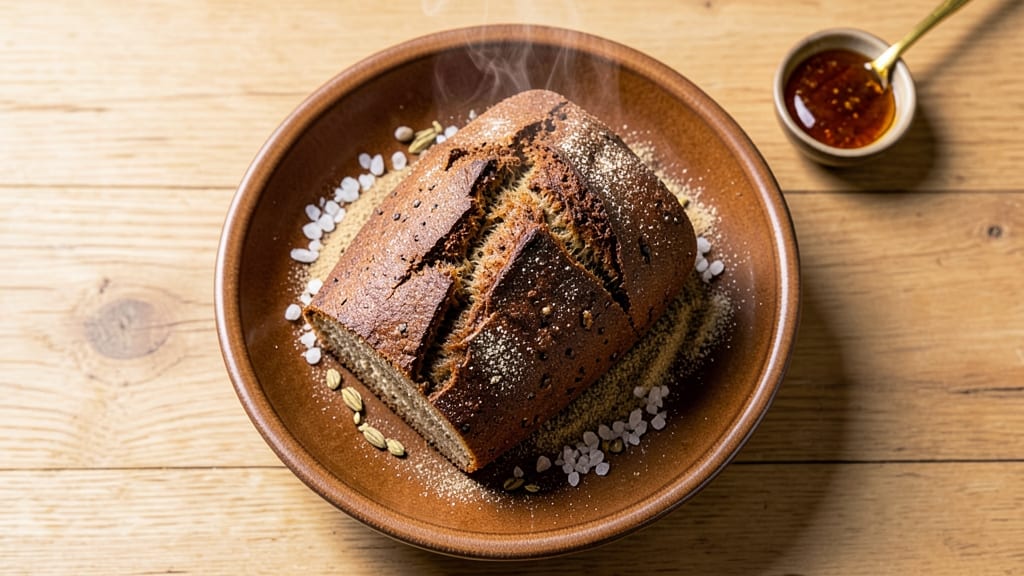
This authentic Swedish rye bread recipe delivers the dense, nutty crumb and caramelized crust you crave—just like from a Swedish bakery. The secret lies in a long fermentation that develops deep malt flavors, while cardamom in the dough adds warmth that lingers with every bite.
I've perfected this version after years of testing, balancing traditional methods with modern shortcuts for home bakers.
The dough requires patience—24 hours of cold fermentation transforms simple ingredients into something extraordinary. Rye flour gives that signature hearty texture, while a touch of honey and malt powder enhances the natural sweetness.
The crust develops a beautiful amber color with just the right crispness when baked with steam. This isn't just bread; it's a flavor experience that pairs perfectly with smørrebrød toppings or Swedish meatballs.
What makes this recipe truly authentic is the attention to detail—from the precise water-to-flour ratio to the proper scoring before baking. The result is a loaf with a dense, slightly tangy crumb and a crust that crackles with caramelized goodness.
No shortcuts here—just the real deal that will impress even the most discerning bread lovers.
Serve it warm with butter, or use it as the perfect foundation for classic Swedish open-faced sandwiches. The possibilities are endless, but the effort is worth every minute. Let's get started on creating your own piece of Swedish tradition.
Ingredients for authentic swedish rye bread
Precision-milled flours, aromatic cardamom, and cold fermentation create this Swedish bakery-style rye bread.
| Ingredient | Amount | Notes |
|---|---|---|
| Dark Rye Flour 🌾 | 3 cups | High-extraction for authentic flavor |
| All-Purpose Flour 🌾 | 1 cup | For structural balance |
| Active Dry Yeast 🍞 | ¼ oz | Or 2.5g for precision |
| Granulated Honey 🍯 | ½ cup | Local preferred for depth |
| Malt Powder 🍺 | 2 tbsp | Dark malt for caramel notes |
| Ground Cardamom 🌿 | 1 tbsp | Freshly ground preferred |
| Diamond Crystal Kosher Salt 🧂 | 1 ½ tsp | Fine grain preferred |
| Cold Water 💧 | 2 ½ cups | Chilled for proper hydration |
| Unsalted Butter 🧈 | 2 tbsp | Cold, cubed for crust |
| Cornmeal 🌽 | 2 tbsp | For dusting and scoring |
| Instant Coffee Granules ☕ | 1 tsp | Enhances rye depth |
The rye flour is non-negotiable for that signature dense crumb and nutty flavor—King Arthur or Bob's Red Mill brands deliver the best results. If you can't find high-extraction rye, a blend of regular rye and whole wheat works, though the texture will be slightly less authentic. The cardamom should be freshly ground; pre-ground spices lose potency quickly. For the best quality, source it from Penzeys Spices or your local Scandinavian market. The yeast must be active dry, not instant, to ensure proper fermentation timing. Store your flours in airtight containers to preserve their freshness, and keep the cardamom in a cool, dark place for up to 6 months.
No malt powder? Substitute with an extra tablespoon of dark brown sugar—it won't be identical, but it adds a touch of caramelization. Running short on cardamom? Cinnamon at half the amount provides warmth, though it lacks the unique citrusy notes. The instant coffee granules can be swapped for a pinch of espresso powder if needed, though the flavor profile will differ slightly. For the butter, European-style unsalted butter like Plugrá enhances the crust's richness, but any good-quality unsalted butter will suffice. If you're baking in a dry climate, consider adding an extra tablespoon of water to compensate for evaporation during the long fermentation.
The dough requires 24 hours of cold fermentation for optimal flavor development, so plan ahead. Store the dough in an airtight container in the refrigerator, and avoid opening it frequently to maintain consistent temperature. Once baked, the loaf keeps well at room temperature for 3-4 days wrapped in a clean kitchen towel. For longer storage, freeze the loaf in slices, separated by parchment paper, and reheat in a 350°F oven for 5-7 minutes to restore freshness. The crust's crispness is best enjoyed within the first day, but the dense crumb remains delicious for several days.
Why You'll Love This Recipe
- No-Knead Magic: The dough comes together in minutes—just mix, rest, and bake. I swear, the yeast and malt powder do all the heavy lifting while you sip coffee.
- Honey-Rich Depth: That touch of granulated honey isn’t just sweet—it caramelizes into a subtle, complex flavor. The rye’s earthy bite and honey’s warmth? Chef’s kiss every time.
- Weeknight Workhorse: Slice it fresh for breakfast, toast it for sandwiches, or pack it for lunches. My kids grab it straight from the fridge—no reheating needed, just pure satisfaction.
- Budget-Friendly Staple: Dark rye flour might sound fancy, but it stretches further than white bread. A single batch feeds my family for days, and the leftovers? Even better the next day.
Step-by-step instructions for authentic Swedish rye bread
Mastering this recipe delivers a dense crumb with a signature cardamom-infused crust—exactly how Swedish bakeries achieve their signature texture.
Hydrate the Dough with Cold Water and Honey
In a large mixing bowl, combine the 3 cups dark rye flour and 1 cup all-purpose flour. Create a well in the center and add the 0.25 oz active dry yeast, 1 tbsp ground cardamom, 1.5 tsp diamond crystal kosher salt, 2 tbsp malt powder, and 1 tsp instant coffee granules. Mix dry ingredients thoroughly to distribute the yeast and spices evenly.
Gradually pour in the 2.5 cups cold water while stirring with a wooden spoon. The dough will be thick and shaggy at first. Add the 0.5 cup granulated honey and mix until fully incorporated. The cold water prevents premature yeast activation, giving you control over fermentation timing. Cover the bowl with a damp kitchen towel and let rest for 30 minutes at room temperature.
Knead and Develop Gluten for Structure
After the initial rest, transfer the dough to a lightly floured surface. Knead for 8-10 minutes by hand, using a folding technique (stretch and fold) to strengthen the gluten. The dough should become smoother and more elastic, though it will remain dense compared to wheat bread. If it feels too sticky, add 1 tablespoon of all-purpose flour at a time until workable.
Return the dough to the bowl, cover again, and let rise at room temperature for 2-3 hours, or until it has doubled in volume. Swedish rye dough ferments slower than wheat dough due to its high acidity and density. Patience here ensures proper flavor development and texture. Gently press the dough—it should spring back slowly rather than immediately.
Shape and Score for Authentic Presentation
Turn the risen dough onto a lightly cornmeal-dusted surface. Gently shape it into a round loaf by folding the edges toward the center, creating surface tension. Place the dough seam-side down on a parchment-lined baking sheet. Using a sharp knife or razor, score the top in a decorative pattern—traditional Swedish rye often features a cross or simple geometric cuts. This prevents over-expansion and adds visual appeal.
Cover the shaped loaf loosely with plastic wrap and let proof for an additional 1-2 hours until it has risen noticeably. The dough should feel slightly springy when pressed. Preheat your oven to 375°F during the final proofing stage to ensure it's ready when the bread goes in.
Bake with Steam for Crispy Crust
Place the baking sheet in the preheated oven. Immediately pour 1 cup of hot water into the bottom of the oven to create steam—this is critical for developing the signature crisp crust. Bake for 45-50 minutes until the crust is deep golden brown and the internal temperature reaches 205°F. The bread should sound hollow when tapped on the bottom.
Remove from the oven and brush the warm crust with melted 2 tbsp unsalted butter for added richness. Let cool on a wire rack for at least 1 hour before slicing. The interior should be dense yet tender, with a subtle sweetness from the honey and malt, while the crust delivers that unmistakable cardamom aroma.
Pro Tips For Making Authentic Swedish Rye Bread
- Bloom the Yeast First: Skip mixing yeast into dry ingredients—dissolve it in warm (not hot) water with honey and a pinch of salt for 5–10 minutes until frothy. This guarantees it’s active before meeting the rye’s stubborn acidity, which can otherwise leave your dough sluggish.
- Sift the Rye Twice: Dark rye flour is dense and clumpy. Sift it before measuring into the bowl, then sift again after adding all-purpose flour. This avoids thick pockets that make kneading uneven and weaken gluten development—critical for that classic chewy texture.
- Don’t Over-Knead the Dough: Rye dough is fragile. After 8–10 minutes of mixing (by hand or mixer), it’ll look shaggy but resist stretching. Overworking it turns tough; underworked dough collapses. Test with the "windowpane" trick—stretch a small piece thinly; if it tears easily, stop.
- Steam the Loaf: Place a metal bowl of boiling water on the oven rack before baking. The steam mimics Swedish bakery conditions, giving your crust that deep amber color and preventing a dry exterior. Ignore this, and you’ll end up with a sad, pale loaf—trust me, I’ve done it.
Best sauces and condiments for this authentic swedish rye bread
Sweet Butter Spread
The classic Swedish pairing is smörrebröd butter—mix ½ cup softened unsalted butter with 1 tsp lemon zest and 1 tsp fresh dill. This bright, herby spread cuts through the bread's richness while enhancing its nutty depth.
I like to add a pinch of ground cardamom for extra warmth that mirrors the bread's flavor. 🧈
Smoked Salmon Topping
For a true Swedish smørrebrød experience, layer 4 oz smoked salmon on thick slices of the warm rye. Add ¼ cup crème fraîche mixed with 1 tsp capers and a few red onion slices.
The bread's dense texture holds up perfectly to the salmon's moisture, while the tangy crème fraîche balances the smokiness. 🐟
Mustard and Herring
Create a bold contrast with 2 tbsp whole-grain mustard mixed with 1 tbsp sour cream and topped with 3 oz pickled herring. The mustard's sharpness and herring's briny tang create a perfect balance with the bread's sweet, cardamom-infused crust. Serve with thinly sliced cucumber for freshness. 🌶️
Cheese Pairings
Swedish Vasterbottenost or Gammelost cheese pairs beautifully with this bread. Spread 2 oz of the cheese on warm slices, then top with sliced apples or lingonberry jam. The cheese's caramelized sweetness complements the bread's malt notes, while the fruit adds a bright acidity. 🧀
Caramelized Onion Jam
Make a simple jam by cooking 2 cups thinly sliced onions with 2 tbsp brown sugar and 1 tbsp balsamic vinegar until deeply caramelized. Spread this sweet-savory jam on toasted slices of the rye bread. The jam's depth enhances the bread's natural flavors while adding a luxurious texture. 🍯
Sweet Toppings
Finish with lingonberry jam or cloudberry jam for a sweet contrast. The tart berries cut through the bread's richness, creating a perfect balance. I also love adding thinly sliced almonds for crunch. This combination is especially popular during Swedish Julbord holiday feasts. 🍓
Nutrition facts
Frequently asked questions
Why does Swedish rye bread need such a long fermentation?
The extended 24-hour cold fermentation develops the bread's signature tangy depth and complex malt flavors. This slow process breaks down starches into sugars, creating that caramelized sweetness and improving digestibility. Traditional Swedish bakeries use this method to achieve the bread's characteristic nutty, slightly sour profile that sets it apart from quicker recipes.
Can I substitute dark rye flour with regular rye flour?
Regular rye flour won't give you the same dense texture or rich flavor. For best results, use high-extraction dark rye flour (like King Arthur or Bob's Red Mill). If you absolutely must substitute, blend 2 cups dark rye with 1 cup whole wheat flour—this will give you a closer texture, though the flavor will be slightly less authentic. The dark rye's higher bran content is key for that signature Swedish crumb.
How do I know when the bread is fully baked?
Your bread is done when the internal temperature reaches 205°F and the crust is deep golden brown. It should also sound hollow when tapped on the bottom. For extra assurance, insert a long skewer—it should come out clean. The bread will continue firming up as it cools, so don't overbake just to reach these indicators. Patience here prevents a dry crumb.
What's the best way to store leftover Swedish rye bread?
Wrap the cooled loaf tightly in a clean kitchen towel or beeswax wrap, then store at room temperature for 3-4 days to maintain freshness. For longer storage, freeze slices wrapped in parchment paper between layers. To revive, warm frozen slices in a 350°F oven for 5-7 minutes until crisp. The crust loses crispness after 1-2 days, but the dense crumb stays delicious.
Can I make this bread without cardamom?
Yes, but you'll lose the signature warmth and aromatic depth. Replace the cardamom with ½ tsp cinnamon plus ½ tsp allspice for a similar spiced profile. For a more neutral version, simply omit it—the bread will still taste delicious, just less complex. Cardamom is what gives Swedish rye its distinctive "baker's spice" character that pairs perfectly with smørrebröd toppings.