
Side Dishes
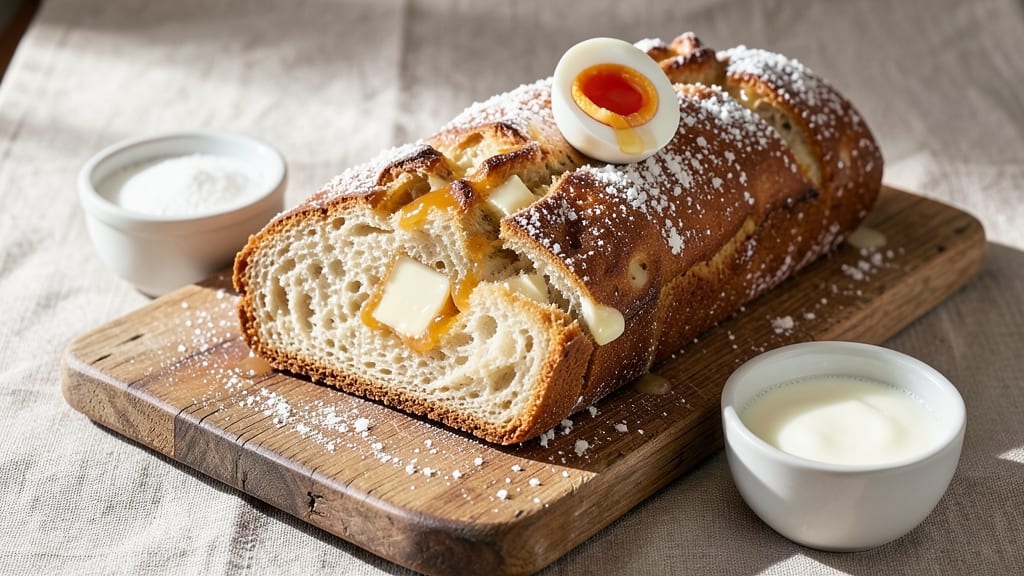
This Azorean sweet bread recipe brings the sun-drenched islands of the Azores to your kitchen table with its signature cinnamon swirls and golden crust. 🌟 Born from centuries of Portuguese baking traditions, this bread is a staple during family gatherings, especially during holidays like Christmas and Easter, where it's often served warm with butter or paired with hearty stews.
The dough is enriched with eggs and butter, creating a tender crumb that contrasts beautifully with the aromatic cinnamon filling.
The secret to achieving that perfect buttery crust and flaky layers lies in the dough's preparation—kneading just until smooth, then resting to relax the gluten before shaping into a classic round loaf.
Traditional Azorean bakers often score the top with a cross or simple lines before baking, allowing the bread to expand evenly while creating a crisp, caramelized finish. This recipe maintains authenticity while adapting to home kitchens, ensuring you get the same satisfying results without specialized equipment.
What makes this bread truly special is its balance of sweetness and warmth, with the cinnamon filling adding depth that lingers on the palate. Each bite delivers a harmonious blend of tender dough and fragrant spice, making it a comforting centerpiece for any meal.
Whether you're celebrating a special occasion or simply craving a taste of the Azores, this recipe delivers restaurant-quality results with just a few simple ingredients and a little patience.
Perfect for breakfast, brunch, or as a dessert-like treat with a cup of coffee, this Azorean sweet bread is a versatile addition to your baking repertoire.
The dough can be made ahead and refrigerated overnight for even better flavor development, while the baking process ensures a crisp exterior and soft interior that will impress everyone at your table. Let's get started on creating this timeless classic!
Ingredients for azorean sweet bread
Six simple ingredients create this Azorean treasure with golden crust and fragrant cinnamon swirls.
| Ingredient | Amount | Notes |
|---|---|---|
| All-Purpose Flour 🌾 | 5 cups | Sifted for even texture |
| Unsalted Butter 🧈 | 1 cup | Cold, cubed for dough |
| Granulated Sugar 🍚 | ½ cup | White or light brown |
| Large Eggs 🥚 | 2 whole | Room temperature preferred |
| Instant Yeast 🍞 | 2 ½ tsp | Active dry works too |
| Whole Milk 🥛 | ½ cup | Warm to 110°F |
| Ground Cinnamon 🌿 | 2 tbsp | Pure, aromatic variety |
| Light Brown Sugar 🍚 | ¼ cup | Packed firmly |
| Salt 🧂 | ½ tsp | Diamond Crystal preferred |
| Vanilla Extract 🌸 | 1 tsp | Pure, high-quality |
| Powdered Sugar 🍚 | ½ cup | For final dusting |
| Coarse Sugar 🍚 | ¼ cup | For sprinkling top |
The flour and butter are your foundation. King Arthur or Gold Medal flour gives the best rise, but any all-purpose will work. For butter, Land O'Lakes or Plugrá brands stay firm when cold—essential for that tender crumb. The cinnamon should be pure, not the grocery store's basic blend. McCormick or Penzeys have excellent quality. Store your flour in the freezer to preserve freshness, and keep butter wrapped in parchment to prevent rancidity. Eggs should be large and fresh; room temperature helps them incorporate smoothly into the dough.
No vanilla extract? Vanilla bean paste or seeds from a pod work beautifully. Swap brown sugar for white if needed, but the molasses in brown sugar adds depth to the flavor. For a dairy-free option, use unsweetened almond milk instead of whole milk, though the texture will be slightly less tender. If you can't find coarse sugar for the top, turbinado sugar is a perfect substitute. The yeast is non-negotiable—if it's old, it won't activate properly. Test it by dissolving a pinch in warm water with a pinch of sugar; if it foams in 5 minutes, it's good to go.
This dough keeps beautifully in the fridge for up to 3 days, wrapped tightly in plastic. For longer storage, freeze shaped loaves for up to 3 months. Thaw overnight in the fridge before baking. The cinnamon filling can be prepped ahead and chilled until ready to use. Once baked, store the bread at room temperature in a bread bag for 2 days, or freeze sliced for 1 month. Reheat slices in a toaster or oven for that fresh-from-the-oven taste.
Why You'll Love This Recipe
- No-Knead Magic: I swear by this dough—just mix, let it rise, and bake. The yeast works its wonder while I sip coffee, and that rich butter-sugar combo makes every bite feel like a hug.
- Golden Crust Secret: That crispy, caramelized top? Pure reward. The sugar and butter create a buttery crack that’s dangerously hard to stop nibbling—even when it’s still warm.
- Breakfast to Dessert: Serve it toasted with jam for breakfast or split open with whipped cream for a lazy afternoon treat. Honestly, I’ve even used leftover slices to make French toast—no judgment.
- Budget-Friendly Staples: Flour, butter, sugar, eggs—these are pantry basics that stretch into something special. A single batch feeds my whole family, and leftovers toast up just as good the next day.
Step-by-step instructions for Azorean sweet bread
Here's the method that delivers those signature cinnamon swirls and golden crust every time.
👨🍳 Step 1: Mix Dough and Let Rise
In a large bowl, combine the 5 cups All-Purpose Flour, 2.5 tsp Instant Yeast, 0.5 tsp Salt, and 0.5 cup Granulated Sugar. Whisk to remove lumps, then cut in the 1 cup Unsalted Butter using a pastry cutter or your fingers until the mixture resembles coarse crumbs.
Make a well in the center and add the 2 whole Large Eggs, 0.5 cup Whole Milk, and 1 tsp Vanilla Extract. Gradually mix until a shaggy dough forms. Knead on a lightly floured surface for 8-10 minutes until smooth and elastic. The dough should be slightly tacky but not sticky—add a little more flour if needed.
Shape into a ball, place in a lightly greased bowl, cover with a damp towel, and let rise in a warm place for 1-2 hours or until doubled in size. I like to use my oven with the light on for consistent warmth. Poke the dough gently—if it springs back slowly, it's ready.
👨🍳 Step 2: Prepare the Filling
In a small bowl, mix together the 2 tbsp Ground Cinnamon, 0.25 cup Light Brown Sugar, and 0.25 cup Coarse Sugar. This aromatic blend is what gives Azorean bread its signature flavor. Set aside until ready to use.
Roll out the risen dough on a lightly floured surface to a 12x16-inch rectangle, about ¼-inch thick. Spread the cinnamon-sugar mixture evenly over the surface, leaving a 1-inch border around the edges. This prevents the filling from leaking out during baking.
Here's the thing—don't be tempted to use too much filling. The border is crucial for that classic swirl shape. Fold the long sides toward the center, then roll tightly from the short end to form a log. The filling should be completely enclosed within the dough.
🔥 Step 3: Shape and Proof the Loaf
Place the rolled dough seam-side down in a 9x5-inch loaf pan that's been lightly greased. Cover with a damp towel and let rise for another 30-45 minutes until the dough has puffed noticeably above the pan. The edges should look slightly rounded and full.
Preheat your oven to 375°F while the dough proofs. The cinnamon filling will release aromas as it bakes, filling your kitchen with that irresistible sweet scent. This is the moment that matters—don't skip the proofing time, even if it seems like the dough isn't quite ready.
Brush the top of the loaf with a little whole milk or egg wash (beat 1 egg with 1 tbsp milk) for a golden finish. Sprinkle any remaining cinnamon-sugar mixture on top for extra flavor and texture. Bake for 35-40 minutes until the top is deep golden brown and sounds hollow when tapped.
⏰ Step 4: Cool and Serve
Remove the bread from the oven and let it cool in the pan for 10 minutes, then transfer to a wire rack to cool completely. This resting period is crucial—it allows the filling to set and prevents the bread from becoming gummy. Real talk: trying to slice it too soon is how you get that sad, sticky mess.
Once cooled, slice the bread into ½-inch thick pieces. Each slice should reveal those beautiful cinnamon swirls throughout. The crust should be crisp and golden, while the interior remains soft and tender. For the ultimate presentation, dust with 0.5 cup Powdered Sugar just before serving.
This bread is best enjoyed fresh, but you can store it in an airtight container at room temperature for up to 3 days. For longer storage, wrap slices individually in plastic wrap and freeze—they'll reheat beautifully in the oven or toaster.
Pro Tips For Making Azorean Sweet Bread
- Weigh Your Butter: I learned this the hard way—measuring butter by volume (especially when it’s soft or warm) leads to a dough that’s either too dry or too greasy. Azorean sweet bread relies on that perfect butter-to-flour ratio for tender layers, so grab a kitchen scale and use 227g (1 cup) of cold, cubed butter—no exceptions.
- Let the Yeast Wake Up: Skip the instant yeast shortcut if you’re in a rush—this dough needs time to develop flavor. Mix the yeast with warm water (110°F/43°C) and 1 teaspoon sugar, then let it sit for 5–10 minutes until foamy before adding it to the flour. Cold water kills it; hot water cooks it. No foam? Start over.
- Knead Just Enough: Overworking the dough is the fastest way to make Azorean sweet bread tough. Once the dough clears the sides of the bowl and pulls away slightly, stop kneading by hand after 8–10 minutes—it’ll finish rising in the fridge. If it’s sticky, add 1 tablespoon flour at a time, but don’t go overboard.
- Chill the Dough Overnight: This isn’t optional—it’s the secret to that melt-in-your-mouth texture. After the first rise, wrap the dough tightly in plastic and refrigerate for 12–24 hours. The cold slows fermentation, deepens the flavor, and makes shaping easier. (Yes, even if you’re impatient like me.)
Troubleshooting perfect results
Dough Too Sticky
If your dough feels overly sticky during kneading, you're likely adding too much flour. The ideal dough should be slightly tacky but not cling to your hands. I find that using King Arthur flour reduces stickiness better than generic brands.
Gradually add flour in 1 tbsp increments while kneading, and avoid overworking the dough—this develops gluten and makes it tough. For extra insurance, chill the dough for 15 minutes before shaping if it's too warm. 🧂
Underproofed Dough
An underproofed loaf will bake up dense and compact rather than light and airy. The dough should double in size during the first rise—if it hasn't after 2 hours, your yeast might be inactive or the environment too cold.
Place the bowl near a warm oven (turned off) with the light on, or use a proofing box set to 80°F. Test readiness by poking the dough: if it springs back slowly, it's ready. Never skip proofing—this is where the magic happens for that tender crumb. ✨
Filling Leaks Out
When the cinnamon-sugar filling escapes during baking, it's usually because the dough wasn't rolled tightly enough or the edges weren't sealed properly. After spreading the filling, fold the dough sides inward first, then roll from the short end to create a tight log.
Press the seam down gently to seal. For extra security, chill the shaped loaf in the fridge for 15 minutes before baking—this helps the filling stay put. 🌿
Pale Crust
A pale crust means the bread didn't brown properly, often from insufficient egg wash or oven temperature fluctuations. Brush the loaf with an egg wash (1 egg + 1 tbsp milk) before baking, then sprinkle with coarse sugar for caramelization.
Preheat your oven to 375°F for at least 15 minutes and use an oven thermometer to confirm accuracy. For a deeper color, broil for 1-2 minutes at the end of baking—just watch closely to avoid burning. 🔥
Gummy Interior
If your bread turns out gummy instead of tender, it likely didn't cool properly after baking. Always let the loaf rest in the pan for 10 minutes before transferring to a wire rack to cool completely. This allows steam to escape and the filling to set.
Slicing too soon traps moisture, making the bread sticky. For extra insurance, dust the slices lightly with powdered sugar before serving—this absorbs excess moisture and adds a sweet finish. 💫
Uneven Rise
An uneven rise often happens when the dough isn't shaped properly or the pan isn't greased well enough. Always use a 9x5-inch loaf pan and grease it thoroughly with butter or oil. Place the dough seam-side down to ensure even expansion.
If the dough puffs more on one side, rotate the pan halfway through proofing. For a foolproof rise, proof the dough in a proofing box or a bowl set over a pot of simmering water to maintain consistent warmth. 💡
Nutrition facts
Frequently asked questions
What makes Azorean sweet bread different from cinnamon rolls?
Azorean sweet bread has a more delicate, tender crumb thanks to its enriched dough (with extra butter and eggs) and a subtle cinnamon-sugar filling that's less sweet than traditional cinnamon rolls. The shaping technique creates elegant swirls rather than thick, gooey layers, and it's often baked in a loaf pan for a more structured form. The crust is also lighter, with a focus on buttery flavor rather than caramelized sweetness.
Can I make this bread without a loaf pan?
Shape the rolled dough into a freeform log or round loaf on a parchment-lined baking sheet. Brush with egg wash and sprinkle with coarse sugar before baking at 375°F for 30-35 minutes. For extra flair, score the top with a cross or simple lines before baking. The texture will be slightly different but still delicious—just watch for faster browning on the bottom.
How do I store leftovers to keep them fresh?
Wrap cooled slices tightly in plastic wrap or store in an airtight container at room temperature for 2 days. For longer storage, freeze slices individually for up to 1 month. To reheat, toast in a toaster or warm in a 300°F oven for 5-7 minutes until golden. The cinnamon filling stays fresh longer when properly sealed—never store the whole loaf wrapped in plastic without cooling first.
What's the best way to adjust the recipe for a gluten-free version?
Replace the all-purpose flour with a 1:1 gluten-free baking flour blend (like Bob's Red Mill 1-to-1) and add 1 tsp xanthan gum to improve texture. Use 1 extra egg (3 total) for structure, and let the dough rest 10 minutes after mixing before kneading. Proofing times may increase—watch for dough to double in size. The filling will still work, but expect a slightly denser crumb compared to traditional bread.
Can I add other spices to the filling?
Traditional Azorean versions stick with cinnamon, but you can experiment with ½ tsp nutmeg or cardamom for warmth or zest of 1 lemon for brightness. For a nutty twist, fold in ¼ cup chopped toasted almonds or walnuts before rolling. Keep additions to 1 tbsp total to maintain the bread's signature flavor balance—too many spices can overpower the delicate dough.