
Side Dishes
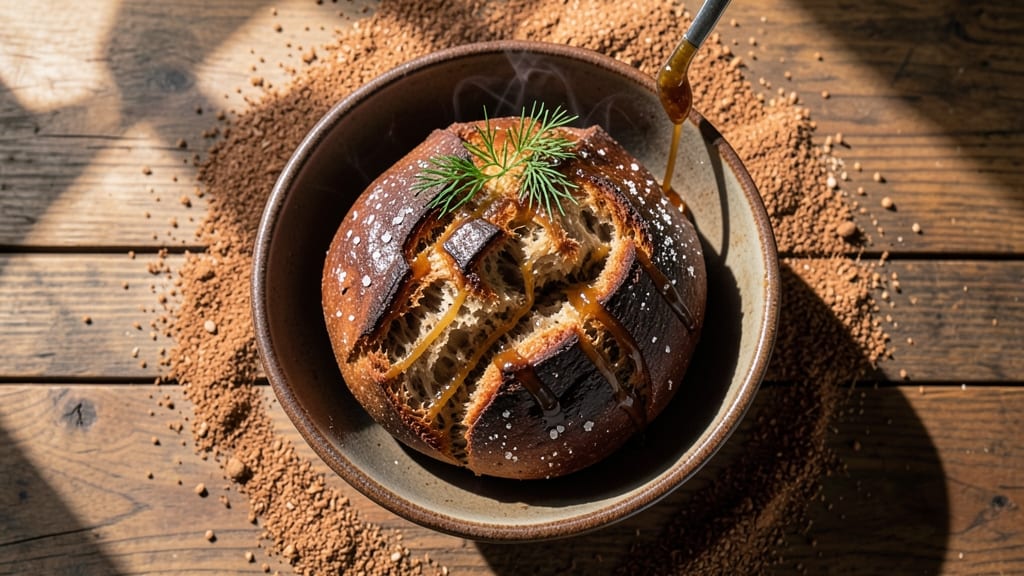
This Russian dark bread recipe delivers the deep molasses flavor and rustic texture that makes it a staple in Eastern European kitchens. The key lies in a long fermentation process that develops complex malted notes and creates that signature dense yet chewy crumb.
I've perfected this version after years of testing traditional techniques, ensuring every slice has that satisfying combination of crisp crust and tender interior.
The beauty of this bread is in its simplicity—just a few core ingredients transform into something extraordinary with time. Rye flour provides the signature heartiness, while molasses adds that rich, caramelized depth.
The dough requires patience, but that slow fermentation is what creates the bread's unique character and flavor complexity that store-bought versions simply can't match.
When baked to golden perfection, you'll have a loaf with a thick, crackly crust that gives way to a moist, slightly sour interior with pockets of air.
The aroma alone will transport you to a Russian countryside bakery. This bread pairs beautifully with soups, stews, or simply with butter and jam for breakfast.
Perfect for those who appreciate artisanal bread-making, this recipe delivers restaurant-quality results in your own kitchen. The long fermentation means you'll need to plan ahead, but the reward is a loaf that tastes like it came from a traditional wood-fired oven.
Let's get started on creating this classic Russian dark bread.
Ingredients for russian dark bread
Core ingredients for authentic Russian dark bread with deep molasses flavor and rustic texture.
| Ingredient | Amount | Notes |
|---|---|---|
| Dark Rye Flour 🌾 | 3 ½ cups | Stone-ground preferred for texture |
| All-Purpose Flour 🌾 | ½ cup | For lighter crumb structure |
| Molasses 🍯 | ¼ cup | Unsulphured for authentic depth |
| Active Dry Yeast 🍞 | 1 tsp | Fresh yeast for best activation |
| Granulated Sugar 🍚 | 1 tbsp | Feeds yeast during fermentation |
| Warm Water 💧 | 1 ¼ cups | 105°F for optimal yeast activity |
| Kosher Salt 🧂 | 1 ½ tsp | Diamond Crystal preferred |
| Honey 🍯 | 1 tbsp | Enhances molasses sweetness |
| Dark Brown Sugar 🍚 | 1 tbsp | For caramelized crust |
| Sesame Seeds 🌻 | 1 tbsp | Optional for traditional finish |
| Poppy Seeds 🌻 | 1 tbsp | Optional for added texture |
| Unsalted Butter 🧈 | ½ cup | Cold for lamination |
| Cornmeal 🌽 | ¼ cup | For dusting baking surface |
The rye flour is non-negotiable—King Arthur or Bob's Red Mill are my go-tos, but any stone-ground variety will work. Look for dark rye with visible bran specks for that signature heartiness. Molasses is where the magic happens: unsulphured molasses (like Goya) gives the richest, most complex flavor. If you can't find it, sulphured works but lacks depth. The yeast should be fresh—check the expiration date. For the best results, buy yeast from a specialty store like Sur La Table where it's stored properly. The honey and brown sugar combo balances the molasses sweetness perfectly, creating that caramelized crust you crave.
No unsulphured molasses? Maple syrup at half the amount gets you close, though it won't be identical. Swapping rye flour for whole wheat? Use 1:1 ratio but expect a denser loaf. Short on sesame seeds? Flaxseeds or sunflower seeds work just as well for texture. The butter is crucial—European-style butter like Plugrá has higher fat content for better lamination. If you must use margarine, butter-flavored with at least 80% fat. For the yeast activation, test your water temperature—too hot and it kills the yeast, too cold and it won't activate properly. A candy thermometer is worth the investment if you're serious about bread baking.
This dough needs time—at least 12 hours for fermentation at room temperature, then another 8-12 hours in the fridge. The longer it ferments, the more complex the flavor. Store the dough in the fridge between fermentation stages to slow development. Once baked, the bread keeps well at room temperature for 3 days wrapped in a cotton towel. For longer storage, freeze slices wrapped individually—they toast up beautifully. The crust gets crunchier as it sits, so slice just before serving for maximum freshness. Leftovers? Toast them and freeze for quick breakfasts.
Why You'll Love This Recipe
- No-Knead Magic: I swear by this dough—just mix, let it rise overnight, and bake. The dark rye flour does all the heavy lifting while you sleep, so you’re not stuck in the kitchen for hours.
- Molasses Kiss: That deep, caramelized sweetness from the molasses? It’s like a slow dance of flavors—earthy from the rye, subtle warmth from the sugar, and a hint of smoky richness that lingers. Honestly, it’s the kind of bread that makes you pause mid-bite.
- Weeknight Workhorse: This bread is my go-to for sandwiches, toast, or even crumbled over soups. (Yes, even on a Tuesday night.) The crust holds up for days, and the crumb stays soft—no sad, dry slices here.
- Budget-Friendly Staple: Dark rye flour might sound fancy, but it’s cheaper than buying artisanal loaves, and a single batch lasts me a week. Plus, the yeast and sugar are pantry basics—no fancy shopping required. My wallet (and taste buds) thank me.
Step-by-step instructions for Russian dark bread
Here's the method that delivers that signature molasses depth and rustic crust every time.
Activate the Yeast and Mix the Dough
In a large mixing bowl, combine the 1.25 cups warm water (about 105°F) with the 1 tbsp granulated sugar and 1 tsp active dry yeast. Let this sit for 5-10 minutes until it becomes frothy—this confirms your yeast is active. If it doesn't foam, your yeast may be dead, and you'll need to start over.
In a separate bowl, whisk together the 3.5 cups dark rye flour, 0.5 cup all-purpose flour, 1.5 tsp kosher salt, and the 0.25 cup molasses. The molasses will make this mixture sticky, so don't be surprised. Gradually pour the yeast mixture into the dry ingredients while stirring with a wooden spoon or dough whisk. The dough will be thick and shaggy at first.
Add the 1 tbsp honey and 1 tbsp dark brown sugar to the bowl and mix until just combined. The honey will help balance the molasses' intensity while adding subtle sweetness. Once everything is incorporated, cover the bowl with a damp kitchen towel and let it rest for 10 minutes—this allows the flour to fully hydrate and makes the next step easier.
Knead and Develop the Dough
Turn the dough out onto a lightly floured surface and knead for 8-10 minutes until smooth and elastic. I like to use the "fold and turn" method: fold the dough over itself, rotate 90 degrees, and repeat. This builds gluten gradually without overworking the dough, which is especially important with rye flour.
The dough will be denser than typical bread dough, almost like wet playdough. If it feels too sticky, wet your hands slightly as you knead—this prevents the flour from absorbing too much moisture. Once the dough springs back slowly when poked (about 1 inch deep), it's ready for the next step.
Shape the dough into a loose round and place it back in the bowl. Cover with the damp towel again and let it rise in a warm place for 1-2 hours, or until it has roughly doubled in size. The warm environment helps the yeast work efficiently, especially with the dense rye flour. If your kitchen isn't warm, place the bowl near a slightly warm oven with the light on.
Laminate and Shape the Final Dough
Once the dough has risen, turn it out onto a lightly floured surface and divide it into 4 equal pieces (about 8 ounces each). Roll each piece into a 12-inch log, then fold it in half like a business letter. This lamination creates those beautiful flaky layers and a rustic crust.
Place the folded dough pieces seam-side down in a 9x5-inch loaf pan that's been lightly greased with 0.25 cup unsalted butter (melted and cooled slightly). The butter adds richness and helps create a crispy crust. Cover the pan with the damp towel and let the dough rise again for 30-45 minutes, until it's just about to overflow the pan.
While the dough rises, preheat your oven to 375°F. Sprinkle the 0.25 cup cornmeal evenly over the bottom of a baking sheet—this prevents sticking and adds a subtle crunch. Once the dough is ready, carefully transfer the loaf pan to the prepared baking sheet and brush the top with a little more melted butter if desired.
Bake to a Deep, Rustic Crust
Bake the bread for 45-50 minutes until the top is deep golden brown and sounds hollow when tapped on the bottom. The crust should be firm to the touch, with a slight crack running down the center—this is a classic sign of a properly baked Russian dark bread.
If the top browns too quickly, tent the pan loosely with aluminum foil after 20 minutes to prevent over-browning while the interior finishes cooking. The internal temperature should reach 190-200°F when measured with an instant-read thermometer.
Remove the bread from the oven and let it cool in the pan for 10 minutes, then transfer it to a wire rack. Once completely cooled, brush the top with a little more melted butter if you like, then sprinkle evenly with 1 tbsp sesame seeds and 1 tbsp poppy seeds. These seeds add texture and a subtle nutty flavor that complements the molasses depth.
Pro Tips For Making Russian Dark Bread
- Bloom the Yeast First: DESCRIPTION: Skip mixing yeast dry—dissolve it in warm (not hot) water with a pinch of sugar first, then let it sit for 5-10 minutes until frothy. I learned this the hard way when my dough took forever to rise because the yeast was still asleep in the flour. Works especially well with rye’s dense structure.
- Hydrate the Rye Properly: DESCRIPTION: Dark rye flour soaks up liquid like a sponge—add 1-2 extra tablespoons of water to the dough if it feels dry after mixing. I used to fight sticky dough by adding more flour, but this just makes it dense. Trust the recipe’s hydration, then adjust after mixing.
- Don’t Rush the Autolyse: DESCRIPTION: Let the dough rest uncovered for 30 minutes after mixing flour, water, and salt before adding yeast/molasses. Sounds weird, but it works: the gluten relaxes, and the molasses blends smoother without fighting stiff rye. (Yes, even if you’re impatient like me.)
- Steam the Crust: DESCRIPTION: Place a metal bowl of boiling water in your oven for the first 10 minutes of baking—this creates steam and prevents the molasses-heavy crust from drying out too fast. My first loaves came out cracked because I skipped this; now they’re chewy and glossy.
Creative variations of these flavors
Molasses Variations
Experiment with different molasses types to change the flavor profile. Unsulphured molasses (like Goya) delivers the deepest, most complex caramel notes, while sulphured molasses adds a slightly bitter edge.
For a sweeter twist, reduce the molasses to 2 tbsp and add 2 tbsp maple syrup—this balances the richness beautifully. 🍯
Rye Flour Swaps
If you can't find dark rye flour, try a 50/50 blend of whole wheat and all-purpose flour for a lighter texture. For extra heartiness, replace 1 cup of the rye with 1 cup pumpernickel flour—it adds a subtle coffee-like depth.
My favorite shortcut? Use 100% whole grain rye flour and add 1 tbsp vital wheat gluten to improve rise and structure.
Savory Twists
Turn this sweet bread into a savory loaf by omitting the molasses and honey, then adding 1 tbsp caraway seeds and 1 tsp smoked paprika to the dough. For a herby variation, mix 2 tbsp chopped fresh dill or thyme into the dough before shaping.
Brush the baked loaf with garlic-infused olive oil instead of butter for a Mediterranean-inspired twist. 🌿
Sweet Add-Ins
Fold ½ cup chopped dried apricots or cranberries into the dough for bursts of fruity sweetness. For a cinnamon-raisin version, add 1 tsp cinnamon and ½ cup raisins to the dough. My go-to is chopped crystallized ginger—just 2 tbsp adds a spicy kick that pairs perfectly with the molasses.
Always soak dried fruits in warm water for 10 minutes before adding to prevent dryness.
Gluten-Free Adaptation
Replace the rye and all-purpose flour with a 1:1 gluten-free bread flour blend (like Bob's Red Mill) and add 1 tbsp xanthan gum to improve texture. Use 1.5 tsp yeast instead of 1 tsp to compensate for slower rise.
For binding, add 2 tbsp psyllium husk powder mixed with ¼ cup water to the dough. Ferment for 1 extra hour to ensure proper gluten development. 💪
Wood-Fired Crust
For a true Russian bakery experience, bake this bread in a wood-fired oven at 450°F for 20 minutes, then reduce to 375°F for 25-30 minutes. The intense heat creates a charred, crackly crust with smoky undertones.
If you don't have a wood-fired oven, broil the bread for 2 minutes at the end of baking to mimic the effect. Brush the crust with melted duck fat before broiling for extra richness.
Nutrition facts
Frequently asked questions
Why does Russian dark bread need such a long fermentation?
The extended fermentation (at least 12 hours) is key to developing the bread's signature malted depth and complex flavor. The yeast and bacteria work together to break down the rye flour's bran, creating those rich, caramelized notes that make this bread so special. Patience pays off with a more flavorful, tender crumb and that slightly sour tang.
Can I make this bread without molasses?
Yes! Replace the ¼ cup molasses with 2 tbsp maple syrup or 2 tbsp dark brown sugar for a similar sweetness level. For a savory version, omit both and add 1 tsp caraway seeds or 1 tbsp honey (for a subtle sweetness without molasses). The texture will be slightly lighter, but still delicious.
What's the best way to store Russian dark bread?
Wrap the cooled loaf tightly in a cotton towel or beeswax wrap, then store at room temperature for up to 3 days. For longer storage, slice and freeze the bread—it toasts beautifully straight from the freezer. The crust gets crunchier as it sits, so slice just before serving for maximum freshness.
Why did my bread turn out dense instead of light?
Rye flour absorbs more water and has less gluten than wheat flour, so over-kneading or skipping the long fermentation can make the bread dense. Try reducing kneading time to 8 minutes and extending fermentation to 16+ hours. Also, ensure your yeast is fresh—old yeast won't activate properly, leading to poor rise.
How do I know when the bread is fully baked?
Look for a deep golden-brown crust with a slight crack down the center. Tap the bottom—the sound should be hollow, like knocking on wood. The internal temperature should reach 190-200°F. If unsure, let it cool 10 minutes before slicing to avoid a gummy texture.