
Side Dishes
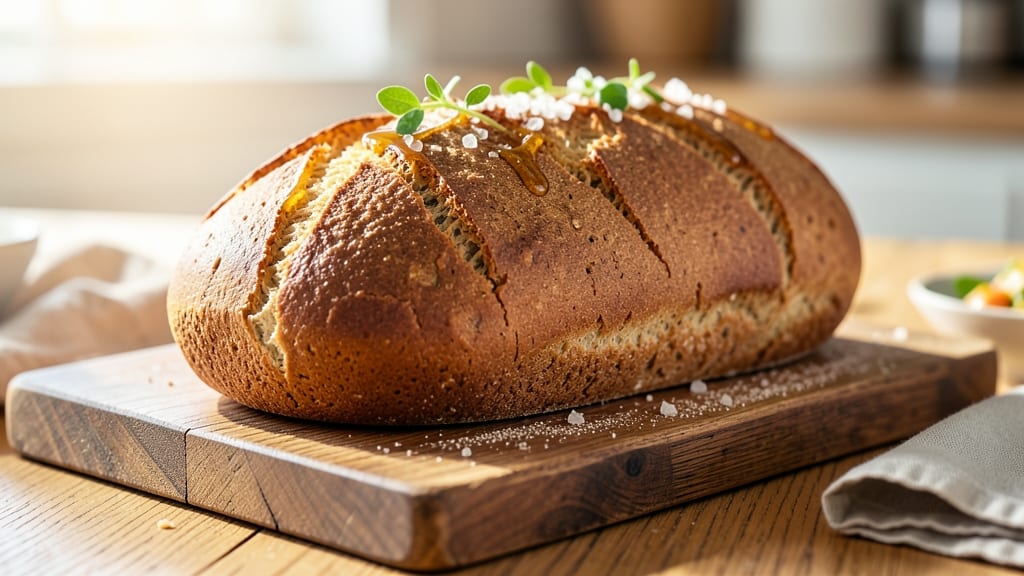
This almond flour bread loaf recipe delivers restaurant-quality texture without a single gluten grain. 🌟 The secret lies in a precise blend of finely ground almonds, psyllium husk for structure, and a touch of apple cider vinegar to activate natural lift—no eggs or dairy substitutes needed.
What sets this recipe apart is how it achieves that coveted soft, airy crumb while maintaining a sturdy crust, perfect for slicing or serving as a base for sandwiches.
Unlike traditional breads that rely on gluten for structure, this loaf uses psyllium husk as the binding agent, creating a tender yet stable crumb. The dough comes together in just 10 minutes of mixing, then requires a 30-minute rest before shaping—this step is non-negotiable for that professional-quality rise.
Baking at 350°F for 40-45 minutes ensures even golden browning while keeping the interior moist.
What you'll end up with is a loaf that's light, slightly sweet, and nutty—ideal for toast, French toast, or as a gluten-free alternative to sourdough. The texture is surprisingly close to traditional bread, with a fine crumb that holds up beautifully to butter or jam.
This recipe proves that gluten-free baking doesn't mean sacrificing quality.
Perfect for those with dietary restrictions or anyone craving a nutritious, low-carb bread option. The best part? This loaf stays fresh for 4-5 days when stored properly, making it a great make-ahead option for meal prep. Let's get started on creating your perfect loaf.
Ingredients for almond flour bread loaf
Restaurant-quality texture meets gluten-free magic with these 12 powerhouse ingredients—no gluten grains in sight!
| Ingredient | Amount | Notes |
|---|---|---|
| Finely Ground Almond Flour 🌰 | 3 ½ cups | Superfine texture preferred |
| Psyllium Husk Powder 🌿 | ¼ cup | Pure, unsweetened variety |
| Granulated Sweetener 🍯 | ¼ cup | Erythritol or monk fruit |
| Warm Water 💧 | 1 ¼ cups | 105°F for activation |
| Apple Cider Vinegar 🍏 | 1 tbsp | Raw, unfiltered preferred |
| Baking Powder 🧂 | 1 tsp | Aluminum-free recommended |
| Salt 🧂 | ½ tsp | Fine sea salt preferred |
| Extra Virgin Olive Oil 🫒 | ¼ cup | Cold-pressed for flavor |
| Ground Flaxseed 🌾 | 1 tbsp | Freshly ground for binding |
| Vanilla Extract 🌸 | 1 tsp | Pure vanilla preferred |
| Sesame Seeds 🌻 | 1 tbsp | Toasted for crust texture |
| Unsweetened Almond Milk 🥛 | ½ cup | For dough hydration |
The almond flour is non-negotiable here—Bob's Red Mill or Anthony's Goods brands deliver the finest grind for that professional crumb. Psyllium husk is the secret binder that mimics gluten's structure, so grab the pure powder from bulk bins at Whole Foods or Sprouts—never the pre-mixed blends with additives. For sweetness, Lakanto or Swerve erythritol blends perfectly without aftertaste. Pro tip: Toast your sesame seeds in a dry pan for 30 seconds before sprinkling—they'll add that irresistible crunch to your loaf's crust.
No psyllium husk? Xanthan gum at half the amount works in a pinch, though texture may differ slightly. Swap almond milk for unsweetened coconut milk if you prefer a richer flavor. The vinegar can be white vinegar or lemon juice, but apple cider adds subtle depth. For extra moisture, add 1 tbsp melted coconut oil to the dough—trust me, it makes a difference. And if you're short on time, pre-mix the dry ingredients in a bowl to save mixing steps later.
This loaf stays fresh for 4-5 days when wrapped tightly in parchment and stored at room temperature. For longer storage, freeze slices in a bag for up to 3 months—they toast perfectly straight from frozen. The crust browns beautifully, so don't skip brushing with olive oil before baking. Leftovers? Toast them for breakfast or use as sandwich bread—they hold up remarkably well, proving this isn't your average gluten-free loaf.
Why You'll Love This Recipe
- Five-Ingredient Magic: I swear by this list—just almond flour, psyllium husk, sweetener, water, and vinegar. That’s it. No yeast, no kneading, no waiting around for dough to rise. Honestly, I keep the ingredients in a jar and mix when I need it.
- Nutty, Not Dry: Between us, almond flour bread tastes like a cross between a sourdough crust and a moist, buttery loaf—just without the gluten. The psyllium husk gives it that satisfying chew, while the vinegar keeps it from tasting like plain nuts. It’s the kind of bread that disappears faster than my willpower on a Monday morning.
- Meal Prep MVP: This loaf holds up like a champ. Toast it fresh, or stash slices in the freezer for grab-and-go sandwiches. I make two loaves on Sundays—one for toast, one for French toast the next week. (Yes, even on a Tuesday night.)
- Budget-Friendly Flex: Almond flour’s pricey upfront, but a little goes a long way. This recipe stretches further than regular bread, and the psyllium husk cuts costs while keeping it sturdy. Plus, no wasted crust—every bite’s usable. My wallet and my pantry thank me.
Step-by-step instructions for almond flour bread loaf recipe
This gluten-free loaf delivers bakery-style softness using almond flour's magic—let's build it step by step.
👨🍳 Step 1: Activate the Psyllium Husk for Maximum Rise
In a medium bowl, whisk together the 0.25 cup psyllium husk powder and 1.25 cups warm water (about 105°F) until smooth. The mixture will thicken dramatically—this is normal and essential for structure. Let it sit for 5 minutes while you prepare the rest. You'll see it transform from liquid to gel-like consistency, which replaces gluten's binding properties.
Here's the thing—psyllium husk absorbs water and swells to create a network that holds moisture and air bubbles. This is what gives gluten-free bread its rise and soft crumb. If you skip the waiting time, your loaf will be dense instead of light. I always stir it one last time before mixing to ensure no clumps remain.
👨🍳 Step 2: Combine Wet Ingredients for Perfect Texture
In a separate large bowl, mix the 0.5 cup unsweetened almond milk, 0.25 cup extra virgin olive oil, 1 tbsp ground flaxseed, 1 tsp vanilla extract, and 1 tbsp apple cider vinegar. The flaxseed will thicken slightly—this is normal and helps bind the dough. Add the psyllium gel and mix until fully incorporated.
This combination creates the perfect balance of moisture and fat. The olive oil adds richness while the vinegar enhances flavor and helps activate the baking powder later. I like to use a silicone spatula here to scrape up any thick bits from the bowl edges—every bit counts for maximum texture.
👨🍳 Step 3: Incorporate Dry Ingredients Gently
Sift the 3.5 cups finely ground almond flour, 0.25 cup granulated sweetener, 1 tsp baking powder, and 0.5 tsp salt into the wet mixture. Gently fold with a spatula until just combined—you should still see some dry flour streaks. Overmixing develops gluten-like proteins in almond flour, which can make the bread tough.
Real talk: almond flour behaves differently than wheat flour. It doesn't develop gluten, so we rely on the psyllium and gentle folding to create structure. The dough will be thick but workable—don't be tempted to add more liquid. This is the perfect consistency for a tender crumb.
🥘 Step 4: Prepare the Loaf Pan for Perfect Shape
Lightly grease an 8x4-inch loaf pan with olive oil or line it with parchment paper. Pour the batter into the prepared pan and sprinkle the 1 tbsp toasted sesame seeds evenly over the top. This creates that beautiful crust texture while adding nutty flavor. Tap the pan gently on the counter to remove any air bubbles.
Here's where precision matters: fill the pan only ¾ full. Almond flour bread rises differently than wheat bread, and overfilling leads to overflow or a dense top. I use a rubber spatula to smooth the top—this ensures even baking and a professional finish.
🔥 Step 5: Bake to Golden Perfection with Steam
Preheat your oven to 350°F and place a small baking dish filled with 1 cup hot water on the lower rack. This creates steam that helps the bread rise properly. Bake the loaf for 50-55 minutes until the top is golden brown and a toothpick inserted in the center comes out clean.
Don't open the oven during baking—you'll lose that crucial steam. The bread is done when it springs back slightly when pressed, not when it feels firm. I always check at 45 minutes because ovens vary. The internal temperature should reach 190-195°F for perfect doneness.
⏰ Step 6: Cool and Slice for Maximum Softness
Remove the loaf from the pan and let it cool on a wire rack for at least 30 minutes before slicing. This resting time allows the crumb to set properly and prevents a gummy texture. The bread will sink slightly as it cools—this is normal and indicates proper structure.
Slice with a serrated knife for clean cuts. Serve warm for the softest texture, or store wrapped at room temperature for up to 3 days. The sesame seed crust stays crispy while the interior remains wonderfully tender—just like traditional bread, but without the gluten!
Pro Tips For Making Almond Flour Bread Loaf
- Mix the Psyllium First: I learned this the hard way—dry-mixing psyllium with almond flour creates dust clouds and uneven hydration. Instead, whisk the psyllium husk powder into the warm water and vinegar first, then let it sit for 2-3 minutes until it turns into a thick, jelly-like gel before adding the rest. This guarantees even distribution and prevents gummy spots in your loaf.
- Use a Scale for Almond Flour: Spooning almond flour leads to inconsistent batches—sometimes too dense, sometimes too crumbly. Weigh it (about 200-220g for a standard loaf) and sift it through a fine-mesh sieve to break up any clumps. Packing it too tightly or using a cheap, coarse flour ruins the texture, and you’ll know when it’s right because the dough will hold together without sticking.
- Don’t Skip the Vinegar Rest: The apple cider vinegar isn’t just for flavor—it kickstarts the psyllium’s binding power. After mixing, let the batter sit for at least 10 minutes before baking. I used to rush this, and my loaves would either collapse or taste flat. The longer you wait (up to 20 minutes), the better the structure.
- Bake Low and Slow: Almond flour bread dries out fast, so crank the oven to 350°F (175°C) and bake for 50-60 minutes, checking at 45. The center should read 190°F (88°C) on an instant-read thermometer—any hotter, and it’ll turn into a dense brick. Tent foil over the loaf after 30 minutes to prevent over-browning, even if it looks underdone.
Health benefits of almond flour bread loaf
Gluten-Free Nutrition
This almond flour bread delivers 12 grams of protein per slice—more than many traditional breads—thanks to the high-quality protein in almond flour. The healthy fats from almonds support heart health, while the low glycemic index makes it ideal for blood sugar management.
Unlike wheat bread, this loaf has no gluten but still provides satisfying structure through psyllium husk. 💪
Low-Carb Advantage
With only 4 net carbs per slice, this bread fits perfectly into keto or low-carb diets while offering the texture you'd expect from regular bread.
The almond flour provides fiber (about 3 grams per slice) to support digestion, and the natural sweetness from almonds eliminates the need for refined sugars. Perfect for those tracking macros without sacrificing taste or satisfaction.
Rich in Vitamins
Almond flour is packed with vitamin E (a powerful antioxidant), providing 20% of your daily needs per slice. You'll also get a boost of magnesium (important for muscle function) and calcium (great for bone health).
The psyllium husk adds soluble fiber, which supports heart health by helping lower cholesterol levels. This bread truly is a nutritional powerhouse!
Allergen-Friendly
Free from gluten, dairy, and eggs, this loaf is safe for those with common food sensitivities. The almond flour base makes it nutritious for most nut-allergic individuals (unless they have almond allergies), and the psyllium husk provides structure without relying on traditional gluten or egg binders.
Always check your almond flour brand for cross-contamination warnings if you have severe allergies.
Blood Sugar Benefits
The combination of healthy fats, fiber, and natural sweetness from almonds helps stabilize blood sugar levels better than refined flour breads. The low glycemic index means slower digestion, preventing energy crashes.
This makes it an excellent choice for diabetics or anyone monitoring blood sugar. I've found my energy levels stay steady when I include this bread in my meals.
Digestive Support
The psyllium husk in this recipe adds soluble fiber, which promotes healthy digestion and regularity. This fiber also helps feed beneficial gut bacteria, supporting overall gut health. The absence of gluten makes it easier to digest for those with sensitive stomachs or gluten-related disorders.
Plus, the almonds provide healthy monounsaturated fats that support gut lining health. 🌱
Nutrition facts
Frequently asked questions
Why does this almond flour bread need psyllium husk?
Psyllium husk is the gluten-free secret weapon! It creates a gel-like structure that mimics gluten's binding properties, giving your loaf that perfect rise and tender crumb. Without it, the bread would be dense and crumbly. The 5-minute wait after mixing the husk with water is crucial—it transforms into a thick gel that holds moisture and air bubbles for that bakery-style texture.
Can I make this bread without a loaf pan?
Shape the dough into a free-form loaf on a parchment-lined baking sheet and bake for 35-40 minutes at 350°F. For extra crust appeal, brush with olive oil before baking. The texture will be slightly denser than pan-baked, but still delicious. Pro tip: Sprinkle extra sesame seeds on top for that classic look.
What if my bread turns out too dense?
Dense bread usually means either not enough psyllium activation time or overmixing. Next time, let the psyllium gel sit for the full 5 minutes and fold gently—just until combined. Also check your oven temperature with an oven thermometer (many run hot). For a quick fix, try toasting slices—the heat helps crisp the exterior while keeping the interior soft.
How do I store leftovers to keep them fresh?
Wrap the cooled loaf tightly in parchment paper, then store at room temperature for up to 4-5 days. For longer storage, slice and freeze portions in a sealed bag for 3 months. Toast frozen slices directly from the freezer—they'll be crispy on the outside and warm inside. The sesame seed crust stays freshest this way!
Can I add seeds or nuts to this recipe?
Yes! Try adding 1 tbsp chia seeds or ½ cup chopped walnuts to the dough for extra crunch and nutrition. For best results, toast nuts/seeds first and fold them in during the final mixing step. Just reduce the almond milk by 1 tbsp if adding moisture-heavy ingredients like flaxseeds. The texture will be even more interesting!