
Side Dishes
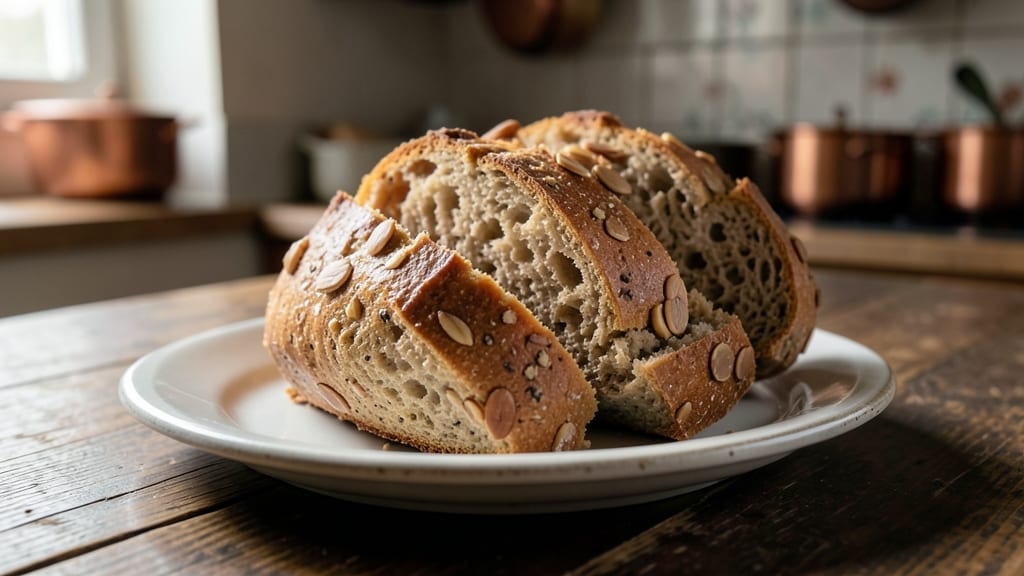
This almond sourdough bread recipe transforms your kitchen into a bakery with its nutty crust and pillowy crumb—a perfect blend of rustic tradition and almond richness.
The secret lies in integrating almond flour into the dough, creating a texture that's both tender and slightly crisp, with a subtle sweetness that lingers. I've perfected this recipe over years of baking, ensuring every slice delivers that satisfying contrast between the chewy interior and the golden, almond-kissed crust.
What sets this recipe apart is the balance of hydration and kneading time, which prevents a dense crumb while enhancing the almond flavor. The dough incorporates almond flour and almond milk, giving it a delicate nuttiness that pairs beautifully with the tangy sourdough.
Whether you're a seasoned baker or a beginner, this method is designed to be foolproof, with clear steps for mixing, proofing, and baking to achieve that signature almond sourdough experience.
The result is a loaf that's vegetarian-friendly and packed with natural flavor, requiring no added sweeteners or artificial ingredients. The almond elements infuse the bread with a subtle richness, making it ideal for toast, sandwiches, or simply enjoying on its own with a spread of butter.
Each slice reveals a perfectly balanced texture—crisp on the outside, soft and airy within, with a hint of almond aroma that elevates every bite.
For those who love customization, you can experiment with add-ins like chia seeds, flaxseeds, or a drizzle of honey before baking. This recipe scales easily, so you can bake a single loaf for personal enjoyment or double the batch for sharing.
Let’s get started on creating your own almond sourdough masterpiece—one that will impress even the most discerning bread lovers.
Ingredients for almond sourdough bread
Almond flour, sourdough starter, and butter create this rich, pillowy loaf with nutty crunch.
| Ingredient | Amount | Notes |
|---|---|---|
| Active Sourdough Starter 🍞 | ½ cup | Unfed, bubbly starter |
| All-Purpose Flour 🌾 | 2 cups | White or bread flour preferred |
| Almond Flour 🥜 | 1 ½ cups | Fine-ground, blanched almonds |
| Unsweetened Almond Milk 🥛 | 1 ¼ cups | Full-fat for best texture |
| Granulated Sugar 🍚 | ¼ cup | White or raw cane sugar |
| Large Eggs 🥚 | 2 whole | Room temperature |
| Unsalted Butter 🧈 | ½ cup | Cold, cubed for dough |
| Kosher Salt 🧂 | 1 ½ tsp | Diamond Crystal preferred |
| Instant Yeast 🍄 | ¼ tsp | For extra rise |
| Olive Oil 🫒 | 1 tbsp | For greasing loaf pan |
| Coarse Cornmeal 🌽 | ¼ cup | For dusting pan |
| Toasted Almond Slices 🥜 | ¼ cup | For crust decoration |
| Chia Seeds 🌱 | 1 tbsp | Optional add-in |
The almond flour is non-negotiable here—Bob's Red Mill or Anthony's Goods brands give the best texture. Look for fine-ground, blanched almonds to avoid grit. The almond milk should be full-fat (like Silk or Califia Farms) for that signature richness. If you're using a sourdough starter, make sure it's bubbly and active, not sluggish. The butter matters too—Plugrá or Land O'Lakes work best when cold for that perfect crumb. For the almond slices, toast them until golden for maximum crunch—3-4 minutes at 350°F does the trick.
No almond flour? Substitute with extra all-purpose flour, but expect a less nutty flavor. Short on almond milk? Oat milk or cashew milk work in a pinch, though texture may vary slightly. The chia seeds are optional but add a nice crunch—if you skip them, a sprinkle of flaxseeds does the same job. For the yeast, if you don't have instant yeast, use active dry yeast at double the amount but dissolve it in warm water first. The sugar can be swapped for maple syrup if you prefer a hint of natural sweetness, but keep it to the same volume.
This dough keeps best in the fridge overnight for deeper flavor—wrap tightly in plastic and let it come to room temp before shaping. The baked loaf stays fresh for 3-4 days at room temperature, but if you want it to last longer, slice and freeze portions for up to 3 months. For reheating, wrap slices in a damp towel and warm in a 350°F oven for 5-10 minutes—nothing beats freshly baked almond sourdough straight from the oven.
Why You'll Love This Recipe
- No-Fuss Mix-In: I swear by the almond flour—it’s the secret that keeps this bread light yet sturdy. No fancy techniques, just toss it in with the starter and milk, and let the dough do the work.
- Nutty Crunch Magic: That first bite? The toasted almond flavor from the flour and milk pairs insanely well with the tangy sourdough. It’s like a warm hug for your taste buds—no weird aftertaste, just pure, rich satisfaction.
- Weeknight Hero: Between us, this is my go-to for breakfast toast or sandwiches all week. Make a batch on Sunday, and you’re set—no sad, stale bread by Wednesday. (Yes, even on a Tuesday night.)
- Budget-Friendly Luxe: Almond flour might sound fancy, but a little goes a long way here. I stretch my starter and milk further by using them in other recipes, so it’s basically a two-for-one deal. Fancy flavor, zero guilt.
Step-by-step instructions for almond sourdough bread
Here's how to craft a loaf with a nutty crust and tender crumb—every step matters for that perfect texture.
Mix the Wet Ingredients and Activate the Starter
In a large mixing bowl, combine the 0.5 cup active sourdough starter, 1.25 cups unsweetened almond milk, and 0.25 cup granulated sugar. Stir until the sugar dissolves completely, then let the mixture sit for 5 minutes—you'll see the starter begin to bubble and expand. This activation step ensures your bread rises properly later.
Next, add the 2 whole large eggs and 0.5 cup cold unsalted butter, cut into small cubes. Mix until the butter melts into the warm almond milk mixture, creating a smooth, creamy base. The butter should fully incorporate without leaving any visible lumps—this prevents dense pockets in your final loaf. If the mixture feels too thick, add 1 tablespoon of olive oil to help emulsify everything properly.
Combine Dry Ingredients and Form the Dough
In a separate bowl, whisk together the 2 cups all-purpose flour, 1.5 cups almond flour, 1.5 teaspoons kosher salt, and 0.25 teaspoon instant yeast. The almond flour gives this bread its signature nutty flavor, while the all-purpose flour provides structure. Sift the dry ingredients lightly to aerate them before mixing.
Gradually add the dry ingredients to the wet mixture, stirring with a wooden spoon until a shaggy dough forms. The dough will be sticky at this stage—this is normal due to the high almond flour content. Once combined, sprinkle 1 tablespoon chia seeds on top and gently fold them into the dough. The chia seeds add a subtle crunch and help with hydration balance. Cover the bowl with a damp towel and let the dough rest for 20 minutes at room temperature.
Shape and Proof the Dough
After resting, the dough should be more pliable but still sticky. Lightly grease your hands with olive oil and gently shape the dough into a 9x5-inch loaf pan shape on a floured surface. The dough will resist at first, but keep pressing and folding until it forms a smooth, cohesive rectangle. Fold the short ends toward the center to create a compact log shape.
Transfer the shaped dough to a greased 9x5-inch loaf pan, seam-side up. Lightly dust the top with 0.25 cup coarse cornmeal and sprinkle 0.25 cup toasted almond slices evenly across the surface for decoration and extra crunch. Cover the pan with a damp towel and let it proof in a warm place (75-80°F) for 1 to 1.5 hours, or until the dough has risen about 1 inch above the pan and springs back slowly when gently pressed.
Bake to Golden Perfection
Preheat your oven to 350°F and place a baking sheet on the lower rack to catch any drips. Once the oven reaches temperature, bake the loaf for 50 to 55 minutes, until the top is deep golden brown and an instant-read thermometer inserted into the center reads 190-195°F. The bread should sound hollow when tapped on the bottom.
If the top browns too quickly, tent the loaf with aluminum foil after 30 minutes to prevent over-browning while ensuring even cooking. The almond flour can dry out faster than regular flour, so keep an eye on it. Let the bread cool in the pan for 10 minutes, then transfer to a wire rack to cool completely before slicing—this prevents a gummy texture.
Slice and Serve for Maximum Enjoyment
Once fully cooled, slice the loaf into ½-inch thick pieces using a serrated knife. The interior should be light and pillowy with a fine crumb, while the crust will have a nutty, toasted flavor from the almond flour and slices. For best results, store any leftovers in an airtight container at room temperature for up to 3 days or freeze for longer storage.
This bread pairs perfectly with butter, jam, or as toast for breakfast. The almond flour gives it a slightly denser crumb than traditional sourdough, but the texture remains tender and flavorful. Each bite delivers that perfect balance of crispy crust and soft interior—worth every step of the process!
Pro Tips For Making Almond Sourdough Bread
- Autolyse First: DESCRIPTION: Mix the all-purpose flour and almond milk before adding starter or sugar—let it sit for 30 minutes. I learned this the hard way: skipping it makes the dough tougher, and almond flour needs extra love to hydrate properly.
- Toast Almond Flour: DESCRIPTION: Lightly toast the almond flour in a dry pan for 2–3 minutes until fragrant. This cuts bitterness and adds depth—no need for fancy equipment, just keep an eye on it so it doesn’t burn.
- Don’t Over-Knead: DESCRIPTION: Almond flour weakens gluten, so handle the dough gently. A few stretches and folds are enough—overworking it turns the bread dense instead of light.
- Proof in Two Stages: DESCRIPTION: Let the dough rise at room temp first (1–2 hours), then move it to the fridge overnight. The cold slows fermentation, letting flavors meld without overproofing—trust me, it’s worth the wait.
Serving suggestions for almond sourdough bread
Breakfast Pairings
Start your day with this almond sourdough as the star of your morning routine. Toast two thick slices and top with 2 tablespoons whipped cream cheese and ½ cup sliced strawberries for a fruity twist.
The nutty flavor balances the sweetness beautifully. For a savory option, spread with 2 tablespoons almond butter and drizzle with 1 teaspoon honey—the combination is like a gourmet almond cookie. 🥞
Lunch Sandwiches
This bread holds up perfectly for hearty sandwiches. Try a classic turkey and avocado combo with 3 slices turkey breast, ¼ avocado mashed, and a smear of Dijon mustard.
For a vegetarian option, layer 2 slices roasted red peppers, ¼ cup hummus, and a handful of baby spinach. The almond flavor adds depth that regular sourdough can't match.
Dinner Accompaniments
Use slices to mop up rich sauces like bolognese or mushroom gravy. The dense yet tender crumb soaks up flavors beautifully. For a lighter option, serve with grilled chicken salad—the nutty bread contrasts perfectly with the fresh greens and tangy vinaigrette.
I also love pairing it with steak and chimichurri for a restaurant-quality meal at home.
Sweet Toppings
For dessert-style servings, warm slices in the oven for 3-5 minutes at 350°F, then top with 2 tablespoons Nutella and a sprinkle of sea salt.
Another favorite is mascarpone cheese mixed with 1 teaspoon vanilla extract and a drizzle of maple syrup. The almond notes enhance the sweetness without overpowering it.
Cheese Board Pairings
This bread is a game-changer on cheese boards. Pair with aged cheddar, brie, and blue cheese for a mix of sharp and creamy flavors. Add cured meats like prosciutto, dried apricots, and walnuts to round out the spread.
The almond flavor bridges the gap between the rich cheeses and sweet dried fruits beautifully.
Storage and Reuse
Save leftovers by wrapping slices in parchment paper and storing in an airtight container for up to 3 days. For longer storage, freeze slices between parchment layers in a ziplock bag. Reheat in a 350°F oven for 5-7 minutes to restore freshness.
I often use stale slices as breadcrumbs for meatballs or coatings by blending them with 1 tablespoon olive oil and 1 tsp garlic powder. 💡
Nutrition facts
Frequently asked questions
Can I substitute almond flour with another nut flour?
Yes, but the flavor and texture will change. Try hazelnut or cashew flour for similar richness, though almond flour gives the best balance of nuttiness and tenderness. If using walnut flour, expect a stronger, earthier taste. For a 1:1 swap, reduce other flours slightly to maintain dough consistency.
Why is my almond sourdough denser than expected?
Dense bread usually means overmixing or underproofing. The almond flour absorbs more liquid, so ensure your dough rests 20 minutes before shaping. Also, check your starter's activity—it should bubble vigorously. If the dough feels too sticky, add 1 tablespoon extra flour gradually.
How do I make this gluten-free?
Replace all-purpose flour with a 1:1 gluten-free blend (like Bob's Red Mill) and use a dedicated gluten-free almond flour. Add 1 teaspoon xanthan gum to improve texture. Proofing time may increase to 1.5-2 hours due to the lack of gluten structure.
Can I add seeds or nuts beyond what's listed?
Try sunflower seeds, pumpkin seeds, or extra chopped almonds for texture. Toast seeds at 350°F for 5 minutes before adding to enhance flavor. For nuts, use ¼ cup total to avoid overpowering the dough's balance.
What's the best way to reheat slices?
Wrap slices in a damp paper towel and warm at 350°F for 5-7 minutes to restore freshness. For extra crispiness, broil for 1-2 minutes on high. Microwaving works in a pinch, but it can make the crust soggy.