
Side Dishes
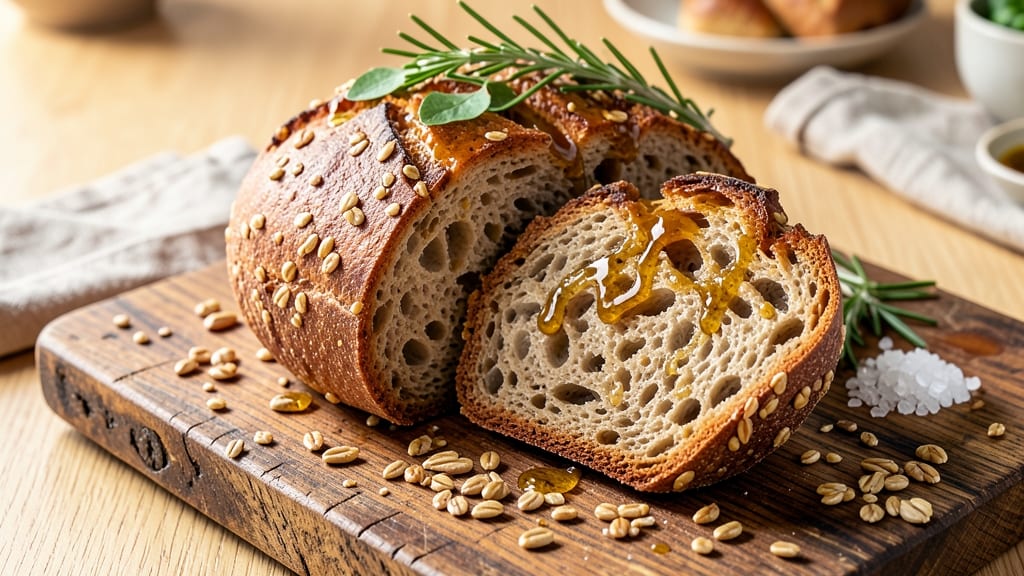
This amazing grains and salty bread recipe delivers a perfect balance of crusty crunch and nutty depth that’ll make you forget store-bought loaves ever existed. 💛 The secret lies in a mix of whole grains and a careful salt distribution that enhances every bite, creating a bread so flavorful it becomes the star of any meal.
With just a few simple ingredients—flour, water, yeast, and a touch of salt—plus optional seeds or grains for texture, this recipe is surprisingly straightforward. The key is letting the dough rest properly, which develops flavor and creates that signature open crumb structure.
No fancy equipment needed, just time and patience (and maybe a little elbow grease).
What you’ll end up with is a loaf that’s crisp on the outside, tender inside, and packed with salty, nutty goodness. The crust is golden and shatteringly crunchy, while the interior stays soft and airy.
Perfect for dipping in olive oil, pairing with soups, or just enjoying on its own with butter.
This bread is so versatile—great for breakfast, lunch, or dinner—and makes your kitchen smell like a bakery. Ready to bake something truly special? Let’s get started!
Ingredients for amazing grains salty bread
Simple flours, seeds, and a pinch of patience create this unforgettable crusty bread.
| Ingredient | Amount | Notes |
|---|---|---|
| All-Purpose Flour 🌾 | 3 ½ cups | For structure and texture |
| Whole Wheat Flour 🌾 | 1 cup | For nutty depth |
| Active Dry Yeast 🍞 | ¼ tsp | Ensure it's fresh |
| Warm Water 💧 | 1 ¼ cups | 110°F for activation |
| Honey 🍯 | 1 tbsp | Feeds yeast and adds sweetness |
| Kosher Salt 🧂 | 1 ½ tsp | Diamond Crystal preferred |
| Olive Oil 🫒 | 2 tbsp | Extra-virgin for richness |
| Sunflower Seeds 🌻 | ½ cup | For crunchy texture |
| Sesame Seeds 🌿 | ¼ cup | Toasted for extra flavor |
| Flaxseeds 🌾 | ¼ cup | Ground for nuttiness |
| Cornmeal 🌽 | ¼ cup | For dusting baking sheet |
| Coarse Sea Salt 🧂 | 1 tbsp | For sprinkling crust |
| Ice Water ❄️ | ½ cup | For kneading control |
The flours are where the magic happens. King Arthur or Bob's Red Mill all-purpose and whole wheat flours give that perfect balance of chew and crunch. If you're feeling fancy, swap half the whole wheat for spelt flour—it's got a deeper, almost caramel-like flavor. For the seeds, Trader Joe's has the best bulk bins, but any grocery store will do. Just make sure they're toasted if you can find them—that extra crunch makes all the difference. The yeast? Check the expiration date—if it's older than a few months, it might not activate properly.
No honey? Maple syrup works in a pinch, but it'll give a slightly different flavor profile. Running low on olive oil? Avocado oil is a great substitute, though it won't have that fruity depth. And if you don't have flaxseeds, toasted pumpkin seeds work just as well for texture. The cornmeal? Don't skip this—it's what keeps your bread from sticking to the baking sheet. Pro tip: Toast the cornmeal in a dry pan for 2 minutes before using it for even more flavor. The coarse sea salt is non-negotiable for that perfect crust—Maldon is my go-to, but any flaky salt will do.
This dough needs time to rest—at least 2 hours, but overnight is even better if you can swing it. Store any unused dough in an airtight container in the fridge for up to 3 days. Once baked, let it cool completely before slicing—that first bite is worth the wait. The bread keeps well at room temperature for 3 days wrapped in a towel, or you can freeze slices for up to 3 months. Toasting revives stale bread like nothing else—worth keeping a few extra slices on hand.
Why You'll Love This Recipe
- No-Knead Magic: This recipe lets you mix, wait, and bake—no fancy skills needed. I swear, the yeast and honey do most of the work while you handle the kids or scroll through your phone.
- Honey-Salt Crunch: That touch of honey caramelizing in the oven? It turns ordinary bread into something crispy-edged and subtly sweet, like a buttery cracker but better. The whole wheat gives it a nutty bite too—surprisingly addictive.
- Weeknight Wonder: Toss a loaf in the freezer for busy mornings or pack it for lunches. It stays fresh for days, and honestly? I’ve reheated slices straight from the fridge with zero effort—perfect for toast or sandwiches.
- Pantry Staple Power: You’re using flour, yeast, and honey—stuff you already own. No specialty ingredients, no last-minute grocery runs. Between us, this is my go-to when I’m broke but still want something that tastes like I tried.
Step-by-step instructions for crusty grains bread
Let's bake this nutty, crunchy masterpiece with a perfect crust and tender crumb.
👨🍳 Step 1: Activate the Yeast with Warm Water and Honey
In a small bowl, combine the 1.25 cups warm water (about 110°F) with the 1 tbsp honey and 0.25 tsp active dry yeast. Let it sit for 5-10 minutes until it becomes frothy and bubbly—this means your yeast is alive and ready to work. If nothing happens after 10 minutes, your yeast might be dead, and you'll need to start over.
I always test my yeast this way first. The honey not only feeds the yeast but also adds a subtle sweetness that balances the earthy grains. The mixture should smell slightly sweet and yeasty—like fresh-baked bread should smell. If it smells sour or rotten, something's off, and you should discard it and try again.
🍳 Step 2: Mix the Dough with Flour, Oil, and Seeds
In a large mixing bowl, whisk together the 3.5 cups all-purpose flour, 1 cup whole wheat flour, and 1.5 tsp kosher salt. Make a well in the center and pour in the yeast mixture along with the 2 tbsp olive oil. Using a wooden spoon or your hands, stir until a shaggy dough begins to form.
Next, add the 0.5 cup sunflower seeds, 0.25 cup sesame seeds, and 0.25 cup ground flaxseeds. These seeds will add texture and nuttiness to every bite. Mix everything together until the dough comes together—it should be sticky but manageable. If it's too dry, add 1 tablespoon of ice water at a time until it's just combined.
🥘 Step 3: Knead Until Smooth and Elastic
Turn the dough onto a lightly floured surface and knead for 8-10 minutes until it's smooth and elastic. You'll know it's ready when it springs back slowly when poked. I like to use the "windowpane test"—stretch a small piece of dough thin enough to see light through it without tearing.
If the dough feels too sticky, add a little more all-purpose flour (about 1 tablespoon at a time). But don't overdo it—too much flour will make the bread dense. Once kneaded, place the dough back in the bowl, cover it with a damp towel, and let it rise in a warm place for 1-2 hours or until it doubles in size. This resting time develops the gluten, which gives the bread its structure.
🔥 Step 4: Shape and Proof the Dough
Punch down the risen dough to release any air bubbles, then shape it into a loaf. I like to use a little extra all-purpose flour to dust my hands and the surface while shaping. Place the dough seam-side down in a greased 9x5-inch loaf pan that's been sprinkled with 0.25 cup cornmeal for extra crunch.
Cover the pan with a towel and let the dough proof for another 30-45 minutes until it rises about an inch above the pan. The dough should feel light and springy when pressed gently. Preheat your oven to 375°F during this time—you want it hot and ready when the dough is proofed.
🔪 Step 5: Bake to Golden Perfection
Once the dough is proofed, remove the towel and score the top of the loaf with a sharp knife—this helps it expand properly and gives it a professional look. Sprinkle the top generously with the 1 tbsp coarse sea salt. Bake in the preheated oven for 35-40 minutes until the bread is golden brown and sounds hollow when tapped on the bottom.
The crust should be deep golden and crispy, while the interior should be tender and perfectly baked. If the top browns too quickly, tent the loaf with foil to prevent over-browning. Let the bread cool in the pan for 10 minutes, then transfer it to a wire rack to cool completely before slicing. The flavors will deepen as it cools, making every bite even more amazing.
Pro Tips For Making Amazing Grains Salty Bread
- Mix by Hand First: The whole wheat flour in this dough can gunk up mixers fast—start by combining the dry ingredients (flours, yeast, salt) with your fingers until you see no more dry pockets. Only switch to the mixer after adding the wet ingredients, or you’ll be scraping dough off blades like it’s a science experiment.
- Bloom Yeast in Honey Water: Skip the dry yeast straight into flour—it’s a lazy move. Instead, dissolve the yeast in warm water with the honey first, then let it sit for 5 minutes until frothy. This ensures your yeast is active before it hits the whole wheat’s tough fibers, which can slow fermentation.
- Don’t Over-Knead the Dough: Whole wheat flour makes dough dense fast, and once you hit 8–10 minutes of kneading by hand (or 5–6 in a mixer), you’re just breaking down the gluten too much. Test readiness by poking the dough—if it springs back slowly, it’s done. Overwork it, and your bread turns out tougher than a campfire biscuit.
- Proof in a Warm Spot: Your oven’s light-on setting is perfect for this—turn it on, let it warm for 2 minutes, then turn it off and proof the dough inside for 1–1.5 hours. The trapped heat keeps the dough cozy without overcooking the edges, especially important when using whole wheat, which rises slower. No oven? A turned-off microwave with a bowl of hot water works too.
Perfect pairings for this amazing grains salty bread
Olive Oil Drizzle
Nothing enhances this salty bread like a generous drizzle of extra-virgin olive oil right after baking. I like to use Californian avocado oil or Italian Arbequina for their buttery richness that complements the nutty seeds.
Warm the oil slightly before drizzling—it enhances the bread's aroma and makes every bite feel luxurious. 🫒
Butter Pairings
For a classic touch, serve warm slices with cultured butter like Plugrá or Kerrygold. The saltiness of the bread cuts through the butter's richness, creating a perfect balance. I spread a thin layer on a slice, then fold it in half for a quick, satisfying bite.
For extra decadence, sprinkle with a pinch of flaky Maldon salt.
Soup Companions
This bread is ideal for dipping into hearty soups like tomato basil or creamy mushroom. The crust soaks up the broth beautifully while the nutty interior holds its shape.
I also love pairing it with French onion soup—the salty bread and rich broth create a match made in heaven. Serve with a side of sharp cheddar for melting on top.
Cheese Boards
Add this bread to your next cheese board for a textural contrast that elevates everything. I recommend pairing it with aged Gouda, sharp cheddar, and creamy brie. The crusty exterior handles firm cheeses well, while the soft interior pairs perfectly with spreadable varieties.
Breakfast Spreads
Transform this bread into a breakfast star with toppings like cream cheese and smoked salmon, or a classic peanut butter and banana combo. The seeds add a satisfying crunch that contrasts beautifully with creamy spreads. For a savory option, try avocado slices with a sprinkle of chili flakes and a drizzle of hot honey.
Wine Pairings
A crisp Sauvignon Blanc from New Zealand or a light Pinot Noir from Oregon complements the bread's nutty and salty notes perfectly. The acidity in the wine cuts through the richness, cleansing your palate between bites.
For beer lovers, a Belgian witbier with its citrusy notes provides a refreshing contrast to the bread's earthy flavors. 🍷
Nutrition facts
Frequently asked questions
Can I substitute whole wheat flour with another grain flour?
Yes! You can use spelt flour or rye flour for a deeper flavor, but adjust hydration—grain flours absorb more water. Start with 1:1 substitution but add 1-2 extra tablespoons of water if the dough feels dry. For a lighter texture, mix 50% whole wheat with 50% all-purpose flour.
Why is my dough too sticky to handle?
Sticky dough happens when hydration is too high or gluten isn't developed enough. Try adding 1 tablespoon of flour at a time while kneading, but don't overdo it—this can make the bread dense. If the problem persists, reduce water by 1-2 tablespoons next time. A 5-minute extra knead also helps tighten the gluten.
How do I make this bread without seeds?
Simply omit the seeds and replace them with 1 extra tablespoon of flour to maintain structure. For texture, try toasted nuts (walnuts or almonds) or crushed herbs (rosemary or thyme). The bread will still be delicious—just less crunchy. The crust's saltiness will still shine!
Can I bake this bread in a Dutch oven for a crustier texture?
Shape the dough into a round loaf and bake in a preheated 450°F Dutch oven for 25 minutes, then remove the lid and bake 10-15 more minutes until golden. The Dutch oven traps steam, creating a thicker, crunchier crust—perfect for dipping in soups. Just reduce baking time by 5-10 minutes compared to the loaf pan method.
How can I store leftovers to keep them fresh?
Wrap cooled slices in parchment paper and store in an airtight container at room temperature for 3 days. For longer storage, freeze slices for up to 3 months. To revive stale bread, toast in a 375°F oven for 5-7 minutes or wrap in a damp towel and microwave for 10-15 seconds. The crust will crisp up again!